


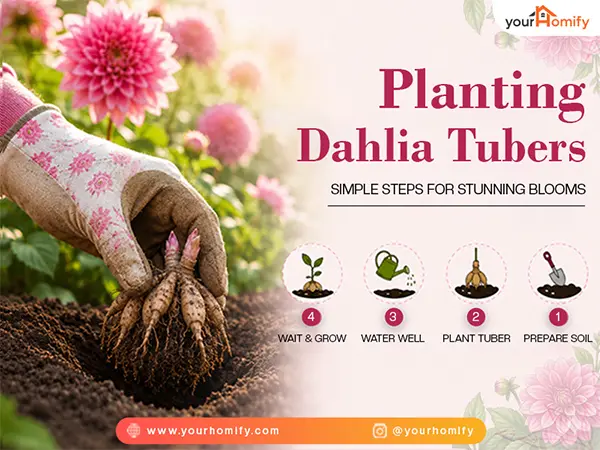
Planting dahlia tubers the right way can make a huge difference in how healthy and flower-filled your plants become throughout the season. This flower is among the most beautiful flowering plants for gardens, but successful blooms begin by following a proper care guide.
I have always found dahlias rewarding because even a single healthy tuber can transform into a vibrant plant covered with colorful blooms. Moving further, in this guide, I will walk you through the best planting, spacing, and care methods for growing stunning dahlias successfully. Follow along for some practical tips that I personally follow and enjoy continuous blooms all season long.
Quick Answer
Planting dahlia tubers is easiest when they are placed in warm, well-draining soil about 4–6 inches deep with the eye facing upward. Plant after the last frost, provide full sun, proper spacing, and moderate watering to encourage healthy growth and abundant blooms.
When to Plant Dahlia Tubers for Best Growth
According to the American Dahlia Society, timing plays a major role in successful dahlia growth, and it is important to understand the fundamentals of growing this summer flower.
Planting dahlia tubers too early in cold soil can lead to root rotting, while planting them too late may delay flowering. The species thrives in warm conditions, so waiting for the right season helps the tubers establish and produce stronger blooms.
I personally believe that the best time to plant dahlia tubers depends on your local climate and frost conditions.
| Climate Type | Best Planting Time |
| Cold Regions | Late spring, after the last frost. |
| Moderate Climates | Mid to late spring |
| Warm Tropical Areas | Late Winter to Early Spring |
| Indian Plains | February to April |
| Hill Stations | March to May |
A simple rule is to plant dahlias only after the danger of frost has passed completely. Container-grown dahlias can often be started slightly earlier than the garden-planted ones because pots warm up faster. Planting at the correct time helps prevent tuber rot, encourages faster sprouting, and improves root development.
How to Choose Healthy Dahlia Tubers Before Planting
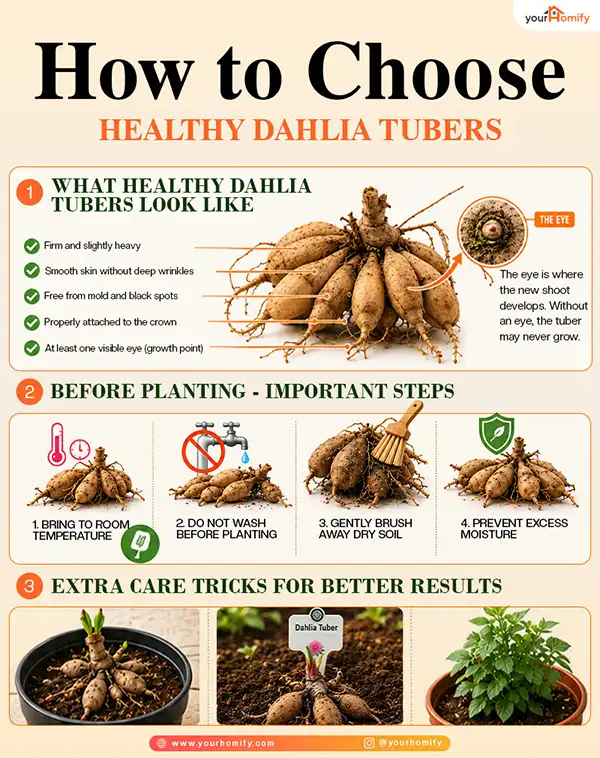
Choosing healthy dahlia tubers is one of the most important steps for growing strong and flower-filled plants. Even with perfect soil and watering, weak or damaged tubers often struggle to bloom. I always focus on selecting firm, healthy tubers because they establish faster and produce better flowers throughout the season.
A healthy dahlia tuber should feel:
- Firm and slightly heavy
- Smooth without deep wrinkles
- Free from mold or black spots
- Properly attached to the crown
- Should have at least one visible eye or growth point
The “eye” is where the new shoot develops. Without an eye, the tuber may never grow, no matter how healthy it looks. Before planting, I gently inspect each tuber by hand instead of relying only on appearance.
Over time, I have noticed a few simple care tricks make a big difference in sprouting and plant health. Before understanding how to plant dahlia tubers, it is ideal to go through some practical tips that I personally use for better tuber development.
- If the tubers were kept in storage, it is always ideal to keep them at room temperature for a few hours before planting. This helps reduce sudden temperature shock.
- Never plant the tubers before, as extra moisture can encourage fungal problems. I prefer brushing off dry soil gently instead of washing it under cold water.
Pro Tip: When dividing tubers, I sometimes use plain cinnamon powder on fresh cuts because it helps keep fungal issues lower naturally.
- For smaller or slower-looking tubers, I place them in a slightly moist potting mix indoors for early sprouting before moving them outside. Additionally, it is better to label them to avoid any kind of confusion between different Dahlia varieties.
Starting with healthy tubers makes the entire growing process easier and greatly improves the chances of vibrant, long-lasting dahlia flowers.
How to Plant Dahlia Tubers the Right Way?
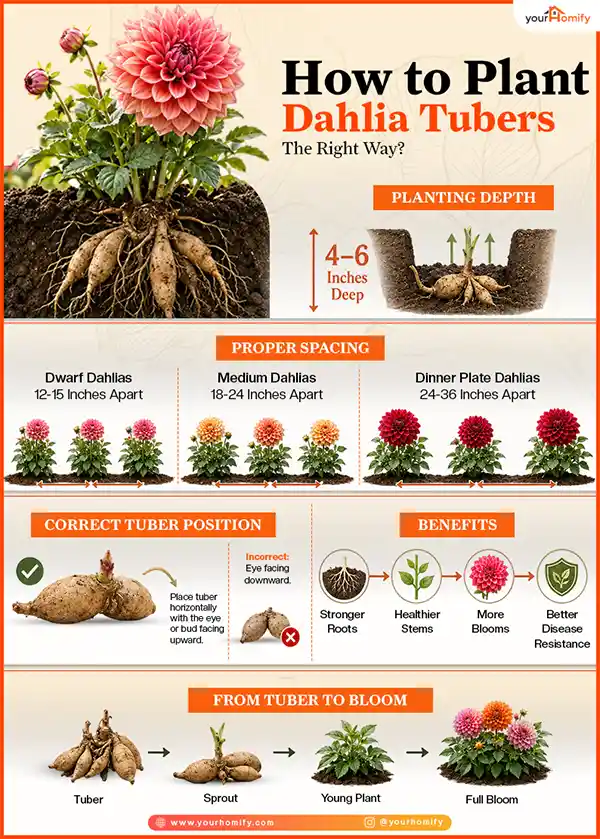
Planting dahlias tubers correctly is one of the most important steps for growing these healthy flowers that represent love. Proper depth, spacing, and positioning help the tubers establish faster and reduce plant problems like rotting, stunted growth, or overcrowding.
- Correct Planting Depth: Dahlia tubers are usually planted about 4-6 inches deep. This depth protects the tubers from temperature fluctuations while still allowing the shoots to develop properly.
- Proper Spacing Between Tubers: Spacing depends on the Dahlia variety and mature plant size. The dwarf varieties should be planted 12-15 inches apart, medium-sized flowers should be 18-24 inches apart, and the dinner plate species must be planted 24-36 inches away from each other.
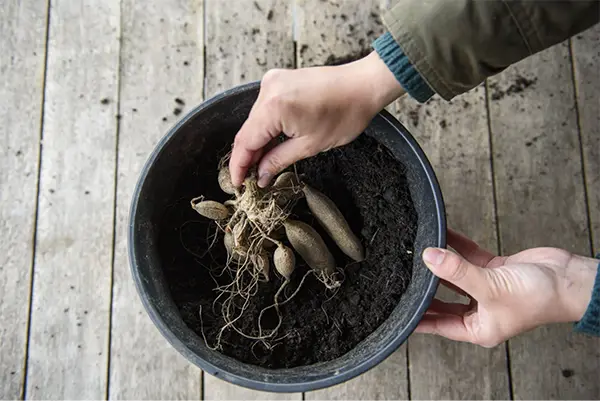
- Positioning the Tuber Correctly: Dahlia tubers should usually be placed horizontally in the planting hole with the eye or the budding point facing upward. If the eye faced downward, sprouting may become slower or uneven.
Following a proper planting method matters as it helps dahlias develop stronger roots, produce healthier stems, bloom more heavily, and resist fungal diseases better. A proper dahlia tuber is established quickly and creates the foundation for a long season of vibrant flowers.
How Deep Should the Tubers be Planted?
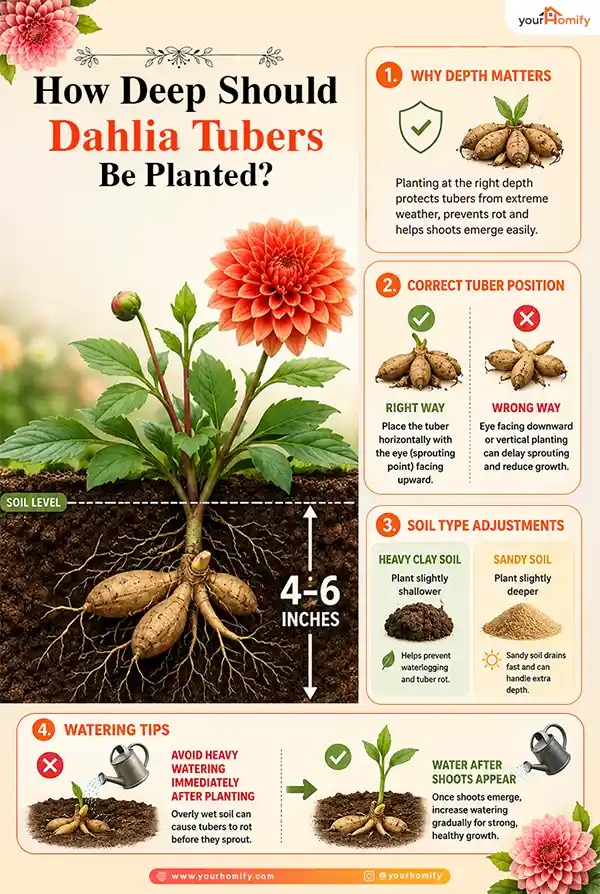
If you are also wondering how deep to plant dahlia tubers, then let me tell you the ideal depth is 4-6 inches in loose, well-draining soil. This depth protects the tubers while still allowing the shoots to grow easily toward the surface. In heavy clay soil, planting slightly shallower helps prevent rot, while sandy soil can handle a little extra depth.
Moreover, I usually place the tuber horizontally with the eye or sprouting point facing upward. After covering it with soil, avoid pressing the potting mix too firmly because compacted soil can slow sprouting and root growth.
Avoid heavy watering immediately after planting. Dahlia tubers can rot in overly wet soil before they begin sprouting. I wait until the shoots appear before increasing watering.
How to Plant and Grow Dahlia Tubers Successfully
Dahlia tubers are easy to grow when planted correctly in warm, well-draining soil. Proper planting depth, soil conditions, watering, and sunlight help produce healthier plants with vibrant blooms throughout the season. If you are looking for a complete care guide for this species, you have reached the right place.
Step 1: Choose healthy tubers with visible eyes near the crown. Avoid soft, mouldy, or shriveled tubers.
Step 2: Pick the right planting time. Plant dahlia tubers after the last frost when the soil becomes warm.
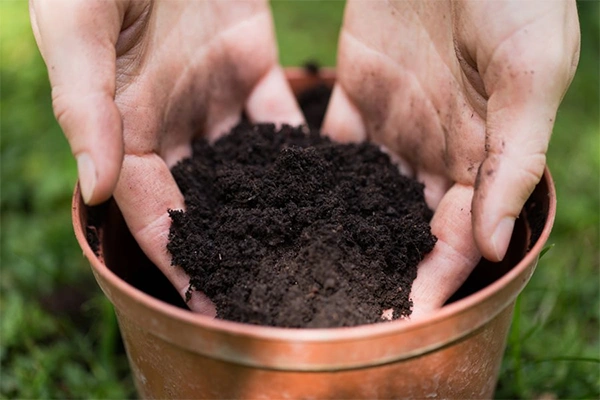
Step 3: Prepare the soil. Dahlias prefer loose, fertile, and well-draining soil. I usually mix compost into the soil for added nourishment.
Step 4: Plant the tubers correctly. Dig a hole 4-6 inches deep, place the tuber horizontally, keep the eye facing upward, and gently cover with soil.
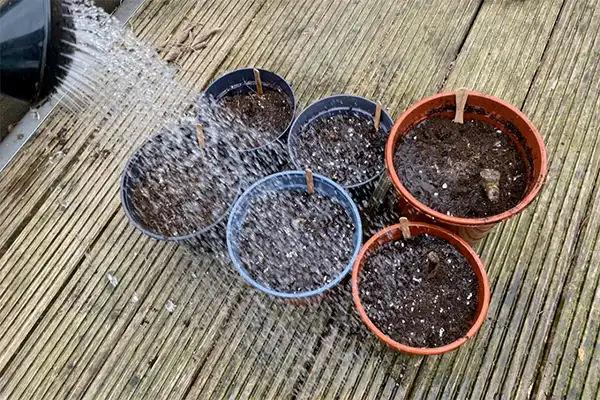
Step 5: Water the tubers carefully and provide proper support for tall dahlias. Installing stakes during planting helps prevent root damage later.
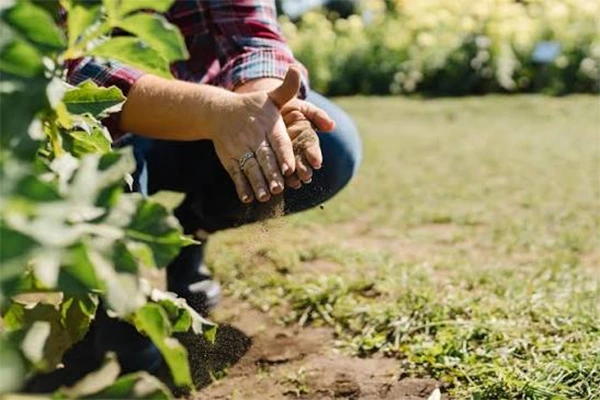
Step 6: Fertilize during the growing season. Use a low-nitrogen fertilizer once the plant begins active growth. Balanced feeding is necessary for optimal growth.
Most dahlias begin flowering by midsummer and continue blooming until frost. By following proper care tips, they produce colorful flowers for several months. Growing dahlia tubers becomes much easier when they receive warmth, sunlight, balanced moisture, and consistent seasonal care from the beginning.
Dahlia Tuber Spacing Guide for Healthy Plants
Proper spacing is essential for healthy dahlia growth. When plants are placed too close together, airflow becomes restricted, increasing the chances of fungal diseases, weak stems, and smaller blooms. Good spacing also allows roots to spread properly and ensures each plant gets enough sunlight and nutrients.
Recommended spacing for different Dahlia Types:
| Dahlia Type | Ideal Spacing |
| Large Dinner Plate Dahlias | 24-26 inches apart |
| Medium Varieties | 18-24 inches apart |
| Dwarf Dahlias | 12-15 inches apart |
Tall and large-flowered dahlias usually need extra room because they produce big foliage and heavier blooms. Correct spacing helps them get proper air circulation, stronger root development, and fewer fungal infections. Overcrowded plants compete for water, nutrients, and other basic growing conditions, which can eventually affect the quality of the blooms.
Common Dahlia Tuber Planting Mistakes to Avoid
Planting dahlias tubers may seem simple, but a few mistakes can affect sprouting, growth, and flowering of the species. Avoiding these errors can help the genus grow profusely. Here is a list of some common mistakes that should be avoided while planting dahlia tubers.
- Planting in Cold Soil: Cold, damp soil can rot tubers before they even sprout or flower.
- Overwatering or Underwatering: Too much or too little moisture before the growth begins often causes fungal problems.
- Wrong Planting Depth: Extremely deep or shallow planting affects sprouting and the stability of the overall plant.
- Using Damaged Tubers: I always make sure to check the quality of the tubers. Soft, shriveled, or broken tubers usually have poor flowers.
- Wrong Planting Depth: Extremely deep or shallow planting can affect the blooming and overall structure of the dahlia flower.
- Ignoring Sunlight Needs: Dahlias need plenty of direct sun exposure for appropriate flowering; ignoring this can result in stunted growth.
- Planting Upside Down: The eye or sprout should face upward for proper growth.
- Overfertilizing with Nitrogen: Excess nitrogen produces more leaves but fewer flowers.
Avoiding these common planting mistakes creates stronger plants, healthier roots, better airflow, and a much longer flowering season for Dahlias.
Conclusion
Planting dahlia tubers the right way can completely transform the health, size, and blooming ability of your plants. Proper timing, well-draining soil, correct spacing, and balanced watering help the species flourish with more abundant flowers.
Whether they are grown in containers or garden beds, dahlias thrive when given warmth, sunlight, and steady care throughout the season. I believe even beginners can manage growing beautiful blooms by simply avoiding common planting mistakes and focusing on healthy tuber care from the very beginning.
FAQs
What is the best month to plant dahlia tubers?
The best planting time depends on your climate, but most gardeners plant dahlias in spring after the frost season is gone. In many parts of the USA, the ideal months are from April to June when the temperature reaches 60F.
How deep should I plant dahlia tubers?
Dahlia tubers are usually planted about 4-6 inches deep. Planting them too shallow may expose the tubers, while planting them too deep can delay sprouting and increase the risk of root rot.
How far apart should I plant the dahlia tubers for good results?
Most dahlias grow best when spaced 12-24 inches apart, depending on the variety you are growing. Proper spacing improves airflow, reduces disease risk, and gives the plant enough room for healthy root and flower development.
Why are my dahlia tubers not sprouting?
Dahlia tubers may fail to sprout because of cold soil, overwatering, damaged eyes, rotting, or poor-quality tubers. Warm soil temperatures and a well-draining potting mixture or soil usually improve sprouting success.
Should I soak dahlia tubers before planting?
Dahlia tubers generally do not need soaking before planting. Healthy tubers already contain stored moisture. Overwatering can sometimes increase the chances of fungal problems or rotting.
- Starting Dahlia Tubers – Dahlia Society of Ohio
- Why Smart Gardeners Start Their Dahlias in Pots First – BBC Gardeners World Magazine

When to Plant Dahlias: Best Time & Planting Guide
[…] June. As the soil warms up pretty late due to the long frost window, you can start growing the dahlia tubers indoors in a pot and then transplant them outdoors after the soil warms up. This accelerates the […]