


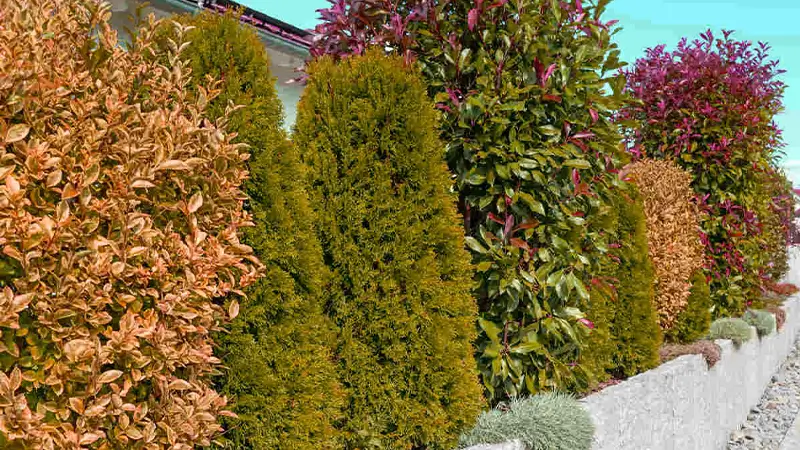
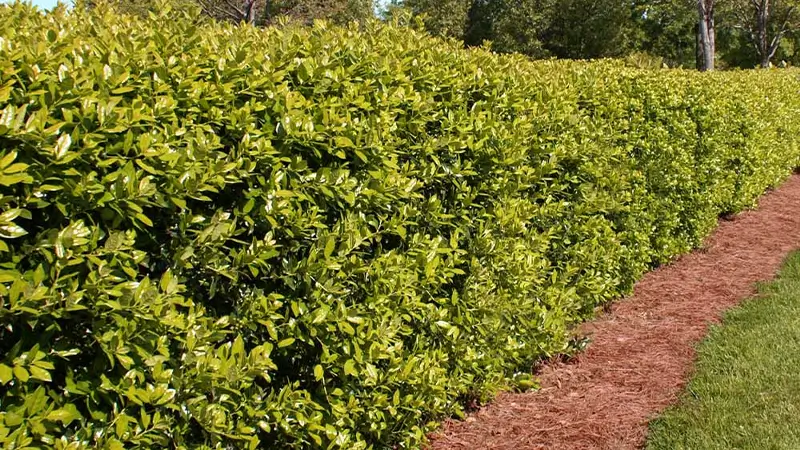


| Common Name | Dwarf Yaupon Holly, Dwarf Yaupon, or called by specific cultivar names like Schilling’s Dwarf or Stokes Dwarf | Maintenance | Low |
|---|---|---|---|
| Native Region | Southeastern United States | Average Height | 2 to 4 feet |
| Plant Type | Broadleaf evergreen shrub | Average Width | 3 to 6 feet |
Key Features and Benefits of Dwarf Yaupon Holly
- Yaupon Holly Dwarf is a slow-to-moderate-growing shrub with an annual growth rate of 3-12 inches, taking a few years to reach its mature form.
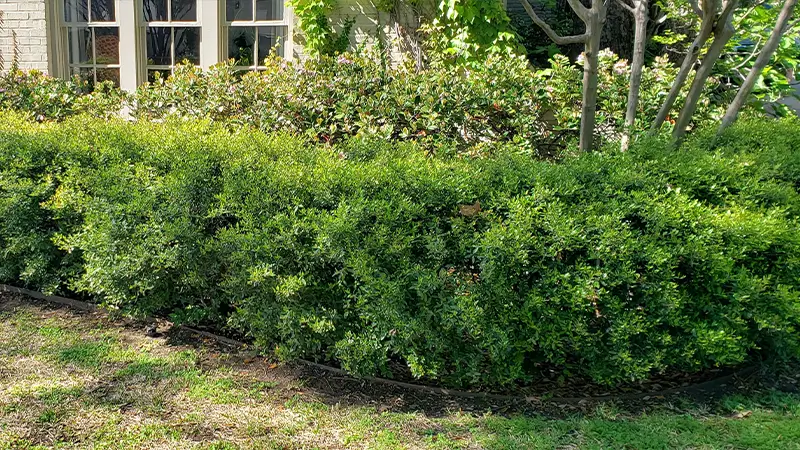
- Thanks to its density, it acts as a host plant for Henry’s elfin butterfly, a critical nesting site for birds, and a protective shelter from predators.
- ‘Schillings’ and ‘Nana’ are male, producing no berries; the other varieties may produce red berries that are highly toxic.
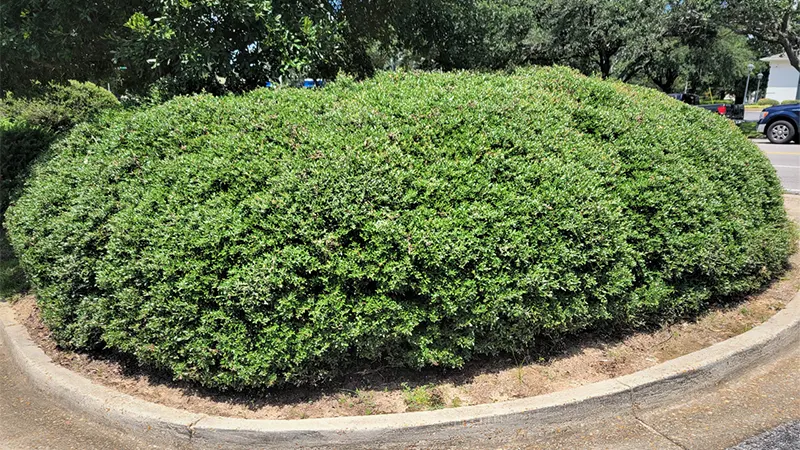
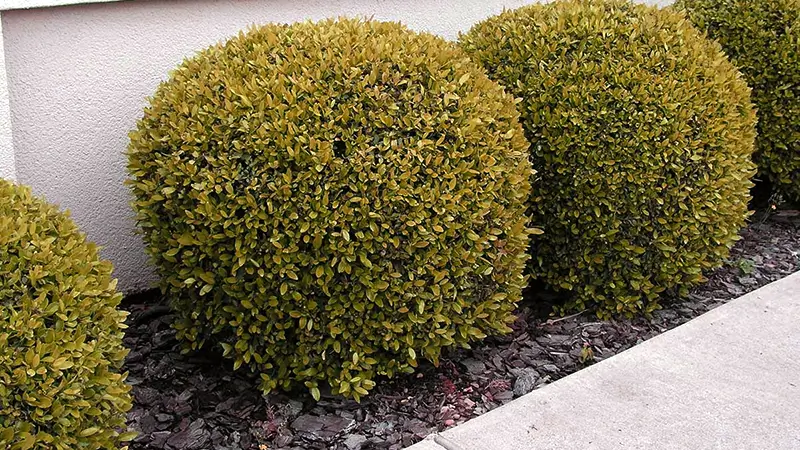
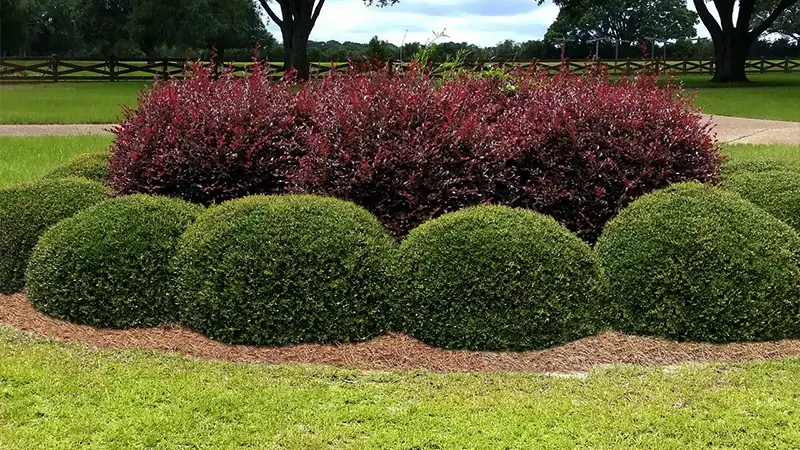
- Due to its naturally rounded structure, Holly Dwarf Yaupon is well-suited for diverse purposes, including hedges, mass plantings, rock gardens, or container plantings.
Care Guide, Advantages, and Disadvantages of Natchez Crape Myrtles
Advantages
- Offers all year-round interest with evergreen dark foliage that turns red-hued in early spring.
- It is highly resistant to salt sprays and droughts, coming across as the best choice for coastal areas.
- Naturally resistant to many diseases and pests, and highly resilient to damage from deer.
- Being a low-maintenance shrub, it requires minimal pruning and care to make it grow. It is a viable option for novice gardeners.
Disadvantages
- If unpruned for many years, it may outgrow its “dwarf” designation, with some varieties growing large.
- Considered intolerant to pollution, growth is hindered in urban, high-traffic roadside environments.
- Not preferred to be planted in immediate defensible space because of its high flammability.
- Due to being a male plant, it provides less food to birds as compared to the female counterpart.

Gerald Olsen –
The best part is that it rarely requires any pruning from my side. It is a minimal care-taking shrub that naturally grows into a 3-4 feet meatball-like shape.
Liza Coleridge –
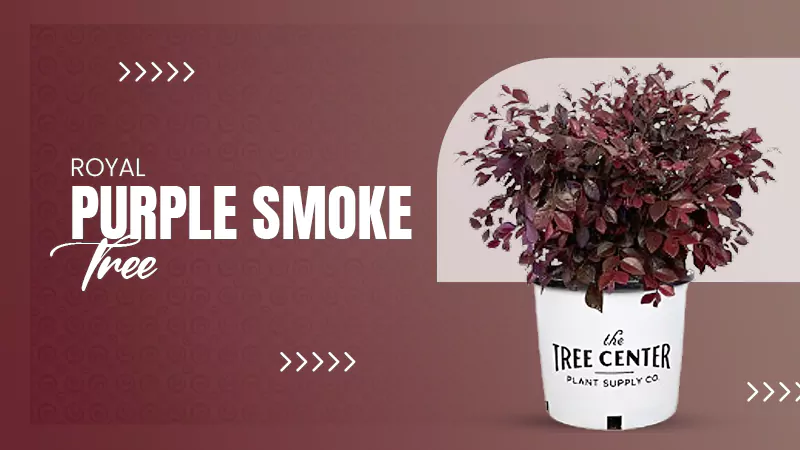
I planted it 2 years ago as a border cover in my entryway. I love how in the springtime, the new growing red-purple smoky-hued leaves add a beautiful contrast before turning glossy green.
Joseph Murphy –
I saw it for the first time in my neighbor’s outdoor space, where the dense foliage provides shelter to many birds, and the white flowers attract bees and butterflies in springs. Looking forward to decorating my rock garden with these plants.
Sarah Clark –
It is an evergreen shrub that offers year-round colour. In winter, the leaves look attractive with olive to dark green colour and leathery structure.