


| Common Name | Royal Purple Smoke Tree, Royal Purple Smokebush | Maintenance | Low |
|---|---|---|---|
| Native Region | Southern Europe to central China | Average Height | 10-15 feet |
| Plant Type | Deciduous shrub or small tree | Average Width | 10-15 feet |
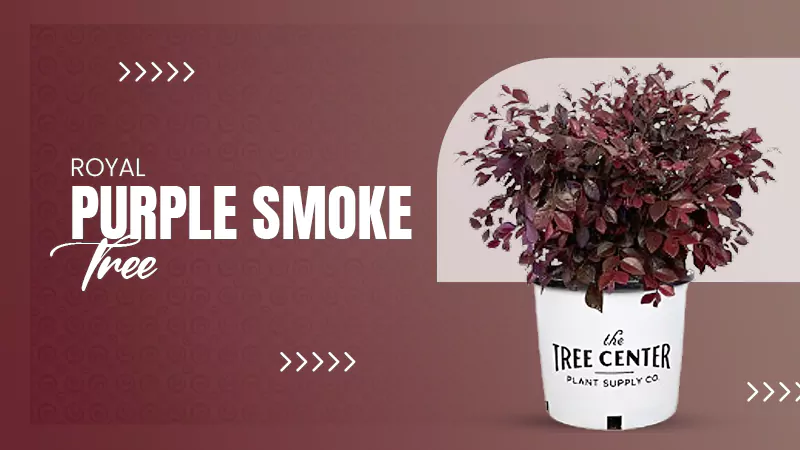
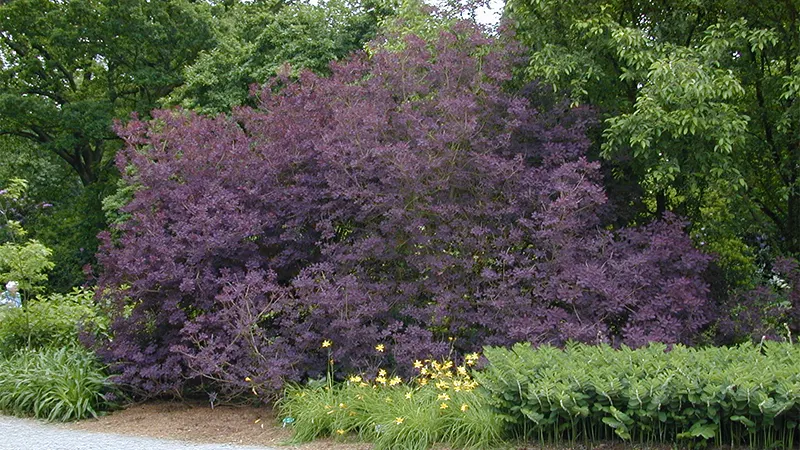
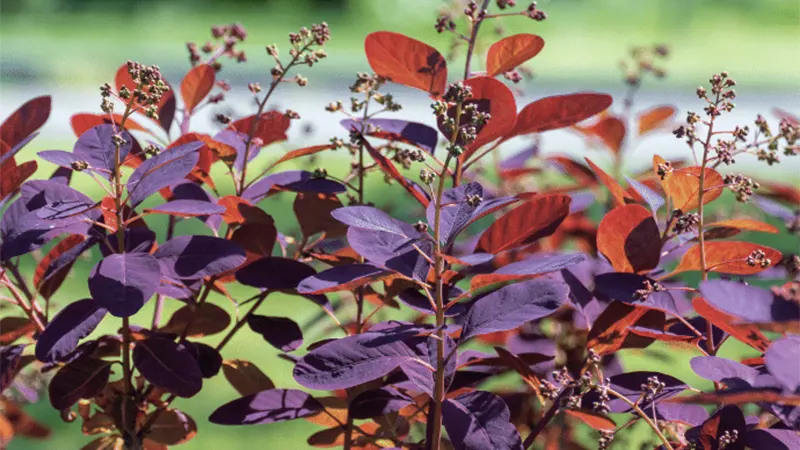
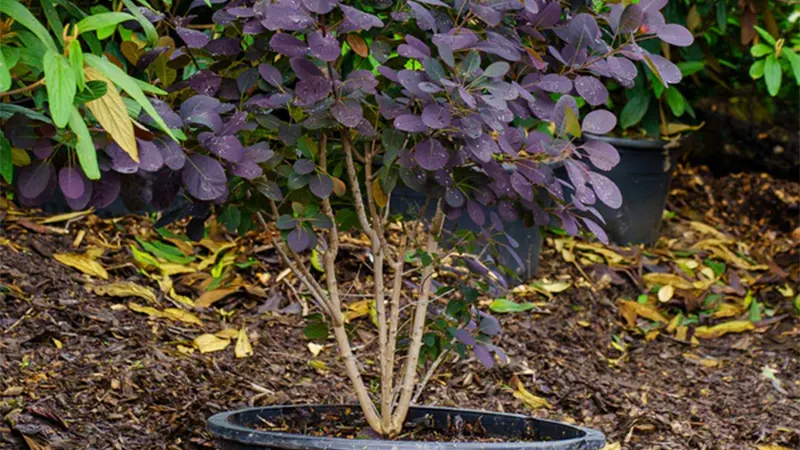
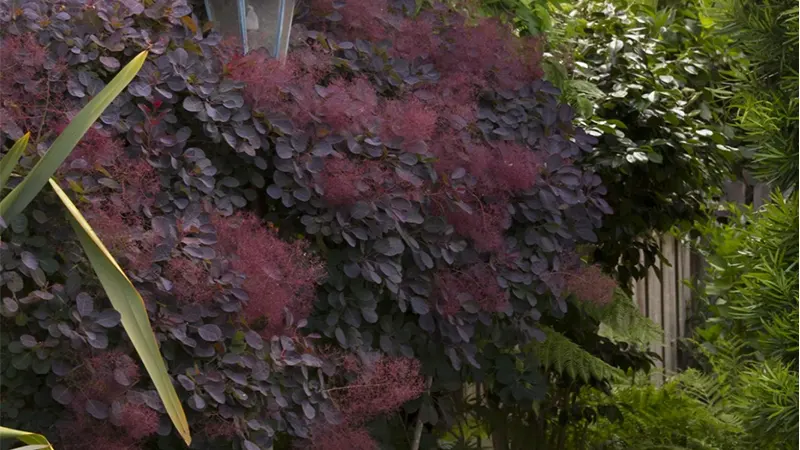
Cotinus Coggygria Royal Purple Smoke tree is a true garden masterpiece with deep purplish red leaves all summer long that turn scarlet red in autumn. It is a drought-tolerant deciduous shrub that is well-suited for versatile landscapes like a hedge, shrub border, and small tree.
Key Features and Benefits of Royal Purple Smoke Tree
- Smoke tree Royal Purple has an open, upright, multi-branched growth habit, though it can be trained into a single-branched tree.
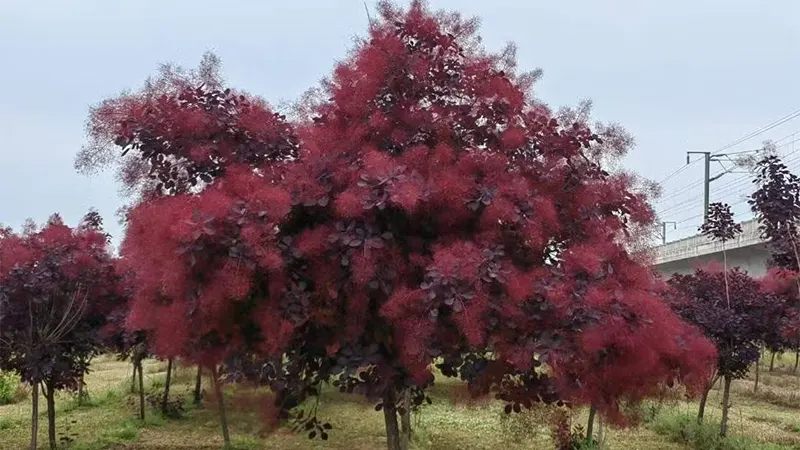
- In the late spring to early summer, the shrub blooms with airy, fluffy flower clusters that give a wonderful hazy smokey appearance.
- Cotinus Royal Purple Smoke tree requires minimal fertiliser; over-fertilising can inhibit bloom production and cause excessive but weak growth.
- The root system spreads widely, often expanding further than the canopy, securing the required moisture.
Care Guide, Advantages, and Disadvantages of Royal Purple Smoke Tree
Advantages
- Can handle city pollution and is adaptable to even poor, rocky soil.
- Considered highly resistant to deer and rabbits.
- Requies minimal pruning only to maintain shape, improve health, and enhance foliage.
- Moderate to fast-growing tree, adding up to 1-2 feet every year.
Disadvantages
- Vulnerable to diseases like Verticillium wilt, leaf spot, and rust.
- Does not tolerate wet or boggy conditions.
- Sap can cause skin irritation and contact dermatitis in sensitive individuals.
- The shrub is considered short-lived, only living for around 20 years.

Andrew Lewis –
I ordered the Royal Purple Smoke Tree because I wanted something that would really stand out in the garden. The deep purple foliage caught my eye, and the tree arrived healthy and well-packed. It looks fantastic against the greener plants around it.
Bob Rogers –
The Royal Purple Smoke Tree has quickly become one of the more noticeable plants in my garden. It arrived in great condition, and I love the rich color of the foliage. I’m excited to see how much it fills out as it grows.