



| Common Name | Hybrid Willow, Austree Willow | Maintenance | Low |
|---|---|---|---|
| Native Region | Crosses between different willow species, therefore, do not have a single native region | Average Height | 30-70 feet |
| Plant Type | Deciduous hardwood tree | Average Width | 15-35 feet |
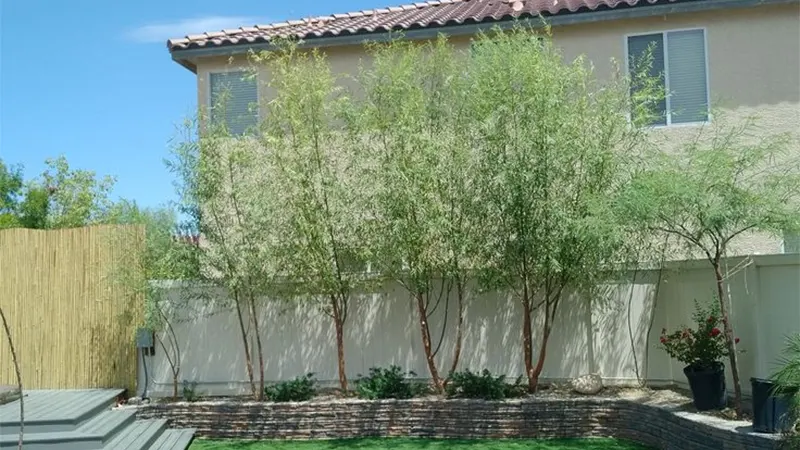
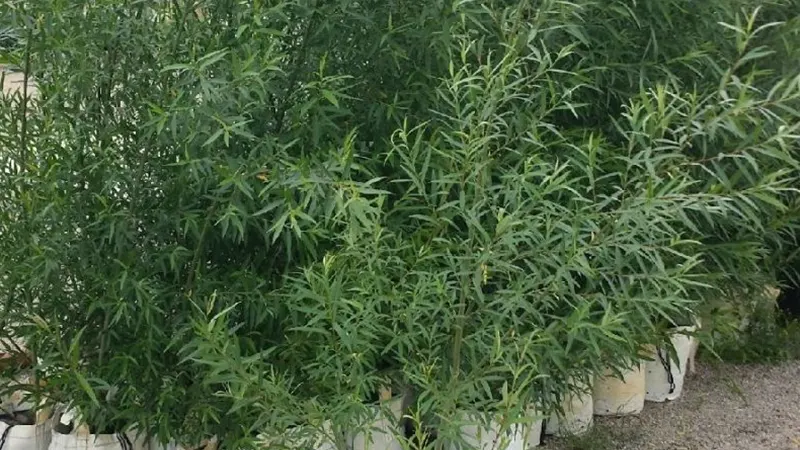
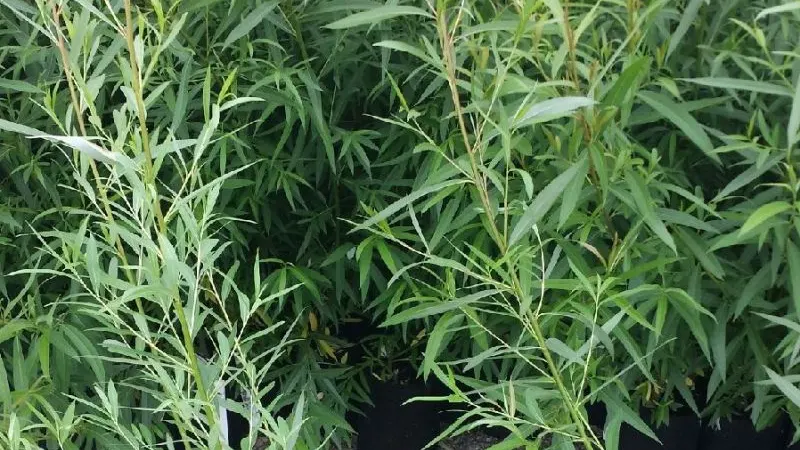
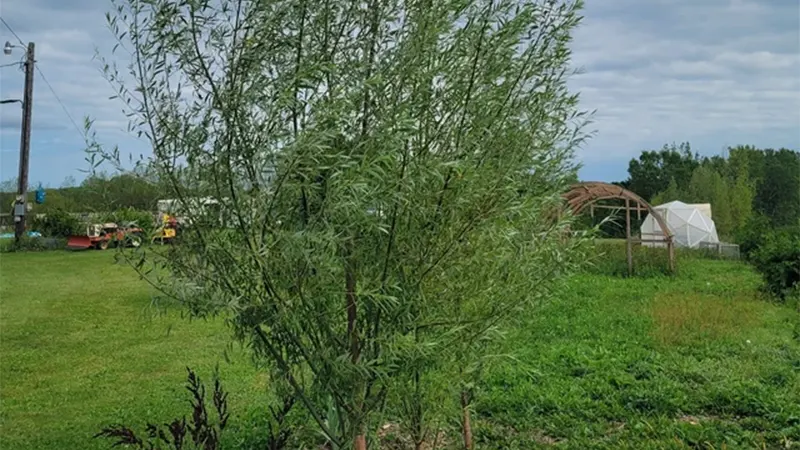
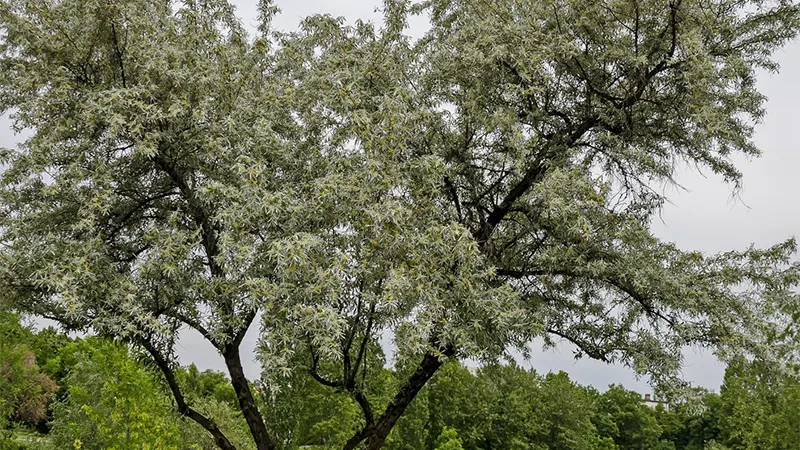
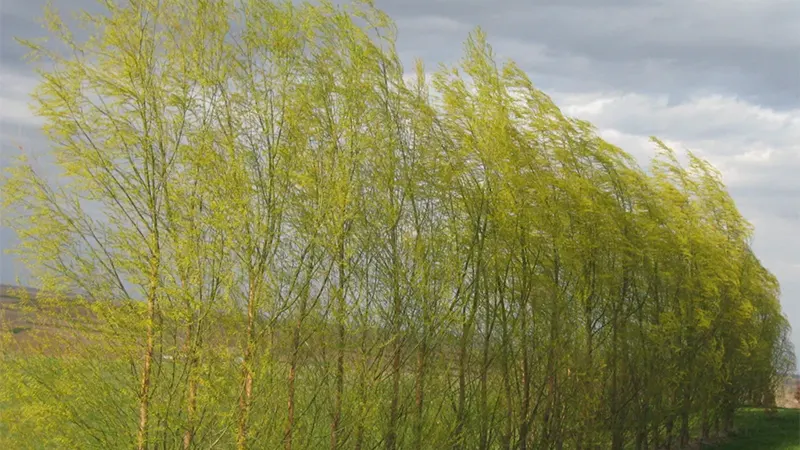
Hybrid Willow, also known as Austree, is a fast-growing tree primarily used for privacy screens, windbreaks, and erosion control. While being low-maintenance and adaptable to diverse climates, the tree grows best in areas with ample water availability.
Key Features and Benefits of Hybrid Willow Tree
- Due to its capability of growing 6-15 feet annually, the Willow Hybrid tree reaches maturity in 3-5 years.
- It does not have sweeping branches like the Weeping Willow that leads to its upright growth habit, making it best suited for privacy walls and hedges.
- Austree Hybrid willow trees have an extensive root structure that is highly effective in controlling soil erosion and absorbing the standing water in flood-prone areas.
- If planted in fertile soil, it doesn’t need fertilizers. However, if it is growing sluggishly, consider applying a balanced fertilizer in early spring or summer.
Care Guide, Advantages, and Disadvantages of Hybrid Willow Tree
- Growing Zone : USDA 3-9
- Sunlight Exposure : Can survive in 4 to 6 hour daily sun exposure but performs best with more than 8 hours of direct daily sunlight.
- Water Needs : Require high moisture; during dry spells, provide supplemental water.
- Soil Type : Adaptable to soil types, including clayey, loamy, and sandy, with neutral to alkaline pH levels.
Advantages
- It is cost-effective as it provides a dense living wall much faster than any artificial fencing.
- Responds well to pruning and can be cut back to encourage the growth of stronger lower branches.
- The summer foliage provides shade, reducing the cooling costs.
- The summer foliage provides shade, reducing the cooling costs.
Disadvantages
- The weak and brittle wood is susceptible to breakage during high winds and heavy snow.
- Has very aggressive root system that can damage underground sewers, pipes, and home foundations.
- Unlike many landscape trees, it has a shorter life span.
- Depending on the specific hybrid, they can be susceptible to diseases and pests.




Emilia Robertson –
I have four hybrid willow trees in my garden, and in the last 3 years, they have attained significant growth. I bought them as cuttings, and I love the fact that they are so undemanding and grow with minimal care.
Sarah Jones –
I planted one tree as a privacy screen, and in just 2 seasons, it became a dense living wall. If you are also looking for something fast-growing, then it is a no-brainer.
Jeremy Baker –
The dense tree provides near instant shade on sunny days. Furthermore, it attracts many honey bees, mason bees, and mining bees by becoming a food source for them.
Noah Carter –
This tree is visually pleasing, providing a strong green backdrop. It can grow quickly and block off noise and ugly views.
Bob –
I’m really happy with the Hybrid Willow Tree I received. The tree arrived safely and looked fresh when I unpacked it. I planted it in an open spot in the garden, and I’m looking forward to watching it grow into a larger tree.
Andrew Lewis –
I ordered the Hybrid Willow Tree from YourHomify because I wanted something that would grow into a noticeable feature in the yard. It arrived in good condition with healthy-looking foliage, and I’m excited to see how quickly it develops.