



| Common Name | Pink Lemonade Blueberry | Maintenance | Low |
|---|---|---|---|
| Native Region | North America | Average Height | 4-5 feet |
| Plant Type | Deciduous Fruit Shrub | Average Width | 4-5 feet |
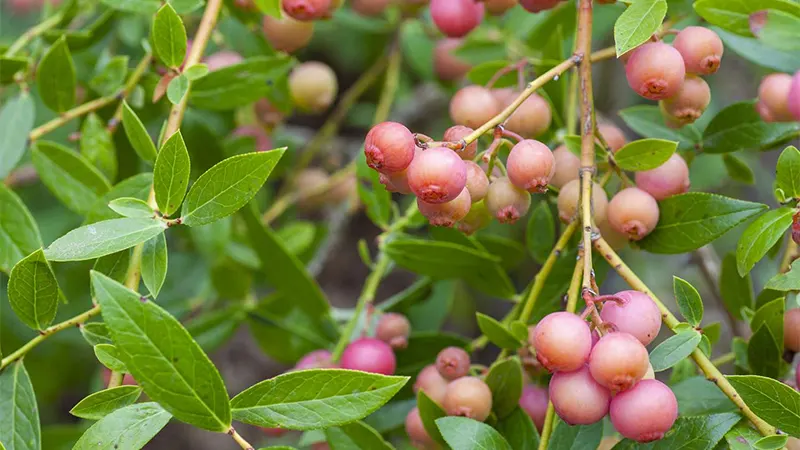
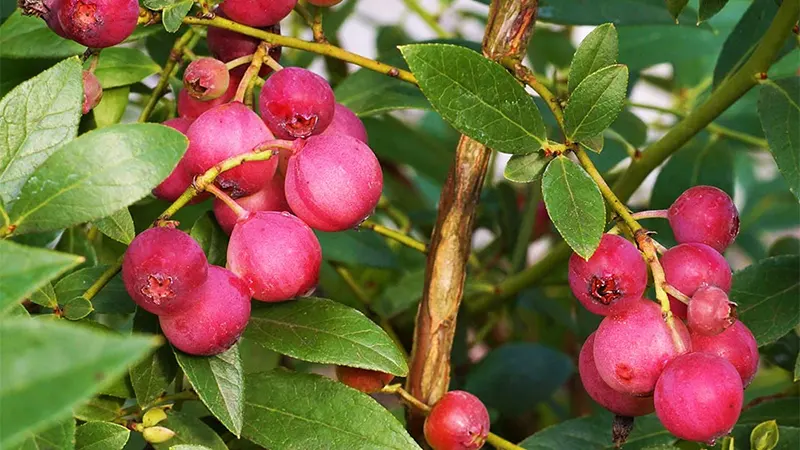
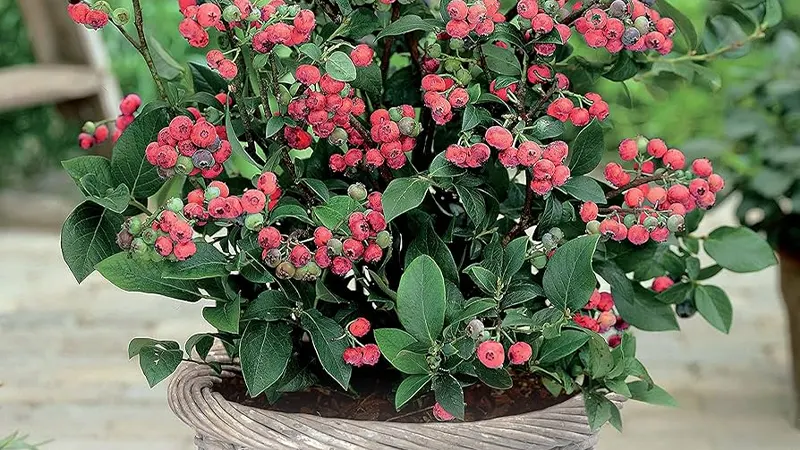
Pink lemonade blueberry plant, scientifically called Vaccinium ‘Pink Lemonade’, offers a perfect ornamental beauty with white pink bell-shaped flowers in spring, edible fruit in summer, and bright red foliage in the fall. The hardy, low-maintenance bush is the favourite of gardeners as it attracts a wide range of pollinators to the landscape.
Key Features and Benefits of Pink Lemonade Blueberry
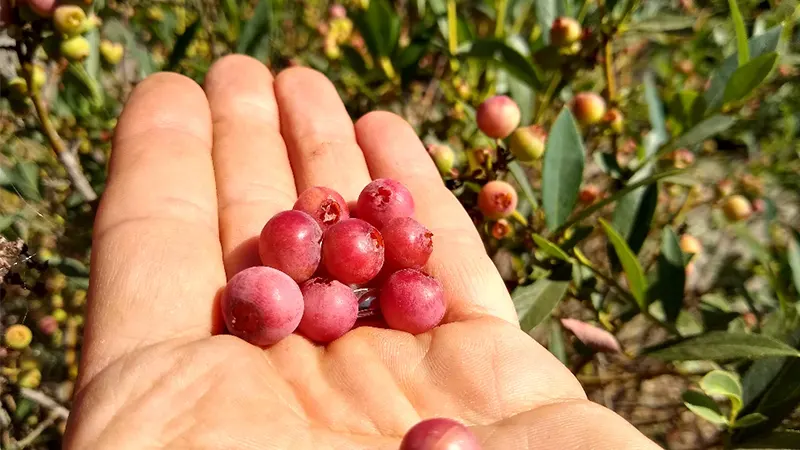
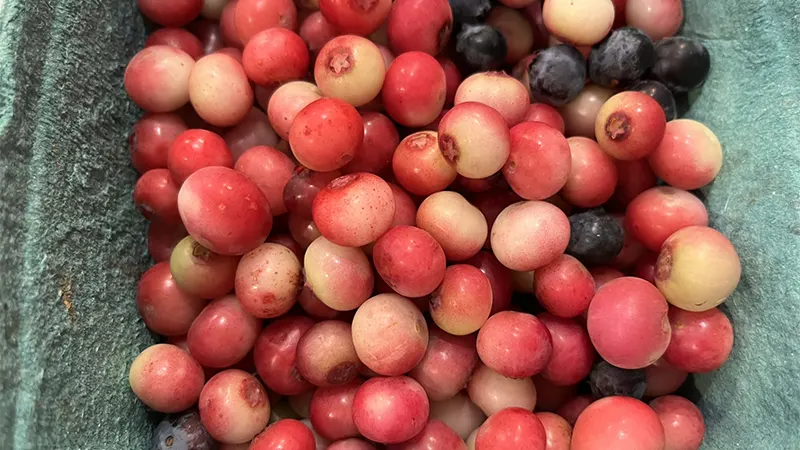
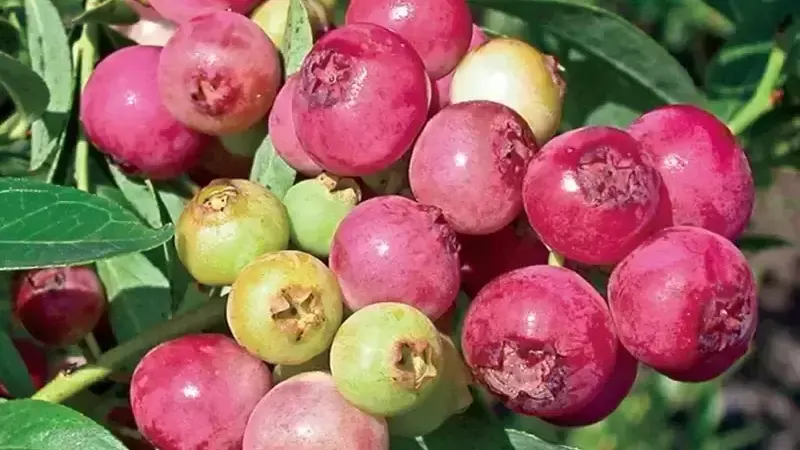
- The bell-shaped spring flowers give way to greenish white berries that transform to bright, vibrant pink till summer with a mild, sweet citrusy taste profile.
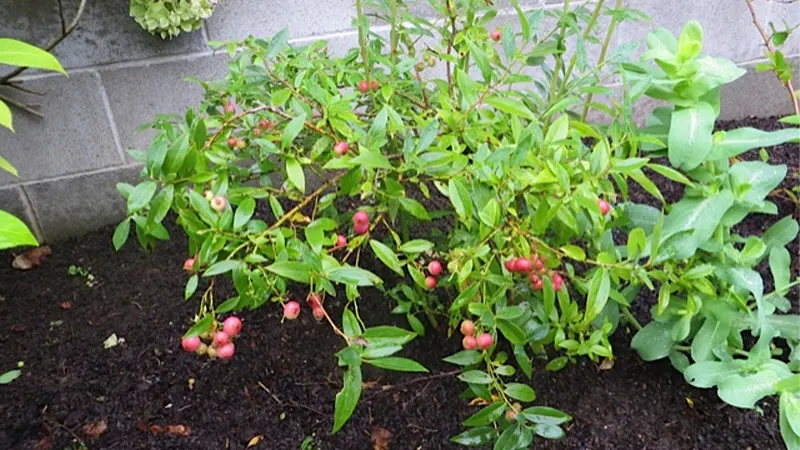
- Blueberry Pink Lemonade bush is a compact and deciduous shrub that features an upright and somewhat spreading growth habit.
- The shrub can be used in versatile spaces, including kitchen gardens, mixed borders, container gardens, companion planting, and privacy screens.
- Pink Lemonade blueberry tree has a fibrous, shallow root structure that rarely extends below 16 inches in the soil.
Care Guide, Advantages, and Disadvantages of Pink Lemonade Blueberry
- Growing Zone: USDA 4-9
- Sunlight Exposure: Can tolerate partial shade, but 6-8 hours of daily full sun is crucial for abundant berry production.
- Water Needs: 2-3 times weekly deep watering is crucial during the established phase, but ensure that the soil does not get soggy.
- Soil Type: Prefers well-drained sandy, loamy, and clayey soils with a pH of 4.5 to 5.5.
Advantages
- Pink berries are found to be rich in antioxidants and nutrients, contributing well to digestive health.
- Due to the unique colour, the berries are ignored by birds.
- The berries’ sweet tartness makes them ideal for fresh eating, baking, and many culinary uses.
- Supports the ecosystem by attracting many pollinators to the garden, like bees and butterflies.
Disadvantages
- The plant is often observed to be less productive than blueberries, yielding low quantities of fruit.
- Susceptible to damage from late spring frosts and heat stress.
- If kept in poorly drained soil or overwatered, it can suffer from root rot.
- The fruit-laden limbs can bend and expose themselves to direct sunlight, resulting in damaged fruits.



Anthony Hill –
The berries of this shrub are my favourite choice for healthy snacking, as they offer a satisfying pop with a sweet, non-tart flavour when eaten.
Ryan Lee –
My mother planted this shrub in the kitchen garden. Within two years, the shrub has started producing a bountiful harvest of berries that we use in salads and desserts.
Sarah Evans –
The plant doesn’t let the show stop even after the spring, with its bright green summer foliage that transforms into red or orange in the fall.
Zendaya Piper –
My friend made me try the pink berry for the first time some days ago. I really enjoyed its sweet and floral flavour. Ordered the shrub yesterday, can’t wait to see it yielding large quantities of berries.
Andrew –
I ordered the Pink Lemonade Blueberry because I wanted to try growing a slightly different type of berry at home. The plant arrived healthy and well-packed. I’m excited to watch it grow and hopefully enjoy some berries later on.
Bob –
The Pink Lemonade Blueberry arrived in great shape and looks really healthy. I love the idea of growing something edible that also looks attractive in the garden. It’s settling in nicely, and I’m looking forward to seeing how it develops.