
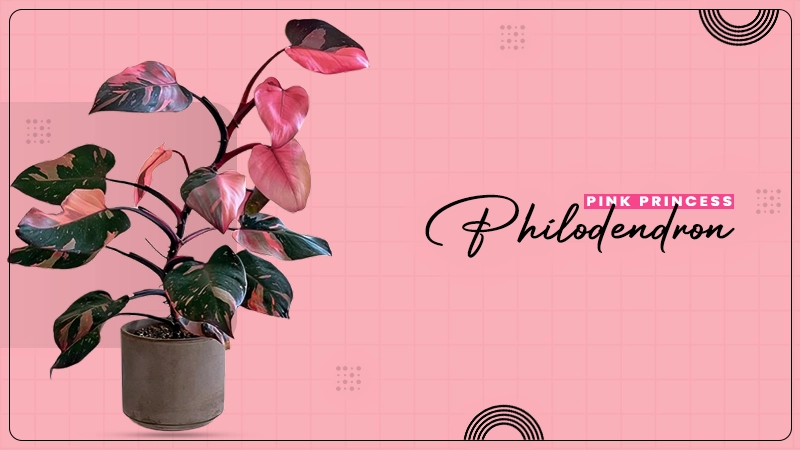


| Common Name | Pink Princess Philodendron, Blushing Philodendron | Maintenance | Moderate |
|---|---|---|---|
| Native Region | This cultivar is a hybrid, native to the rainforests of Colombia and South America. | Average Height | 3-6 feet |
| Plant Type | Tropical, evergreen, climbing, or vining perennial | Average Width | 1-2 feet to 3-4 feet |
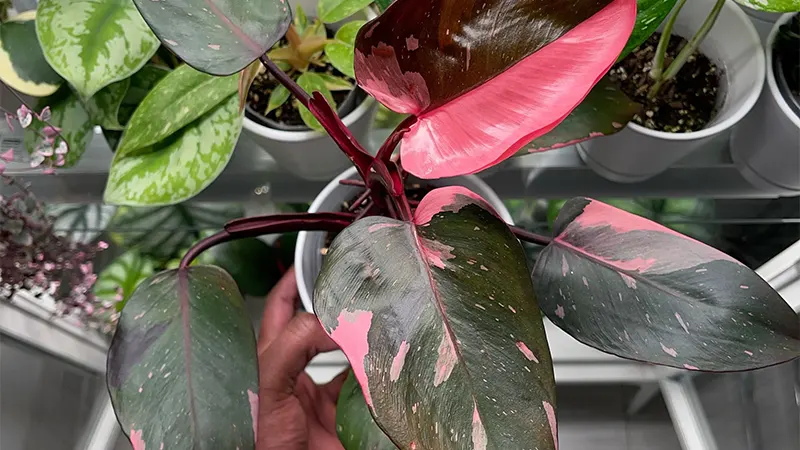
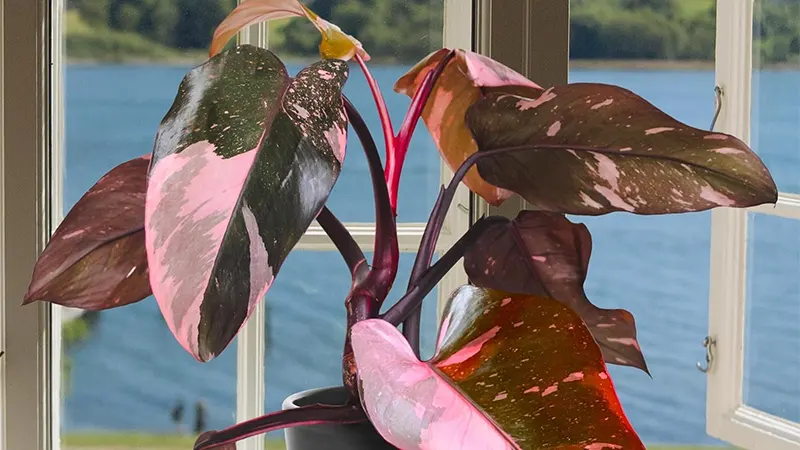
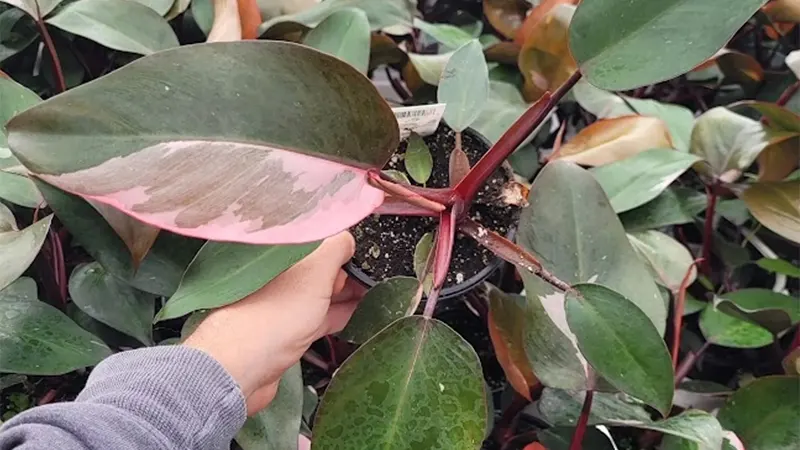
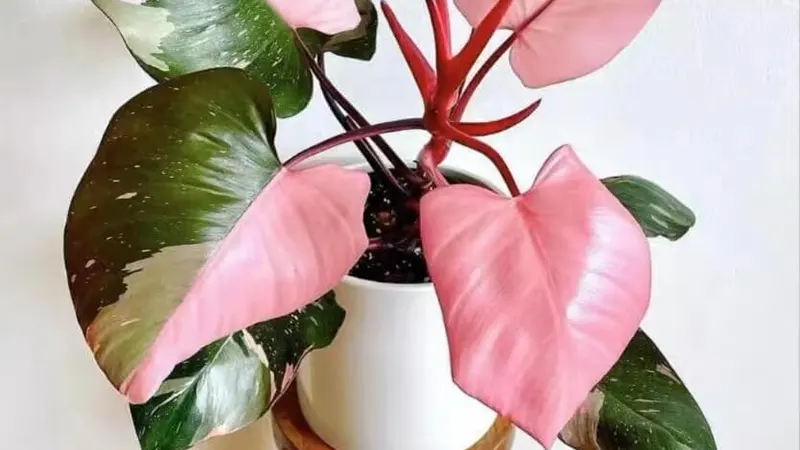
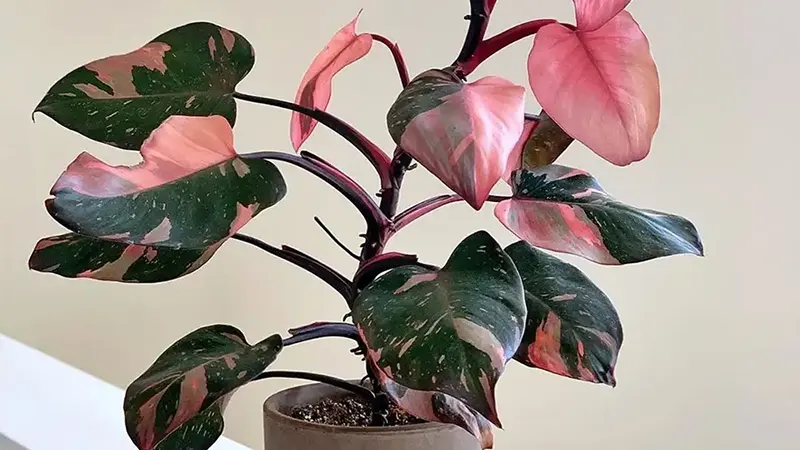
The pink variegation in the Philodendron Pink Princess houseplant is a genetic mutation that can appear as splashes, speckles, or leaves with a half-and-half coloration.
Additionally, to maintain its intense pink coloration, the genus requires bright, indirect light. This plant prefers a moss pole or trellis for support to grow properly.
Key Features of the Philodendron Pink Princess houseplant
- The variegated leaves add a pop of color with their pink, green, and burgundy tones, ensuring a colorful flair to any landscape.
- The pink princess philodendron plant is perfect for small spaces due to its compact and upright growth.
- Philodendron Pink Princess plants have air-purifying traits that boost the indoor air quality.
- If the leaves of this plant are ingested, then it can cause stomach irritation.
- Since the leaves of this genus are toxic, keep the plant away from children and pets.
Care Guide, Advantages, and Disadvantages of the Pink Princess Philodendron
- Hardiness Zone : Zones 9a-11b (usually grown indoors).
- Light Exposure : Bright, indirect light.
- Soil Type : Well-draining, nutrient-rich, peat-based mix.
- Water Needs : Moderate
Advantages
- Features stunning dark green and bright pink contrasted leaves, making it popular among plant enthusiasts.
- Philodendron Pink Princess care is relatively easy.
- It filters the toxins and helps to improve the indoor air quality.
- They are very adaptable and can be trained to climb a moss pole or allowed to trail.
Disadvantages
- Philodendron pink princess plants can be very expensive due to their rarity and high demand.
- Requires a very high level of bright, indirect light.
- Toxic to cats, dogs, and humans due to calcium oxalate crystals.
- Compared to non-variegated plants, the growth of this genus can be slower.

Daniel Taylor –
This plant brightens up any corner of my home with its vibrant colour.
Edward Black –
A bit slow growing, but so visually appealing.
Robert Maxwell –
Grows best near a bright window. Bright filtered sunlight works wonders for the genus.
Steve Stark –
The pink leaves and the pattern look so stunning, fully worth the hype.
Bob rogers –
The Philodendron Pink Princess was purchased from YourHomify and came in excellent condition. What initially attracted me to this plant was its beautiful pink variegation, but it turns out it’s more impressive when seen with the naked eye.
Andrew –
The Philodendron Pink Princess that I ordered came in great condition and well-packaged. Initially, I was skeptical about purchasing a plant from an online store; however, it all went smoothly, and I love the appearance of its leaves.