
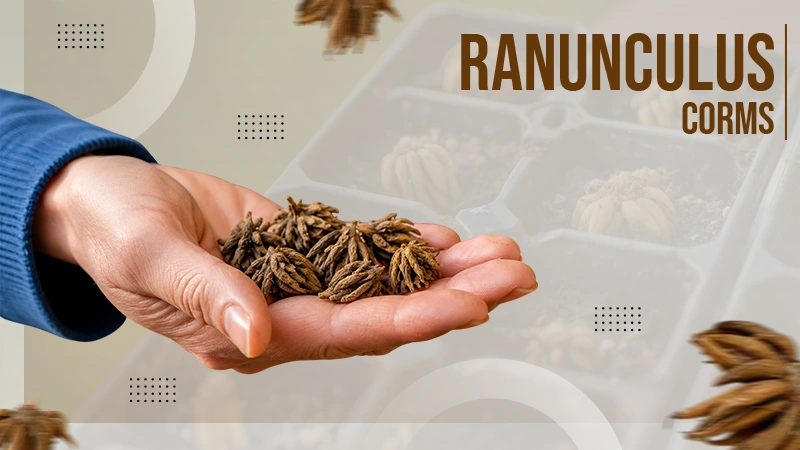
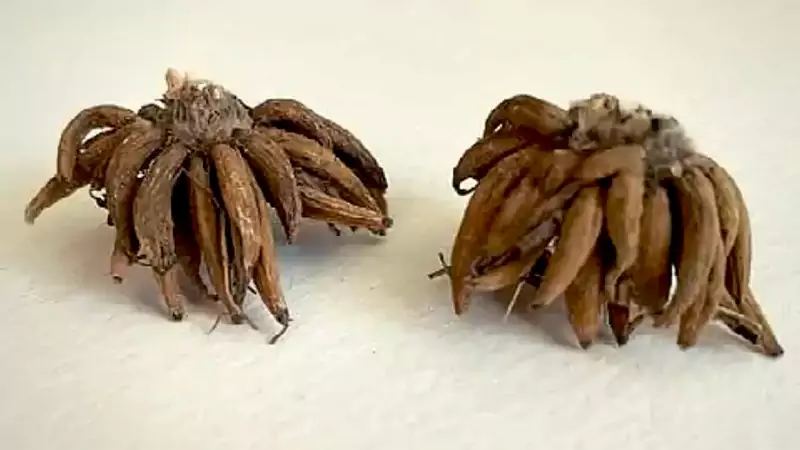
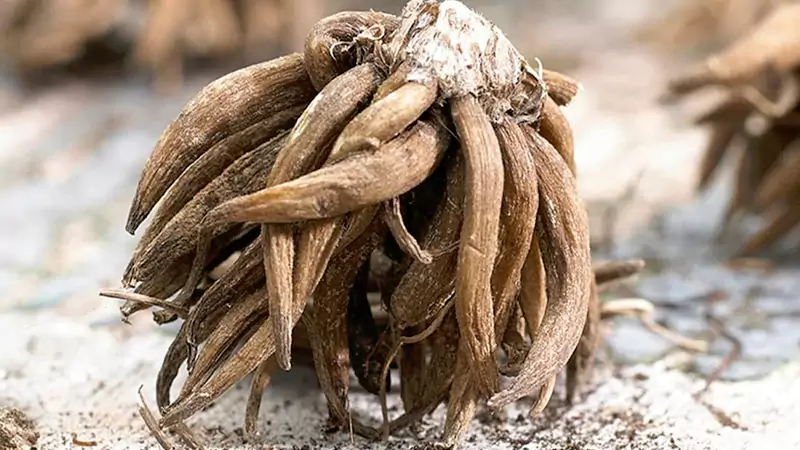


Overview and description of the Ranunculus corms
| Common Name | Buttercup | Maintenance | Low |
|---|---|---|---|
| Native Region | Mediterranean regions and Southwestern Asia | Average Height | 12-24 inches |
| Plant Type | Herbaceous perennials | Average Width | 10-12 inches |
The ranunculus corms are small, claw-like storage organs that grow peony and rose-like flowers in the shade, white, pink, and red. These small corms are easy to plant and grow faster than seeds. Also known as the “Rose of spring”, the ranunculus corms need to be soaked in water for a few days in water before planting, which helps in faster root development. Ideally grown in full sun with consistent watering, these corms are susceptible to rot caused by overwatering.
Key features of the Ranunculus corms
- Ranunculus corms are claw-like storage organs that produce elegant, rose-like flowers that thrive in cooler temperatures, often between 40°F and 50°F.
- Often received in a dry condition, it is advised to soak these corms in water for 2-3 days in water to encourage faster sprouting.
- The ranunculus corms are best planted in autumn in zones 7 and above and in early spring in zones below 6. While they are cool-season flowers, they require direct sunlight to thrive, and extreme winters can make them rot.
- While planting, ensure they are watered throughout the growing season as they can not tolerate dry conditions.
Care Guide of the Ranunculus Corms
- Growing Zone: USDA zones 8-10
- Water Needs: Regular watering
- Soil Type: Well-draining soil rich in organic matter
- Sunlight Exposure: 6-8 days of direct sunlight
- Growth Rate: Slow
Advantages
- The ranunculus flowers last up to 2 weeks in a flower vase.
- Can be planted both outdoors and indoors in containers.
- The growth of the corms is faster than the seeds, with a better yield quality.
- As compared to seeds, the ranunculus corms are easier to grow.
Disadvantages
- The ranunculus corms are sensitive and are susceptible to rot.
- They need a precise temperature to thrive, or else they might die.
- The ranunculus corms are considered toxic for dogs and can be a nuisance indoors.
- While the growth rate is much faster, the ranunculus corms have a high initial cost.



Emma –
The flowers grown from these corms looked elegant in my garden.
Jack –
These ranunculus corms are really easy to plant and were received in the best conditions possible.
Cristina –
The ranunculus corms are easier to grow and have a faster growth as compared to seeds.
Jessie –
I am a beginner and growing ranunculus corms is easy and beginner friendly, both indoors and outdoors.
Jack –
I bought Ranunculus Corms from YourHomify and they arrived nicely packed and in good condition. Excited to plant them and see the colorful blooms in my garden!
John –
Very happy with my Ranunculus Corms purchase from YourHomify. The corms looked healthy when they arrived, and the ordering experience was smooth and easy.