


Overview and description of the rosemary plant
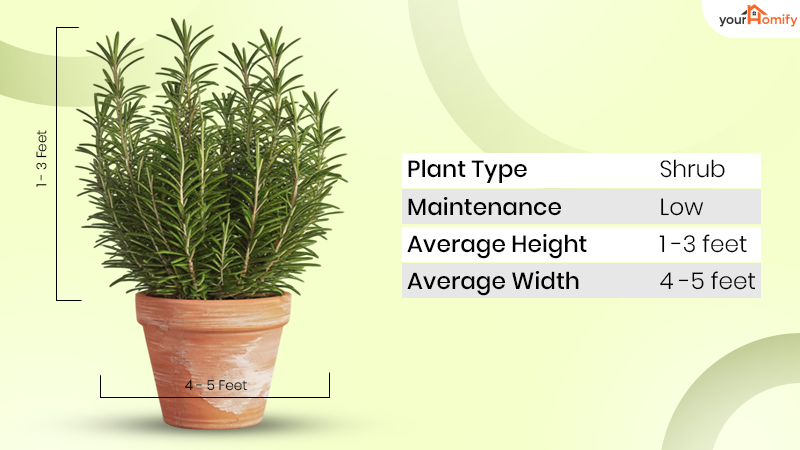
| Common Name | Rosemary | Maintenance | Low |
|---|---|---|---|
| Native Region | Mediterranean regions | Average Height | 1-3 feet |
| Plant Type | Shrub | Average Width | 4-5 feet |
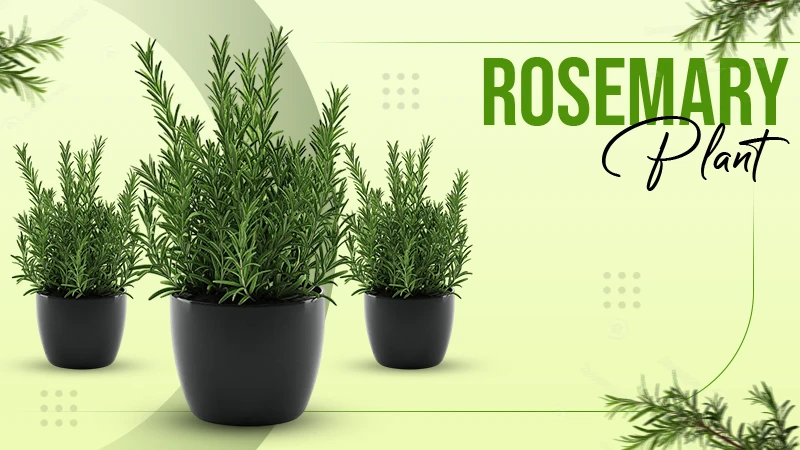
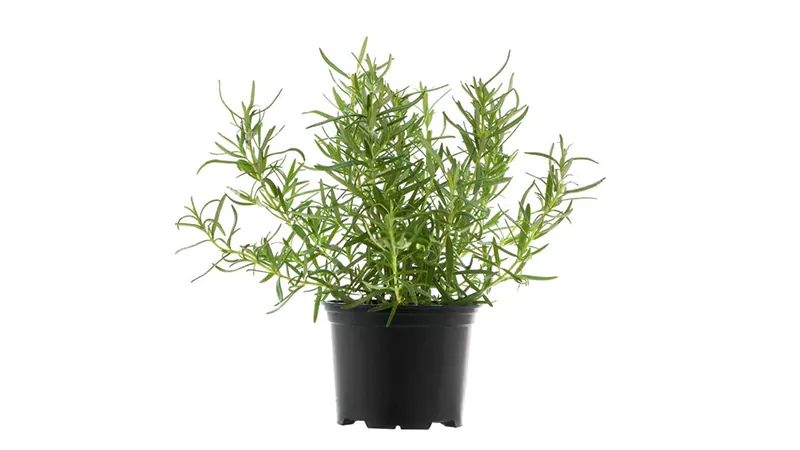
Botanically known as Salvia rosmarinus, the rosemary plant is an easy-to-care-for culinary herb that is best planted in spring. It features green needle-like leaves and white flowers, which are used to make tea and extract oil.
These extremely low-effort plants have a camphor-like scent and are very ecologically beneficial due to their pollinator-attracting and pest-repellant abilities.
Key features and benefits of the rosemary plant
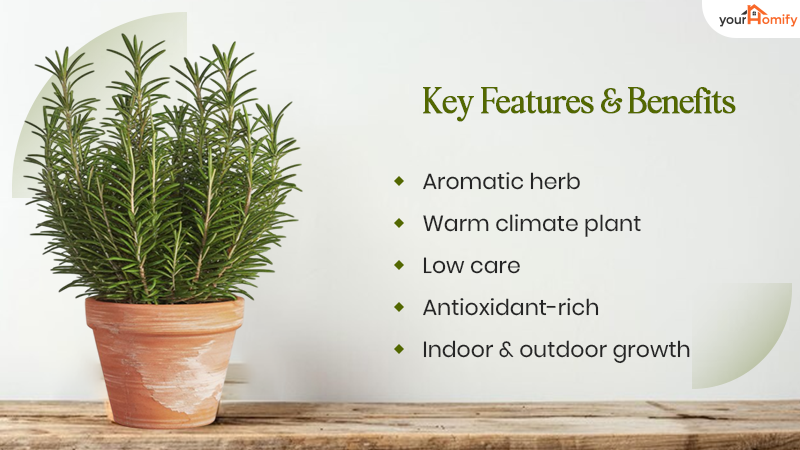
- The rosemary plant is a perennial shrub from the mint family that is planted for its rich aroma and culinary uses.
- Also popular as a medicinal herb, rosemary leaves are credited with antioxidant properties and are known to help with memory, concentration, and skin health.
- It grows green needle-like leaves and white flowers, which cannot tolerate cold temperatures.
- This perennial herb is drought-tolerant once established and can survive on minimal watering as well. Hence, low care would not kill the plant.
- Rosemary is a versatile plant, as it can be grown indoors in pots and outdoors as ground covers and garden hedges.
Care guide for the rosemary plant
- Growing Zone : USDA zones 8-10
- Water Needs : Moderate (drought-tolerant once established)
- Soil Type : Well-draining sandy loamy soil
- Sunlight Exposure : Full sun
- Growth Rate : Slow
Advantages
- The rosemary plant is drought-tolerant and can survive with little watering as well.
- This plant acts as a natural pest control, as the insects do not enjoy its strong aroma.
- Rosemary is ecologically beneficial, as it attracts various pollinating insects to the garden.
- The rosemary plant has antioxidant and antimicrobial properties.
Disadvantages
- Rosemary is not cold-hardy and cannot tolerate anything below 13°C and, hence, dies back in the winter.
- The rosemary leaves have adverse side effects if consumed with blood thinners.
- Although uncommon, rosemary can also cause skin allergies in some cases.
- The rosemary plant has a really slow growth rate.



Mary –
The rosemary plant is easy to care for with an aromatic scent.
Olivia –
I received the plant a few days ago, and it looks lovely in my kitchen garden. It is also quite drought-tolerant.
Max Miller –
This rosemary plant is great for gardens, and its aroma helps to repel pests as well.
Nick J –
It has a slow growth rate, but totally worth it, especially due to its fragrant white flowers.
Jordan –
I bought the Rosemary Plant from YourHomify and it arrived fresh and well packed. The plant looks healthy and has settled nicely in my garden. Very happy with my purchase!
Jolly –
Really happy with the Rosemary Plant I ordered from YourHomify. It arrived in good condition with fresh green growth. The whole buying experience was smooth and easy.