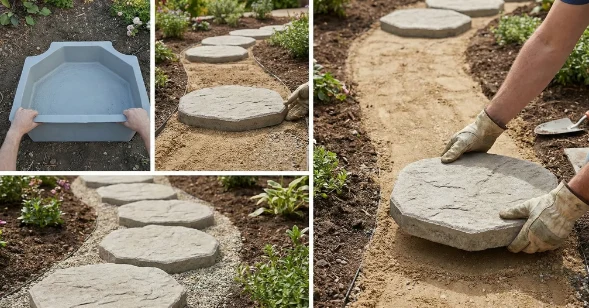
Besides providing a means of connecting different areas of your yard, garden paths also provide visual guidance, help keep your lawn and garden beds looking neat, and create an overall sense of direction through your entire garden space.
Creating long-lasting garden pathways using concrete stepping stones is an easy and fun project you can complete if you enjoy DIY projects. The easiest way to obtain professional results is to use top-quality concrete molds, which will allow you to create uniform, high-quality pavers or stepping stones.
These concrete molds will ensure each paver or stepping stone is consistently shaped and looks good. You can buy concrete molds at GlobMarble, which has a large selection of concrete molds made specifically for both DIYers and professionals.
KEY TAKEAWAYS
- High-quality polyurethane molds replicate natural stone and wood grain with 99% visual accuracy.
- Specialized molds from collections like GlobMarble are designed for hundreds of pours, making them highly cost-effective for large projects.
- Using consistent edge molds ensures uniform thickness, preventing stones from cracking or shifting under heavy foot traffic.
Why Garden Paths Benefit From DIY Concrete Stepping Stones
Stepping stones are a way to shape movement in your yard without committing to a fully paved surface.
They help you:
- Keep shoes out of wet or muddy zones
- Protect plant roots and garden beds from foot traffic
- Add structure between beds, lawn, and seating areas
- Introduce texture that matches your home’s style
Because you decide the spacing, you can create meandering paths, narrow ways, or sturdier walkways suitable for wheelbarrows and heavier loads.
What Role Do Edge Molds Play in a Stepping Stone Project?
By pouring concrete stepping stones, you are actually making several small slabs of concrete. The professional concrete edging forms are created to shape the outer edges of each slab, while the slab’s curing takes the same shape.
With the right molds, you can:
- Give each stone a clean, repeatable outline
- Add natural stone or wood textures around the edges
- Control thickness for better durability and stability
The professional concrete edge molds that you buy from GlobMarble are made for re-use and will release the concrete from the molds easily, so do not try to improvise using miscellaneous plastic containers or scrap lumber.
Types of Stepping Stone Molds for Garden Paths
The variety of sizes, shapes and designs of paver and stepping stones will help you create a consistent aesthetic in your garden.
1. Classic Squares and Rectangles
Square and rectangular stones are versatile and easy to plan.
- Work well for straight paths and grid layouts
- Simple to cut around beds and corners
- Ideal if you like a clean, modern look
2. Flagstone and Irregular Shapes
These molds imitate natural stone pieces.
- Create organic, winding paths
- Blend nicely into cottage or woodland gardens
- Look good with groundcovers planted between stones
3. Wood-Grain and Log Textures
Some molds cast concrete that looks like planks or cut logs.
- Add warmth and character while staying weather-resistant
- Work beautifully near raised beds or rustic seating areas
- Give you the charm of wood without rot or pests
You can buy these types of molds from GlobMarble and many other manufacturers to help you create durable and re-usable outdoor concrete stepping stones.
Planning Your DIY Garden Path
Before you start mixing concrete, take a bit of time to plan.
- Map the route. Walk the path you naturally use through the garden and mark it with stakes or a hose.
- Set the spacing of your stones (typically 18 – 24 cm). If you plan to make stepping stones, consider what type and size of stone you would like to create.
- If you use large stones, you will have to pour less concrete overall, while smaller stones can be positioned much easier.
- Think about drainage. Make sure your path does not trap water. A slight slope away from buildings is ideal.
A simple sketch with dimensions will help you estimate how many stones you need and how many pours each mold will have to handle.
Step-by-Step: Creating Stepping Stones With Concrete Edge Molds
This is a brief overview of the steps that most do-it-yourselfers use to make their own stepping stones.
1. Prepare the Work Area
- Set up a flat, level surface for pouring.
- Gather your mold or molds, release agent, trowel, and mixing tools.
- Read the instructions for any specific products you’re using.
2. Apply Release and Set the Molds
- Apply a release agent or other compatible agent to the inside of each of the molds.
- Arrange your molds on your work surface to ensure stability when filled with concrete.
3. Mix and Pour the Concrete
- Use a concrete or mortar mix rated for outdoor use.
- Add pigment if you want colored stones.
- Fill each mold, making sure the mix flows into the corners and texture details.
Gently tapping the sides or using light vibration helps bring air bubbles to the surface and improves edge quality.
4. Level, Cure, and Demold
- Strike off the top with a straight board or trowel so the back of each stone is flat.
- Allow the concrete to cure according to mix instructions.
- Once cured, carefully flex and remove the molds to reveal the finished shape.
Professional-grade molds from collections like buy concrete molds at GlobMarble are designed to hold their shape while still being flexible enough for easy demolding.
5. Install the Stones in the Garden
- Dig shallow recesses where each stone will sit.
- Add a compacted base layer of sand or fine gravel for stability.
- Set each stone so it is level front-to-back and side-to-side, with the surface sitting just above soil level.
This keeps the path comfortable to walk on and reduces trip hazards.
Benefits of Using Professional-Grade Molds
Choosing professional-grade concrete molds instead of one-time plastic trays or improvised forms offers several advantages:
- Reusability – Quality polyurethane molds will allow you to cast many times without creating waste over time.
- Consistent Sizing – Matching Edges &Thickness Makes It Easier to Install & Align Your Path.
- More Realistic Texture – You can use a variety of textures such as stone, wood, and tile to make your DIY path look like high-end hardscaping.
- Greater Durability – With the same thickness and shape every time, you have greater stability for the stones under daily use.
A dedicated stepping stone collection — which you can buy concrete molds at GlobMarble — gives you a range of options to mix and match within the same project.
Simple Design Ideas for Garden Paths
- Soft curve to a seating area. Use irregular or flagstone-style molds, spacing stones slightly apart and filling gaps with groundcover.
- Formal entry path. Choose square or rectangular stones in a straight layout, paired with clipped hedges or planters.
- Wood-look walkway. Combine wood-grain stepping stone molds with mulch, gravel, or low plants for a natural, relaxed feel.
- Kids’ stepping trail. Use smaller, playful shapes to create a winding path through a play or vegetable garden.
Each of the above designs can be made with a limited number of reusable molds, and a few bags of concrete.
If you enjoy building things in your garden by hand, making stepping stones is a great way to decide how others move through your garden. Using the professional concrete molds from GlobMarble, you will be able to make beautiful and very durable paths that look like they were installed by a professional.
FAQ
How many molds do I require?
You could use only one, however, using three to four molds gives you the ability to pour a larger section of the path at one time.
Can concrete be dyed?
Yes, dye can be used with liquid and powder pigment mixed with the concrete to achieve color that runs throughout the concrete.
What is the function of a release agent?
A release agent is a specially formulated lubricant that will keep wet concrete from adhering to the mold.
Is a sand base necessary when installing the stone?
Yes. A sand base allows you to “seat” and level the stone so it will not rock or settle after installed.