
Most people spend weeks comparing moving companies, but only a few minutes choosing their moving date. That’s a mistake. The time of year you move can influence everything from scheduling availability and building access to traffic, weather, and how much flexibility you have throughout the relocation process.
While finding movers NJ residents can trust is essential, choosing the right time of year is just as important. No matter whether it’s a short or long move, understanding seasonal effects helps you plan smarter, stay organized, and settle into your new home easily.
KEY TAKEAWAYS
- Spring and fall often provide the best balance of weather, mover availability, and scheduling flexibility.
- Summer is the busiest moving season and typically requires the earliest planning and booking.
- Building regulations, parking access, school schedules, and specialty items can influence moving dates as much as seasonal factors.
- The most successful moves are planned around both personal timelines and logistical requirements, not just the weather forecast.
Why Moving Season Matters
Moving often takes more planning than you might think. You may need to reserve elevators, follow condo rules, deal with parking limits or narrow streets, manage closing dates, storage plans, or coordinate with moves to or from nearby states.
The season directly influences moving demand, affecting everything from scheduling availability to how far in advance you’ll need to book your preferred moving date.
The best time to hire NJ movers is when your ideal date, your own schedule, and the company’s availability all match up. That’s why it’s helpful to consider the whole moving process, not just the weather.
When to Start Planning Your Move
Before picking a season, it’s important to set a realistic moving timeline. A full-service move includes:
- Packing and labeling
- Checking your inventory
- Preparing special items
- Planning for storage
- Loading and transporting your things
- Scheduling delivery
- Arranging furniture
- Unpacking
Starting early gives you more room to:
- Compare moving companies
- Evaluate service options
- Coordinate building requirements
- Avoid rushed decisions that can lead to added stress
If you’re moving in the summer, have a large home, are moving far away, have a business move, or need to move special items, it’s especially helpful to plan early. Dates in late June, July, August, weekends, and the end of the month fill up fast. The more complex your move, the more important it is to plan each step before schedules get booked.
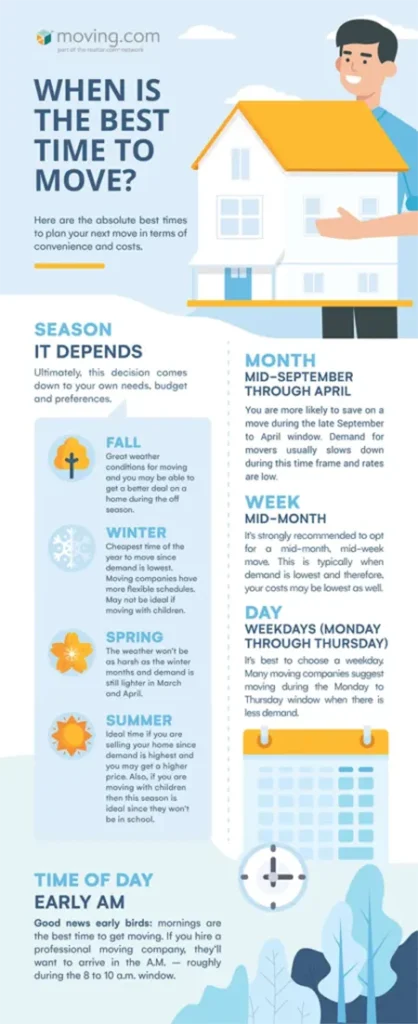
Here’s an infographic on seasons and months for moving:
Moving Factors That Affect Timing
The best date for your move depends on more than just the season or cost. Logistics often decide your schedule before you even think about the weather.
Building Rules
Many apartments, condos, and managed communities have set moving hours, elevator reservations, loading dock rules, or paperwork requirements. Even when your preferred moving company has availability, building regulations may narrow your scheduling options and require additional coordination well in advance.
This is especially common in cities, high-rise buildings, gated communities, and newer apartment complexes. For a full-service move, working with the building early also helps the movers plan packing, elevator timing, loading order, and delivery access more accurately.
Parking Access
Parking is a big issue in busy downtown areas. Some streets have:
- Limited curb space
- Strict parking rules
- Narrow access
- Heavy traffic at certain times
Bad parking access can slow down loading and unloading. It can also affect where the truck goes, how far items must be carried, crew timing, and the order in which things are moved. Checking parking early helps the movers make a better plan.
School and Work Schedules
Families often plan moves around school calendars, childcare, sports, exams, and work. A date that seems free at first may become tricky if it overlaps with a big school event, a work deadline, or travel plans.
For families with children, summer is practical because it doesn’t interrupt the school year. Adults with flexible schedules might prefer spring or fall for better availability and weather. A full-service move can also help you get back to normal faster since packing, moving, furniture setup, and unpacking are all planned together.
Specialty Items
Items such as pianos, antiques, fine art, large furniture, fragile collections, and custom pieces require extra planning. These items often need specialized preparation, equipment, and careful coordination to ensure safe handling throughout the move.
White Glove Moving & Storage is an example of a company that specializes in handling these types of complex relocations as part of larger residential and commercial moves, offering services such as packing, unpacking, storage, long-distance moving, and custom crating for art, antiques, and pianos.
These types of services become especially important when timing, access, and building rules require a highly coordinated moving plan.
Choosing the Right Moving Season by Move Type
Once the main timing factors are clear, it becomes easier to compare each season. Spring, summer, fall, and winter all have different advantages, so the best choice depends on how each season fits your moving schedule and service needs.

Spring Moves
Spring is often considered one of the most practical moving seasons because it combines moderate weather with relatively manageable demand.
March and April Moves
March and April are good months for residents who want more flexible scheduling. Families aren’t yet busy with summer plans, and many movers have better weekday availability than later in the year.
These months are often good for apartment and condo moves, local moves, smaller households, and moves tied to early home closings. They’re also helpful for full-service moves since packing and delivery are easier to schedule before summer gets busy.
May Moves
May often feels like the start of the busy season. The weather is nicer, school is almost out, and many people begin planning summer moves. This makes May a good choice, but it’s important to schedule early.
Late May is especially popular because of Memorial Day weekend. If your move includes packing, storage, special items, or unpacking, try to book May dates before the summer schedule fills up.
Summer Moves
Summer consistently ranks as the most active moving season, making early planning especially important. Families often choose it because school is out, the weather is more predictable, and home-buying is active.
Why Summer Is Popular
Summer is good for families with kids because it doesn’t interrupt the school year. It also gives you more daylight, vacation flexibility, and time to get ready before starting a new school or work routine.
For long-distance moves, summer can also be convenient because people may have more control over travel plans, temporary housing, and delivery coordination.
What to Know About Peak Season
Busy summers require planning. Late June, July, and August can fill up quickly, especially for weekend moves. Due to lease time coinciding, end-of-month dates are also in high demand.
If summer is your only option, being flexible can help. Choosing a weekday, a mid-month date, or booking earlier may make it easier to coordinate packing, loading, storage, delivery, and unpacking.
Fall Moves
Many homeowners consider fall one of the most favorable times to move because it offers a balance of:
- Comfortable temperatures
- Reduced demand
- Improved scheduling flexibility
September Moves
September can still be busy, especially early in the month, because some families try to finish moving before school routines begin. However, compared to July and August, there is usually more flexibility.
September works well for people who want summer-like weather without the same peak-season pressure. It can also be practical for apartment moves after lease turnover periods.
October and November Moves
October and early November are often great months to move. Temperatures are cooler, movers may have more availability, and households can settle in before the holiday season starts.
Fall is especially good for larger residential moves because the weather is comfortable for full-day service. It is also a good time for commercial moves, since many businesses want to finish changes before year-end planning gets busy.
Winter Moves
Winter is typically the slowest-moving season, often giving customers greater flexibility when selecting preferred dates and times.
Benefits of Winter Moving
Winter moves can work well for people who are not tied to the school calendar. They are also useful for apartment moves, downsizing, office relocations, or long-distance moves that need careful scheduling outside peak demand.
For full-service moves, winter availability may also make it easier to coordinate packing, loading, storage, delivery, and unpacking with fewer scheduling conflicts.
Winter Challenges
The biggest concern in winter is the weather. Snow, ice, freezing temperatures, and early sunsets can affect access, parking, sidewalks, and loading areas. In some towns, narrow streets and limited parking can become more difficult after snowfall.
Winter moves need extra attention to floor protection, safe walkways, timing, and delivery access. If your move involves storage, multiple stops, or specialty items, planning the details is even more important.
A Better Moving Date Starts With Better Timing
There is no single best season for every move. The right time depends on your household needs, building requirements, work and school schedules, moving complexity, and how much flexibility you have with your timeline.
Spring offers balance, summer is convenient for families, fall often brings good availability and pleasant weather, and winter can work well for flexible schedules. The best choice is the season that supports your whole move, from planning to unpacking.
FAQs
How long does a full-service move usually take?
A full-service move may take one day or several days, depending on the home size, distance, packing needs, building access, storage timing, and specialty items. Larger residential moves and long-distance relocations often include separate packing, loading, delivery, and unpacking stages.
Should professional packing be scheduled before moving day in NJ?
Yes, professional packing is often scheduled before moving day for larger moves, fragile belongings, specialty items, or full-service relocations. Packing in advance helps items stay organized, labeled, protected, and ready for efficient loading and delivery.
When should storage be included in a moving plan?
Storage should be included early if there is a gap between move-out and move-in dates, a delayed closing, renovation work, downsizing, or staged delivery. Planning storage ahead of time helps coordinate pickup, holding, and final delivery without disrupting the rest of the move.
How do specialty items affect moving dates?
Specialty items can affect scheduling because they may require custom packing, crating, special equipment, or additional handling time. For moves involving art, antiques, pianos, glass pieces, or oversized furniture, these details should be discussed during the estimate stage so the moving date supports proper preparation.
How can full-service movers help with settling in after delivery?
Full-service movers can help make move-in day more organized through room-by-room delivery, furniture placement, unpacking support, and packing material removal. When these services are planned, the new home or workspace can become functional much sooner.