


White tulips stand out for their fresh, sophisticated look and versatile appeal. Whether planted in garden beds, containers, or used for display in floral arrangements, they bring a sense of calm and elegance. Native to the mountainous regions of Central Asia, these alluring blooms are known for their low-maintenance nature and ability to withstand harsh climate conditions.
In this guide, let me walk you through the physical features, historical relevance, meaning, symbolism, and care guide of the flower.
Quick Answer
White tulips are surreal spring flowering bulbous plants known for their classic appearance and aesthetic value. They are easy to care for and are used to express emotions such as forgiveness, honor, respect, purity, and innocence.
What is a White Tulip? Features and Historical Significance
White tulips are known for their timeless elegance and are one of the most cherished spring blooms. Originating from Central Asia, these species gained popularity during the early 16th and 17th centuries in the Netherlands and some parts of Europe.
Today, tulips are available in a wide range of colors and are used on many different occasions for gifting and floral arrangements. These are spring-flowering bulb plants valued for their white, crisp, cup-shaped blooms, unbranched stems, and broad basal leaves.
White tulips gained popularity because of the deep symbolic meanings they carry. In the language of flowers, these are used to convey messages of respect, honor, and hope for a bright future together. These are particularly utilized on occasions like funerals, memorials, religious events, or wedding anniversaries.
| White Tulips at a Glance | |
| Botanical Name | Tulipa spp. |
| Plant Height and Width | 12-24 inches tall and 4-6 inches wide |
| Native Range | Central Asia, the Middle East, and Southern Europe |
| Hardiness Zone | USDA Zones 3-8 |
| Bloom Time | Early to late spring (March-May) |
| Growth Habit | Upright bulbous perennial |
| Toxicity | Toxic to pets and humans if ingested |
| Symbolism | Purity, Innocence, Forgiveness, Fresh Start |
| Primary Uses | Garden borders, flower beds, and bouquets |
Meaning and Symbolism of White Tulips
White tulips are broadly associated with forgiveness, purity, and new beginnings. Their elegant and calming appearance makes them an excellent flower to celebrate somber occasions.
- Forgiveness and Apologies: White tulips are often used to convey sincere regret and are a gentle way to say “I am sorry” or ask for a fresh chance.
- Respect and Honor: In many distinct cultures, these blooms are often gifted to convey respect, appreciation, or honor someone’s personality.
- Purity and Innocence: White tulips are the ultimate floral expressions of purity and innocence. They are frequently used at religious events such as christenings and baptisms.
- Sympathy and Peace: Because of the peaceful and untainted shade of the flower, these are also used to represent serenity and clarity. These are widely utilized for funeral arrangements and condolences.
5 White Tulip Varieties for Your Garden
Some of the most appreciated white tulip varieties are Tulipa Calgary, Tulipa Maureen, Tulipa Mondial, Tulipa Mount Tacoma, and Tulipa Purrissima. These perennial flowers are known for their crisp petals, soft but sturdy stems, and aesthetic appeal.
Let us take a close look at some of the most popular white tulips and understand what makes them a standout spring-blooming flower.
1. Tulipa Calgary
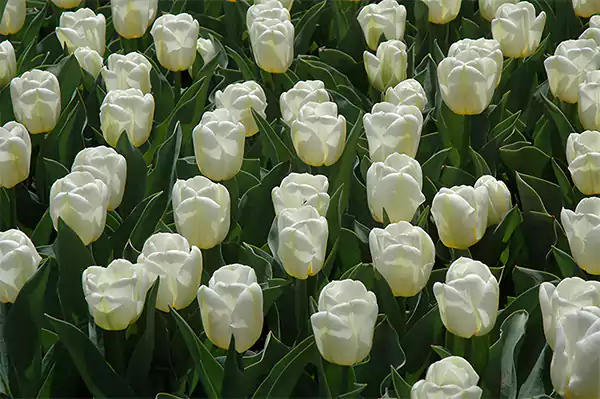
- Botanical Name: Tulipa ‘Calgary’
- Native Range: Central Asia, Iran, and Anatolia
- Hardiness Zone: 3-8 USDA
Mainly found in thin mountain soil, meadows, or slopes, Tulipa Calgary is one of the most attractive white tulip cultivars. It grows up to 10 inches tall and produces ivory-white flowering bulbs. Ideal for fall planting, this flower requires minimal care and can be easily grown in containers, garden beds, or rock gardens.
2. Tulipa Maureen
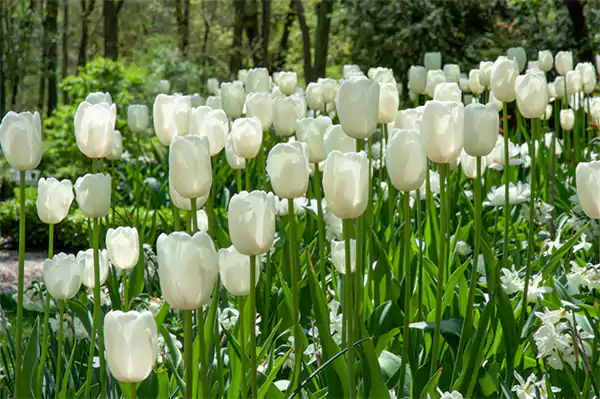
- Botanical Name: Tulipa ‘Maureen’
- Native Range: Central Asia, Iran, and Anatolia
- Hardiness Zone: 3-8 USDA
Tulip Maureen is an impressive flower that bears goblet-shaped blooms, which are pure white as marble and turn ivory as they mature. As per the Royal Horticultural Society, this upright bulbous perennial blooms in late spring and is ideal for patio, cottage gardens, garden edging, cut flowers, and container plants. It performs best in full sunlight and is an easy-to-grow species.
3. Tulipa Mondial
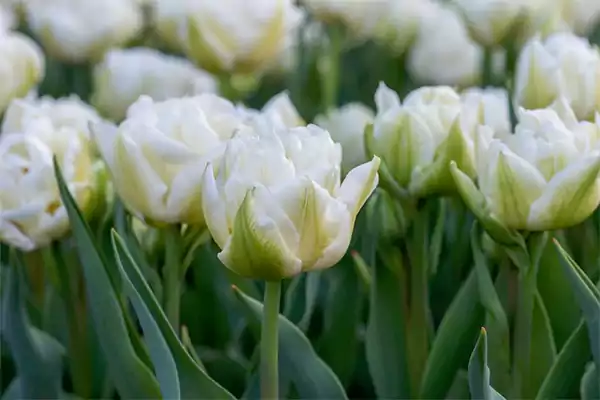
- Botanical Name: Tulipa gesneriana ‘Mondial’
- Native Range: Central Asia, the Mediterranean, and Turkey
- Hardiness Zone: 3-8 USDA
The Tulipa Mondial is a striking early-blooming flower that produces large, peony-like blossoms with ruffled petals. It grows up to 8-12 inches tall and adds an instant flair to any garden space.
For a high-contrast, modern look, dark pink or black tulips are typically paired with this. One of the most exotic-looking white tulips, Mondial, is highly prized as a cut flower for bouquets.
4. Tulipa Mount Tacoma
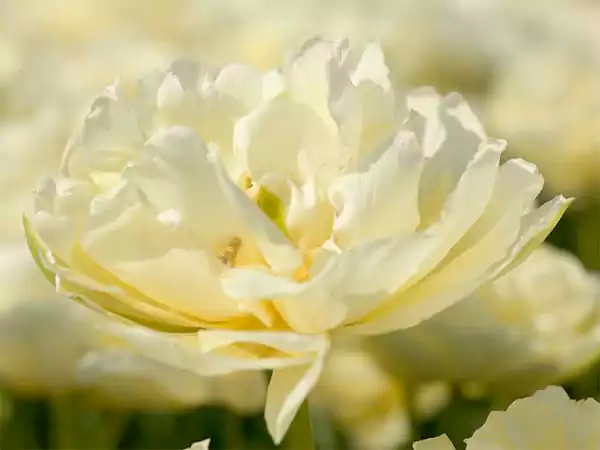
- Botanical Name: Tulipa ‘Mount Tacoma’
- Native Range: Central Asia, the Mediterranean, and Turkey
- Hardiness Zone: 3-8 USDA
This perennial bulb is a late-blooming (typically late April into May) variety that features off-white petals with butter yellow lining on the edges. Its dense layers resemble a peony or clematis.
Unlike other species, Tulipa Mount Tacoma thrives best in afternoon shade, and its blossoms tend to last longer.
5. Tulipa Purrissima
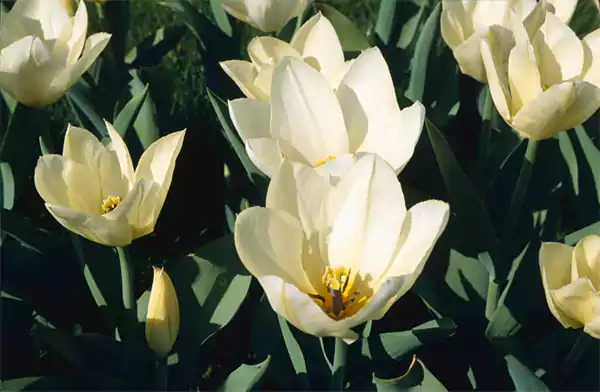
- Botanical Name: Tulipa fosteriana ‘Purissima
- Native Range: Mountainous region of Central Asia
- Hardiness Zone: 3-8 USDA
The Tulipa Purissima is better known as the White Emperor and is an award-winning white tulip variety that features ivory-white blossoms with a creamy-yellow center.
It blooms typically from early to mid-spring and grows up to 16-18 inches tall. I like the fact that the stem of this genus is quite sturdy and can tolerate a wide range of climatic conditions.
How to Grow White Tulips at Home?
Growing classic white tulips is almost similar to growing any other tulip variety. It is ideal to plant these perennial bulbs in late autumn to early winter (November to December) as they usually require a cold dormancy period.
Follow these steps to witness healthy, flourishing blooms in your courtyard.
Step 1: Select the tulip bulbs that have a strong, firm base. Make sure they do not have soft spots or molds.
Step 2: White tulips grow best in abundant sunlight. Choose a spot where the blooms can receive at least a minimum of 6-8 hours of direct sunlight.
Step 3: It is ideal to plant the bulbs in permeable, fertile soil that has a pH level between 6.0 and 7.0.
Step 4: Always plant the bulbs in holes that are around 6-8 inches deep and ensure to place the pointed end facing upward. Make sure to place them 4-6 inches apart for proper air circulation.
Step 5: Water the bloom immediately so that the bulbs can settle down, but do not overwater, as it can make the soil soggy and cause root rot.
YourHomify Tip
Applying a balanced fertilizer during early spring works best for white tulips. Make sure to follow the instructions written on the packet. Do not overfeed the plant with chemicals, as it can kill the leaves and cause root rot.
Care Guide for White Tulips
White tulips are known for their low-maintenance qualities. Here are some tips and tricks that I personally followed to grow these perennial bulbs.
1. Growing White Tulips in the Garden
| Sunlight Requirement | 6 hours of direct sunlight. |
| Soil Type | Permeable, loamy, and fertile. |
| Soil pH Level | 6.0-7.0 |
| Watering Schedule | Consistent during the initial growing years |
| Temperature | 7°C- 18 °C is the ideal range |
| Fertilizer | Balanced NPK fertilizer in the ratio 10:10:10 |
| Spacing | 4-6 inches apart from each other |
| Pests and Diseases | Aphids, slugs, snails, bulb mites, etc |
2. When Stored in a Vase
White tulips typically last in a vase for 5-7 days; if given proper care, they can also thrive for 10-14 days. Whether you plant the homegrown bulbs or store-bought ones, care tips for cut flowers remain the same.
- Cut the stems at a 45-degree angle and place them in a fresh jar of water. Consider using cold water, as these blooms grow best in cold dormancy.
- Change the water every two days. I usually remove or trim off all the submerged leaves to avoid any kind of fungal infections.
- It is beneficial to place the stem cutting near a north-facing window to avoid direct sunlight, as this may scorch the leaves and young petals.
Conclusion
To sum up, one can say that white tulips are known for their enigmatic appearance and robust growth rate. They symbolize forgiveness, remembrance, fresh beginnings, and innocence. With a wide range of options, these are often used for gifting or floral decor and are highly admired by both experienced and novice plant lovers.
Adding a fresh flair to any landscape, white tulips are mainly added for their ornamental value, aesthetic appeal, and easy-to-grow qualities. Whether you are planning to send a message of deep regret or wish to celebrate a fresh chapter, incorporating white tulips can be an excellent choice.
FAQs
What is the meaning and symbolism of white tulips?
White tulips are primarily associated with purity, innocence, apology, and renewal. Because of their calm and elegant appearance, they are used to convey sincere messages.
Are white tulips used to express a romantic gesture?
Beyond forgiveness and calmness, many cultural traditions used white tulips to convey romance and everlasting love. The blooms are often linked to romantic gestures and respect.
What are the growing needs of the white tulip?
Just like any other tulip variety, white tulips grow best in abundant sunlight. They need moderate watering and a permeable soil base for ideal development. Adding fertilizers and organic compost to the soil can help them flourish.
What color of tulips means “I love you”?
Red and pink tulips are mainly used to express emotions like love, friendship, affection, and admiration. These are often used on occasion, like anniversaries or Valentine’s Day.
What is the significance of gifting 9 tulips?
Gifting 9 tulips universally symbolizes eternal love, deep affection, well-wishes, happiness, joy, enthusiasm, and care.
Best White Tulips to Grow – BBC Gardeners Magazine



Tulip Colors: Meaning, Symbolism & Popular Varieties
[…] White Tulips are cherished for their simplicity and elegance. They represent peace, purity, sincerity, and calmness. Some also use them to express honesty, forgiveness, and emotional clarity. The snow-white petals of the flower are associated with innocence or serious emotions like condolences. […]