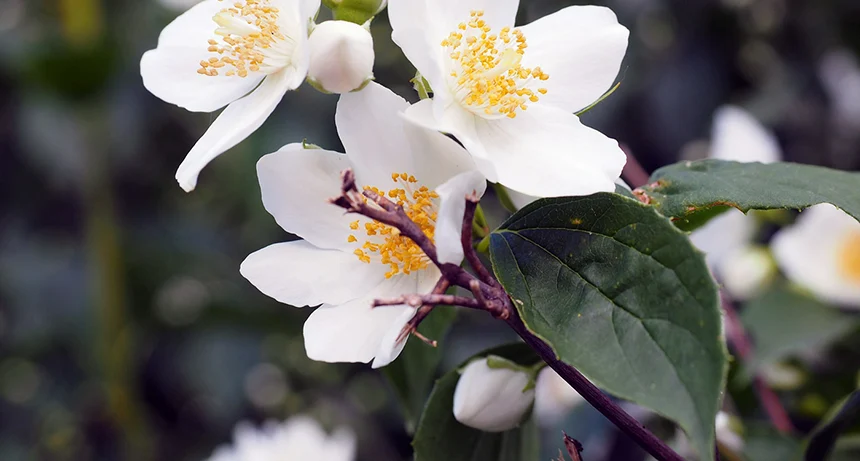
Syringa, a popular flowering shrub, is the Idaho state flower. It was adopted as the official floral emblem by the western United States in 1931. At first glance, the bloom may seem like any other wild blossom, but this spring flower carries deep meaning and rich historical significance.
The sturdiness and ability of the flower to thrive in a variety of climatic conditions make it even more appealing. Many native settlers appreciate the genus for its elegant appearance. As I started exploring more about this shrub, I quickly understood why it was chosen as the state’s official flower.
Moving further, jump into this immersive blog and discover its heritage, meaning, symbolism, ideal growing conditions, and some astonishing facts that make it all the more special.
Quick Answer
The Idaho state flower is the Syringa, a native flowering shrub known for its fragrant, citrus-scented white blooms. It was officially designated as the state symbol in 1931, and grows naturally throughout the rugged landscape of the region.
What is the Idaho State Flower?
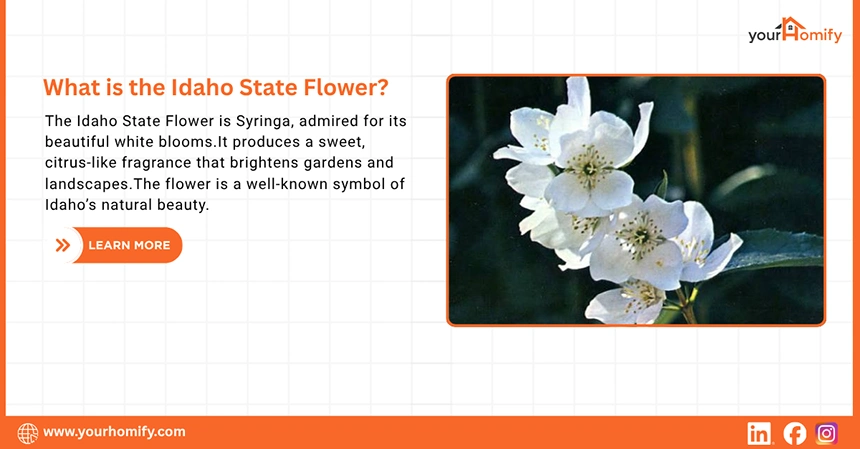
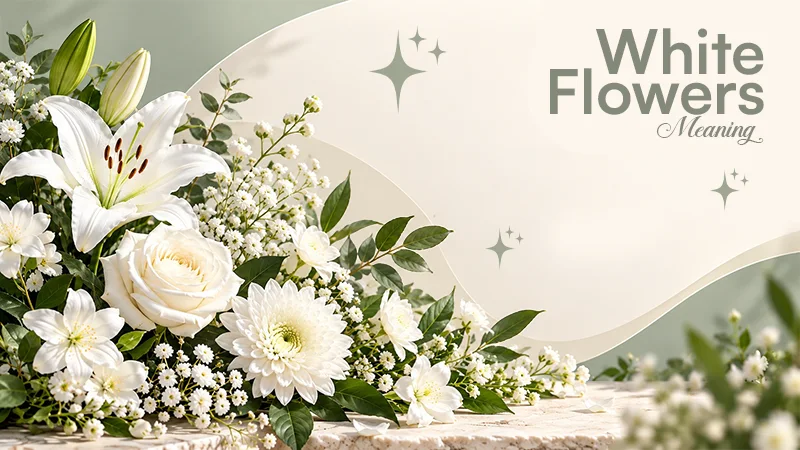
Whenever I think of the Idaho state flower, the beautiful Syringa comes to mind. It is scientifically called Philadelphus lewisii, and some of its common names are Mock Orange or Lewisii Mock Orange. According to official records, the species inherited its title in 1931. I personally find the bloom charming because of its delicate white petals and sweet orange-like fragrance.
The Syringa flower naturally grows across many woodlands and hilly areas of Idaho. It can thrive in harsh conditions and rugged landscapes, which makes it a fitting symbol of resilience and elegance. Many native settlers of the region used parts of the plant for distinct purposes; therefore, it is also one of the most appreciated botanical marvels of Idaho.
Botanical Profile and Plant Classification of the Syringa Flower
Syringa, according to the United States Department of Agriculture, is an ornamental flowering shrub with deciduous characteristics that is native to the Southeastern European region and certain areas of temperate Asia. The flowers on this plant have a strong fragrance and are typically white in color. They also have oval-shaped leaves that are green in color and arching stems.
| Botanical Features | Details |
| Plant Kingdom | Plantae |
| Division | Magnoliophyta |
| Class | Magnoliopsida |
| Order | Rosales |
| Family | Hydrangeaceae |
| Genus | Philadelphus |
| Plant Type | Deciduous Shrub |
| Flower Color | White |
| Blooming Season | Late Spring to Early Summer |
| Mature Height | 4-12 feet |
Historical Significance of the State Flower of Idaho
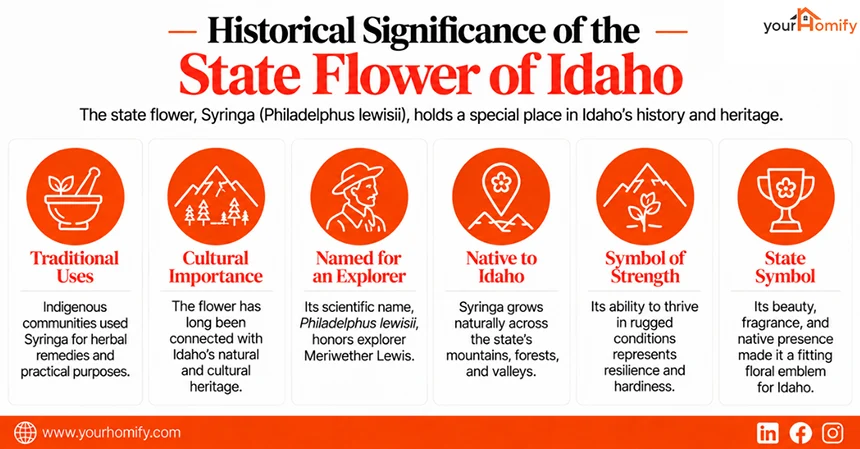
Before Syringa became Idaho’s state flower, it was appreciated by native people for its uses in their daily lives. The petals were used to make herbal teas that helped reduce inflammation and had antioxidant properties. The aromatic fragrance of Syringa was used in home diffusers for aromatherapy, which helps with stress.
The Idaho flower is more than just a pretty bloom. It has deep historical significance and is closely tied to the state’s cultural heritage. Furthermore, its scientific name honors one of America’s most famous explorers, Meriwether Lewis, who documented the genus on his expeditions.
But there is another reason why many people thought this floral symbol would perfectly represent the state. The Syringa grows naturally across mountains, forests, and valleys in Idaho. When I did my own research on the history of Syringa I was amazed at how such a delicate-looking bloom thrived in these rugged areas of the state. It truly is a symbol of strength and hardiness
When and How to Grow Syringa Flower?
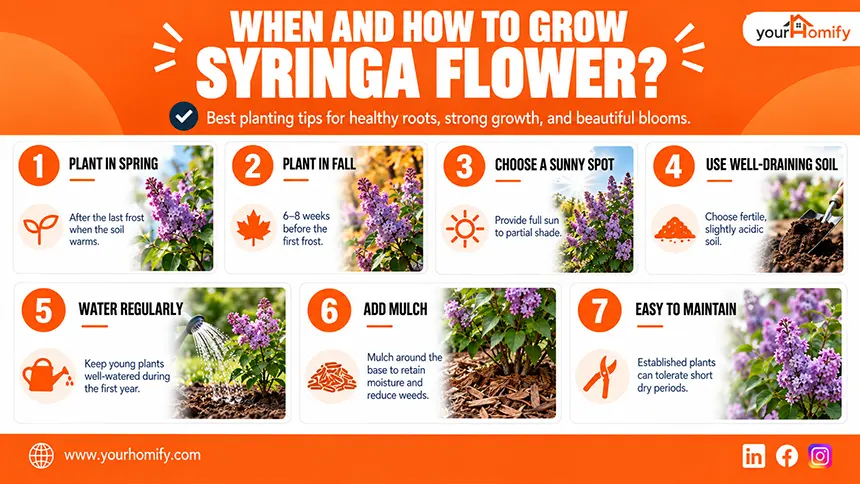
Philadelphus lewisii is highly valued for its fragrant white bloom and minimal care needs. If you are planning to add it to your home garden, planting it at the right time and providing the ideal growing conditions helps in maintaining the overall health of the bloom.
The ideal time to plant a Syringa shrub is:
- Spring: Once the frost season has passed and the soil begins to warm up.
- Fall: Around 6-8 weeks before the first frost is expected, so that the roots can establish properly.
Both seasons are suitable for the bloom to grow and flourish, as they provide the perfect temperature, enabling the roots and species to settle.
Moving further, here are some simple yet practical growing tips that I personally followed while planting this botanical marvel in my front yard.
- Pick a Sunny Spot: Syringa grows best in full sunlight to partial shade. Planting them in bright direct light helps in producing more flowers.
- Use Well-Draining Soil: The shrub can adapt to different types of soil but prefers well-draining, moderately fertile, and slightly acidic soil.
- Water During Establishment: Water the seeds or the transplanted sapling regularly during the first year. Once established, it can also tolerate short dry spells.
- Mulch Around The Base: This has helped me extremely during the frost season. Add a layer of organic mulch to retain the moisture and reduce weed growth.
In my opinion, the Idaho state flower can be a great choice for gardeners who want a beautiful flowering shrub without much hassle.
Interesting Facts About The State Flower of Idaho
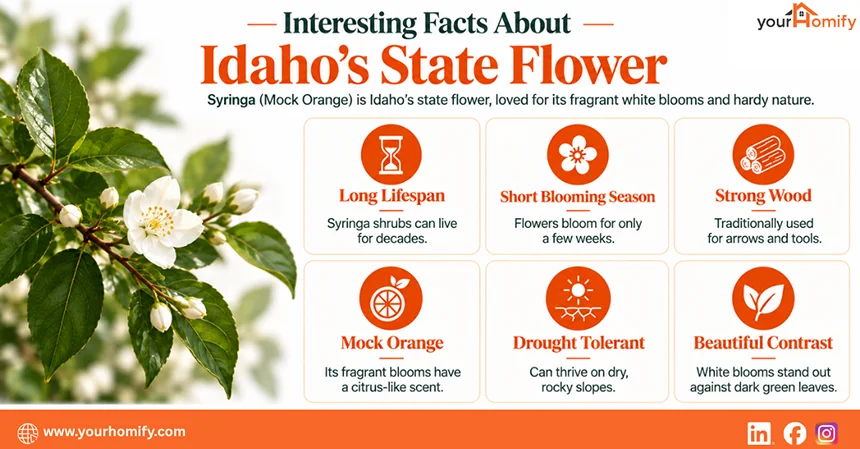
The state flower of Idaho may look like a simple white flower, but as I explored more about the genus, it has some astonishing facts that make it even more unique. Let us take a quick look at some of them for your reference.
- Although a healthy Syringa shrub can thrive for decades with proper care, its flowering season lasts only for a few weeks.
- The wood of the Idaho flower was used to make arrows, tools, and other useful household items due to its sturdiness.
- Syringa was also named as Mock Orange because the bloom had a strong citrusy fragrance that resembles orange.
- While most of the shrubs started wilting, Syringa was a rare flower that thrived on slopes and rocky hillsides and was able to handle dry conditions better than many flowering shrubs.
- The white blossoms and glossy dark green leaves create a stunning contrast in many landscapes. Many garden enthusiasts added this to enhance the aesthetics of their garden space.
Concluding Remarks
Syringa or Philadelphus lewisii, has so many layers beyond being the official state flower for Idaho. As you learn more about it, I believe that you will see a true connection to the state in which it was found. The botanical features and symbolic meanings of Syringa or Philadelphus lewisii, combined with the specific growing requirements that are needed to keep them healthy, create a plant that is truly unique.
I think it’s wonderful that despite living in very harsh environments, this beautiful white flower continues to thrive and show pride in its origins. Whether you find it in nature or in your own yard, it brings awareness of the natural beauty of Idaho, as well as an appreciation of its history.
Frequently Asked Questions
What is the Idaho state flower and state bird?
The Idaho state flower is Syringa, and the state bird is Mountain Bluebird (Sialia currucoides).
What plant says “I love you”?
Roses are typically considered the classic flowers representing love and affection, but some other blooms are Hoya Kerrii, Anthurium, and the Sweetheart plant.
What does the state flower of Idaho symbolize?
The floral emblem of the state represents purity, resilience, fresh beginnings, and adaptability.
Where does the Syringa grow?
The Syringa flower grows well in areas with abundant sunlight and a permeable soil type. Moderate watering is also needed for optimal development of the bloom.
What is Idaho’s state bug?
The monarch butterfly was officially adopted as the state bug in 1992.
- Western Syringa in the Landscape – Utah State University
- What is the state flower of Idaho – World Atlas