Anthurium is a tropical plant that prefers bright, indirect sunlight and consistent watering. This genus of flowering plant is best grown near an east-facing window and with a humidifier for constant humidity.
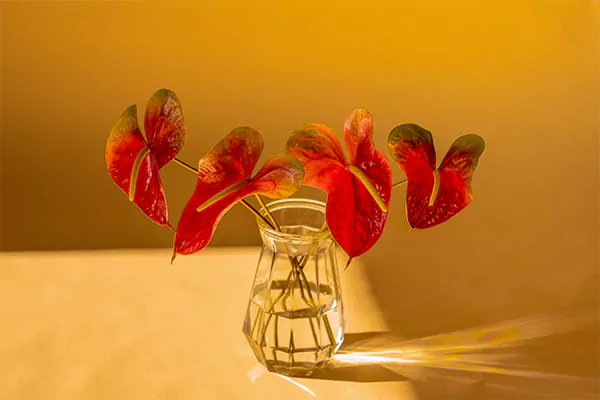
Also known as the flamingo flower, Anthurium produces unique heart-shaped blooms consisting of a colorful spathe and a tail-like spadix covered with tiny flowers.
In this guide, you will learn how to maintain anthurium plants, including sunlight, watering, soil, propagation, and common mistakes.
Quick answer
Anthurium care involves providing the plant with bright indirect sunlight, consistent watering, high humidity, warm temperatures, a porous soil mix, and monthly feeding. Water the plant once a week after the soil has completely dried out. It benefits from a monthly feeding of high-phosphorus, balanced, water-soluble fertiliser.
Essential Anthurium Care Requirements for Healthy Growth
Anthurium is a tropical plant that thrives in bright indirect sunlight, with 60-80% humidity, consistent watering, monthly plant feeding, a well-draining soil mix, and warm temperatures. These low-maintenance indoor plants prefer loose, well-drained soil due to their epiphytic growing nature.
Take a look at the following anthurium plant guide for proper maintenance of these red flowers:
1. Sunlight Requirements
The anthurium plants prefer indirect sunlight for 6-8 hours, which is best achieved near an east-facing window. It provides morning sun exposure and shade from the afternoon heat, which can scorch the leaves. Make sure the plant is not placed in a completely shaded area, as it will make the plant leggy.
If you have planted them outdoors, place them in an appropriate, partially shaded area or use a garden shield for protection. A balance between partial sunlight and shade should be maintained throughout the growing season.
2. Watering
These summer flowers are tropical plant species that require consistent moisture due to their natural growing requirements. I use the soak and dry method, which involves watering until the soil is moist and then letting it dry before watering again. While there is no fixed quantity, ½ cup of water weekly is perfect for anthuriums.
Note that the anthurium plant does not like damp soil, as it leads to root rot. Always check the soil moisture level before watering again to avoid waterlogging.
3. Potting Soil Mix
An orchid soil mix is preferred for the anthurium plant because both are epiphytic plants and prefer a well-draining, permeable soil. These low-light plants have a fleshy root system that cannot tolerate moist soil.
Either purchase an orchid soil mix or prepare one on your own using humus, peat moss, and sand. It improves aeration and lets the soil breathe, reducing the chances of root rot.
4. Fertilising Requirement
The best fertilizer for anthurium plant care is a water-soluble, balanced plant food with an NPK ratio of 20:20:20. A balanced fertilizer is always best for indoor plants. A high-phosphorus plant food of 11:35:15 or 20:7:20 is also really beneficial for the anthuriums because it encourages strong root and flower development.
While they are considered heavy feeders, experts suggest moderate feeding to reduce the chances of root burn. According to BBC Gardeners World, ideally, these tropical plants should be fed with the liquid fertilizer every 3-4 weeks, that is, every third watering.
5. Temperature and Humidity
Maintaining an ideal temperature between 18 and 27°C is the most important step in the anthurium plant care guide. Since it is a tropical plant, it thrives in warm temperatures and up to 60-80% humidity.
To provide the plant with the right amount of humidity, either place a humidifier or a pebble tray filled with water near the plant. Make sure they are not placed near AC or heating vents, as it can scorch the plant leaves.
How to Plant, Repot, and Propagate the Anthurium Plant
Planting in the right pot with appropriate growing requirements provides the right foundation for a healthy plant. Repotting and propagation, on the other hand, ensure the plant is adjusted and replanted as it matures to avoid suffocating roots.
Take a look at the 3 crucial Anthurium care guide steps:
1. Planting Anthurium in Pots
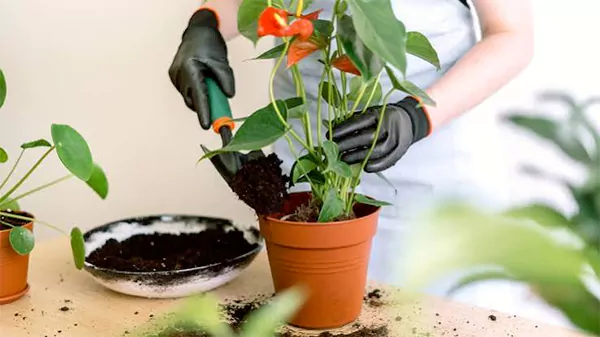
An anthurium plant is best planted near an east-facing window in a terracotta pot with enough drainage holes. They have a shallow root system; therefore, a deep pot will not benefit them. Deep pots have the ability to retain moisture, which in this case can cause root rot.
The best potting mix for anthurium is an orchid soil mix with humus, peat moss, and coarse sand. It provides appropriate aeration and drainage, necessary for the plant’s growth.
Step 1: Take a planting pot with drainage holes and fill it with the soil mix.
Step 2: Now take the anthurium root ball/potted plant from the container.
Step 3: Fill it back with the soil and pat well to ensure there are no air pockets.
Step 4: Water the plant thoroughly until the soil is evenly moist.
Step 5: Place the plant near an east-facing window for bright, indirect sunlight.
2. Repot the Anthurium Plant
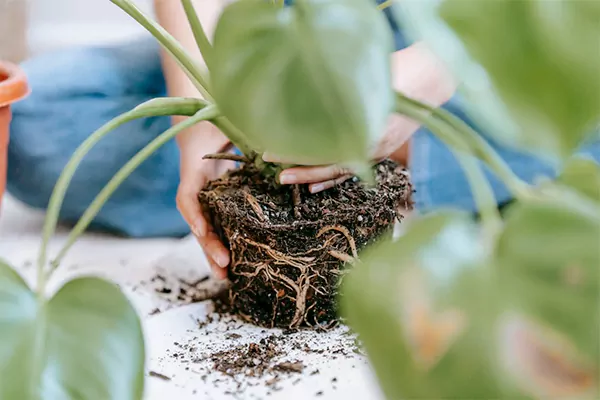
The anthurium plant is best repotted every 2-3 years. Repotting is best done to provide the plant roots adequate space to spread, which is limited in the original pot as the plant matures.
Here are simple repotting steps for the anthurium plant:
Step 1: Hydrate the plant 1 day before repotting to prevent transplanting stress.
Step 2: Gently remove the plant from the pot and remove excess soil from the root ball.
Step 3: Now, take a 2-inch larger pot and fill it up with a similar potting mix and place the plant in the soil.
Step 4: Fill the pot back with soil up to the crown of the plant.
Step 5: Water the plant thoroughly until the soil is moist. Make sure the plant receives adequate sunlight and water.
3. Propagate Anthurium Plant
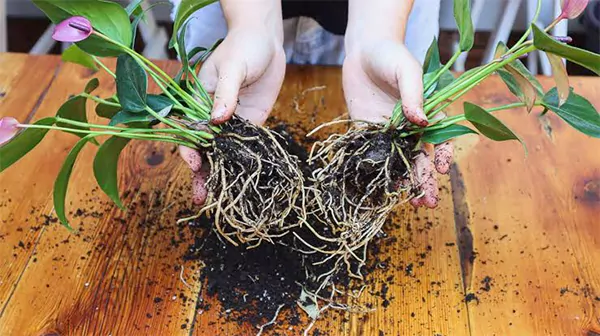
Similar to the process of repotting, the anthurium plant should be propagated every 2-3 years. This process enables producing new plants using a parent plant.
Some common signs to start propagating your anthurium plants are visible offshoots and plants outgrowing the pot.
Step 1: Water the parent plant before propagating, as transplanting in dry soil can shock the plant.
Step 2: Prepare a well-draining soil mix containing peat moss, humus, and coarse sand in a terracotta pot with enough drainage holes.
Step 3: Carefully remove the plant from the original pot and remove the excess soil from the roots.
Step 4: Using hand pruners, divide the plant into equal sections. Make sure every section has an established root system.
Step 5: Place it in the prepared soil mix and water it until the soil is moist. The sunlight and other essential requirements of the plant remain the same.
Common Anthurium Plant Care Mistakes
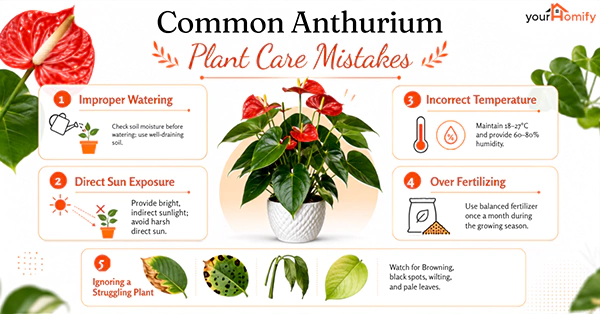
Improper sunlight is the most common mistake for an anthurium care guide, followed by overwatering, incorrect temperature, overfertilizing, and ignoring a struggling plant.
Here are 5 common anthurium plant care mistakes along with their solutions:
1. Improper Watering
Watering is the most crucial part of the anthurium plant care guide. They are tropical plants and hence are used to moist soil. Consistent watering is the best way to ensure long-lasting blooms.
I prefer watering them once a week during spring and summer and significantly reducing it in fall. Fall does not require a lot of watering, as the plant goes dormant. The best way to prevent overwatering is by checking the soil moisture before watering it.
YourHomify Tip
Use a well-draining, porous soil mix to ensure the water is perfectly drained. Many times, the soil mix is the main issue behind waterlogging, and it goes unnoticed.
2. Direct Sun Exposure
The anthurium plant prefers bright, indirect sunlight, as it is an epiphytic plant that grows on the bark of trees under filtered sunlight. Many novice gardeners place them in full sun, leading to leaf burn and brown spots.
The best place to keep your indoor plant is near an east-facing window. These low-maintenance species do well in fluorescent lights, in case you have a closed office setup where light rarely reaches.
YourHomify Suggestion
Note that complete shade can make the anthurium plant leggy and weak. Hence, provide it with sufficient light throughout the day.
3. Incorrect Temperature
Like all tropical plants, anthurium also prefers warm and humid temperatures. The ideal temperature for growing the anthurium plant is between 18-27°C. This plant can not tolerate a temperature below 10°C; therefore, make sure an appropriate temperature is maintained throughout the growing season.
Alongside this, this exotic plant thrives on 60-80% humidity, which can be easily achieved by placing it near a humidifier or a water-filled pebble tray.
4. Over Fertilizing
Anthuriums do not benefit from heavy feeding. A dose of balanced fertilizer once a month works well for this plant. Overfeeding the plant can lead to root burn due to salt accumulation in the soil. Always keep the soil well hydrated before feeding and follow the package instructions for an accurate dose.
Avoid plant feeding during fall and winter as the plant goes dormant, and fertilising can shock the plant. Only fertilize during the growing season.
5. Ignoring a Struggling Plant
Browning leaves, black spots, wilting, and pale leaves are signs of a struggling plant. Ignoring these early signs might lead to bigger complications in the plant’s growth. Keep an eye on these signs and work accordingly.
Mushy and pale leaves are a sign of overwatering, while wilting and drooping are caused by underwatering. Some black spots can be a sign of pest infestation. Do not ignore a struggling plant; act early before the infestation spreads to the entire plant.
Final Tips for Successful Anthurium Care
Conclusively, the anthurium plant is a low-maintenance tropical plant that thrives in bright, indirect sunlight and high humidity. They are best planted in an orchid soil mix full of peat moss for drainage and aeration, as the plant can not tolerate damp soil.
An anthurium care guide involves consistent efforts, along with acknowledging a struggling plant and acting right away.
FAQs
What are the sunlight requirements of the anthurium plant?
Anthurium plants prefer bright, indirect sunlight for 6-8 hours. If they are planted indoors, an east-facing window works best for them.
Is anthurium a good indoor plant?
Yes, anthurium is a great option for indoor planting. It is a low-maintenance plant that also has air-purifying properties but is toxic to pets.
What is the best fertilizer for anthuriums?
A balanced, water-soluble, high-phosphorus fertilizer is the best plant food for anthuriums.
What is the most common care mistake for anthuriums?
Improper sunlight is the most common care mistake for anthurium. Gardeners expose the plant to direct sunlight, which leads to brown and burnt leaves. They prefer bright, indirect sunlight due to their tropical nature.
How often should I repot the anthurium plants?
The anthurium plant should be repotted every 2-3 years.
- How to Grow Anthurium? – BBC Gardeners World