Simran Kaur is a botanical specialist with 5+ years of experience in plant research, content development, and plant health analysis. She reviews plant-related information to ensure accurate, science-backed advice.
Areas of Expertise
Plant Care & Maintenance
Indoor Plants & Gardening
Plant Health Diagnosis
Sustainable Plant Practices
Ask Simran
A lavender plant needs less care, which means if you provide the right conditions for the plant, it can be grown easily. The plants can be grown in drought, but ensure there is no waterlogging near the plant. Prune the plant from time to time and avoid fertilizers on lavender plants.
Let’s take a look at how to plant lavender, when, where, and how to plant. I have also added some tips for caring for the plant and common mistakes that can affect the plant’s growth.
Quick answer
To plant lavender, choose a location receiving 6 to 8 hours of direct sunlight and prepare well-draining soil. Dig a hole wider than the root ball, position the plant at its original soil depth, and backfill gently. Water thoroughly after planting, then allow the soil to begin drying between waterings. Regular pruning helps maintain healthy, compact growth.
How to Plant Lavender? Step by Step
The process of planting lavender is simple. Start by selecting a lavender plant based on the area. Then prepare a spot, and dig a hole there. Now take the plant out of the pot, check the roots, and place it in the hole. Fill the hole, dampen it lightly, and water the plant. Lastly, use mulch in the winter to help the roots.
Let’s take a look at the steps of how to grow lavender plants.
1. Choose A Lavender Plant
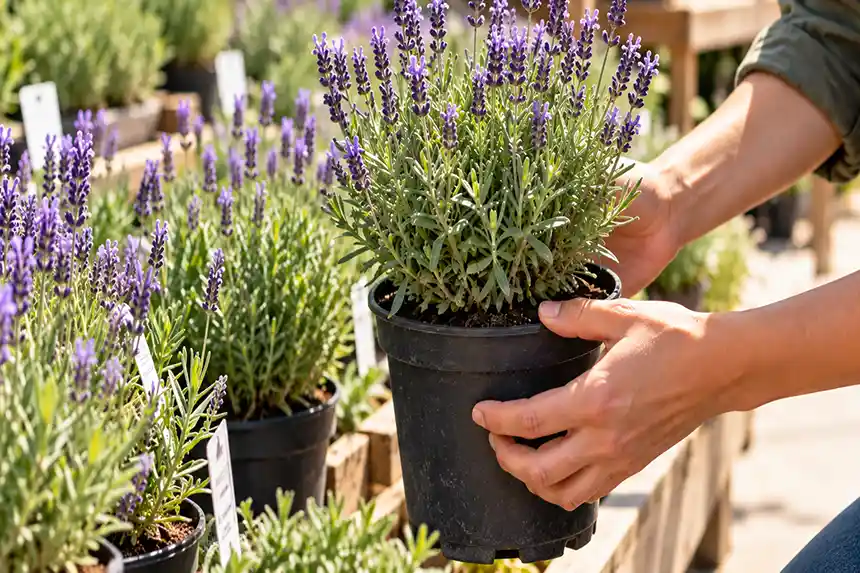
Select a healthy lavender plant
Select a healthy plant that has a straight stem and is not yellowing or wilting. Check the USDA zone of the plant, if it matches your climate. Lastly, ensure the roots have no problems or wilting. There are different varieties in the market, like English lavender and Spanish lavender. Check the condition of the root ball while purchasing; the healthier the root ball is, the better the plant will grow.
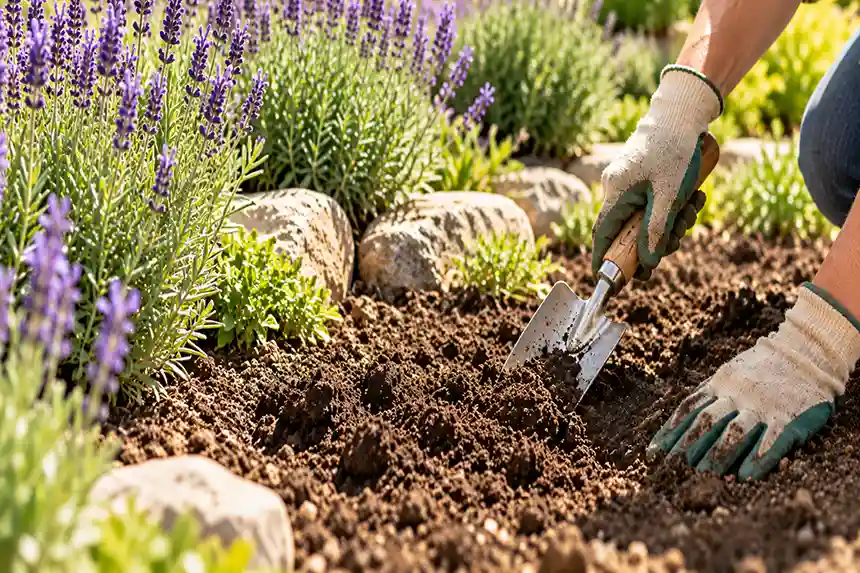
Select a planting spot that receives 6 to 8 hours of direct sunlight daily. Remove weeds, stones, and debris, and check whether the soil drains properly. If the ground is heavy or frequently waterlogged, prepare a raised bed or planting mound to keep the roots above excess moisture. Avoid adding unnecessary fertilizers or peat moss, as lavender prefers relatively lean, well-drained soil.
3. Dig A Hole
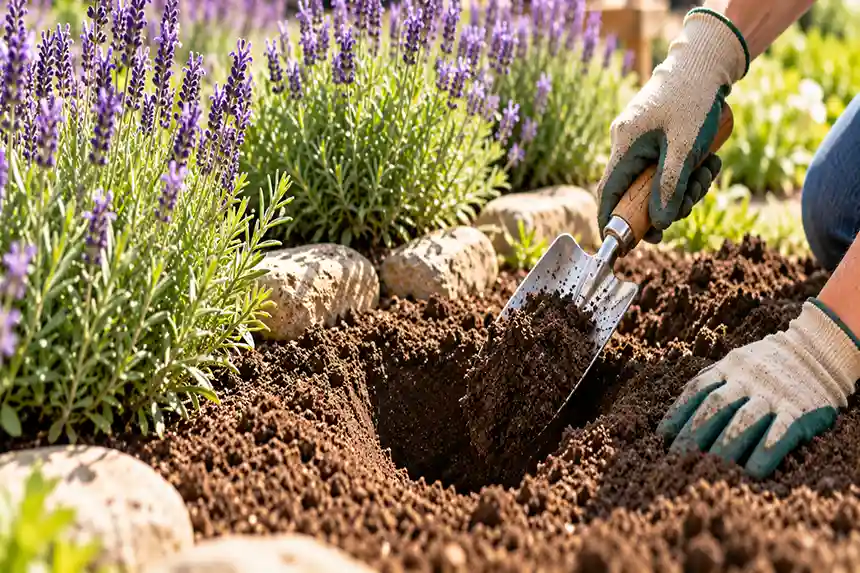
After that, dig a hole.
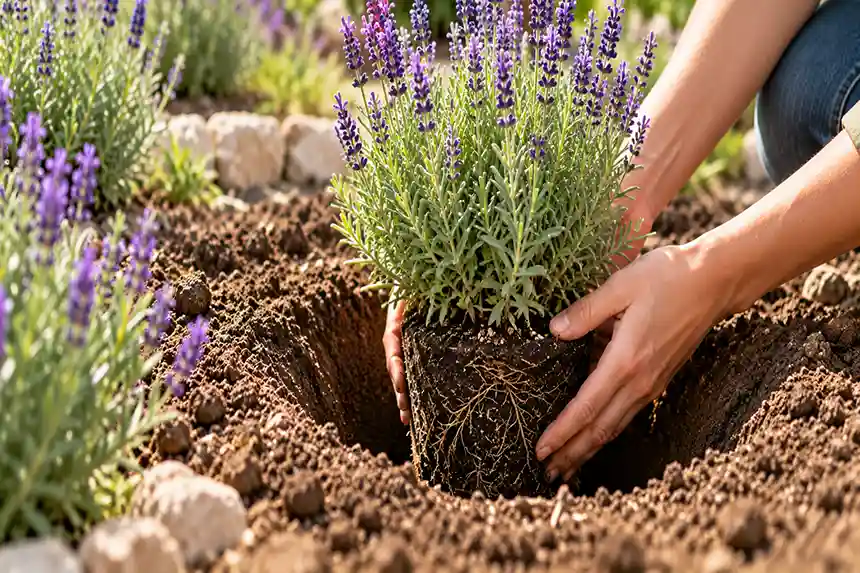
Now make a hole; it should be twice the size of the root ball in width and depth. This will loosen the soil around the root and help with easy spreading.
Personal tip
Check that the plant hole is wider than the nursery pot, but ensure that you are not planting deeper than the original container size, so the roots can spread easily.
4. Take the Plant Out
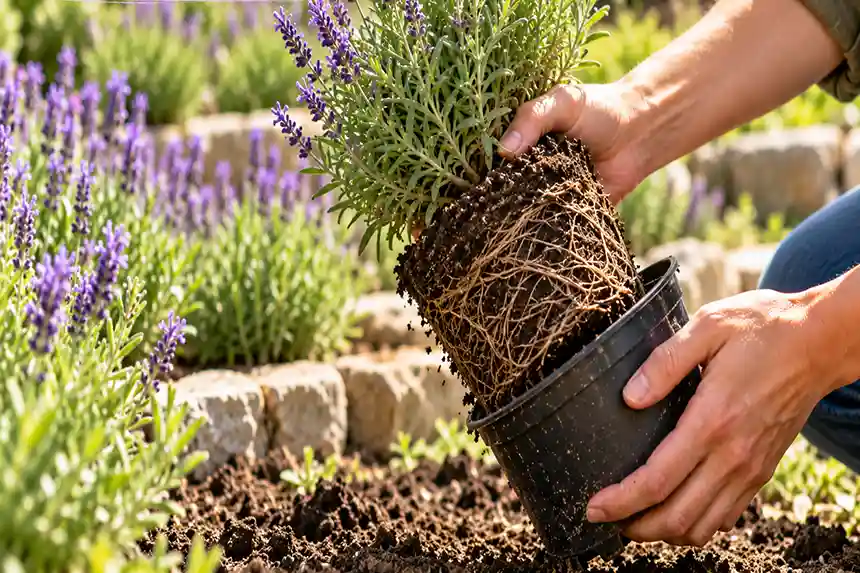
Next, take the plant out of the pot
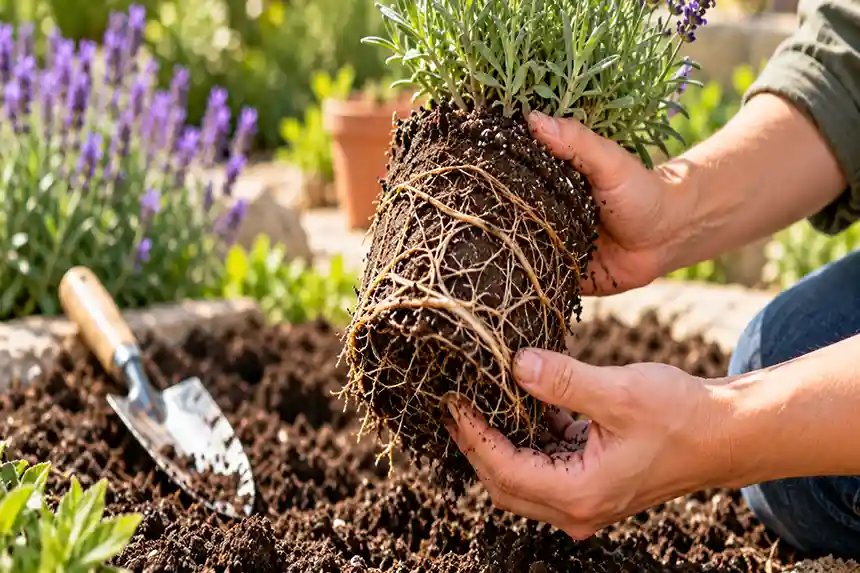
Now gently take the plant out of the pot. Ensure the root ball or crown is not getting damaged. Do not pull the plant out; take it out gently, holding it.
5. Check the Root
Inspect the root ball thoroughly.
Inspect the roots properly; check that they are not decayed or soggy. If the ball is tightly packed, take some strands out with light hands, so the roots can easily expand. If you see any rotting in the roots, then you should remove it.
6. Position the Plant
Position the plant
Now keep the plant in the center of the hole and cover it with soil with light hands. Do not cover the plant’s crown with soil; keep the crown above the surface of the soil.
7. Water After Planting
Water the plants on time
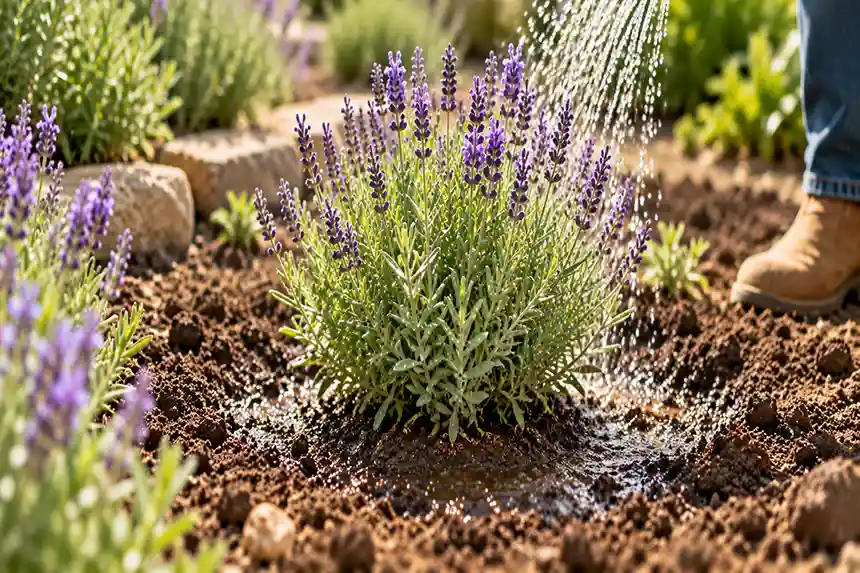
Water lavender thoroughly immediately after planting to settle the soil around the roots. During the first growing season, water regularly when the soil begins to dry, especially during hot or dry weather. Avoid keeping the soil constantly wet. Once established, lavender grown in the ground is drought tolerant and usually needs additional watering only during prolonged dry periods. Ensure that between waterings the soil is getting dry; watering already wet soil can cause root rot or wilting.
8. Add Gravel Mulch
Add gravel mulch for winter protection.
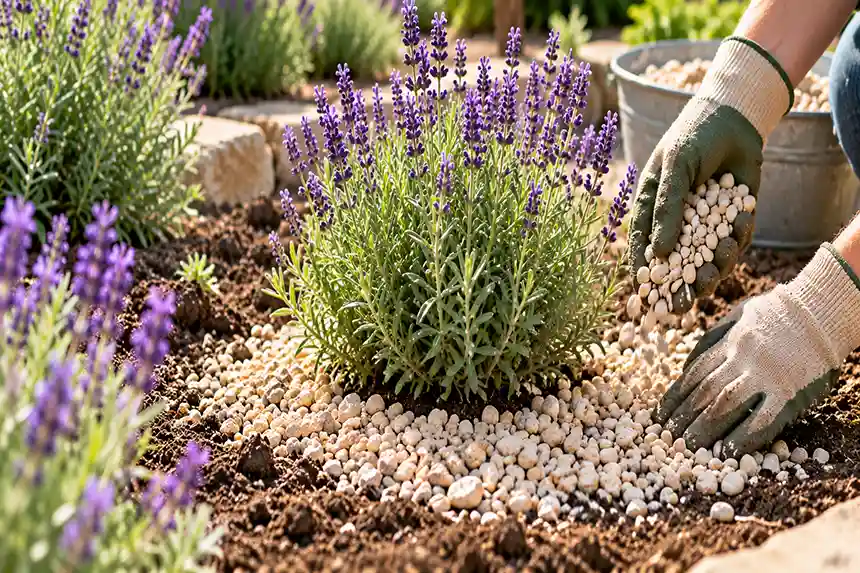
If your area faces heavy winters, then you should add mulch to the soil so the roots will not be affected in the hard frost season. This helps maintain the temperature of the soil at the same level.
When Is the Best Time to Plant Lavender?
Best time for lavender planting.
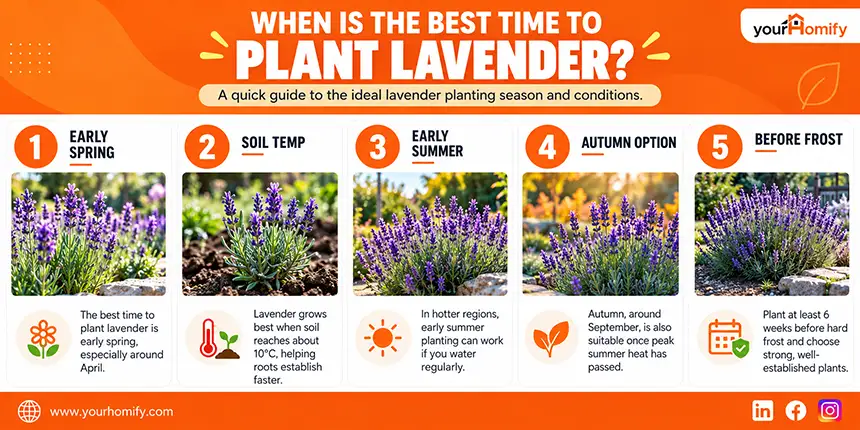
To plant a lavender the best season is early spring season or in the autumn season. Which means April and September. For proper growth, lavender needs 10 degree celsius soil temperature; warm soil helps the roots spread quickly.
The early spring season has warmer soil, and the peak summer is also a way that gives the plant time to establish roots before the peak hits. If you live in any area that faces mid summer then you can plant in early summer, but ensure you are watering the plant timely.
In autumn, the soil has become a little cold after peak summer, so it can be a good time, but ensure the hard frost is at least 6 weeks away and choose a large and well-established plant, so the plant has enough energy to spread the roots and survive the frost.
Where and How to Plant Lavender?
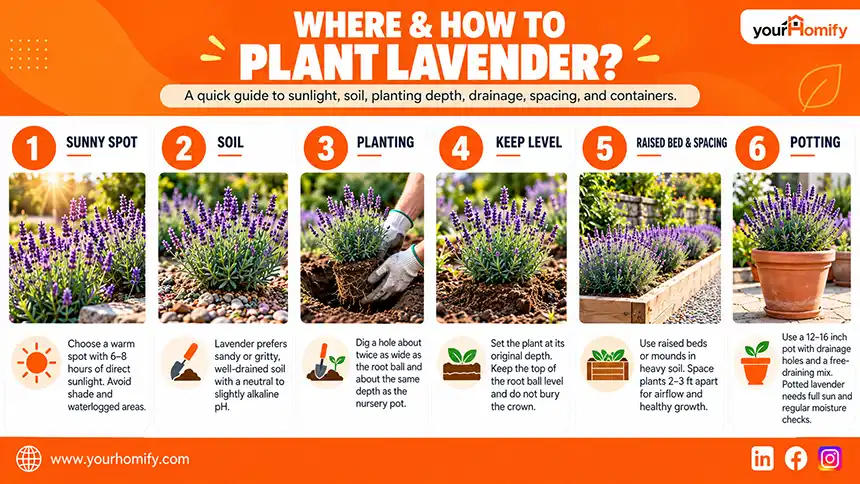
Lavender plants grow best in a sunny environment; select an area that gets 6 to 8 hours of direct sunlight every day. Lavender needs sandy, well-drained soil that does not hold excess moisture. Dig a planting hole about twice as wide as the root ball and approximately the same depth as the nursery pot. The extra width gives the roots room to spread into the surrounding soil. Keep the plant at its original planting depth to prevent moisture from collecting around the crown.
Let’s take a look at the planting requirements for Lavandula angustifolia planting.
Points for where and how to plant lavender.
Selecting the place: Start by choosing a spot that gets at least 6 to 8 hours of direct sunlight every day; do not keep it in the shade. This plant loves warmth and tolerates humidity or wet soil, so ensure there is no waterlogging in that area.
Soil: Lavender grows best in well-drained, sandy or gritty soil with a neutral to slightly alkaline pH, ideally around 6.5 to 7.5. Avoid heavy, waterlogged soil, as excessive moisture can damage the roots. If your garden has poor drainage or compacted clay, consider planting lavender in a raised bed or on a mound. Lavender generally grows well in low to moderately fertile soil and does not need excessive fertilizer.
Planting: Dig a hole about twice as wide as the lavender plant’s root ball, but keep the depth approximately the same as the nursery container. Place the plant so the top of the root ball is level with the surrounding soil. Avoid burying the crown or stems too deeply, as trapped moisture can encourage root rot. Do not cover the stem too much or bury the stem too deep, because it can trap moisture and cause root rot.
Raised Bed: Raised bed planting is best if the soil is heavy, wet, or compacted; if the soil drains freely, then you should prefer in-ground planting. As per the RHS organisation UK, if you plant lavender flowers in a raised bed or above the normal soil level, then the extra water will drain out easily.
Spacing: Space between two plants should be 2 to 3 feet; this helps the plants breathe and also reduces the transmission of diseases and pests. Closely planted plants can pass bacteria very easily. Too much crowding can also cause shade, and the plant’s sunlight intake will be disturbed. Good airflow will ensure less humidity.
Potting: Lavender grows well in containers when provided with enough sunlight and proper drainage. Choose a pot about 12 to 16 inches wide with drainage holes, and fill it with a free-draining potting mix containing coarse grit. Place the container where it receives 6 to 8 hours of direct sunlight. Check soil moisture regularly, as potted lavender may dry out faster than plants growing in the ground.
Personal tip
You can start with seeds in a pot, and after it becomes a seedling, you can transfer it to the ground. This is the most preferred way if you are growing lavender from seed.
How to plant lavender seeds?
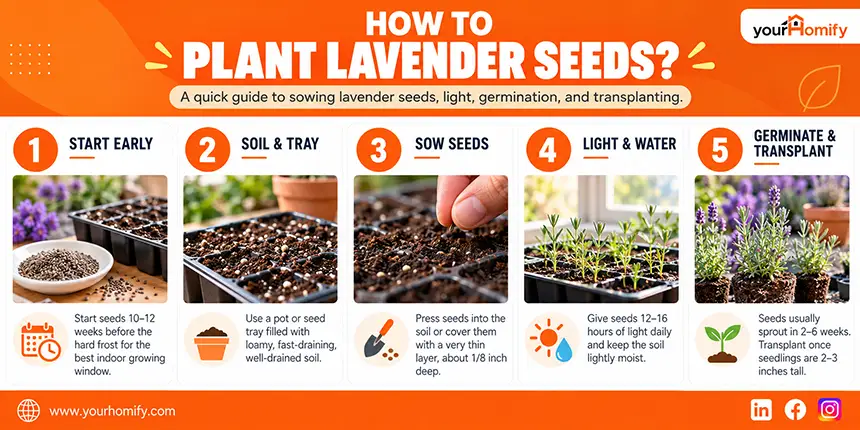
Planting lavender from seeds is a very simple process; you should start planting 10 to 12 weeks before the hard frost. The seed should be placed ⅛ inches below the surface level.
Take a look at the process of growing a lavender tree from seeds.
Start with taking well-drained soil in a pot or tray; ensure the soil is loamy and fast-drying. Then take a seed and press it into the soil, or place it and cover it with a thin layer of soil so it can get sunlight.
Ensure that the plant is getting 12 to 16 hours of sunlight per day and moisten the soil regularly. You will get to see small growth within 2 weeks; it will take 6 weeks maximum to germinate. After it turns into a seedling that is 2 to 3 inches long, then you can transfer it into soil.
How to Care for Lavender After Planting?
After planting, you have to ensure that the plant is growing properly. The work doesn’t end after planting; you have to care for the plant by watering it, ensuring that it is getting enough sunlight, pruning the plant in a timely manner, adding mulch for winter protection, and removing the weeds from the soil.
Let’s take a look at how to care for lavender plants for better growth.
Points for taking care of the plant.
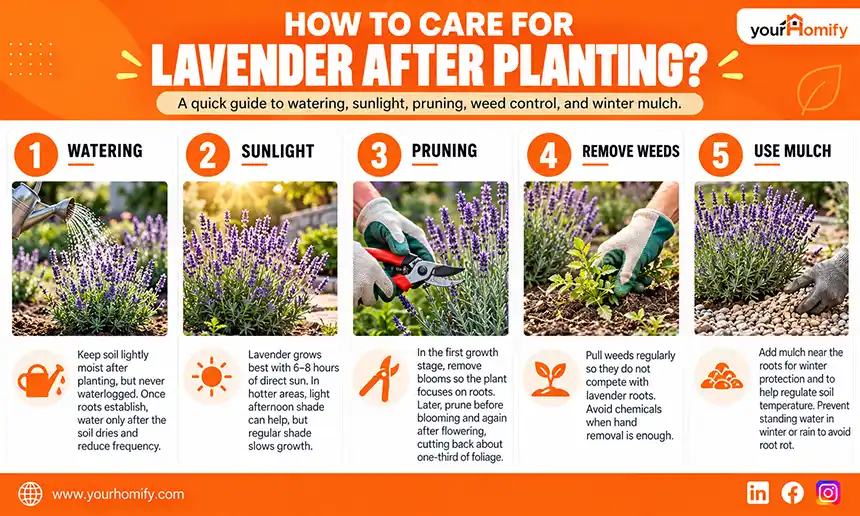
Watering: Newly planted lavender needs regular watering while its roots establish. Check soil moisture before watering and allow excess water to drain away. Mature lavender planted in the ground generally needs little supplemental water, except during extended dry conditions. Lavender in containers may need more frequent watering because potting soil dries out faster.
Sunlight: This plant loves to be in the sun; direct sunlight during the day for 6 to 8 hours can be perfect for it. If, in your location, the sunlight period is more than this, you can choose a spot where the plant can get sunlight during the day and in the afternoon the plant gets shade. Experiencing shade regularly can stop the plant’s growth.
Pruning: This is the main step; the lavender plant will grow. If you have confusion on how to prune lavender plants, it is advised that you should cut all the blooms in the first growth, so the plant can use its energy to spread the roots and not to grow the blooms; after that, you should prune two times a year. First, before blooming, remove all the wilted and dried leaves; second, after blooming ends, cut back a third of the foliage.
Removing weeds: weeds can affect the roots of the plant; that’s why you should remove the weeds from time to time. Avoid using any chemical if the weeds can be removed without it, as the plant can also get harm due to it.
Use mulch: to protect the plant from harsh winter, you should add mulch near the roots of the plant. It helps maintain the temperature of the soil lower than the outside temperature, so the roots can survive. In winter and rain, you have to ensure that there is no waterlogging near the plant, which will cause root rot or wilting.
Fact
Lavender is native to the Mediterranean; that’s why it prefers a dry, sunny climate with good air circulation.
Common Lavender Planting Mistakes
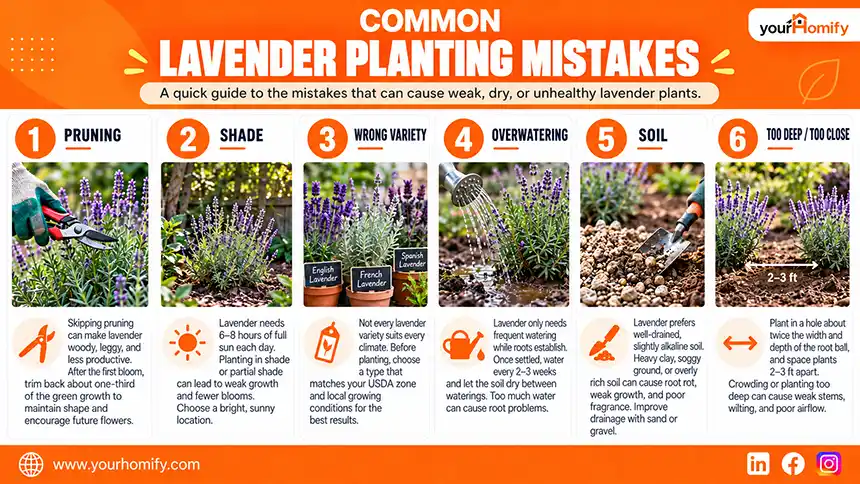
Lavender is an easy-to-grow plant, but ignoring important points like planting in shade, not pruning in time, choosing the wrong variety, overwatering the plant, not preparing the soil, or a hole that is wider than the root ball, but no deeper than the original container, allows roots to spread without burying the plant’s crown to each other can cause dryness in the plant and affect growth.
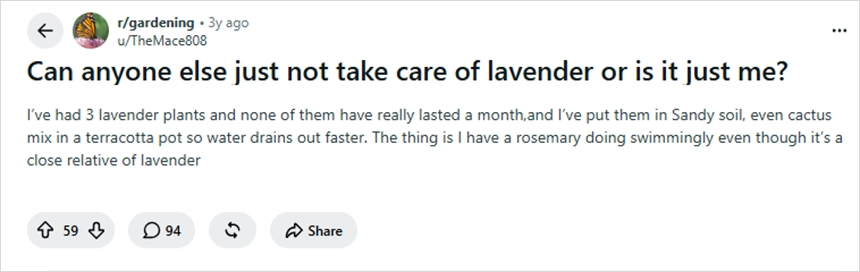
People on the internet also ask this question because they are facing issues with lavender even after providing the preferred soil.
Question asked related to mistakes that lead to dry lavender.
Let’s take a look at the common mistakes that you may make and the correct way.
Common mistake points that can affect the plant.
Neglecting Pruning: Pruning the plant maintains the shape and size of the plant and also improves the overall health. It also encourages new growth, which means new flowers in the next bloom. Avoiding pruning can make the plant woody and less productive.
Trim the plant back after the first bloom; ensure that you are cutting off one-third of the green growth. That will stop overgrowth and will ensure flowering every year.
Planting in Shade: Lavender flowers need 6 to 8 hours of full sunlight every day for proper growth. Placing the lavender plant in shade or partial shade will lead to a weak plant and few flowers.
Choose a spot that gets plenty of direct sunlight throughout the day. The plant will become strong and vibrant with proper sunlight.
Selecting the Wrong Variety: There are different varieties of lavender plants, but not every lavender can be planted in every climate or soil condition. So, before purchasing a plant, ensure it is suitable for the USDA zone you live in.
Overwatering the Plants: Lavender does not grow well in constantly wet soil. Excessive watering can lead to root rot, yellowing leaves, and weak growth. Water regularly during establishment, but allow the soil to begin drying between waterings. Once the plant is established, reduce watering according to rainfall, temperature, and soil conditions.
Not Preparing Soil: Lavender needs soil that drains quickly and does not remain constantly wet. Heavy clay, compacted soil, and poor drainage can cause root rot, yellowing leaves, and weak growth. If your garden holds too much water, plant lavender in a raised bed or container with suitable drainage. Avoid excessive fertilizer, as lavender generally performs well in low to moderately fertile soil.
Planting too deep or too close: While planting, make a hole that is twice the size of the root ball in both depth and width. It will prevent transplant shock and also help the roots expand. Planting in a small space can result in hard pushing in the surrounding soil, which may result in yellowing leaves, weak stems, and wilting.
If you are planting multiple plants in the same place, ensure there is 2 to 3 feet of space between plants so the plant can breathe properly. Improper air circulation can cause diseases like powdery mildew.
Personal Tip
If your garden has heavy clay or poorly drained soil, growing lavender in a container may be a better option. Use a large pot with drainage holes and well-draining soil. Remember that container-grown lavender may require more frequent watering in summer and additional protection during winter.
Conclusion
Planting lavender successfully starts with choosing the right location, soil, and planting depth. Whether you grow lavender from seeds or nursery plants, provide plenty of sunlight, well-drained soil, and enough space for healthy growth. Water regularly during establishment, avoid excess moisture, and prune annually to maintain the plant’s shape. With the right growing conditions, lavender can reward your garden with fragrant flowers year after year.
FAQs
What is the best way to plant lavender?
The best way to plant lavender is to keep it in a spot that has 6 hours of direct sunlight; the soil should be well-draining and lean. The plant will rot in wet, heavy, and clay soil.
Is lavender better in pots or ground?
Lavender grows well both in pots and in the ground. In-ground planting works best when the soil drains freely, while containers are useful for gardens with heavy or wet soil. Potted lavender needs good drainage, regular moisture checks, and winter protection in colder climates.
What month is best to plant lavender?
You should plant in spring or in early autumn. For proper growth, the soil temperature should be 10 degrees Celsius or 50 degrees celsius.
Do lavender plants need to be cut back?
You should cut back the plant once a year to keep the plant healthy, bushy, and full of flowers. Prune in late summer or early fall, at least 6 weeks before the hard frost, so it can harden.
How often should you water your lavender?
Water newly planted lavender regularly during its first growing season, allowing the soil to begin drying between waterings. Established lavender in the ground usually needs water only during prolonged dry periods, while potted plants may need more frequent watering.