Sweet potatoes can be one of the most productive and easiest vegetables for beginners to grow in warmer climates. When learning about growing sweet potatoes, there is no better way than learning how to plant them correctly. This will result in better quality tubers, better plants, and a higher yield from your sweet potato garden. The next page provides information on planting sweet potatoes, with detailed information on selecting slips through to picking mature tubers.
Quick Answer
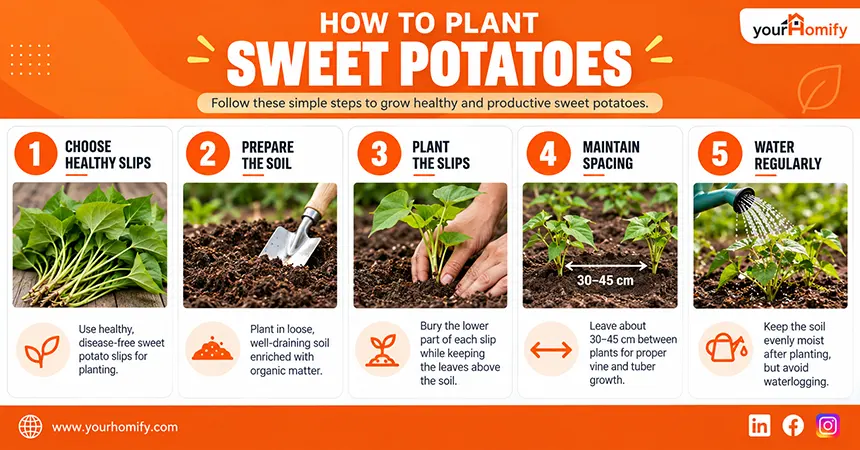
To plant sweet potatoes, first prepare loose, permeable soil in a sunny location. Then plant healthy sweet potato slips 3-4 inches deep, spacing them 12-18 inches apart. After watering thoroughly, I keep the soil moist and warm. Proper sunlight, spacing, and care help sweet potatoes grow successfully at home.
How to Plant Sweet Potatoes?
Beginning with the right planting procedure for sweet potatoes makes growing them much easier than it would be otherwise. Each stage of preparation, from soil preparation through watering newly transplanted slips, is significant when trying to grow healthy potatoes. Look at each stage in greater detail below.
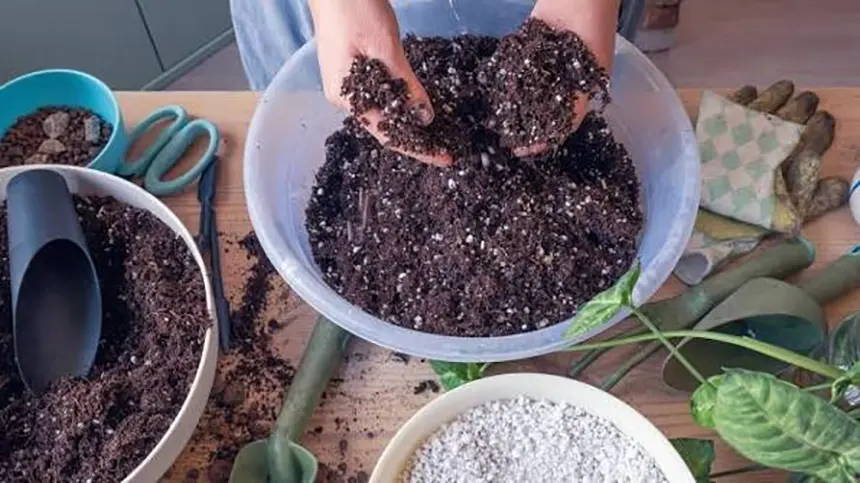
- Begin by preparing your soil. Dig your soil deep enough so that you can loosen it thoroughly. Take care of the weeds, rocks, and other debris found in your soil. Add some compost or other natural materials to improve the quality (drainage and nutrient content) of your soil.

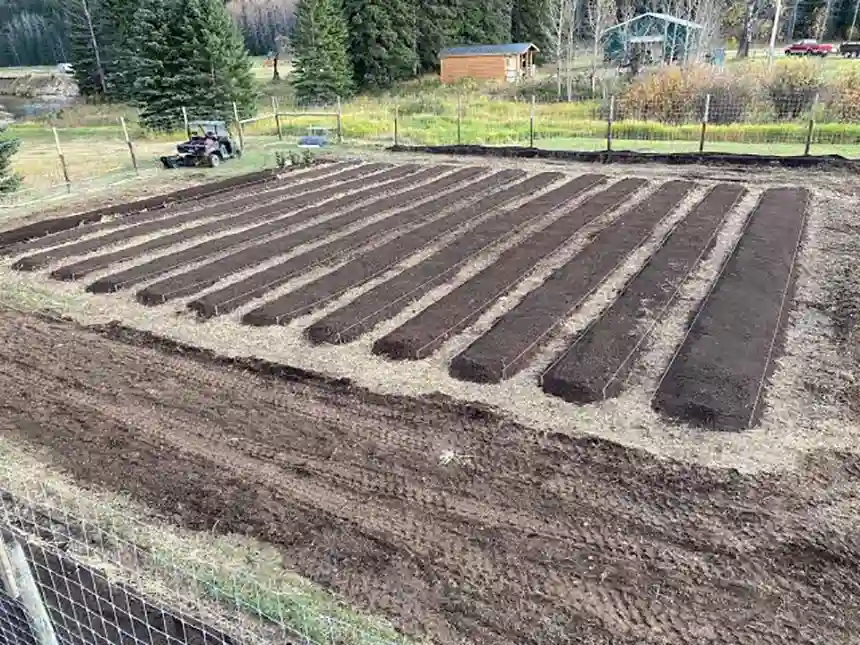
- Raise your beds by building a row of hills that are about 30 centimeters tall (about one foot) to give them room to breathe. Sweet potatoes need good air flow and drainage to produce well.

- Use healthy slips for planting. Choose green slips with some root on each slip, avoiding weak, broken, or diseased slips. This will allow you to have larger, healthier tubers.
- Plant your slips at the correct depth. Bury the bottom one-half to two-thirds of each slip approximately 3-4 inches below grade level; keep the leafy top end exposed above ground, and plant with sufficient spacing.
- Immediately water your newly planted slips well and completely. This is necessary for developing an excellent root system that will support good establishment. It also allows you to develop a solid foundation in which to encourage maximum growth.

- Mulching is also another way to save water by helping retain it, as well as help keep your soil cool, which will help keep weeds down too. Make sure you put the sweet potato in full sun for best results.
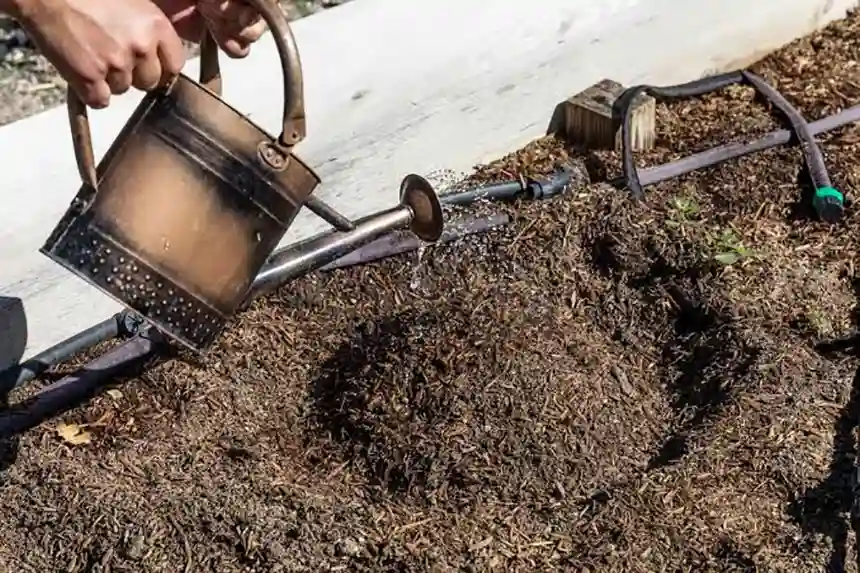
By doing things right when planting, sweet potatoes are going to be healthy and strong from day one. Planting them correctly, along with good care and some warmer weather, will allow anyone who has never grown sweet potatoes before to grow their own and have a successful crop at home.
Growing Conditions Needed for a Sweet Potato Plant
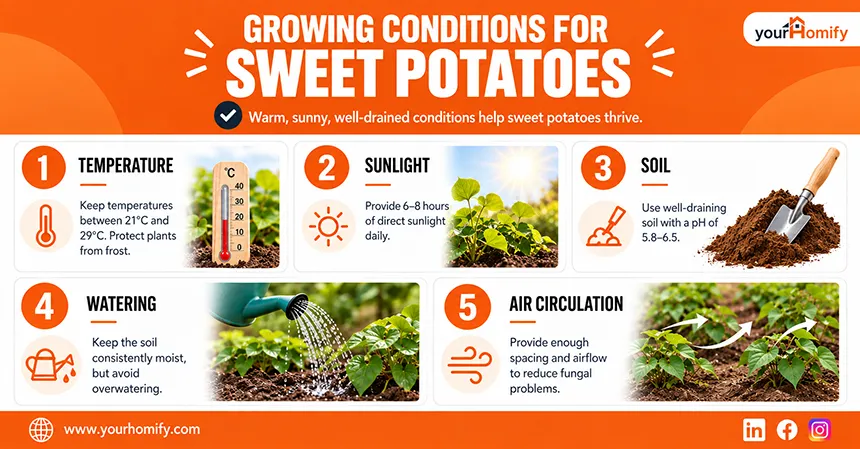
Growing healthy sweet potatoes requires warm and sunny conditions free from frost. In general, when you have the proper climate for your sweet potatoes, they will produce long vines and big, good-quality tubers, better than if you do not give them what they need. Below is how you grow a sweet potato plant so that it produces healthy tubers.
- Temperature: Sweet potatoes require temperatures ranging from 70–85°F (21– 29°C) to thrive. Temperatures below this range or frost may kill the roots immediately.
- Sunlight Exposure: A minimum of 6 to 8 hours of sunlight each day is required for optimal vine and tuber production.
- Soil Requirement: Sweet potato plants prefer to grow in well-draining soil with a pH level of 5.8 to 6.5, as excessive moisture can cause root rot.
- Watering Needs: Although consistency in moisture is necessary throughout the entire growing period, the soil should never become waterlogged. Excessive watering can result in the loss of the plant.
- Sufficient Air Circulation: Sufficient air circulation around your sweet potato plant by providing adequate space among plants is essential to help reduce disease caused by fungi while promoting healthy vine growth.
Providing these growing conditions helps sweet potato plants stay healthy and productive throughout the season. With warmth, sunlight, and well-prepared soil, even beginners can learn to grow potatoes in containers, raised beds, or garden spaces.
Common Mistakes to Avoid While Planting Sweet Potatoes
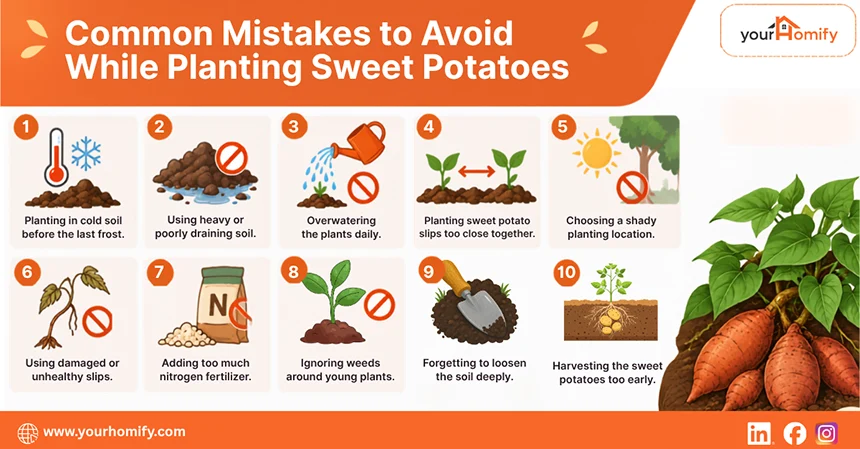
When looking for easy ways to grow food at home, it’s just as important to be aware of common mistakes many people make. I’ve had numerous new gardeners contact me about issues they’re having when trying to plant their first crop of sweet potatoes due to a small number of basic mistakes. My focus is on getting the basics right, such as correct timing, soil preparation, space requirements, and several others.
Below are some common mistakes to watch out for so you can increase your tuber yield and promote healthy growth of your plants.
- Growing sweet potatoes in cold soil after the last frost.
- Growing sweet potatoes in soils that drain poorly or have high clay content.
- Watering your sweet potatoes every day (this will cause root rot).
- Not providing enough space between your sweet potato slip planting sites.
- Place your sweet potatoes in an area with little sunlight.
- Using poor quality slips (damaged or diseased).
- Using excessive amounts of Nitrogen fertilizer.
- Failing to remove weeds from around newly planted sweet potatoes.
- Not loosening the soil deep enough for your sweet potatoes to develop properly.
- Picking your sweet potatoes too soon.
By avoiding these common mistakes, sweet potato vines can grow healthier and produce larger, better-quality tubers. Proper soil type, watering schedule, and potting mixture create the ideal environment for the plant.
Pests and Diseases in Sweet Potatoes
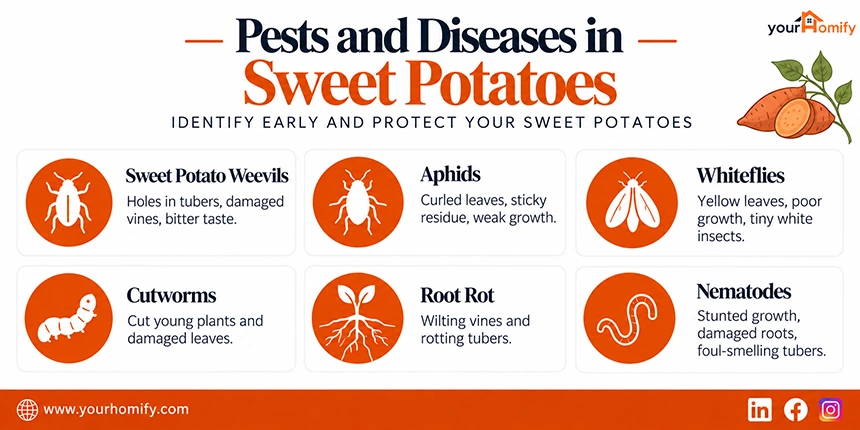
Sweet potatoes are susceptible to many types of pests and diseases, particularly when they have been exposed to warmer and wetter weather. To minimize losses, I check my plants frequently for signs of disease, which makes it easier to treat before the problem gets worse.
Some of the most common pests and diseases that may harm your harvest include:
| Pests and Diseases | Signs and Symptoms |
| Sweet Potato Weevils | Small holes in tubers, damaged vines, bitter-tasting sweet potatoes. |
| Aphids | Curling of the leaves, sticky residue on the back side of the leaves, and weak growth. |
| White Flies | Yellow leaves, poor plant growth, and tiny white insects under the leaves. |
| Cutworms | Young plants are cut near the soil surface and have large holes in their leaves. |
| Root Rot | The vines start wilting, and eventually the tubers will rot. |
| Nematodes | Stunted plant growth, damaged roots, and foul-smelling potatoes. |
The main causes of pests and diseases on sweet potato plants involve too much water, poor air circulation around the plants, overpopulation in a small area, contaminated dirt, unhealthy slips, and improperly watered slips.
In addition, sweet potatoes are also more likely to be attacked by insects and fungus due to their exposure to warmer temperatures and humidity. On the other hand, treating these issues is relatively simple.
Harvest and Storing Tips and Tricks for Sweet Potatoes
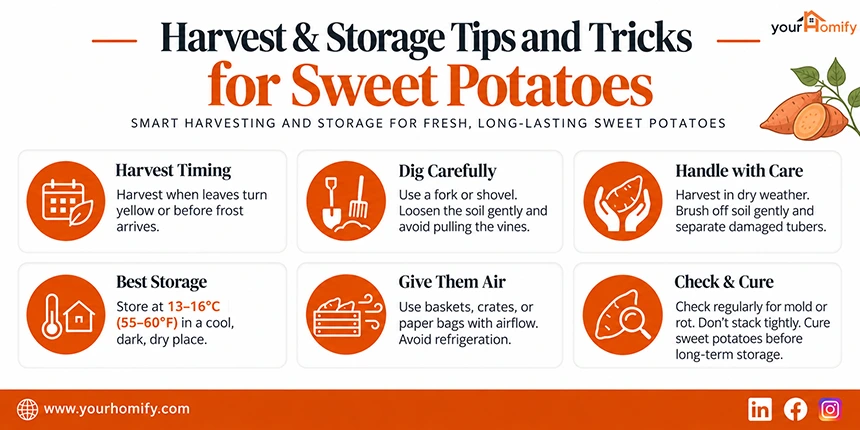
Harvesting and properly storing your sweet potatoes will extend how long they are edible by preserving their flavor and texture. It is also important that you treat the roots with care, as bruising or poor storage can result in rapid rotting.
Following some very basic steps, such as proper harvesting and storage of sweet potatoes, can assist with maintaining the health and freshness of your sweet potato crop well past the end of the harvest season.
1. Harvesting Tips
- Harvest your sweet potatoes when the foliage starts to turn yellow (or at least two weeks prior to the first frost).
- Use a garden fork or shovel slowly to avoid puncturing your sweet potatoes.
- Carefully loosen the soil before digging up the sweet potatoes. Do not pull on the vines aggressively, as this may damage the roots.
- If possible, harvest your sweet potatoes in dry conditions, as the tubers will be less likely to have been affected by moisture, which promotes root decay.
- Gently remove dirt from the surface of your harvested sweet potatoes (do not wash) and then separate the damaged sweet potatoes from those that appear healthy.
2. Storage Tips and Tricks
- Store your sweet potatoes in a cool, dry environment away from direct sunlight. Store at a temperature ranging from 8 to 14°C (46-57°F) for optimal storage.
- It is recommended that you store your sweet potatoes in breathable containers like baskets, crates, or paper bags. Avoid placing your sweet potatoes into refrigerators.
- Regularly inspect your stored sweet potatoes for signs of rot or mold. If you find any spoiled or rotten sweet potatoes, separate them promptly so that they cannot cause additional sweet potatoes to become spoiled.
- Do not overstack your sweet potatoes, as excessive pressure can cause bruises.
Proper harvesting and storage methods help sweet potatoes stay fresh, flavorful, and usable for a longer time. With careful handling, curing, and good storage conditions, I can successfully preserve the harvest for weeks or even months after the growing season ends.
Conclusion
Planting my own sweet potatoes becomes a whole lot simpler once I get an idea of the correct type of dirt, how to keep those slips healthy, and just the right amount of room and warmth.
I have found with consistent care and patience, many beginning gardeners are able to enjoy their first harvests of sweet potatoes. With a little guidance, I will feel confident to begin planting my own sweet potatoes at home.
FAQs
What is the best month to plant sweet potatoes?
Springtime is typically the ideal time to plant your sweet potatoes, following the final frost event and when the soil warms up. It’s essential to grow them in warm climates that don’t freeze.
Can I grow sweet potatoes from store-bought sweet potatoes?
Yes, you can grow sweet potatoes from store-bought ones by producing slips from a healthy tuber. However, untreated or organic sweet potatoes generally work better for a successful harvest.
How deep should sweet potato slips be planted?
When planting your slips, it is recommended to place them approximately 3-4 inches below the earth but above enough so that some of the top portion (leaves) remains exposed to allow for optimal development and quick maturation of your roots.
How long do sweet potatoes take to grow?
Sweet potatoes typically take around 90-170 days to mature, depending on the variety, climate, and growing conditions provided during the season.
What cannot be planted next to sweet potatoes?
Any edible harvest or flower that requires significant space and extra sunlight should not be planted next to sweet potatoes, as they can deplete the plant’s nutrients.
- Growing Sweet Potatoes in a Home Garden – University of Maryland Research Paper
- How to Grow Sweet Potatoes in the UK – BBC Gardeners World Magazine