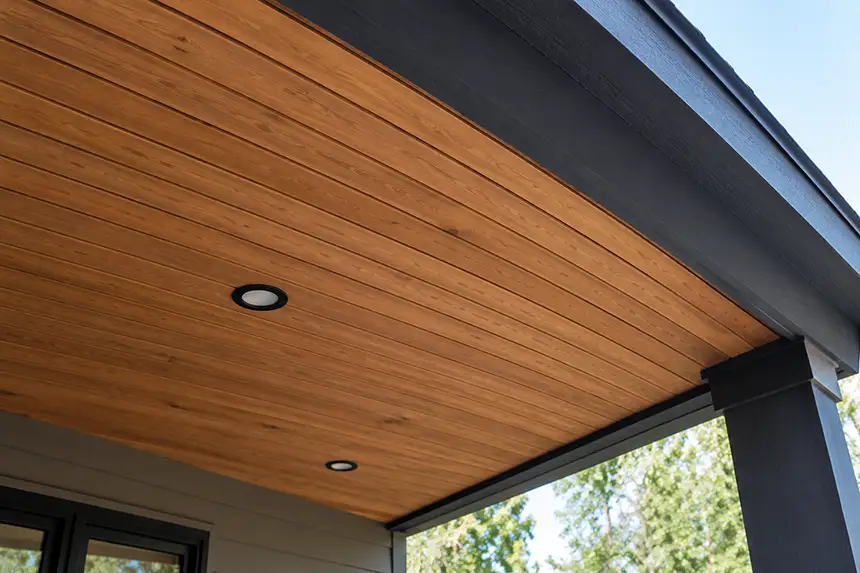
You feel enthusiastic when you notice some details when looking up at a house that everyone usually misses. Shiplap is one that handles such areas beneath a roof edge.
The horizontal boards that give a plain soffit character change the shape or size of the home that is regular.
This is not what you look at first. The soffit is a part of the attic ventilation, so you cover the wrong opening that traps most moisture. This work is for you, and you obviously notice it late.
Plan all materials, spacing, and airflow design. This guide gave you choices, costs, maintenance, and ventilation details; check it before buying.
Quick answer
A shiplap soffit is the finished underside of a roof, using overlapping boards to create the same shadow-line look. But it appears great from outside and needs to be paired and designed sequentially for the vent duct. Your gaps should open and never require guesswork to let the roof ventilation system work, but for dry is a must.
What a Shiplap Soffit Actually Is
A shiplap soffit resides underneath a roof overhang, where you design the underside in a visible portion.
The boards usually overlap at edges and create similar patterns as shiplap. Your joint in the finished ceiling affects the wall, and it should be valued more before installation starts. You should not put Interior shiplap outdoors. As you can see, soffit faces many abiotic stresses during those moments, i.e., rain, humidity, heat, cold, and constant seasonal movement.
You must open some ventilation paths and leave space accordingly. The roof still needs to breathe.
Did You Know?
The word soffit has a fine history for years: it comes from the Italian word soffitta, which means a ceiling, and dates back to Latin history. Today, that fits the soffit is the completed character folded underneath an overhang, not simply a room staying covered.
Why the Look Is Spreading Right Now
Overlapping edges are the reason for the rise in horizontal lines, which gives the exterior a congested and overly decorated look. This is the reason it suits farmhouse or craftsman styles well, while modern homes are common.
A dark finish makes pale siding stand out, while a painted wood and stone or metal combination suits well. You already know that most homeowners liked shiplap indoors and started carrying the same idea outdoors.
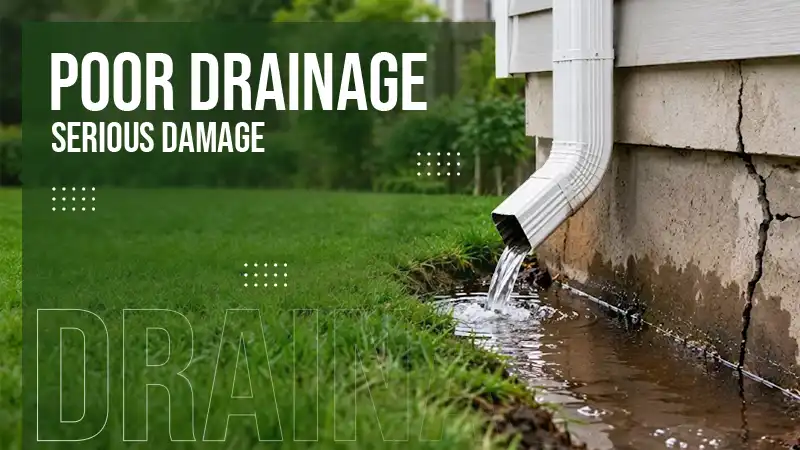
You don’t come under the delusion and decide that soffit should handle the pressure of drainage water, weather conditions, and ventilated airways. Check all first yourself, so as not to sustain moisture at the roof edge.
The Materials Worth Knowing
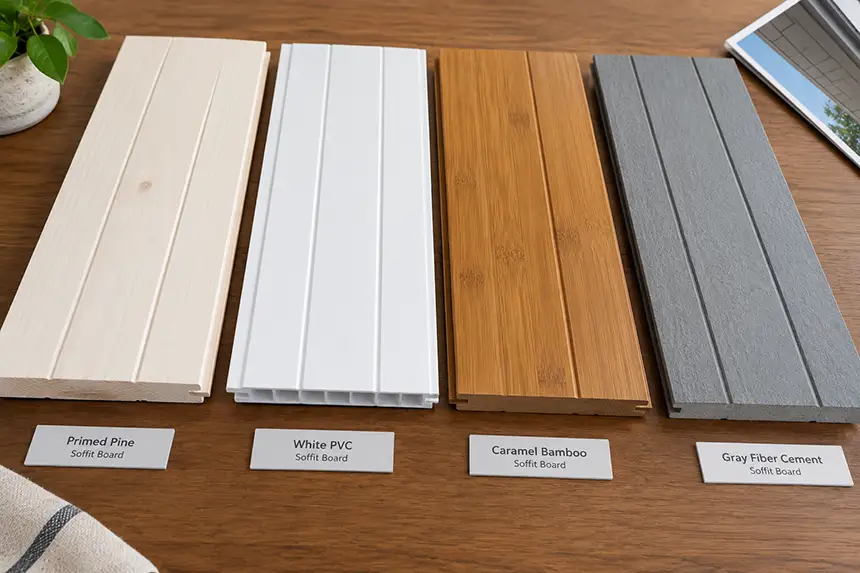
Primed Pine and Cedar
You noticed that pine is usually less costly for ceiling materials. Easily painted and good for it. Moisture retention is fast. Cut areas are more prone to water absorption until you notice.
As for cedar, this is an expensive wooden material. Preferred for outdoors. Prime the front, back, edges, and cut ends before installation. Takes more time upfront, then saves you from premature swelling or rot.
PVC and Composite
You can feel relieved with these materials for wood structures. They do not rot easily like timber, and you need less repainting. The main concern is appearance and movement.
PVC products usually expand in daylight, so you should be careful in spacing ends to allow for motion. It is a choice you made for moisture, making it harder to maintain the wood quality.
Fused Bamboo
You also know that fused bamboo is a better option. The process uses roughly 1/2-inch thickness and is wider than four-inch boards, with ends matched with hidden clips for a cleaner finish. Check the manufacturer’s approval carefully. A product suitable for siding is not automatically suitable for a soffit, particularly in areas with high winds or specific fire requirements.
Fiber Cement
Fiber cement brings a different set of strengths. It is durable, non-ignitable, and invulnerable to insects and pests, and it is paintable, which lasts for years.
The drawback is determined in work lots exposed to the outdoors. It is usually weighty and usually requires two individuals to operate. Cutting assembled the silica particles into dust control and protective supplies count.
Ventilation Is the Part People Get Wrong
A shiplap soffit faces a ventilation problem. The board joints are useless for ventilation. But your attic airflow needs a path from outside air at the eaves or cornice, with openings kept clear and protected from pests.
ICC requires ventilation to furnish many closed lofts and rafter rooms, including insulation away from intake entrances. Many manufacturers assume: shiplap covers the soffit, but ventilation still needs to be provided separately.
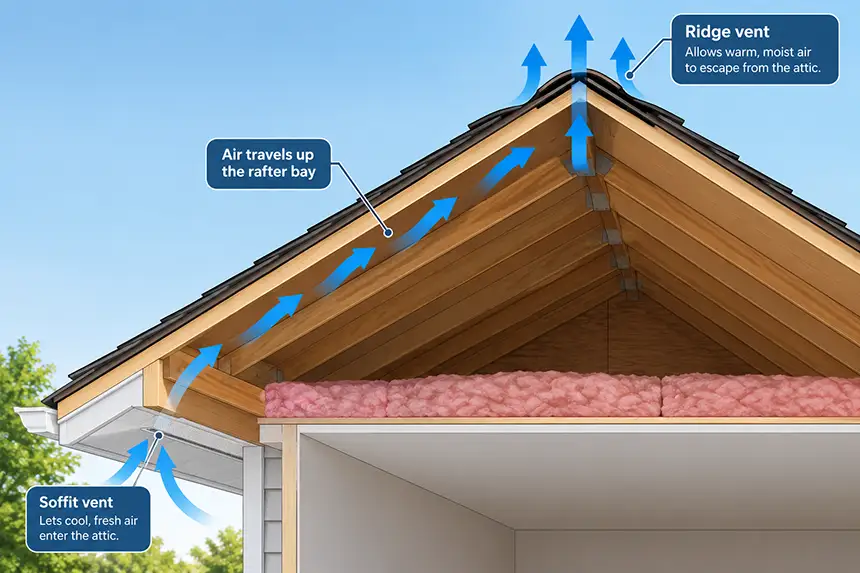
If your input ducts already live, guard them preferably with sealing for better protection. Accept small decorative vent areas that airflow provides a better experience, but not automatically a ranked ventilation.
You should also check the local structure and the shiplap manufacturer’s proper instructions before locking all of it.
Where It Reads Best
When you embed a deep porch in wide roof overhangs, it gives shiplap soffits space to show the required lines, and a patio or entry lets the detail be seen well without pulling your neck.
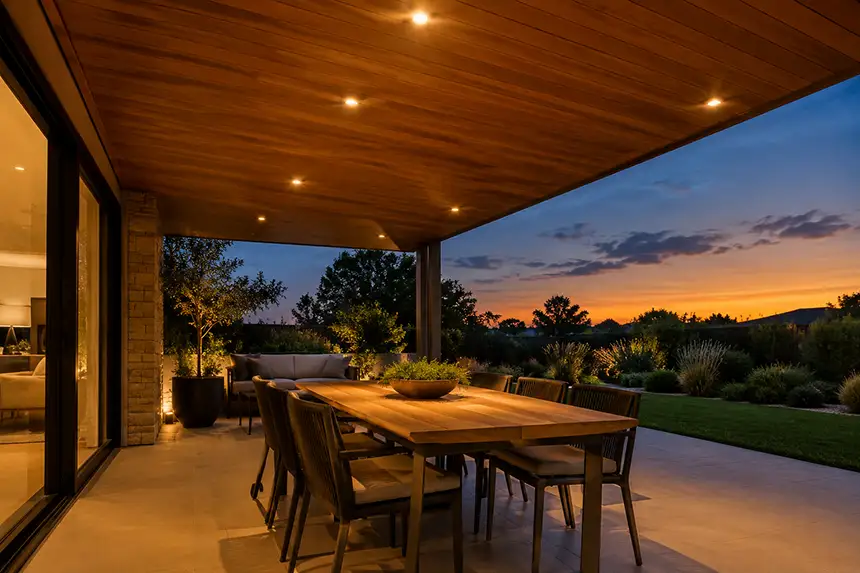
Your house should make the easy choice. Match the porch color with a door, garage, or the ceiling that ties your exterior together. Your small eaves look crowded when too many narrow boards are used, while wider boards look better.
Your roof builds transformation in the results obtained: it simply creates longer depth with sharper corners, while your ceilings should divide the passage into smaller portions.
If you are selecting a soffit, try to be realistic about maintenance costs; you should assume what is in your imagination in the installation setup. It is more dirt, repainting, inspections, and repairs that come along.
What It Costs to Keep
Costs you bear should be acceptable to your limitation or the protection you follow:
- You should know the cost of board. For all the factors like roof length, material, access, and hidden damage, which eventually change the outcome fast and cost more.
- You should maintain the roof, as it costs you less than rotten, border stains, waste materials, fascia restorations, or hidden portions.
- Care also counts what you install. Timber needs initial paints and renovation; PVC and aluminum generally need less work.
Important Facts: The expense data reveals that skilled soffit costs range from 6 to 30 per linear foot in September 2026, while it comes to be approximately 800 to 2,500 wooden soffit structures on common houses in July 2026.
Before obtaining, ask yourself what it is. All installation should be clear to you. Not every renovation has what it gives later. It’s a decorative choice with a lower cost. It costs you less if damaged structures with ventilation remain hidden; these outcomes cost you more if missed.
Final Thoughts
Shiplap gives a simple roofline, but the secret work is most important. You should always check the current soffit, fascia, attic insulation, roof edge, and any indication of rot or water damage. Accept the exterior-rated panel. Internal shiplap is not you use for bad weather. You should ensure ventilation and drainage are functioning before installation.
Get your endurance for the material, and proper room to relocate. Setting a lovely soffit later because moisture or airflow is most ignored is costly and overloaded.
FAQs
Can shiplap be used as a soffit without extra venting?
Not automatically. The boards consist of joints, but gaps are not suitable for a designed intake vent. Make sure the attic path is transparent and follow the instructions provided by code.
Does a shiplap soffit work in a humid or coastal climate?
It happens; materials and finishing should handle weather as well. Factors like excess moisture, dry air passing through, and damage to the board mean you should select an exterior-grade system and guard that are exposed across borders.
What gap should be left between the boards?
Shiplap ventilation has no defined gap, but it should track the factory spacing and keep needed vent doors separate from cosmetic points.
Is this a job a homeowner can take on?
A skilled DIYer should always tolerate some structures given, but ceiling-border work has small spaces. If you choose to frame, corrode, ventilate, or if difficult entry is involved with this, that brings in a skilled contractor or roof expert.
Will a shiplap soffit raise my property value?
Absolutely. It improves the impression when it suits the underlying roof and exterior look, but it does not secure a fixed return. This upgrade increases your value, and the design looks expensive.
- dassoXTR, “Bamboo Shiplap Soffit” — bamboo shiplap soffit, board dimensions, hidden-clip fastening, off-rafter installation at sixteen-inch centers, and high-wind guidance
- YourHomify, “Protect Your Home by Keeping Your Roof in Good Condition” — home’s roofline, balanced soffit and ridge ventilation and ice dam formation
- YourHomify, “The Art of Minimalism: Exploring Modern Residential Architecture” — minimalist and modern architecture, clean lines, natural materials, and indoor-outdoor transitions
- YourHomify, “The Secret to Keeping Your Home Exterior Looking Brand New” — home’s exterior, exterior cleaning intervals and pressure cautions on delicate surfaces
- YourHomify, “How Outdoor Kitchens and Thoughtful Landscaping Work Together” — outdoor living spaces, material cohesion and coordinated lighting in covered outdoor areas
- Etymonline, entry for “soffit” — Italian and Vulgar Latin origin, first English use in the 1610s