Experiencing a garden after sunset has a thoroughly different vibe. Still, most of the individuals miss it. Their plants almost disappear in the dark, paths become a challenge to see, and outdoor seating feels disconnected from the rest of the landscape.
The solution is using the right lighting. It can bring back life without making the entire place seem overly bright. By focusing on key features, guiding areas and a creative layer of light and shadow, the garden can be made exceptionally beautiful.
Keep reading to learn how to use landscape lighting to make your garden look better after dark.
Begin With the Garden, Not the Fixtures
It is natural to begin an outdoor lighting project by selecting fixtures, but the landscape itself should come first.
Walk through the yard and judge the elements that already give it life. These might include a mature tree, an artistic grass border, a stone wall, a linear pathway, a pergola, or a lovingly planted flower bed.
Then ask which of those traits you would still like to see at night.
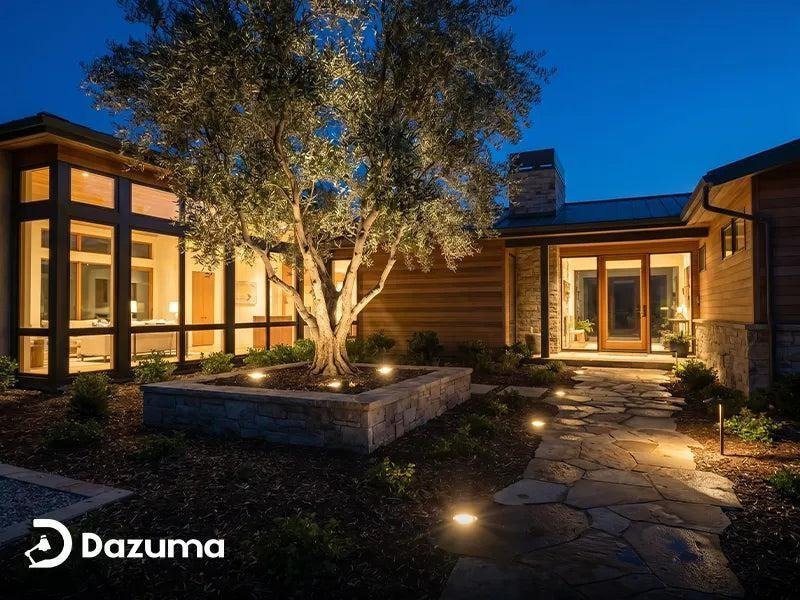
Not everything needs to be lit. In fact, deciding only a few focal points usually creates a stronger result. Lighting one appealing tree can make it feel more important, while glowing every tree equally may lessen the sense of separation within the garden.
Create Depth With Foreground and Background Light
One reason some patios feel cluttered after dark is that the seating area is beautifully lit while everything beyond it vanishes.
You can avoid this by integrating a small amount of light more clearly into the landscape. A softly spotlighted tree at the back of the yard, for example, creates a visual attraction beyond the patio. A path light further into the garden can display that the landscape moves on rather than ending at the edge of the porch area.
This foreground-and-background standpoint is especially valuable when the garden is visible from large windows or glass doors. Instead of looking at sights in dark glass, homeowners can continue admiring parts of the garden from below the house.
Also, learn how to build a healthy garden with simple habits.
Use Different Techniques for Different Plants
Plants do not all adapt to lighting in the same way.
A tree with an interesting trunk can be admired from below so that its bark and branching structure end up more visible. Ornamental grasses can look mysterious when light passes through their thin leaves. Dense shrubs may adjust better to softer spotlights from the front or side.
You can also use plants to develop shadows. A fixture installed near a sculptural plant may cast an interesting drawn figure onto a nearby wall or fence, permitting the plant to become part of the architectural arrangement.
The easiest way to find the right angle is to spend time after sunset. Temporarily move those adjustable fixtures and investigate the results before fixing their locations forever.
Also, learn how to grow and care for harvest dates.
Let Path Lighting Guide Rather Than Dominate
Paths are among the most popular parts of a garden to spotlight because they connect entrances, patios, gates, and other extensively used areas.
However, pathway lighting should provide directional information rather than turn the walkway into a bright corridor.
Instead of installing fixtures directly facing one another at perfectly equal lengths, consider centering them around curves, steps, changes in level, and notable planting areas. Staggered spacing often feels more natural in unadorned gardens.
Fixtures that direct light above the walking surface can improve your perspective without producing unbearable glare. Lower brightness is often effective once your eyes have adjusted to nighttime lighting.
Choose Landscape Fixtures According to Their Job
Different outdoor decor items create very different effects, so it is helpful to rank them according to function rather than their looks alone.
Path lights are suited to traffic areas. Spotlights can reveal trees, sculptures, or architectural details. In-ground fixtures can offer a more discreet source of upward brightness, while bollard lights can add both light and visible architecture to larger paths and driveways.
Homeowners comparing a broad range of landscape lighting can look at more than two fixture types together and decide which blend suits different areas of the property instead of showcasing one light throughout the back yard.
Using several fixture types does not suggest that the design needs to feel unified. Similar finishes, proportions, or light colors can help different lamps work together.
Keep Plant Growth in Mind
A landscape is never completely put together. Trees grow, shrubs flourish, ornamental grasses become taller, and flower beds change depending on the seasons.
Lighting should be planned for that growth.
A fixture positioned optimally beside a young shrub may fall inside the foliage two years later. A spotlight targeted at a small tree may need to be revised as the canopy becomes wider.
Leave enough access around fixtures to allow cleaning, locating, and maintenance. Avoid placing equipment where rising roots or dense vegetation are likely to make future upgrades difficult.
It is worth revisiting the lighting several times a year, particularly after major cuts or seasonal upgrades in the garden.
Use Warm Light to Support Natural Materials
Color temperature can have a key psychological effect on how a garden looks at night.
Warm light tends to go with many materials found in residential gardens, including timber, brick, natural stone, and green foliage. It can also provide a more relaxed ambiance around patios and outdoor picnic areas.
More important than assigning one exact color temperature is ensuring reasonable consistency. A warm path surrounded by significantly cooler blue-white light bulbs can make the garden feel visually disorganized.
Brightness should also vary with respect to purpose. Task areas may demand stronger illumination than artistic planting, while accent lights often work nicely when they are subtle enough to fit into the scene.
Connect the Garden Lighting With the House
Landscape lighting should not feel like a wholly separate system from the residual of the property.
Look at external wall lights, porch fixtures, architectural finishes, doors, windows, and outdoor furniture when deciding on landscape fixtures. Use of a black, bronze, or metallic finish in several areas can help blend the garden visually with the home.
If you are managing multiple indoor and outdoor lighting areas, a versatile lighting source such as Dazuma Lighting can transmit inspiration across wall, pathway, landscape, bollard, and other fixture types, making it easier to distinguish designs that share similar architectural traits.
The lights do not need to match precisely. A repeated finish or similar visual language is often enough to create a consistent pattern.
Do Not Forget Practical Outdoor Conditions
A beautiful fixture still needs to operate outdoors.
Landscape lights may be prone to rain, irrigation, soil moisture, dust, heat, cold, and ultraviolet light. Check that each fixture is optimal for its suggested location and follow the manufacturer’s installation instructions.
An in-ground fixture beside a sprinkler exposes different conditions from a light mounted beneath a closed structure. Likewise, coastal environments and areas with prolonged winters may require additional planning when picking out materials and finishes.
Electrical connections, transformers, cable routes, and drainage also involve proper planning. Professional installation may be correct based on the voltage, local requirements, and scale of the project.
Also, explore ways to maintain a healthy, vibrant, and flourishing outdoor space.
Allow Some of the Garden to Stay Dark
In the end, good landscape lighting is less about including more fixtures and more about using each light with a defined purpose. The core is to highlight features you will love enjoying the most, keep pathways easy to find and follow, and prefer to leave some areas in the shadows to create contrast.
This way, the end result will be a mix of light, darkness, and natural garden elements your outdoor space will use to make it more comfortable and welcoming.
FAQs
How many landscape lights does a garden need?
There is no fixed number. Begin with essential pathways and focus points, and be sure to keep the area visible and safe.
Should landscape lights be bright?
Not always. For the pathways and planting areas, softer lights can also go well and create a relaxing space.
Is it essential to glow in each part of the garden?
No. It is essential to keep some areas dark, as it creates contrast. This way, the glowing features stand out without making the space feel overly bright.