A gorgeous backyard is not just about healthy plants, fresh grass, or an inviting patio. The condition of the land below may decide how well such elements will be able to survive through the years.
Poor grading, unstable soil, and unseen drainage problems can make a landscaping project a never-ending cycle of costly fixes. Water might gather around the house, the paths might become uneven, and the gardening areas might start sinking.
That is why residential excavation deserves attention before any landscaping begins. Preparing the ground properly helps manage rainwater, create stable surfaces, and give every part of your outdoor space a stronger foundation.
What A Dig Crew Actually Does In A Backyard
Residential excavation reshapes and firms up the ground. The team removes the unsuitable soil, sets the slope, digs for footings, pads, and trenches to create a solid foundation for what is to come next.
If you search for residential excavation services, you will see the same work listed under grading, trenching, pads, and drainage. It is all one family of jobs: moving dirt to the right place and leaving it firm enough to build on. A patio, a play area, a hot tub pad, or a gravel parking spot all start this way.
Drainage Comes First
The yard should be at a slight incline to allow water to drain away from the foundation of the house. That slope is set during excavation, not after planting.
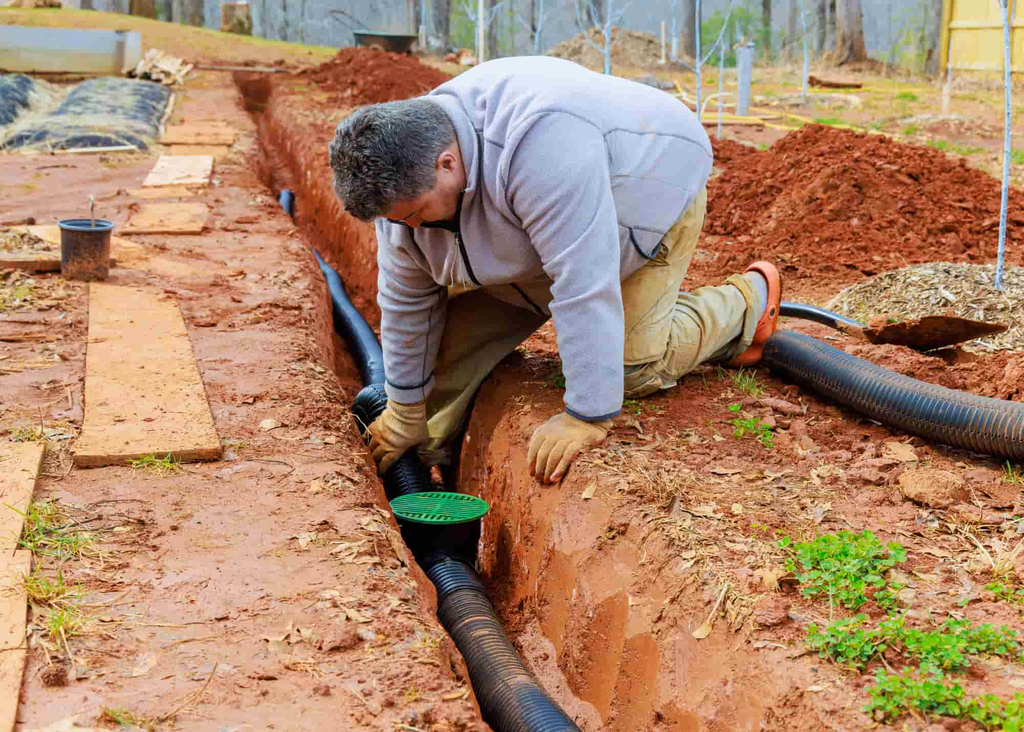
Walk your yard after a heavy rain and note where water collects and how long it stays. Low spots, soggy strips along a fence, and wet ground near the downspouts all tell the crew where the grade needs work. Sometimes the answer is reshaping the slope. Sometimes it is a shallow channel, called a swale, or a buried pipe that carries the water to a better place. In either case, plant after the water problem is resolved, not beforehand.
Why Ground Settles, and How To Stop It
Ground settles when it was loose to begin with. Fill dirt that was never compacted, old rotting roots and stumps, and trenches backfilled in one run are common reasons.
The fix is to dig out what should not be there and rebuild the ground in layers, pressing each layer down before adding the next. It is slow work, and it is the reason a patio stays flat for years. If a contractor skips it, the dips show up under pavers first, and then in the lawn.
Know What Is Underground
Dial 811 a few days prior to excavation to mark public utility lines. That call does not cover private lines, so it is worth looking for those yourself.
- Irrigation lines and sprinkler heads.
- Gas lines running to a grill, fire pit, or detached shed.
- Electrical lines to a garage, shed, or outdoor lighting.
- Septic tanks and drain fields, if your home has a septic system.
- Old drain pipes from earlier projects.
If you have an old site plan or know where the previous owner ran lines, hand it to the crew before they start.
Equipment Size Matters For Your Lawn
The machine that digs should fit the yard. A big excavator in a small backyard tears up the lawn, crushes the path to the gate, and can damage fences and roots you want to keep.
Site Prep is a family-owned contractor from Gap, Pennsylvania. The company matches the mini loaders to the size of each yard, thus causing minimal damage to the sections of your property that you want to keep. Ask any crew how they plan to get equipment in and out, and what they will do about the lawn and the plants along the route.
What To Ask Residential Excavation Contractors
A good excavation contractor will be able to answer all of these questions easily. If the answers are vague, keep looking.
- What exactly is included: digging, hauling away extra soil, bringing in fill, and final grading.
- How buried lines get found and avoided.
- How water will move through the yard when the work is done.
- Who restores the lawn and the access route afterward.
- Who your contact is during the project, and how you will hear about changes.
A Sensible Order For A Backyard Project
The order of work matters as much as the work itself. Clean the dirt first, followed by the hard surfaces, and finally the plants.
- Decide what the yard will hold: a patio, a play area, garden beds, a pad for a pool or hot tub.
- Mark the utilities, public and private.
- Excavate and grade, with the water in mind.
- Add drainage pipes or channels where the yard needs them.
- Build the base for patios and paths.
- Spread topsoil, then seed, sod, and plant.
FAQs
Why is residential excavation necessary prior to landscaping?
Residential excavation gets the ground ready for landscaping by providing proper drainage, getting rid of unsuitable soil, and providing a firm foundation for patios, walkways, lawns, and planting beds.
What are some reasons why the ground settles after landscaping?
The ground will settle due to loose fill dirt, decaying tree roots and stumps, and poorly compacted trenches.
When Should Excavation Take Place During Landscaping?
Usually, excavation should take place before the installation of patios, paths, gardens, or lawn. Draining and grading issues should also be taken care of before planting.
Which factors should be taken into account when choosing the appropriate excavation machinery?
Factors such as the size of the backyard, access route, type of soil, and surrounding structures will guide the decision on what equipment to use. Smaller machines may be preferred because they may cause less damage to grass, fences, and other vegetation.