A yard can look appealing without having a complicated layout, but the right features can make it feel more inviting and easier to use. Imagine walking along a stone path, passing a low retaining wall softened by plants, before reaching a seamless patio at the end of the yard. Natural stone can help create this kind of connected outdoor space while adding texture and structure.
Whether you are enhancing a small yard in Pennsylvania or planning a larger landscape elsewhere in the United States, the key is choosing features that suit the space, local weather, and practical requirments without overwhelming its existing character. Here are seven practical ways to bring natural stone into your outdoor space.
1. Create a Natural Stone Pathway
A pathway connects various areas of the yard and makes them easier to reach. Stone can also make the route feel integrated with the surrounding landscape.
- Stepping stones: Place individual slabs through grass or ground cover.
- Stone paving: Use flagstones for a more refined walkway.
Select a surface with good grip when wet and lay it on a stable base. Space stepping stones for comfortable walking and keep the route clear of tall plants, or tuck low-growing creeping thyme and Irish moss into the joints to soften the stone corners.
2. Add a Stone Retaining Wall
A retaining wall can make a sloping yard more practical by holding back soil and creating level areas. It can also provide a strong visual feature.
- Terraced walls: Divide a slope into levels for planting or seating.
- Low garden walls: Define the edges of lawns, paths, or raised beds.
Natural stone can lie comfortably within the surrounding landscape. Homeowners in the area considering this type of feature can explore stone masonry in Ardmore for information about local stonework services. Retaining walls must be designed to bear soil pressure and water movement. Bigger or load-bearing structures should be assessed and built by qualified professionals.
3. Design a Stone Patio
A stone patio makes a practical place for outdoor dining or relaxing. It can connect the house to the yard and provide a destination at the end of a pathway.
- Natural stone paving: Choose colors and textures that complement the house.
- Seating zones: Use paving patterns to distinguish dining and relaxation areas.
Allow room for furniture and movement, and make sure rainwater can drain away. The US Environmental Protection Agency’s guidance on green infrastructure describes how permeable pavement and rain gardens can help manage stormwater around outdoor spaces. Framing the patio perimeter with container blooms or low boxwood hedges also helps merge the hardscape into your garden.
4. Edge Flower Beds with Stone
Stone edging separates flower beds from lawns and paths. It is generally a low border, not a structure designed to hold back substantial amounts of soil.
- Loose stone borders: Arrange smaller stones for an informal finish.
- Set stone edging: Use larger pieces for a defined boundary.
Select colors that complement nearby paving, and keep the border in proportion to the plants. Lavender, ornamental grasses, and low-growing perennials can lighten the transition between stone and greenery. Remember, the mulch you choose decides how well your perennials and flowering shrubs grow.
5. Build a Small Rock Garden
A rock garden can add interest to a sunny slope, corner, or compact outdoor space. Combine stones with plants that fit the local growing conditions.
- Grouped boulders: Use a few larger stones as anchors.
- Planting pockets: Bring suitable alpine plants in gaps between rocks.
Set stones partly into the ground so they look settled rather than scattered. Check each plant’s sunlight and moisture requirments, and avoid overcrowding the arrangement.
6. Introduce a Stone Water Feature
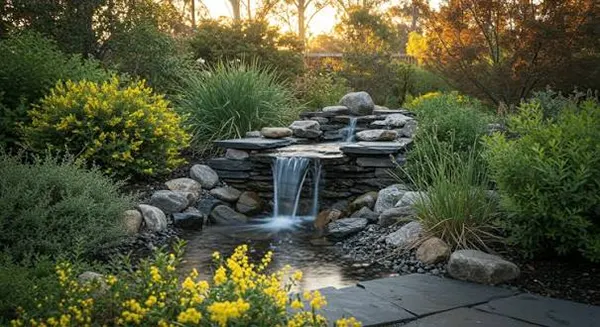
A stone water feature can become a focal point and provide movement and sound in a yard. Stone around a pond, fountain, or water channel can help it blend with the landscape.
- Stone-edged pond: Use rocks to define the pond’s edge.
- Stone fountain: Choose a design that suits the yard’s scale.
Plan for power, water circulation, and safe placement before installation. Select stone suited to repeated water exposure and shifting temperatures, surround the base with moisture-loving ferns or hostas, and leave enough space for maintenance.
7. Add Stone Steps to a Sloping Yard
Stone steps can connect various levels, including terraces, patios, and planted areas. They are useful where a sloping path or lawn is difficult to navigate.
- Broad steps: Make a generous route where space allows.
- Stepping-stone routes: Use individual stones for a more informal path where suitable.
Keep step heights and depths consistent, with a stable foundation and slip-resistant surface. In frost-prone areas, such as parts of Pennsylvania, installation should account for seasonal ground movement and freeze-thaw cycles.
What to Consider Before Choosing Stone Features
Select features that suit the yard’s layout and can be maintained safely. Before you landscape, consider:
- Material: Compare color, texture, durability, and climate suitability.
- Scale: Match each feature to the available space.
- Drainage: Keep water away from buildings and neighboring properties.
- Maintenance: Check cleaning and repair requirements.
- Installation: Seek professional advice for retaining walls, substantial steps, and complex stonework.
Stone performance relies on its type, finish, installation, and exposure. Homeowners should also check local building codes and drainage requirements before starting work. Planning these details supports the finished outdoor space remaining practical and attractive.
The Bottom Line
Natural stone can add structure, texture, and practical value to outdoor spaces of many sizes. Select pathways, patios, walls, and decorative improvements according to the layout rather than trying to include everything. Suitable materials, good drainage, and careful installation help stone features remain attractive and useful throughout every season.
Frequently Asked Questions
What is the best natural stone for a yard?
Sandstone, slate, limestone, and granite are common options, but suitability relies on the feature, climate, finish, and maintenance needs.
Are natural stone features suitable for small yards?
Yes. Stepping stones, narrow borders, and compact rock gardens can add texture without taking up much space that can be utilized.
How can I maintain natural stone features?
Remove leaves and debris, use cleaning methods suitable for the stone, and check joints and walls for movement or damage.