

Peaches are one of the most loved summer fruits because of their sweet flavor, juicy flesh, and refreshing taste. Just like me, if you also enjoy eating them fresh, you may wonder when peaches are in season and when to buy them for the best flavor. Although the timing varies around the world, peaches are generally harvested during the warmer months.
Here, in this article, we will cover peach seasons in different countries, popular varieties, tips for choosing ripe peaches, and easy storage methods to keep them fresh for longer.
Quick Answer
Peaches are generally in season during the warmer months of the year. In the United States, the main peach season typically runs from May to September, although some varieties remain available into October. In the Southern Hemisphere, peach season generally falls between November and March, depending on the country and growing conditions.
When Are Peaches in Season?
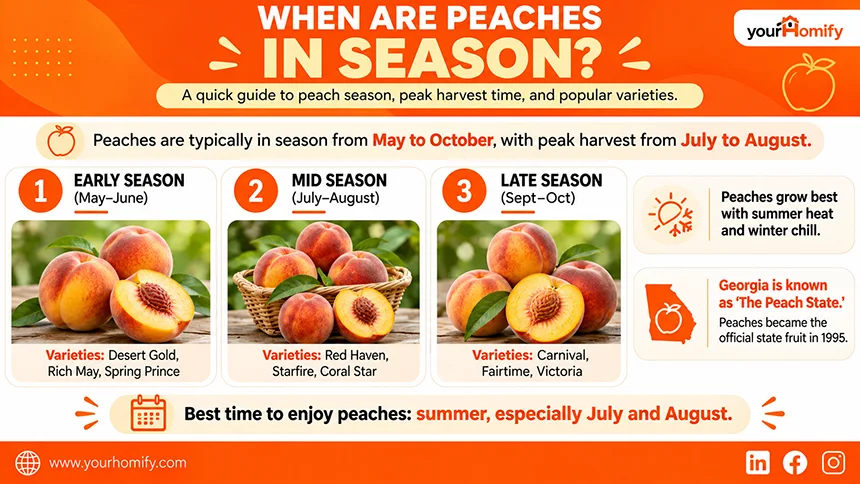
Peaches are ready to enjoy during the summer months, typically from May to October. The peak harvesting season is from July to August. Since peaches require both summer heat and winter chill to grow effectively, it is crucial to cultivate them in suitable temperature conditions.
The availability of certain peach varieties depends on the change of season.
| Season | Popular Varieties |
| Early Season (May to June) | Desert Gold, Rich May, and Spring Prince |
| Mid Season (July to August) | Red Haven, Starfire, Coral Star |
| Late Season (Sept to Oct) | Carnival, Fairtime, Victoria |
Georgia is popularly known as “The Peach State.” The state is celebrated for the exceptional flavor, texture, and juiciness of peaches. In 1995, peaches were designated as the official state fruit.
Peach Season Around the US (Quick Glance)
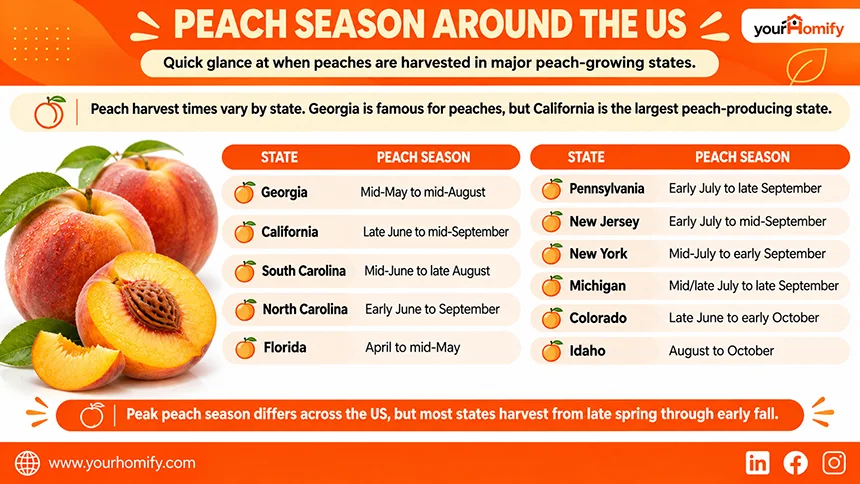
| State | Peach Season |
| Georgia | Mid-May to mid-August |
| California | Late June to mid-September |
| South Carolina | Mid-June to late August |
| North Carolina | Early June to September |
| Florida | April to mid-May |
| Pennsylvania | Early July to late September |
| New Jersey | Early July to mid-September |
| New York | Mid-July to early September |
| Michigan | Mid/late July to late September |
| Colorado | Late June to early October |
| Idaho | August to October |
Understanding when peaches are in season in California and other regions makes it easier to choose them at the right time. While Georgia comes first to mind when talking about peaches, according to the US Department of Agriculture, California is by far the largest peach-producing state in the United States.
How to Tell If Peaches Are Ripe and Ready to Eat?
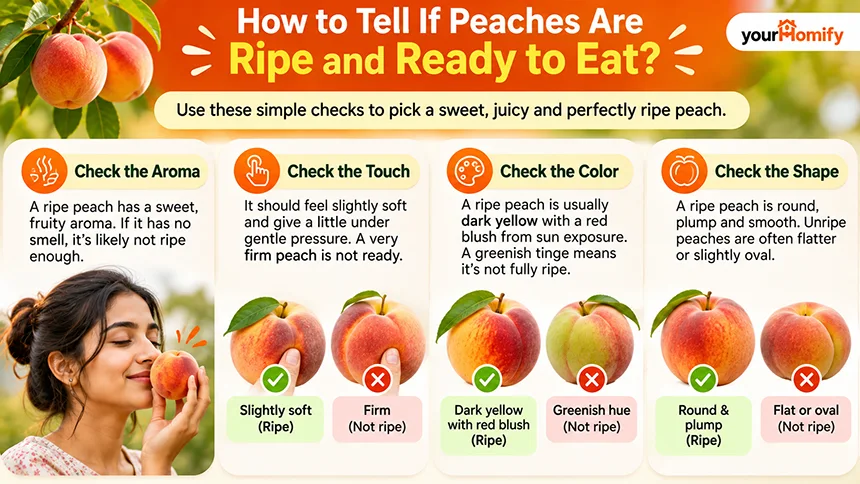
- If the peach is firm and tight to the touch, it means it is not ready. Make sure that when you touch it or press it, it feels a bit juicy. Do not squeeze it too hard; it will result in bruising.
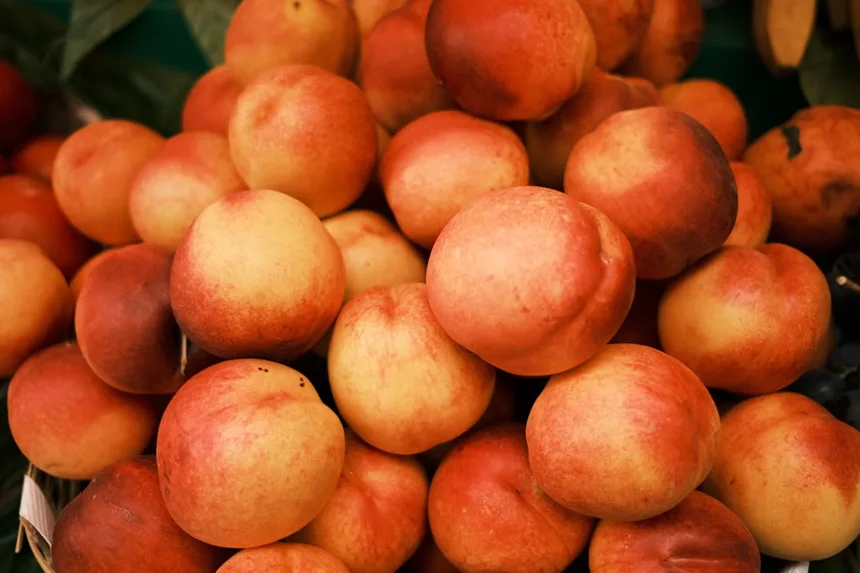
- A ready-to-eat peach is dark yellow in color. The light red part is often due to direct sun exposure. If the fruit is even lightly green, it means that it is not fully ripe. Although you can eat a green peach, it won’t be as sweet and juicy.
- The harvest time of peaches can also be determined depending on their shape. A ready-to-harvest peach should be round or smooth and spherical. Unripe peaches are typically flat or oval.
Different Varieties of Peaches Available
There are over 300 varieties of peaches grown in the United States. To learn more about different types of peaches, it’s essential to first understand the categories they are divided into.
- Clingstone: The pit of clingstone types is tightly woven to the fruit and cannot be separated manually. You must cut the fruit away from the stone. Clingstone peaches are also said to be softer, juicier, and sweeter. You can harvest early in the season, typically from May to early July.
- Freestone: The flesh of freestone peaches separates effortlessly from the stone. These are generally larger and firmer but slightly less juicy than the clingstone varieties. They appear late in season, from mid-summer to September/October.
- Semi-freestone: These are hybrid peaches that combine both the qualities of the above categories. You can easily separate the pit from the flesh of the fruit by just twisting the two halves from the center. These can be harvested later in the season, running from mid-summer to September/October.
Let us quickly explore a few varieties of each of the categories mentioned.
| Variety Name and Type | Image | Description |
| Desert Gold Peach Tree (Clingstone) | 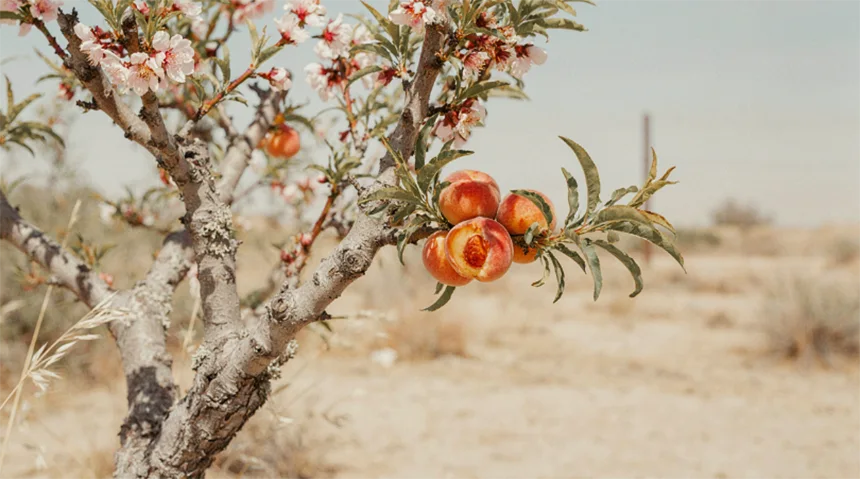 | This peach tree features medium-size fruit that has bright yellow skin with a red blush. It thrives in a warm climate and in USDA hardiness zones 7-9. |
| Springprince (Clingstone) | 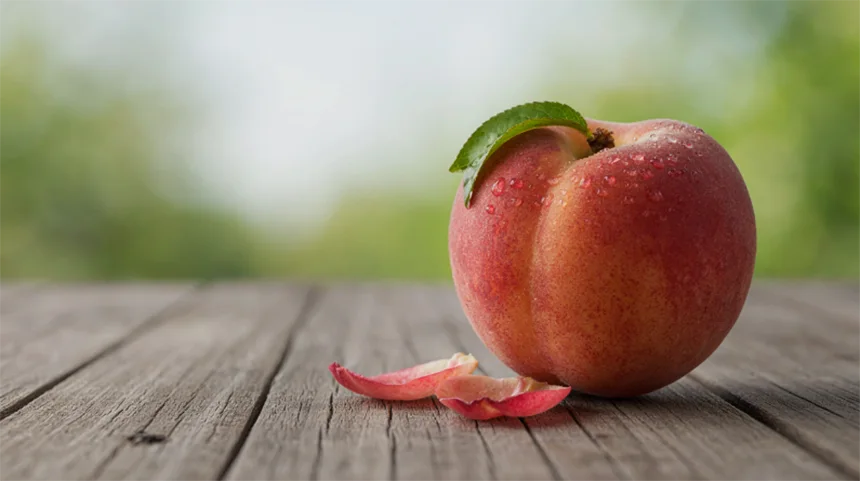 | Springprince is a clingstone peach variety. It is appreciated for its big fruit size and can be harvested early in the season. |
| RedHaven Peach (Freestone) | 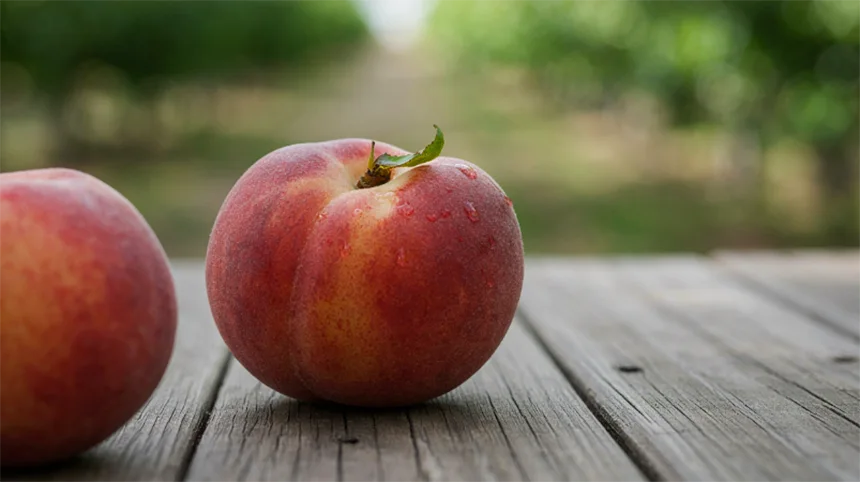 | The RedHaven peach tree is a classic example. It is one of the most widely planted deciduous peach trees. The tree also has showy pink flowers. |
| Suncrest Peach (Freestone) | 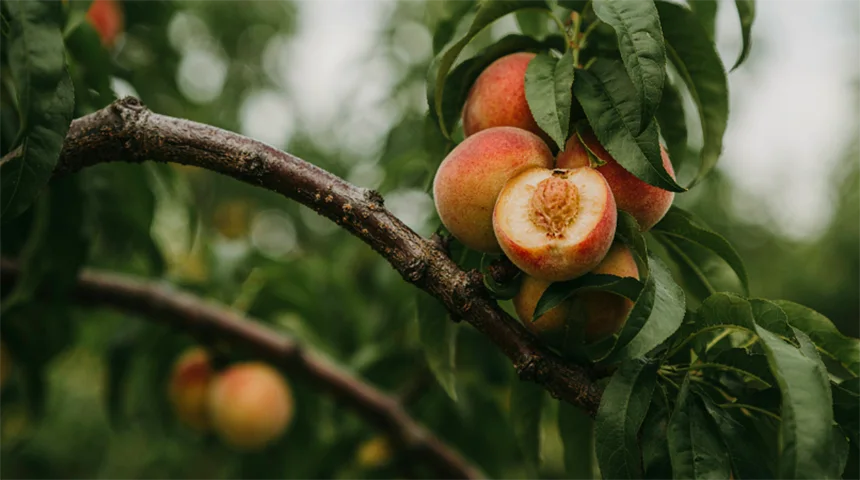 | The Suncrest peach is a midseason fruit with a sweet-tart flavor and firm texture. It is generally used in baking or for preserving. |
| Babcock Peach (Semi-freestone) | 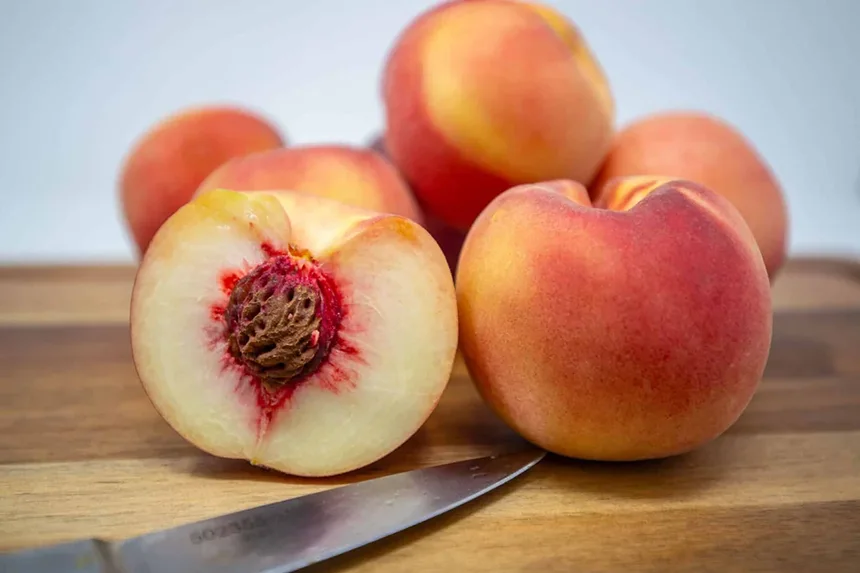 | The Babcock peach (Prunus persica) is a semi-freestone peach variety that is well-known for its white-fleshed skin. It is very juicy and aromatic and is enjoyed fresh. |
| June Flame (Semi-freestone) | 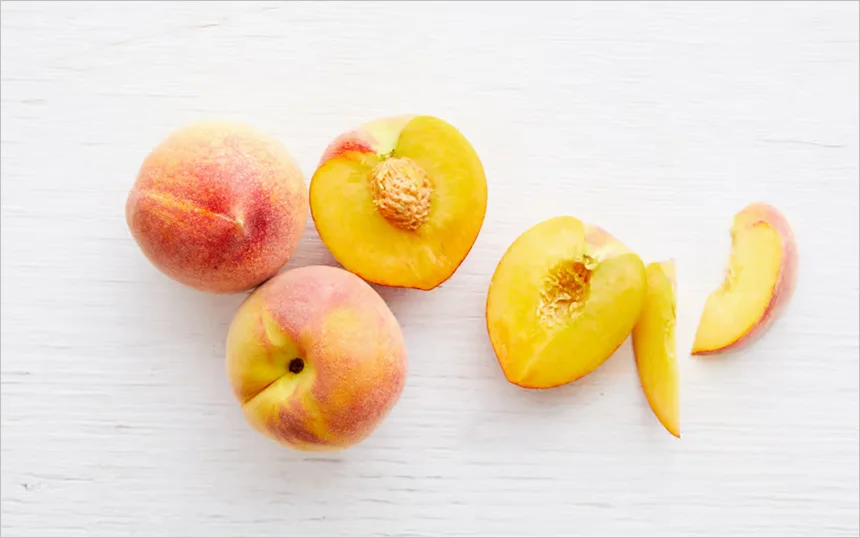 | The June Flame is a popular early to mid-summer peach variety. It has a sweet flavor but requires 500-700 chill hours. |
Recommended Product
View all products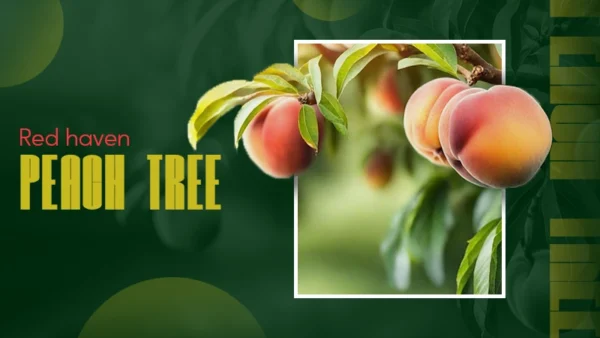
Common Name Red haven Peach Maintenance Moderate to high Native Region Developed in Michigan (is a cultivated variety) Average Height 12 to 15 feet Plant Type Deciduous fruit tree Average Width 12 to 15 feet Red Haven peach trees are a perfect choice for home gardens as well as commercial use, as they not only produce a rewarding harvest but are also highly disease-resistant. This plant is known for its consistent yields, excellent flavor, and its ability to sustain in a wide range of climates. Key Features of the Red Haven Tree It is a medium-sized tree that grows up to 12–18 feet tall and can be easily managed by pruning. The Peach Tree Red Haven genus has a spreading, rounded canopy that allows good sunlight and airflow. The smooth, grey-brown bark and upright branches enhance the overall garden look. During spring, the Red Haven peach trees produce fragrant, soft-pink flowers that attract pollinators. It produces medium to large peaches with juicy yellow flesh, and the narrow green leaves create a beautiful contrast in the garden. This tree features orange foliage in autumn, giving a very aesthetic and scenic view. The dwarf red haven peach tree variety is compact and slow-growing, and is considered ideal for small gardens or containers. Care Guide, Advantages, and Disadvantages of the Red Haven Tree Hardiness Zone : The Red Haven peach tree growing zone includes USDA Zones 5-8. Light Exposure : Requires full sun (at least 6 to 8 hours). Soil Type : Needs well-drained, sandy loam soil. Water Needs : It requires consistent moisture (about 1-2 inches per week). Advantages Highly popular, sweet, delicious, juicy, and luscious fruits. It is a self-pollinating tree. Resistant to bacterial leaf spot. Fast-growing and produces consistent, rewarding crops. Disadvantages Requires multiple pickings as the fruits ripen over a long period. It requires consistent pruning. Prone to brown rot and canker. Needs active maintenance due to vigorous growth rate.
Did You Know?
White-fleshed peaches like Babcock usually taste sweeter and milder because of their low acid content, not because they contain more sugar.
How to Keep Peaches Fresh For Longer?
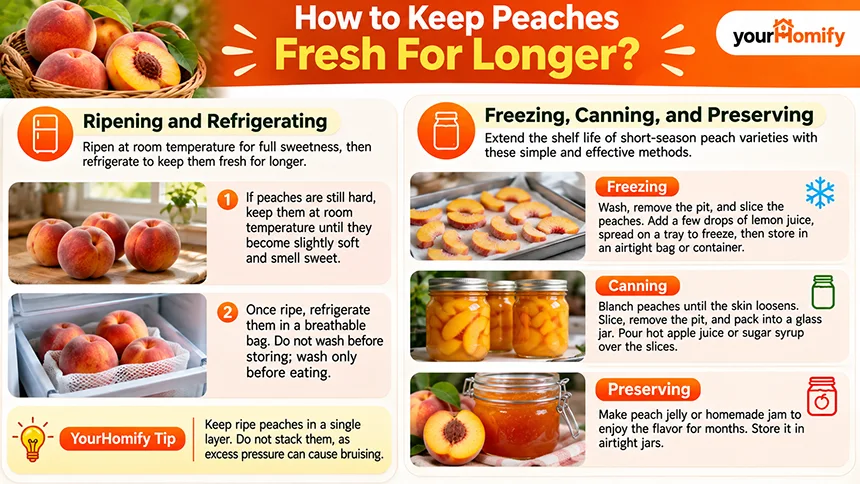
To keep peaches fresh for longer, the most important thing is to store them based on how ripe they are, because they can become soft and spoil quickly if not stored properly. The good news is that with a few simple storage methods, you can enjoy their sweet taste even after the harvest season.
1: Ripening and Refrigerating
Ripening peaches at room temperature and then refrigerating them for freshness is the most common and useful method. This ensures full sweetness and extends the shelf life of the fruit.
- If your peaches are still hard, leave them at room temperature until they become slightly soft and start smelling sweet. You can place them on a kitchen counter, away from direct sunlight.
- Once the peaches are ripe, put them in a refrigerator. Store them in a breathable bag to keep them fresh for a few more days. Do not wash peaches before storing them because excess moisture can spoil them. Wash them just before eating.
YourHomify Tip
Keep ripe peaches in a single layer. Do not stack them, as excess pressure can cause bruising.
2: Freezing, Canning, and Preserving
If you have peach varieties that have a short lifespan, the freezing, canning, and preserving methods can extend that. The process is quick and simple and also reduces microbial growth.
- Freezing: Wash the peaches, remove their pits/seeds, and cut them into slices. I usually add a few drops of lemon juice to prevent browning. Spread the slices on a tray and freeze them. Once they are frozen, you can transfer them to an airtight bag or container.
- Canning: Blanch the peaches until the skin loosens. Slice them, remove the pit, and place the slices into a glass jar. Pour hot apple juice or sugar syrup over the peaches, and you are good to go.
- Preserving: According to me, this is one of the best methods to keep peaches fresh for longer. You can make peach jelly or homemade jam and enjoy the flavor even after the harvest season. Store them in airtight jars.
Final Words
Now that you know when peaches are in season, it is easier to find and enjoy fresh, juicy peaches at the right time of year. Peach season usually falls during the warmer months, but the exact timing depends on the country and variety. Whether you wish to enjoy them fresh, add them to desserts, or preserve them for later, peaches are a wonderful fruit to include in your meals.
FAQs
What is the best month to buy peaches?
Although the peak season varies by region, the best time to buy peaches is from July to August.
Which town is famous for peaches in the United States?
Fort Valley in Georgia and Johnston in South Carolina are the two most famous peach towns in the United States. These regions are globally well-known for their large, firm, and juicy peach harvest.
What is the best way to keep peaches fresh for longer?
Store them on the kitchen countertop until they ripen, and then put them in the refrigerator only after they are soft. If you wish to speed up the process, place them inside a paper bag and keep an apple or a banana inside.
What is the shelf life of fresh peaches?
If the peaches are unripe, they can last for 1-3 days on the kitchen counter; once they are ripe, the fruit can last for 3-5 days.
- When Is Peach Season? It’s a Bit Fuzzy – The New York Times