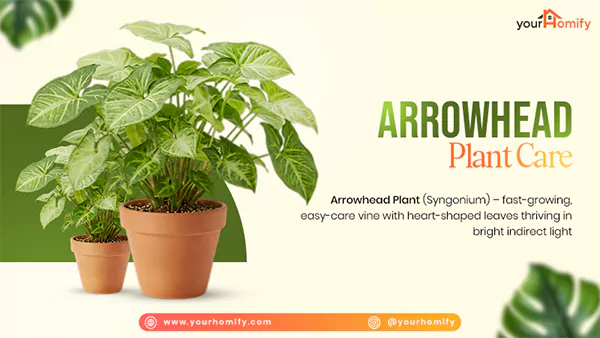
Arrowhead plant, popularly known as arrowhead vine or Nyphthytis, is a houseplant that is prized for its juvenile heart-shaped foliage and quick-growing nature. Native to Central and South America, the air-purifying plant thrives well in warm and humid conditions and prefers to be kept in bright indirect sunlight, much like the bamboo plant.
I particularly admire the easy arrowhead plant care and its growing habit from a bushy tabletop specimen to a dramatic climbing vine. Whether you are a beginner or an experienced gardener, this tropical beauty is certainly a rewarding addition to your balcony garden!
Taxonomy, Key Features and Benefits of Arrowhead Plant
Arrowhead plant, botanically called Syngonium podophyllum, is versatile to add an aesthetic value to homes and offices with different coloured foliage.
The vining plant has some worth discussing, features and benefits like its changing foliage, air purifying nature and growth habit. Let’s take a look at its taxonomy, features, and benefits one by one:
Taxonomic Overview of Arrowhead Plant
| Kingdom | Plantae |
| Order | Alismatales |
| Family | Araceae |
| Subfamily | Aroideae |
| Genus | Syngonium Schott |
| Species | Syngonium podophyllum Schott |
Key Features and Benefits of Arrowhead Plant
- Changing Foliage: The leaves of this vining plant are initially shaped as arrowheads and, on maturity, change their shape by becoming lobed or divided into 5-11 leaflets.
- Distinctive Colours: The plant is available in many colour variations, which often shift from white and pink to green with maturity. Some cultivars showcase bright colours like burgundy and yellow as well.
- Growth Habit: It is known for its versatile growth habit, from being compact and bushy to vining with time, becoming ideal for hanging baskets and trailing up a trellis.
- Natural Air Purifier: By absorbing volatile organic compounds from leaves and roots and converting them into nutrients, it improves indoor air quality naturally.
- Effective Humidifier: The plants release moisture through transpiration, which results in increased humidity levels and reduces dry indoor air, especially in winter, supporting skin and respiratory health.
Did you know?
According to ASPCA, the arrowhead plant is toxic to cats, dogs and horses as it contains insoluble calcium oxalates, which can cause oral irritation, vomiting and difficulty in swallowing if ingested.
Different Varieties of the Arrowhead Plant
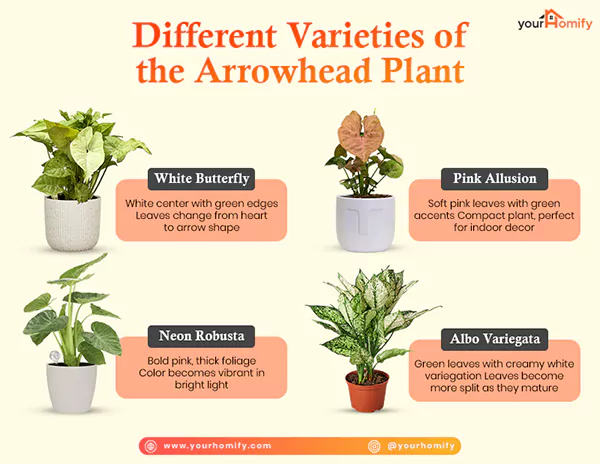
Beyond its classic green form, breeders have developed many cultivars in colours like pink, red, yellow and creamy white that can certainly transform any indoor setting into a tropical oasis. Take a look at some most common types:
| Name of the Variety | Image | Key Points |
| 1) White Butterfly | 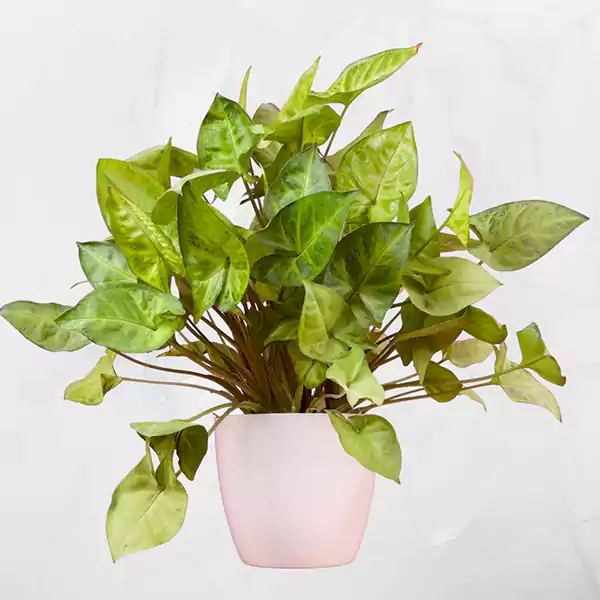 |
|
| 2) Pink Allusion | 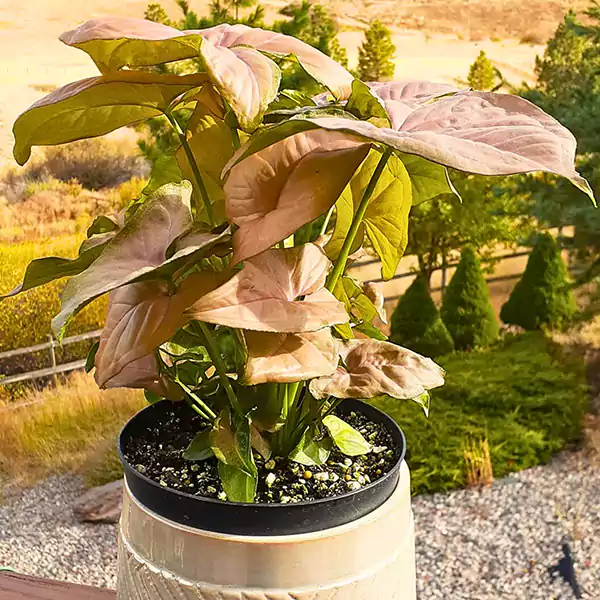 |
|
| 3) Neon Robusta | 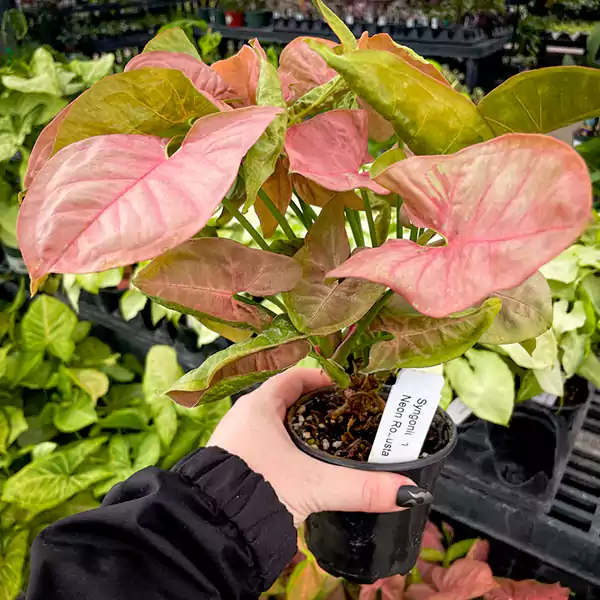 |
|
| 4) Albo Variegata | 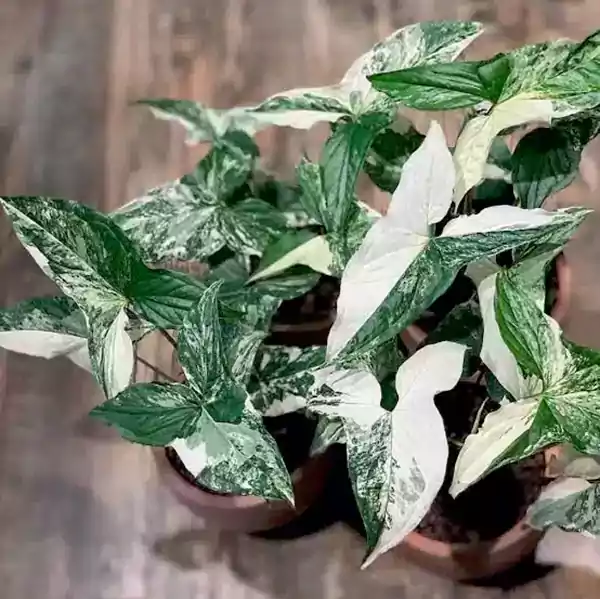 |
|
Did you know?
If the pink or other variegated varieties don’t get enough light exposure, they change their colour to green to produce more chlorophyll.
How to Grow an Arrowhead Plant?
Before having a comprehensive understanding of the arrowhead plant care, I wanted to discuss first how I added these beautiful low-light indoor plants to my home some years ago.
Thankfully, even after being available in a wide range of varieties, their easy-to-care-for nature remains the same. Here’s a look at the vining plants’ ideal growing conditions and the steps to plant them:
Ideal Growing Conditions of the Arrowhead Plant
| Soil Type | Well-draining airy mix of potting soil, peat moss, perlite and orchid bark. |
| Potting | A pot with drainage holes to prevent waterlogging and root rot. |
| Lightning | Bright indirect light is most favourable, as the direct sun can scorch the leaves. |
| Watering | Water consistently in the growing season of spring and summer, but leave the soil to dry out till the top 1-2 inches before re-watering. |
| Humidity and Temperature | As a humidity-loving plant, they prefer frequent misting and being placed on a pebble tray. |
How to Propagate and Plant an Arrowhead Plant?
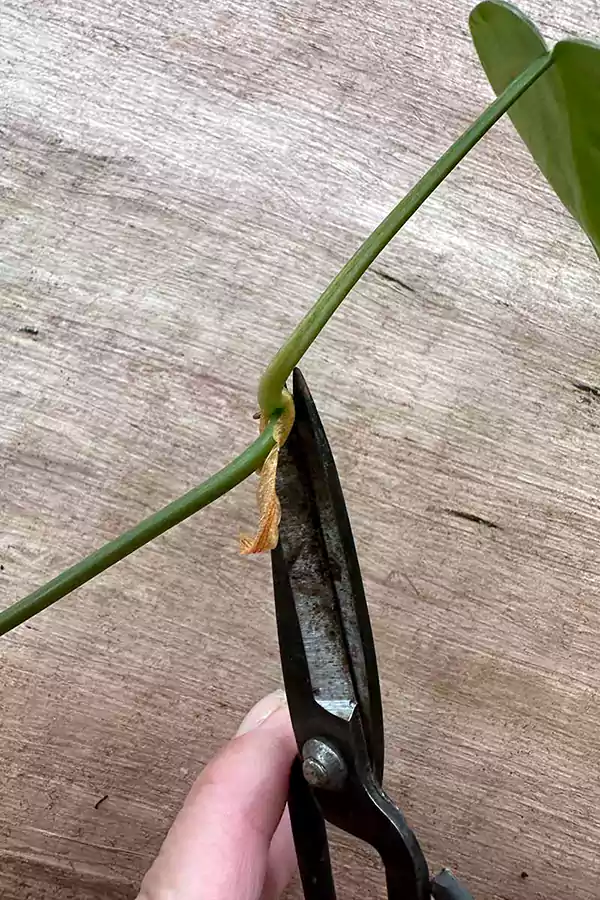
- Propagate the houseplant by taking 4-6 inches of the stem cutting just below the node with some leaves present on it, using sterilised shears.
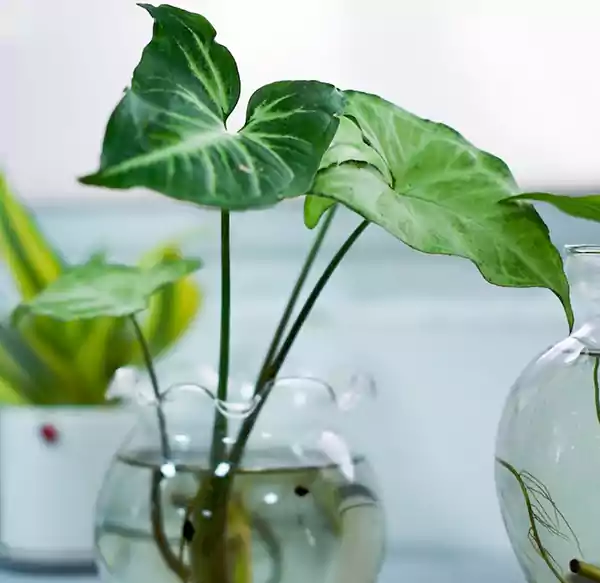
- Place the cutting in water (changing the water weekly) or in the moist potting mix.
- When the roots start emerging in 2-4 weeks, place the rooted cutting into the soil with a well-draining pot. If you want a bushier plant, place the multiple cuttings in the same pot.
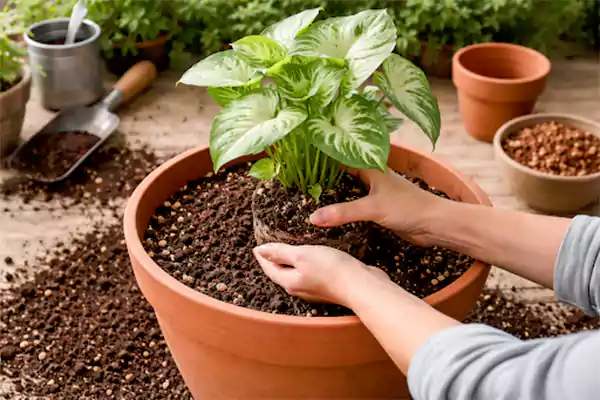
- Water the new plant thoroughly to help it settle, and keep it in indirect sunlight to support its health.
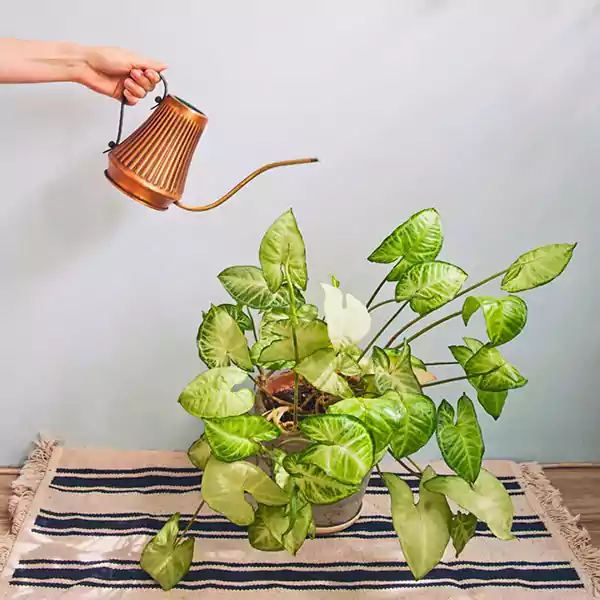
Arrowhead Plant Care Essentials
Arrowhead plants care is simple and beginner-friendly as long as you understand the vining plant’s basic requirements, like consistent pruning, the ideal temperature, and the right time for fertilising. If you are careful about these aspects, the plant will surely grow fast and never show signs of distress.
- Fertilizer

Just like Bromeliad plants, these houseplants do not need heavy feeders. They only require a monthly feeding with the balanced liquid fertilizer in the growing season of spring and summer. Avoid overfeeding as it causes brown and crispy leaves, and stop fertilising in winter, as it can lead to leggy and weak growth.
- Pruning and Maintenance
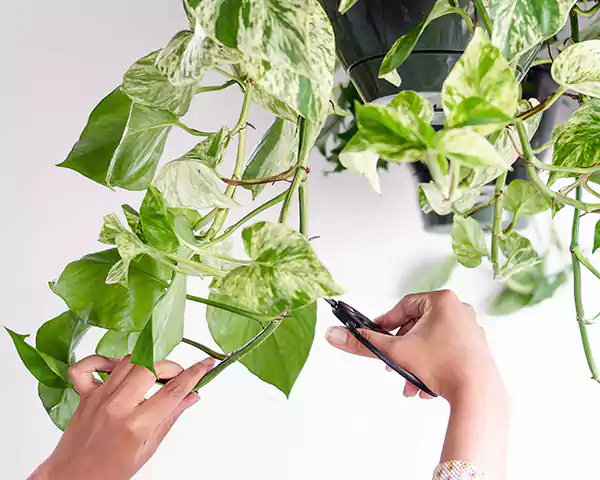
Pruning is one of the essential components of your arrowhead plant care indoors. Trim the plant every spring or summer to maintain its bushy shape and remove leggy vines. Use sharp gardening tools like shears to make cuts just above the leaf nodes to encourage dense growth.
- Temperature
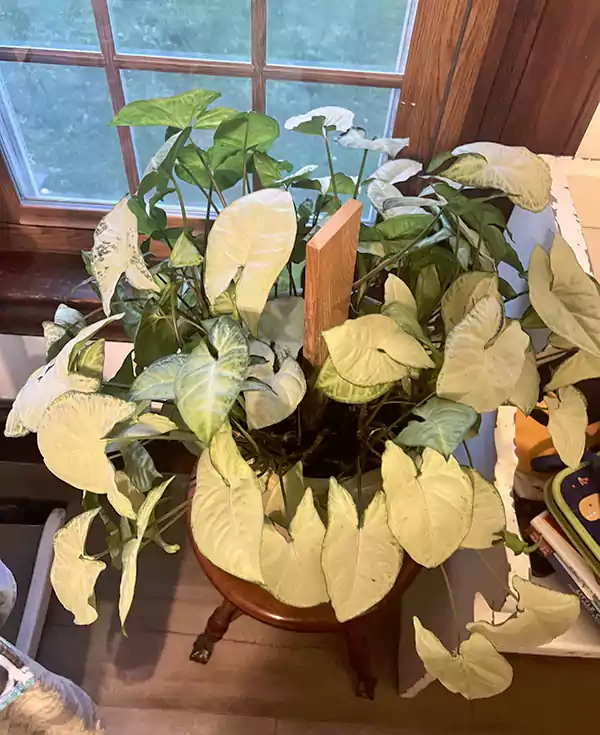
The vining plant thrives well in warm tropical temperatures, ideally between 15°C and 24°C, though it can handle up to 27°C to 29°C. Avoid keeping it below 10°C as it can cause significant stress and damage to the plant. If the temperature is on the higher side, use a humidifier or mist it frequently to complement the warm temperatures.
- Pests and Diseases
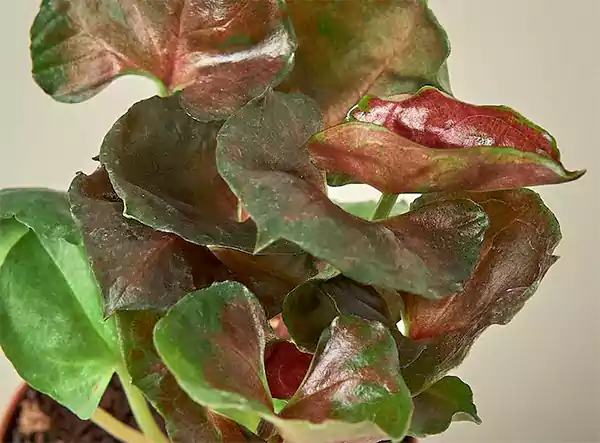
One of the crucial aspects of Arrowhead plant care is safeguarding the plant from pests like spider mites, aphids, mealybugs and scale, particularly if kept in the low humidity conditions. Though generally hardy, it can also suffer from diseases, including fungal leaf spot, powdery mildew and root rot.
To treat these conditions, I use insecticidal soap, sometimes physically remove the insects and cut off the disease-affected foliage.
Common User Problems with Arrowhead Plant
Some arrowhead varieties can have natural pink spots; not knowing this fact can make the grower worried. Therefore, it is important to be enlightened about it.
While scrolling through Reddit, I discovered many such common user queries related to Arrowhead plant care, including the pink spots, brown dry leaves and reviving the dying plant. Let’s see some of the user concerns and their solutions in detail:
- Query: My arrowhead plant is dying, Please help

Solution: If you find your arrowhead plant dying, cut off all the yellow leaves and brown, mushy stems. This reduces the energy that the plant was spending on the dying foliage.
Check the soil for addressing the watering issues. If the soil is bony or dry, it needs more water, and if it’s waterlogged, it requires less water from your side. Last but not least in arrowhead plant care indoors is the sunlight conditions, ensuring that the plant is kept in indirect sunlight.
- Query: new arrowhead plant with weird spots?
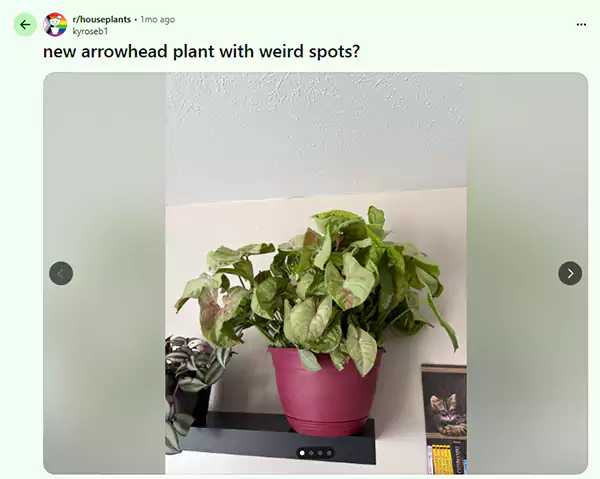
Solution: In some varieties, the pink spots are naturally variegated, like “pink spot” and “pink splash”. If your plant doesn’t come in these varieties and the leaves also have brown, dried-out areas, it is likely that the plant may have sunburn, as it prefers bright indirect sunlight. Furthermore, some pests can also damage the foliage, which lead to odd discolouration.
- Query: What is wrong with my arrowhead plant?
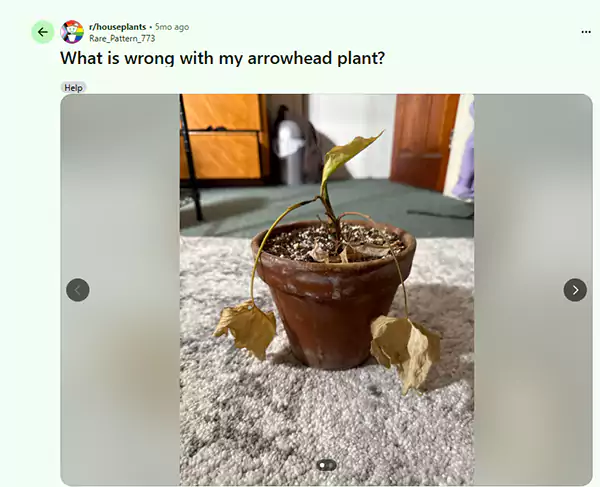
Solution: In the image, it appears that the plant has brown, dry leaves. It could be caused by many reasons, including low humidity, underwatering and direct sun scorch. To solve this issue, add some things to your arrowhead plant care indoors, including cutting off the dead leaves, proper hydration, and checking the soil if it is not waterlogged.
Winding Up
The versatile arrowhead plant is ideal to add a stunning touch to your home! The simple-to-grow house plant complements every space well, whether you want to grow it as a compact bush or a climbing vine.
Learning the above-mentioned arrowhead plant care tips, like pruning requirements, sunlight needs, and propagation method, can significantly help every new plant parent who is looking to add these evergreen shrubs to enhance the beauty of their indoor spaces.
FAQs
Why are the arrowhead plant leaves turning yellow?
The leaves turning yellow can be caused by many diverse reasons, including improper watering, low humidity, lack of sunlight or nutrient deficiencies. The most common cause of this is found to be overwatering, which makes the leaves soft, yellow and drooping.
How to care for an arrowhead plant?
The houseplant is considered easy to care for if some aspects are taken care of, including keeping it in bright indirect sun exposure, planting it in well-draining, consistently moist soil and pruning it regularly to maintain its shape.
What kind of fertilizer should I use in the arrowhead plant?
To encourage the plant’s lush leafy growth, use a balanced water-soluble liquid fertilizer. Fertilise in spring and summer monthly, and avoid feeding in winter when the plant is not growing.
How do I propagate the arrowhead plant?
You can propagate the plant from cuttings by taking a 4-6-inch stem cutting just below the node. Let it root in water or a well-draining soil mix for 2-4 weeks and transfer it to the pot where you want it to grow.
How often should I water the arrowhead plant?
The watering needs of your plant depend on several factors, such as the size of the pot and the potting mix you are using. However, generally speaking, watering once every 1-2 weeks is suggested when the top 2-3 inches of the soil get dry.
- Arrowhead – Birmingham & Black Country Wildlife Trust
- How to grow and care for syngoniums – BBC Gardens’ World Magazine
- Arrowhead – Britannica