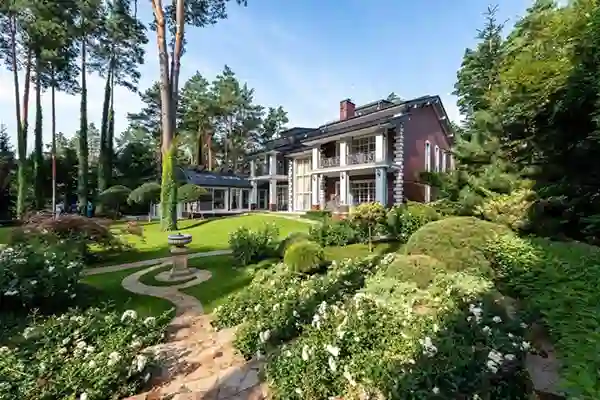
A front yard depicts the first impression of your home that stays in the eyes of spectators at first glance.
This is where everything exists, but without a connectivity idea.
That’s where cohesion comes in: it doesn’t just add decoration; it also brings order.
Design is not about adding more elements. It is about making sure each piece supports the next.
Yes, this is true because even expensive features can look out of place when they don’t match.
There is often that this-should-look-better feeling that cannot be explained easily. That feeling usually points to inconsistency. A garden that works well together takes away that stress and replaces it with balance.
So, what really makes a yard feel complete instead of scattered? That is the question that needs to be answered.
Key Takeaways
- Understanding how to treat the lawn as the base layer and define its tone.
- Analyzing how to layer your yard with purpose and not determining it with guesswork.
- Detecting how simple details can do the heavy lifting quietly.
- Examining the relevance of consistency and evaluating how to carry out a design while keeping it simple at the same time.
Your Lawn Sets the Tone, So Treat It Like the Base Layer
The lawn is the largest visual feature in most front yards. If it looks uneven or patchy, everything else suffers. That’s why it needs to be seen as the base and not an afterthought.
St Augustine grass, for example, works well in warm, humid climates because it handles heat and grows thick. Its dense structure helps reduce weeds while creating a fuller look.
That alone makes the garden look better overall.
Working with reliable St. Augustine sod installation experts helps create a uniform surface that supports the entire design.
Proper installation ensures even growth and reduces future issues. Without that, gaps and mistakes can show up quickly.
Maintenance should be planned early. A lawn that demands constant attention can become frustrating over time.
Choosing the right grass and watering routine makes a big difference. And, no, perfection is not required here. A healthy, well-kept lawn is all you need to hold the space together.
Have you noticed how a clean lawn can instantly elevate everything around it?It’s hard to miss that effect.
Layer Your Yard With Purpose, Not Guesswork
Layering adds depth and structure to a front yard. Without it, the space can feel flat and unorganized. Plants and features should be arranged in a way that guides the eye naturally.
Taller elements should be placed closer to the house or toward the back. Medium plants can fill the middle, while smaller ones stay near the front. This makes a flow that feels balanced over time.
Spacing matters just as much as placement. Too many elements can crowd the space, while too few can make it feel empty. A middle ground should be maintained for visual comfort.
Repetition helps tie everything together. Using similar plants or materials in different areas creates a sense of unity. That consistency makes the design look like it was planned.
Layering should feel smooth – not forced, not confusing. When done right, it makes the garden feel like it has a natural rhythm.
Boundary elements play a role in this rhythm too. Well-placed estate fencing can define the outer edges of the yard, giving the layered design a clean frame that holds everything together without drawing attention away from the planting arrangement.
Could a simple change in placement improve the entire look? Yes, it often does more than expected.
Small Details Do the Heavy Lifting Quietly
The finishing touches are where cohesion truly comes together. These small things may not seem important, but they change the way the garden feels as a whole.
- Matching edging materials for all garden beds and borders
- Consistent lighting fixtures that suit the style of modern homes
- Defined walkways that guide movement clearly
- Uniform mulch or ground cover across planting areas
- Subtle accents that enhance rather than overpower
Each of these choices works in the background. When put together, they make a polished and complete look.
Lighting is a good example – soft illumination along pathways adds both function and warmth. That small addition changes how the yard feels at night.
Repetition across these details strengthens the design. When the same materials are used in different places, everything seems to fit together.
Keep it simple and let it happen.
Keep It Simple and Let Consistency Carry the Design
Simplicity often delivers stronger results than overcomplication. Adding too many features can overwhelm the space quickly. Let a few carefully chosen things stand out.
Consistency should be maintained across all areas. Plants, materials, and colors should support each other without conflict. That alignment gives the room a peaceful and inviting feel.
Maintenance should also remain manageable. A design that is difficult to maintain will not stay cohesive for long. Making smart choices will help things look good over time.
There is also value in stepping back occasionally. Small adjustments can be made when something feels off. That process keeps the design up to date without making it stressful.
So, is creating a cohesive front yard complicated? No, not really, when every choice is based on balance and consistency.
A well-planned front yard does more than look good. It creates a strong first impression and reflects thoughtful care. The result is complete, natural, and easy to keep up with when all the parts work together.
The Bottom Line
Creating an accurate front yard with a cohesive appearance can help you build the appearance of the house, making the first impression attractive and impressive.
Therefore, if you plan on building a front lawn, make sure it appears cohesive.
FAQs
How to design a beautiful yard?
To create an amazing front yard, you can plan a design that combines different colours, textures, shapes and sizes.
What are the six principles of a landscape design?
Some key principles of a landscape design are unity, proportions, focal points, rhythm, repetition, lines and function, which help you to create a harmonious landscape.
Can ChatGPT design my garden?
Yes, of course, ChatGPT can help you design the garden in the way you want to do it. Not only that, but it can even provide you with realistic images and impressive designs.
What is a cohesive landscape?
A cohesive landscape design refers to the overall harmony and unity in the arrangement of various elements in your backyard, including plants, hardscape features and outdoor structures.