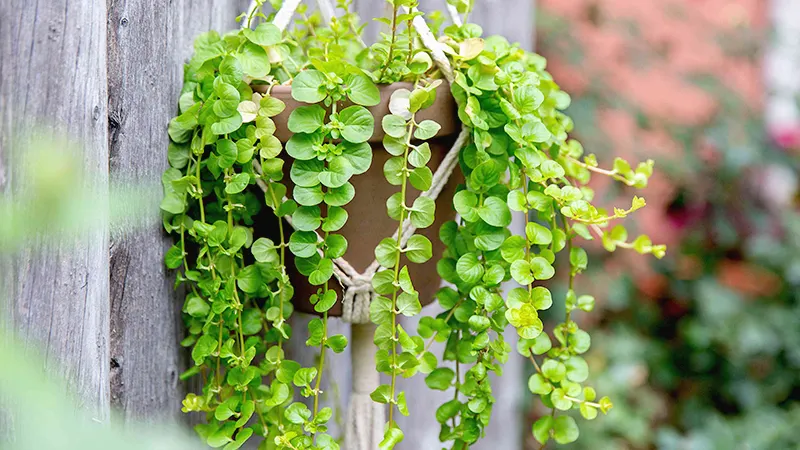
Hanging plants are the most natural way of adding living space. As a botanophile, plants have been a huge part of both my life and house, and growing this perennial plant has been nothing less than a treat.
I have grown creeping jenny as a hanging plant, beside a pond, in my lawn as a ground cover and even in an aquarium. Whether it is the coin-like foliage that instantly elevates the vibe of the space or the low-maintenance nature, it is a perfect plant for beginners or experienced gardeners.
If, like me, you like experimenting in gardening without much effort, dive in and explore the creeping jenny plant, its cultivars, planting care and more.
What is a Creeping Jenny? Get to know this Perennial Creeper
Creeping jenny, scientifically known as Lysimachia nummularia L., is a creeping perennial indoor plant native to Europe that is grown both as a ground cover and as a hanging plant indoors.
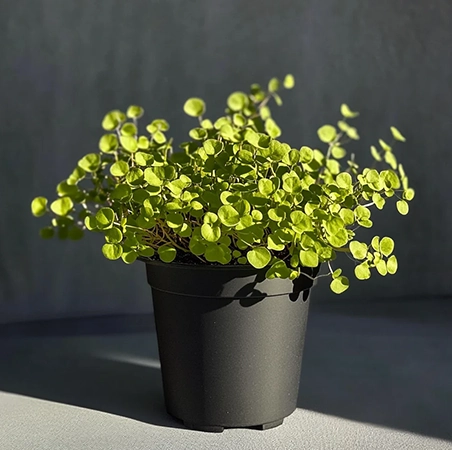
With its green and yellow, coin-like leaves, it also produces small, cup-shaped, yellow flowers that do not last for too long, as the leaves are the main focus of the plant.
Moneywort is a common name for this low-maintenance plant that thrives in various conditions, from full sun to partial shade. The plant grows up to 2–6 inches tall, and when grown as a ground cover, it is known to suppress weeds and improve soil fertility.
Take a look at the scientific classification of the Creeping Jenny:
 | |
| Botanical name | Lysimachia nummularia L. |
| Kingdom | Plantae |
| Division | Magnoliophyta |
| Class | Magnoliopsida |
| Order | Primulales |
| Family | Primrose |
| Genus | Lysimachia L. |
| Species | Lysimachia nummularia L. |
What are the Different Types of Creeping Jenny Plant?
The genus Lysimachia overall has over 180 species of plants, but the species Creeping Jenny Lysimachia has 2 main cultivars that can be distinguished based on the leaf colour.
Take a look at the table for a better understanding:
| Name | Image | Description |
| Golden Creeping Jenny | 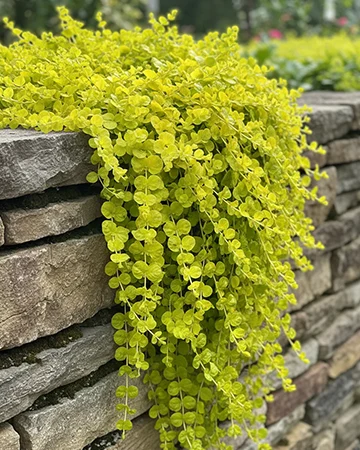 |
|
| Goldilocks Creeping Jenny | 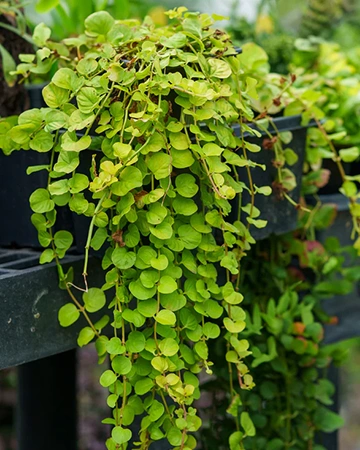 |
|
How to Grow the Creeping Jenny Plant?
Just like the indoor vine plant, Boston fern, and creeping jenny are also a really low-maintenance and easy-to-grow plants. When the growth requirements that are ideal for leafy growth are met, it makes for a perfect ground cover that also does not need regular replanting.
Planting through the Creeping Jenny seeds is the most reliable way of growing this ground cover, but before that, make sure all the following requirements are met:
| Planting time | Spring |
| Hardiness zone | 4-9 USDA |
| Soil | Moist, well-drained soil |
| Water | Regularly (keep the soil moist at all times) |
| Sunlight | Full sun to partial shade (colour of the foliage depends on this) |
| Fertiliser | 10-10-10 Balanced fertiliser |
Steps to grow creeping jenny ground cover at home:
- Choose a location with well-draining soil that has a slightly acidic to neutral pH.
- If planting through seeds, dig a hole and plant the seeds at least 12–18 inches apart to give space for them to spread out evenly.
- The creeping jenny seed will take about 2–4 weeks to germinate, if not more.
- Keep watering the plant thoroughly, as this creeper loves moisture.
- Layer the garden bed with mulch around the plant to retain moisture and suppress weeds.
- In spring, apply slow-release balanced fertiliser for healthy growth, although there is no dire need for plant food in the first place.
- Make sure that the plant is not planted under intense summer sun, as this can lead to scorched leaves.
Personal Planting Tip
Moneywort Creeping Jenny is an invasive plant that should be planted in isolation from other weak plants. As it will compete with the native plants and affect their growth.
Creeping Jenny Care: The Secret for a Healthy Lysimachia Moneywort
Similar to the coleus plant, the creeping jenny care is also hassle-free. Additionally, given the fact that they are perennial, it does not even need regular planting.
However, an invasive plant like this still needs a little vigilance that gardeners cannot avoid; have a look and find out:
- Light Requirements: The plant can survive in various light conditions, but extreme summer heat and direct sunlight can cause blanching.
- Moisture: Moneywort plant loves water and is best planted near a pond or water body. Do not leave the soil to dry out, and keep watering it regularly.
- Pruning: As an essential part of plant care, pruning the moneywort plant helps not only maintain its shape but also control its uneven spread, which can affect nearby plants.
- Fertiliser: Although the plant does not necessarily need a fertiliser, it does during the growing season. Feed it with a slow-release, balanced fertiliser for leafy growth.
How to Propagate Creeping Jenny Ground Cover?
Propagation is my favourite part of planting. I love making several plants from one; it feels so rewarding and productive. Propagating the creeping jenny plant also helps in maintaining the look of the garden by dividing excessive growth into a more uniform layout:
Here are the two ways of propagating the creeping jenny, so choose what suits you best:
| Method | Image | Procedure |
| Through Stem Cuttings | 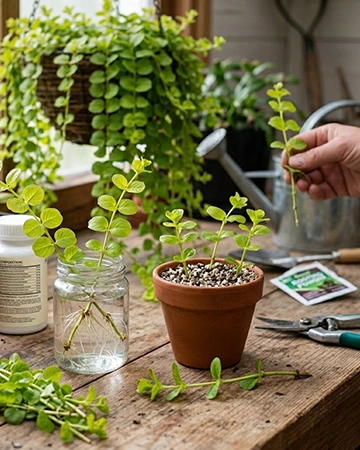 |
|
| Through Root Division | 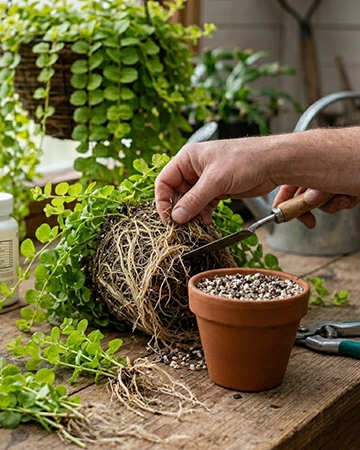 |
|
Do you know?
This perennial creeper is a water plant, and planting Creeping Jenny is also possible in just water without a potting mix.
Pests and Diseases in Creeping Jenny
Creeping jenny is a pest-resistant plant that does not require any special pest-protection care. In rare cases of complete neglect during the growing stage, it can be affected by a few problems. Take a look at what and how to tackle the same:
- Pest Infestation: Pests like snails and mealybugs can impact the plant in overly moist conditions. Treat the pest using an insecticidal soap.
- Root Rot: This is a common concern with plants, especially the moisture-loving ones. Avoid overhead watering and look for proper drainage and airflow so that waterlogging is avoided.
Common Queries and Solutions About the Creeping Jenny Plant
While browsing about planting creeping jenny, I came across this Reddit query regarding the plant. Here are some common issues gardeners have with their easy solutions:
- Can Creeping Jenny be grown in an aquarium?

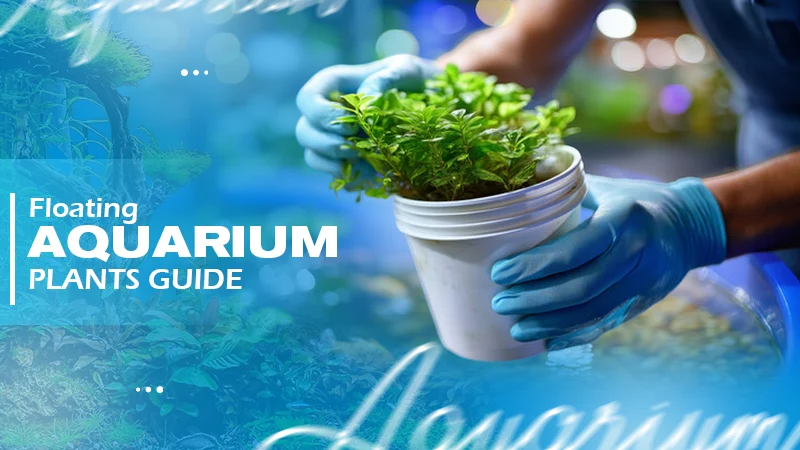
Through adequate research, I found out that the creeping jenny can easily be grown as a water plant without a potting mix. Just make sure to change the water regularly.
- Is this Bacopa or Creeping Jenny?
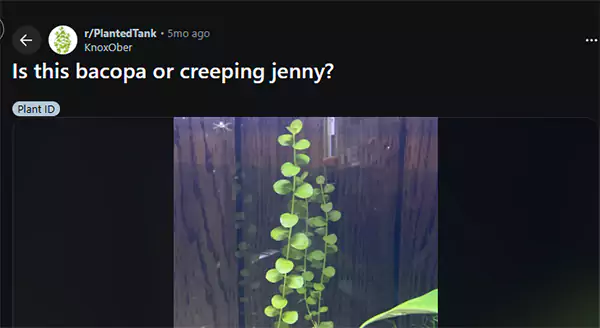
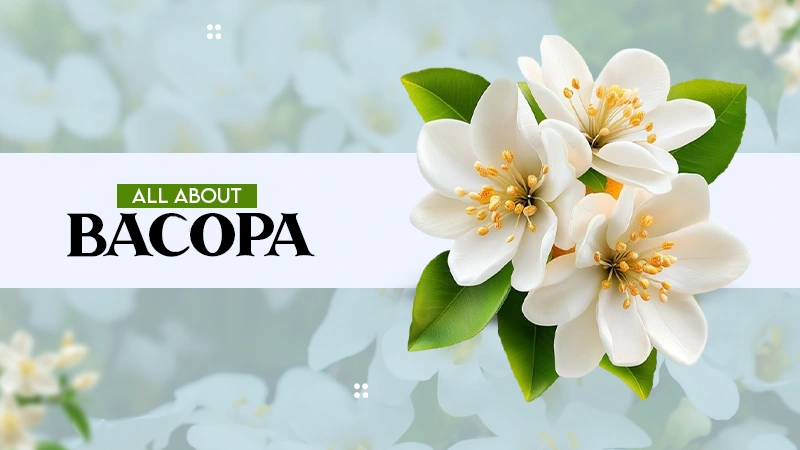
The picture in this Reddit query is that of a Lysimachia Creeping Jenny. However, the plant is often confused with Bacopa. So look at the common difference to help you differentiate between the two:
Creeping Jenny Bacopa - Lysimachia moneywort has round, coin-shaped leaves.
- It produces small cup-shaped yellow flowers.
- The Bacopa plant has spoon-shaped, slightly longer and thicker leaves.
- It produces flowers in various colours, such as white, yellow, and lavender.
- Is this slime mould growing on my plant?
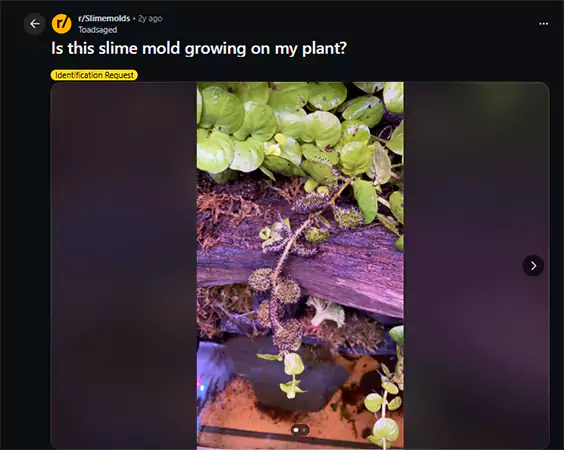
Yes, this is slime mould growing on the creeping jenny plant. It is generally harmless to the plant and does not directly affect its health, and it disappears on its own.
I was scared, too, when something similar happened with my plant the first time I grew it. However, an experienced gardener friend told me they generally grow when the favourable growing conditions are met, like moisture and food resources for the mould to grow.
Research About the Health Benefits of Creeping Jenny Plant
The creeping jenny plant was used to treat gall bladder stones in the Chinese tradition, and had wound-healing and therapeutic effects in cultures around the world.
However, such beliefs are not limited to history, but are also part of modern medical research that credits this creeper as a source of antibacterial properties. Take a look to understand how:
Study year: 2023
Sample type: Extracts of Lysimachia nummularia L.
Aim: Antibacterial Activity of Lysimachia nummularia L. in Oro-Dental Diseases
Key findings: The extracts of the creeping jenny plant have positive effects against the gram-positive bacteria.
The aerial parts of the plant have the most antibacterial effects.
However, it was not effective against Candida albicans (a type of yeast that causes fungal infections).
Hence, it was concluded that the Lysimachia nummularia plant can be utilised for its antibacterial properties but not for treating fungal infections.
Concluding Remarks
Creeping jenny is an effortless addition to the house that is not only low-maintenance but also effortless to grow in different mediums. So, if preparing a potting mix is too much commitment, grow it as a water plant.
This low-growing perennial can be used for landscaping ideas for compact homes or interior decoration with hanging baskets. You say it, and it adapts to it. Its vibrant greenish-yellow colour can make the dull gardens shine bright.
FAQs
Will Creeping Jenny choke out other plants?
The creeping jenny plant is invasive in nature and can affect the neighbouring plants by competing with them for the basic resources.
Hence, plant in isolation or in hanging baskets.
How tall does the Lysimachia Moneywort grow?
The Moneywort plant is a low-growing perennial that grows up to 2–4 inches tall and makes a great ground cover, and is also ideal as a hanging plant.
Does Creeping Jenny prefer sun or shade?
The Lysimachia moneywort can grow in various light conditions, from full sun to partial shade. However, direct summer sunrays can lead to the blanching of leaves.
Can I grow creeping jenny in just water?
Yes, creeping jenny can be grown in water easily. It is essentially not an aquatic plant with adequate care, and regularly changing the water in the container helps in maintaining it as a water plant.