Most people, when designing a home, obsess over what they can see, from the smart lighting to the ideal color palette, but often forget the hidden element. THE AIR. Even though most houses have those air purifying HEPA filters, they work only on moving air.
But what’s the most overlooked factor here? The motion of your feet kicking the dust up into the air causes you to inhale the dust particles. Scientists refer to this as resuspension from human activity.
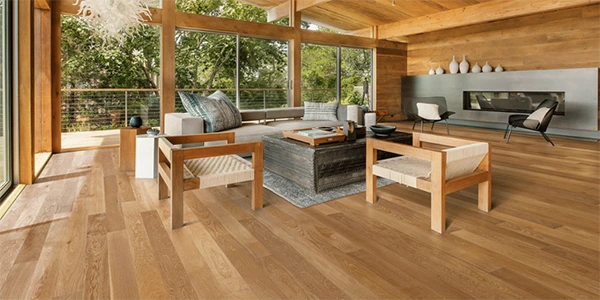
That’s where the modern wooden flooring comes in rescue, eliminating allergens hiding in the home, microscopic areas where they exist. The non-toxic, advanced finish used on these surfaces creates a sleek design option that passively and permanently protects you from indoor air pollution.
Read on to know how timeless, organic beauty creates a clean, healthy, and fresh living space.
Why Flooring Choices Matter for Indoor Air Quality
Floors are like giant sponges. They absorb everything from dirt and dust to toxins in the air, creating invisible clouds of irritants with each step.
- The Carpet Trap: Fibers in carpets retain dust mites, pet dander, and mold spores like a jungle grows dense vegetation; extraction is nearly impossible.
- Chemical Off-Gassing: Many synthetic floors release toxins into the air over time, causing indoor air quality problems.
- Moisture Dynamic: Poorly constructed floors can also allow moisture to accumulate under or behind them, leading to undiscovered fungal growth.
- Electrostatic Attraction: Many synthetic materials have an electrostatic charge, which attracts dust from the air. When you walk on them, the charge will attract and hold the dust until you disturb the area, at which point all the dust will be released.
While observing renovation projects, I once saw the floor come loose from the subfloor, exposing decades of wasted dirt. Seeing how much dirt accumulates underneath your feet establishes a direct relationship between the quality of the air you breathe and the type of floor you have.
Choosing Low-VOC Wooden Flooring Materials
Low-VOC materials are organic materials that are safe for the lungs. There are also lots of great products in the marketplace today that allow you to create a healthy home while not sacrificing the aesthetic value of your space.
Solid Hardwood Flooring
Solid hardwood is the best example of living a clean lifestyle. When you have a solid hardwood floor, the wood comes directly from the tree. So, there are no chemical glues used like in many of the composite Products.
Engineered Wood Flooring
Engineered wood flooring can work in spaces that require stability when it comes to moisture management. Through multi-layer stick construction using wood, we can maintain dimensional stability while focusing on keeping our environment safe.
Certified Sustainable Wood Options
When you select wood that has been manufactured with certification from a lab that cares about the environment. So, you can be sure that the entire process of bringing the wood from the forest to you has been done without adding harmful chemicals or heavy metals.
How Wooden Floors Help Reduce Dust and Allergens
Dust isn’t just a nuisance; it can pose real health problems to people with allergies.
- Dirt and allergens collect on carpet fibers; therefore, an alternative flooring option is needed for families that either have or may develop allergies.
- Hardwood is a good option to consider because it has no fibers to trap dust. All allergens are captured on the surface of the hardwood and easily removed by sweeping.
- The second benefit of wood being a hard, flat surface is that it does not promote static electricity; therefore, the normal air currents within a home will effortlessly pull airborne allergens to the filters rather than keeping them within the structure of your home.
If your goal is to achieve complete dust free floor removal of allergens, switching to hardwood floors will give you the most effective way to clean every day without having to spend hours of labor cleaning carpet. Daily vacuuming can lead to a time-consuming cleaning routine of nothing but dust.
Interesting Fact The Weight of Indoor Air: Research from the Environmental Protection Agency (EPA) indicates that indoor air can be two to five times more polluted than outdoor air, making a home’s foundation a critical boundary line for respiratory health.
Maintenance Tips to Keep Wooden Flooring Air-Friendly
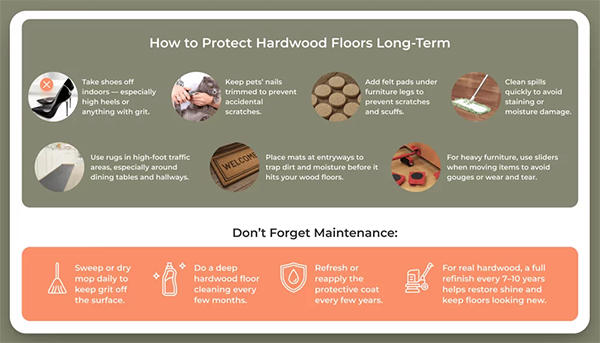
Wooden floors can help to purify the air, but only if you maintain them properly and consistently. By changing a few routine maintenance habits, you can prevent dirt from reclaiming your wooden floor.
- Swap Out Your Broom for a Vacuum: Sweeping can cause fine particles (dust, debris, etc.) to be lifted off the surface of your floor and back into your breathing zone; using a vacuum with a hard-floor setting will guarantee these particles are removed from your living area permanently.
- Use a Microfiber Mop: A barely damp microfiber mop pad can lift pollen and dust from the surface of your wood floors without adding excess moisture to your floors.
- Do Not Use Harsh Chemicals: Strong chemical cleaners leave behind residue that is sticky and collects dust, while also producing unwanted odors.
- Create a No-Shoe Policy: Placing a quality mat at your entrance and conducting a no-shoe policy will cut your outdoor pollen exposure in half.
Check out this infographic to know how to maintain wooden flooring:
Final Thoughts
True luxury is how easy it feels to breathe in your home; modern wood flooring is an ongoing investment in your home’s comfort level; once installed, wood flooring serves as an impenetrable barrier to the invisible dust and dirt that can create irritation.
You will be able to breathe freely because you have switched from traditional textiles that trap dust and moisture to glass-like, low-emission timbers that support a healthy escape from the world around you. With wood floors, homeowners actively create spaces that foster health and happiness.
Good design supports longevity. Therefore, to be able to breathe clearly and freely in their homes gives homeowners a lasting expression of good design.
What signs indicate that a wooden floor has low VOCs?
Look for reputable industry certifications such as FloorScore or GREENGUARD Gold on the packaging of flooring products to confirm that they comply with strict emissions standards.
Do all engineered wood products release formaldehyde?
Engineered wood is often manufactured without formaldehyde today. Many manufacturers now use innovative, soy-based or non-formaldehyde resin products to bond together the various layers, and will do so through 2026.
Do oil finishes provide more indoor air quality than water-based polyurethanes?
Natural plant-based oils provide the minimal amount of chemicals airborne during the application process. Modern water-based polyurethane finishes dry much more quickly and emit little to no odors when compared to traditional solvent-based finishes.
Will switching to wooden floors cure my allergies?
Although hard, cleanable surfaces in your home, such as hardwood floors, can greatly reduce the amount of dust mite allergen and pet dander in your home. It is a complete plan to reduce symptoms of allergies, which will also include using filtered air and proper ventilation within your home.