


Overview and description of the Dipladenia plant
| Common Name | Rocktrumpet | Maintenance | Low |
|---|---|---|---|
| Native Region | Central and South America | Average Height | 1-3 feet |
| Plant Type | Climbing Vine | Average Width | Up to 3 feet |
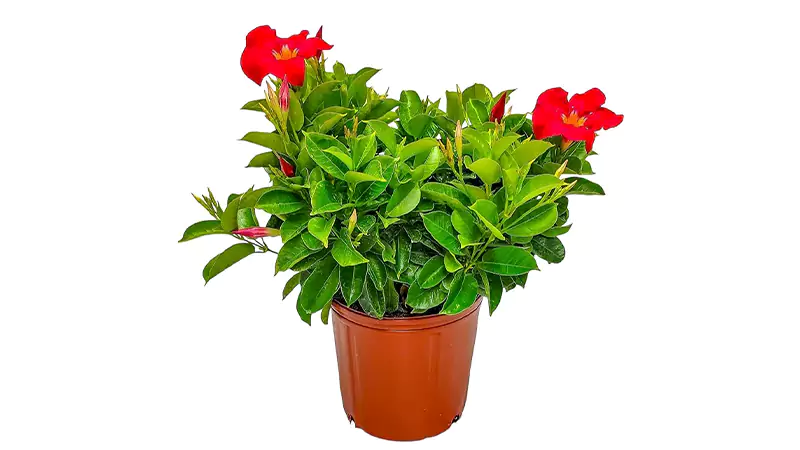
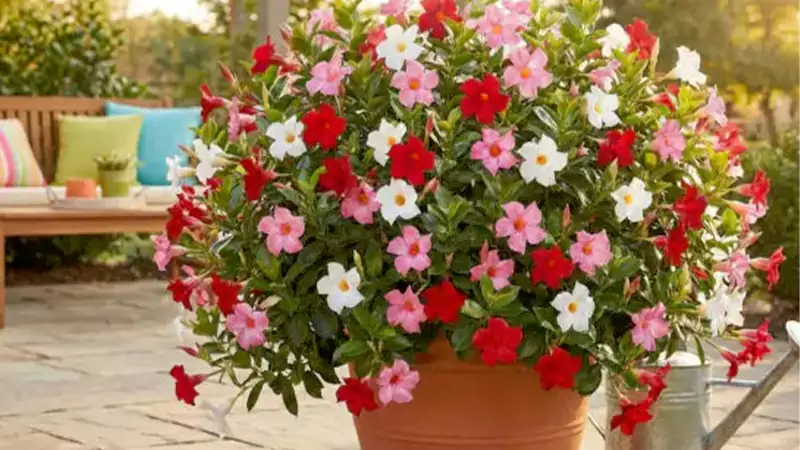
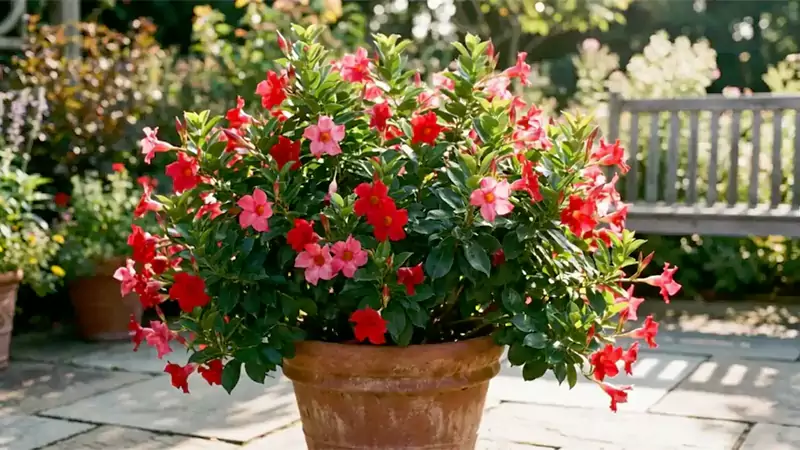
Scientifically known as Mandevilla, the Dipladenia is an evergreen shrub that features trumpet-shaped flowers and glossy green leaves, which are drought-tolerant and heat-resistant. These summer flowers are ideally grown in hanging baskets and can also beautifully trail over the fences and garden gate due to their cascading stems, along with adding a pop of colour to the garden.
Key features and benefits of the Dipladenia plant
- The Dipladenia is extremely heat-tolerant and can survive extremely dry conditions as well, which makes it easy to plant and care for.
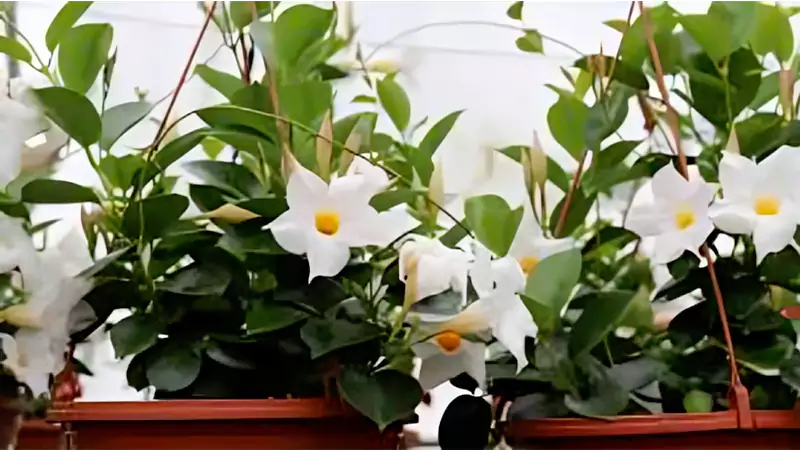
- The ornamental flowers grow in the colours red, white, and pink, which are perfect to add a splash of colour to your garden.
- Often confused with Madevilla, the dipladenia plant has a bushy, mounding growth and can grow with cascading stems that loom like vines.
- While extremely drought and heat-resistant, the dipladenia plant can not survive cold freezes and temperatures below 10 °C.
- Dipladenia are pollinator and hummingbird flowers that maintain the health of the garden and make planting dipladenia extremely beneficial.
Care guide for the Dipladenia plant
- Growing Zone: USDA 9-11
- Water Needs: Consistent watering
- Soil Type: Well-draining soil rich in organic matter
- Sunlight Exposure: Full sun to partial shade( depends on the climate)
- Growth Rate: Moderate to fast
Advantages
- The dipladenia is perfect to add a pop of colour to the garden, both indoors and outdoors.
- Unlike trailing vines of mandevilla plants, the dipaldenia has a compact and space-saving growth habit.
- Apart from being ornamental, these showy blooms are excellent pollinators.
Disadvantages
- These summer flowers are mildly toxic to pets and humans and should be handled with care.
- The Dipladenia flowers are not cold-tolerant and can die in temperatures below 10 °C.
- Dipladenia are highly susceptible to pest infestation and require extreme care and attention.


Alex –
Grows beautifully in my balcony garden with its cascading stems.
Steve –
Purchased the plant a week ago, it was delivered in perfect condition. Very easy to plant and care for indoors.
Noah –
The compact growth looks elegant in containers plus the showy flowers which are a great addition to the space.
Helen –
Dipladenia are really easy to care for, highly recommend planting them, especially beginners.
Andrew –
I purchased a Dipladenia Plant from YourHomify and was very happy with the quality. It arrived healthy and well-packed, with fresh green leaves. I’m excited to see its beautiful flowers brighten up my garden.
Bob –
Bought a Dipladenia Plant from YourHomify and had a great experience. The plant arrived in good condition and looked fresh and healthy. It’s a lovely addition to my garden, and I’m looking forward to seeing it bloom.