
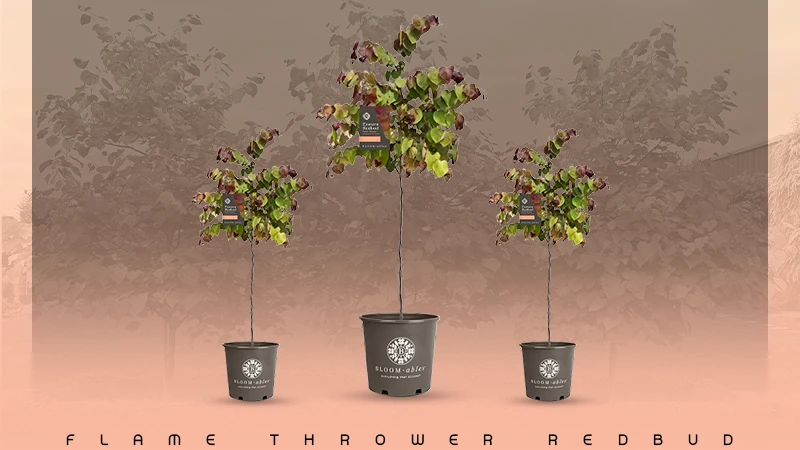
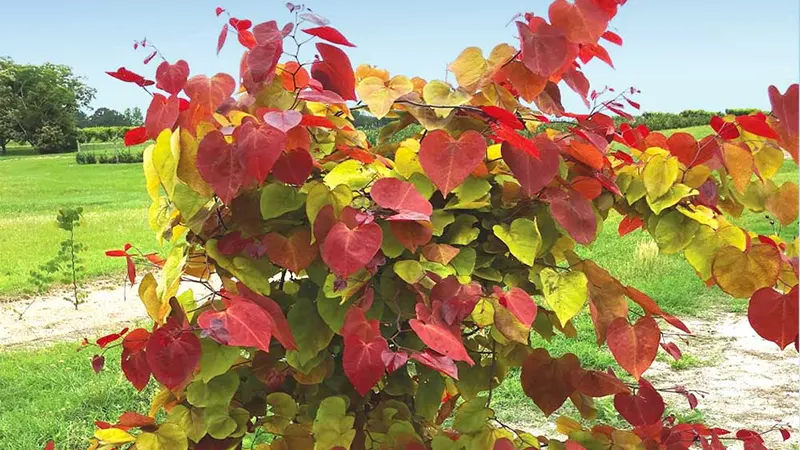

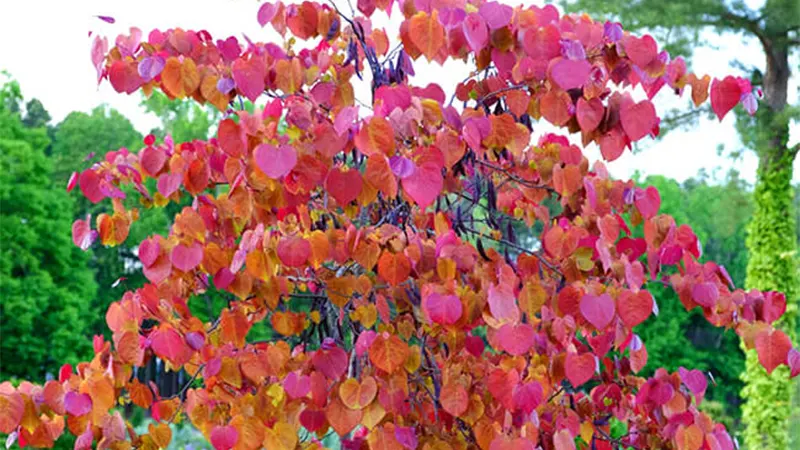


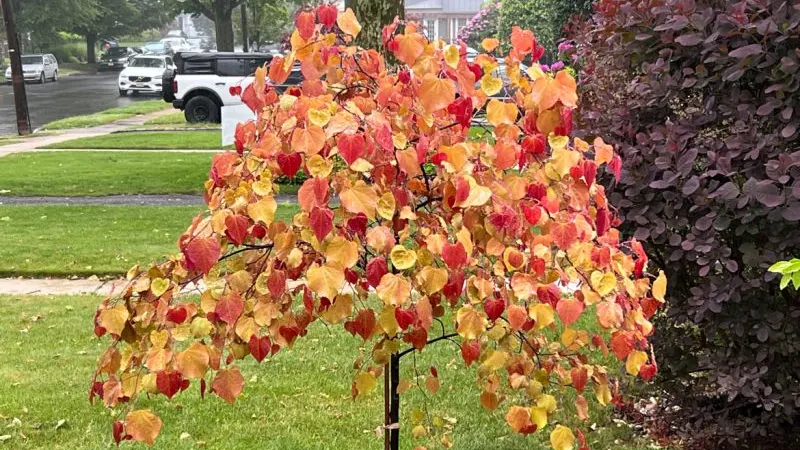


| Common Name | Flame Thrower Redbud or Flame Thrower Eastern Redbud | Maintenance | Low |
|---|---|---|---|
| Native Region | North America, a cultivar of Cercis canadensis developed at NC State University | Average Height | 15-20 feet |
| Plant Type | Small Deciduous Flowering Tree | Average Width | 10-15 feet |
Cercis Redbud Flame Thrower is best for providing a taste of autumn in the heart of summer with spectacular multi coloured foliage. On top of that, the gardeners praise its stunning pink spring flowers, which make it ideal as a tree for offering year-round beauty.
Key Features and Benefits of Flame Thrower Redbud
- Flame Thrower Redbud tree is a fast to moderate growing tree that increases its height by 1-2 feet per year.
- Well regarded for providing all-season appeal with early blooms, shifting summer foliage, vibrant autumn colours and stunning winter branch structure.
- Works as an ideal specimen tree for mass plantings, border shrubs and modern urban gardens.
- Redbud Flame Thrower develops a deep taproot system, which provides strong anchorage and allows it to reach deeper soil moisture.
Care Guide, Advantages, and Disadvantages of Flame Thrower Redbud
- Growing Zone: USDA 5-9
- Sunlight Exposure: 6-8 hours of direct sun exposure is recommended for the best colour foliage. However, in hotter climates, afternoon shade is preferred to prevent leaf scorch.
- Water Needs: In the first two years, it requires regular deep watering to get established. Once established, it is highly drought-tolerant.
- Soil Type: Adapts well to many soil types, including sandy, loamy and clayey if they are well drained.
Advantages
- Highly tolerant of urban pollution and has good drought resistance.
- Has unique structure as it grows as a weeping or spreading tree, which adds to its beautiful architectural appeal.
- Considered highly durable and resistant to deer, rabbits and black walnut toxicity.
- The manageable compact size makes it ideal for small yards and understory planting.
Disadvantages
- The cultivar is relatively short-lived, typically living for 20-30 years.
- Susceptible to diseases like canker, Verticillium wilt and pests like scale insects, treehoppers and leafhoppers.
- Do not transplant well due to the deep taproot system; the location must be carefully chosen.
- Blooms are followed by brown bean-like seedpods that can create litter in the landscape.



Emma Wilson –
Years ago, my father and I planted this sapling in our courtyard. The tree is a living painting now, turning from moody burgundy to bright orange, stealing the show in every season.
Robert Wood –
The tree requires minimal effort with yearly pruning and occasional deep watering. It is best for busy gardeners who want to add something unique to their gardens.
Charles Blake –
This flowering tree makes my garden stand out with amazing, vibrant, rosy pink blooms and colour-changing foliage.
Jenny Louis –
Thriving on neglect, the tree is the best source of nectar, attracting many bees and butterflies to the landscape.
Andrew –
I bought the Flame Thrower Redbud from YourHomify because I wanted a tree with really interesting foliage. It arrived healthy and in good shape, and I love how the different leaf colors make it stand out. I’m excited to see how it changes as it grows.
Bob –
The Flame Thrower Redbud was a great choice for my garden. The tree arrived safely and looked healthy right away. The colorful foliage gives it a unique appearance, and it has already become one of the more interesting plants in my yard.