


| Common Name | Green Mountain Boxwood |
| Native Region | Europe, Asia, and North Africa (hybrid of European and Japanese boxwood) |
| Plant Type | Evergreen Shrub |
| Maintenance | Low |
| Average Height | 4-5 feet |
| Average Width | 2-3 feet |
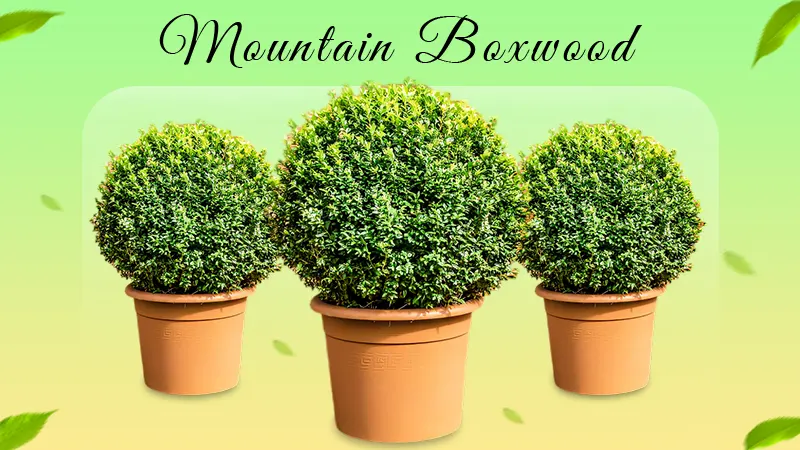
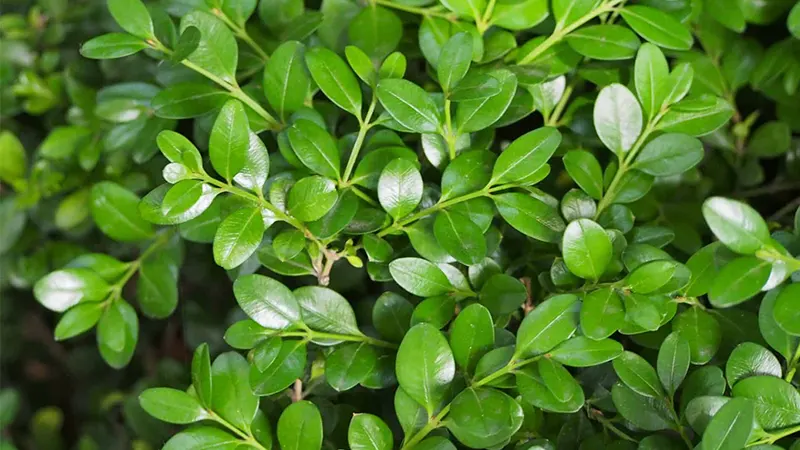
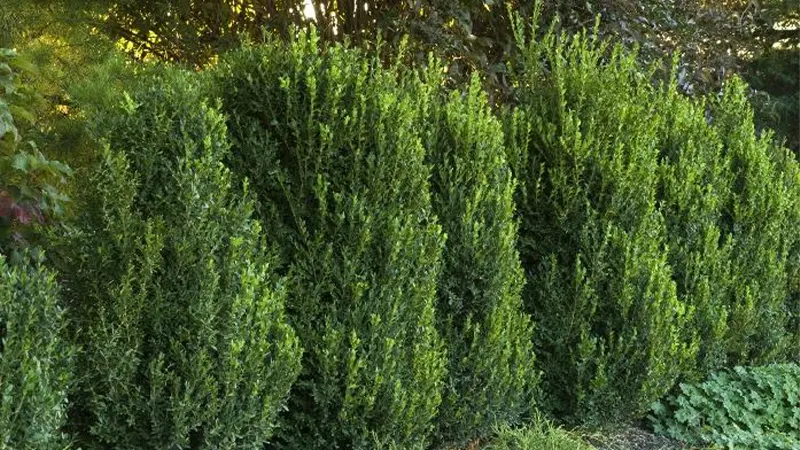
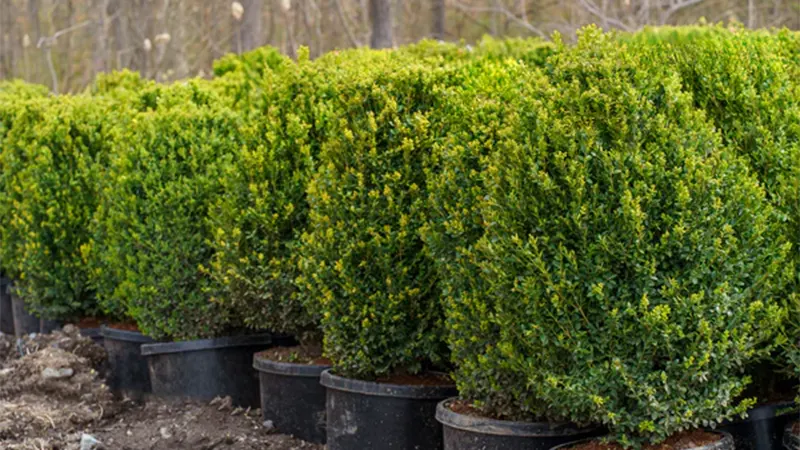
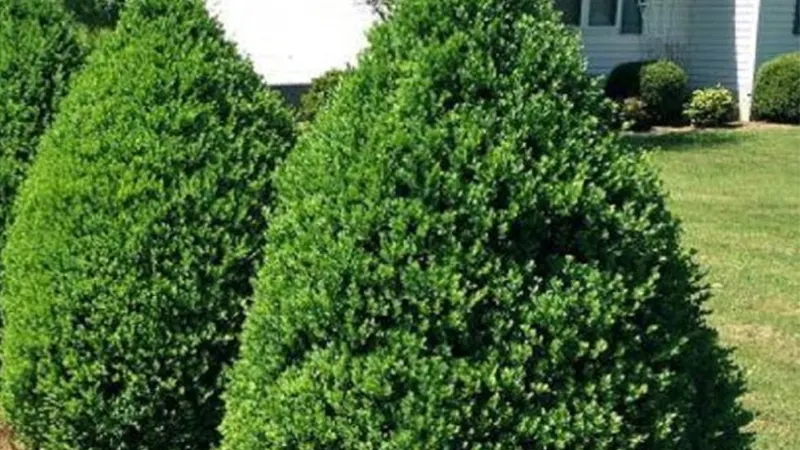
Native to parts of Europe and Asia, the Green Mountain Boxwood hedge dates back to 4000 BC. Being a low-maintenance plant, it is well-suited for formal hedges or topiary. Widely popular for its natural conical shape, the genus is an upright, slow-growing hybrid. The plant’s dense, glossy foliage enhances the space’s vibe while making it a perfect privacy plant.
Key Features and Benefits of Green Mountain Boxwood
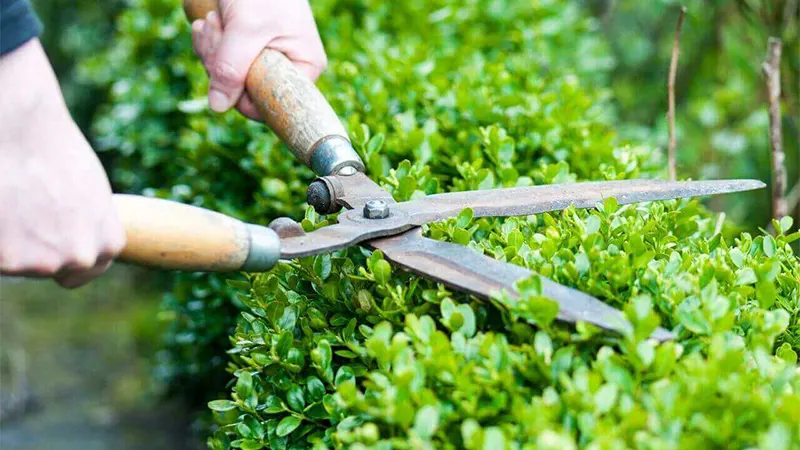
- The green mountain boxwood has a slow to moderate growth rate, reaching 3-6 inches per year. This steady growth helps in maintaining a tidy shape and requires minimal pruning.
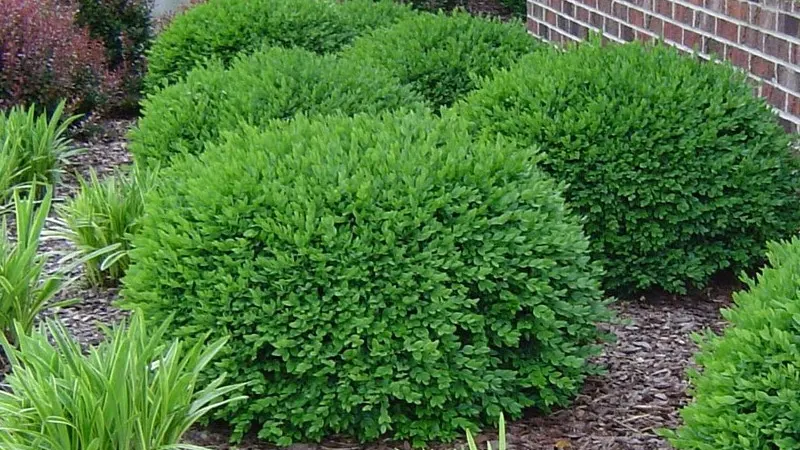
- At maturity, the plant can reach up to a height of 4-5 feet tall and 2-3 feet wide. Its naturally upright and pyramidal shape gives a tidy look to any garden space.
- This plant thrives well in partial to full sun, well-drained soil with neutral pH, and requires consistent and regular watering until it becomes drought-resistant at maturity.
WARNING!
Certain components of this plant can be toxic to humans and animals when ingested.
- It is fairly easy to plant a green mountain boxwood hedge. Begin by gently loosening the roots, then dig a hole twice as deep as the root ball. Carefully place it in a planting hole, spacing plants 2-3 feet apart, if planting a hedge. Water thoroughly and apply mulch to retain the moisture.
- Being a hybrid of Buxus sempervirens (European boxwood) and Buxus microphylla (Japanese boxwood), the genus comprises some astonishing traits from both its parent plants.
Care Guide for Green Mountain Boxwood
| Hardiness Zone | 4-9 USDA |
| Sunlight Exposure | Thrives in full sun to partial shade. |
| Water Needs | Moderate watering is needed only to keep the soil moist. |
| Soil Type | Well-drained soil with a neutral pH. |
| Fertilizer | A balanced, slow-release chemical works wonders. |
Advantages and Disadvantages of Green Mountain Boxwood
| Advantages | Disadvantages |
| The boxwood green mountain maintains its aesthetic appeal all year-round, offering dark-green, dense foliage throughout the year. | This cultivar has specific growth needs; it cannot survive in excessively wet areas and is sensitive to over-mulching. |
| This hedge plant acts as a perfect windbreaker or a topiary, protecting the delicate plants and providing privacy to residential spaces. | Without a proper and regular thinning, the plant may develop dense foliage, which may lead to reduced air circulation and increased risk of diseases. |
| Green mountain boxwood is significantly cold-hardy, which makes it adaptable to various climatic conditions. | The boxwood green mountain growth rate is slow, reaching 2-6 inches per year; it is not ideal for quick landscape coverage. |
| This plant helps promote a sustainable environment by filtering out pollutants. Being drought-resistant, it reduces water usage. | This plant is susceptible to various pests and diseases, such as boxwood mite, boxwood blight, and more, leading to leaf spots, stem breakage, and root rot. |


Trevor Brooks –
I’ve recently ordered my green mountain boxwood plant from yourhomify, and it arrived in great condition. Can’t wait to plant it in my backyard.
Sophie Turner –
When shaped beautifully, this hedge plant looks stunning. It is a great privacy hedge in my front yard.
Scott Walace –
This low-maintenance plant is perfect for beginners. This was the first plant that I grew, and it stand beautiful in my lawn. Loved it!
Emily Cole –
I saw these beautiful green mountain boxwood shrubs in my neighbour’s home, and I was simply taken aback. I’ve also ordered it for myself, can’t wait to grow it in my lawn.
Andrew –
I purchased a Green Mountain Boxwood from YourHomify and was very pleased with the quality. It arrived healthy and well-packed, with beautiful green foliage. It looks great in my garden and is settling in nicely.
Bob Rogers –
Bought a Green Mountain Boxwood from YourHomify and had a great experience. The plant arrived fresh and in good condition. It has a lovely compact shape and adds a neat, elegant look to my landscape. Very happy with my purchase!