
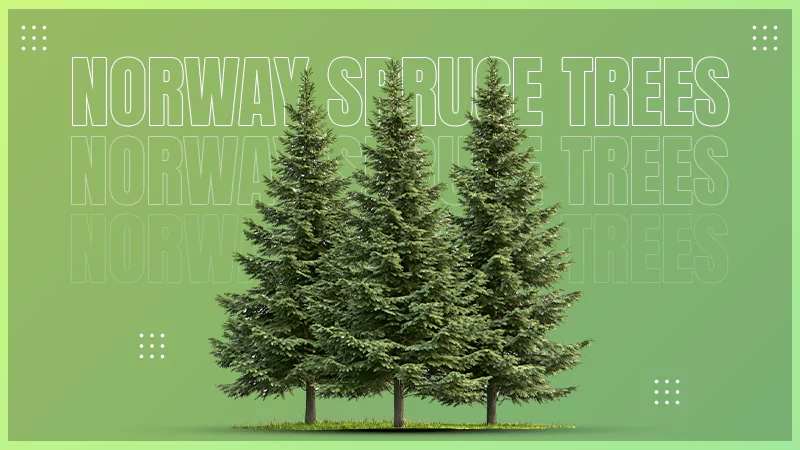
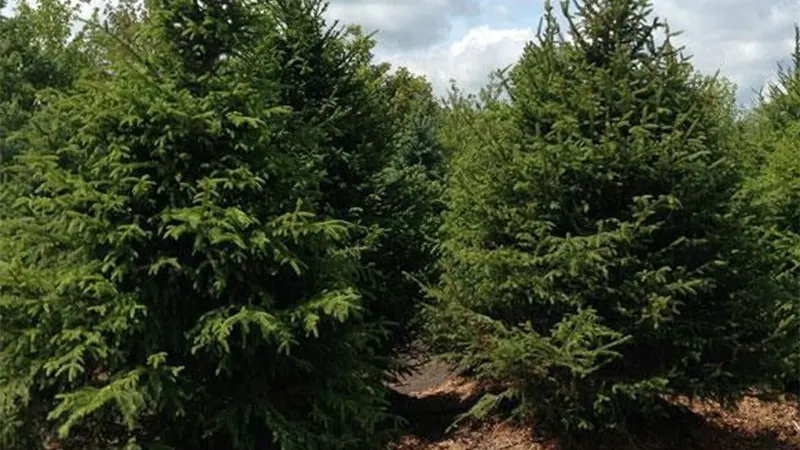


The Norway Spruce tree (Picea abies) is one of the most recognizable evergreen species, widely appreciated for its conical shape. Admired for its pyramid shape and glossy, needle-like leaves, it graces parks, gardens, and large landscapes effortlessly.
Known for both elegance and endurance, this tree remains a favorite among novice plant lovers and seasoned landscapers alike. This fast-growing evergreen belonging to the Pinaceae family is truly one of a kind. Moving further, let us quickly explore more about this genus in this detailed write-up.
Features and Benefits of Norway Spruce Trees
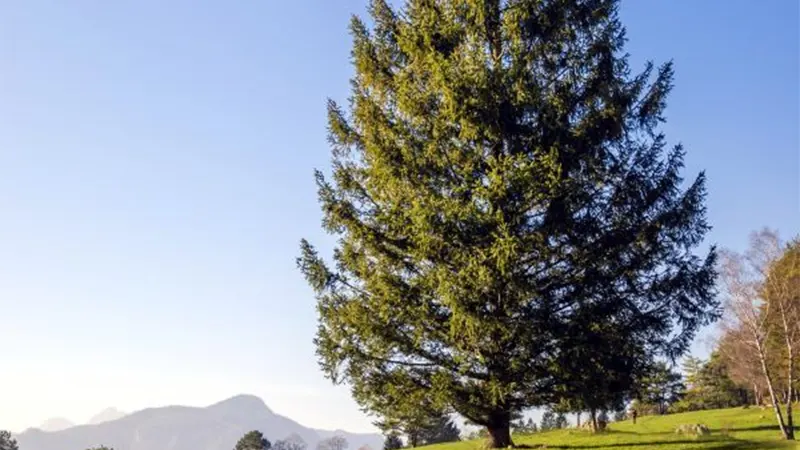
Known for its majestic height and symmetrical beauty, the Norway Spruce tree is a timeless landscape specimen, admired by many across the world.
Native to Europe, this iconic evergreen brings elegance to any garden space. Let us quickly explore some astonishing features and benefits of the genus.
| Key Features and Benefits of Trees Norway Spruce |
| Scientific Name: Picea abies |
| Height: Grows up to 40–80 feet tall |
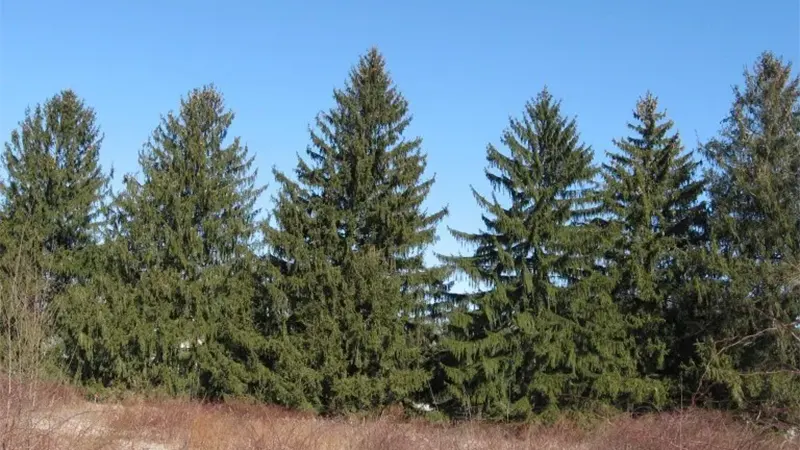
| Shape: Pyramid-shaped with dense and drooping branches. |
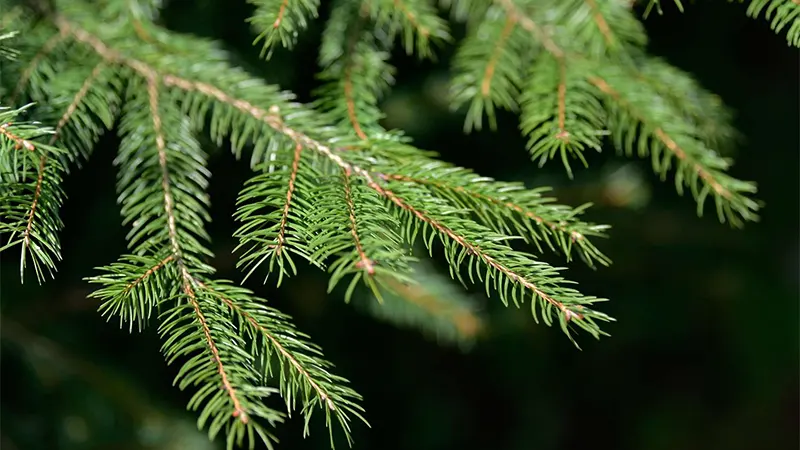
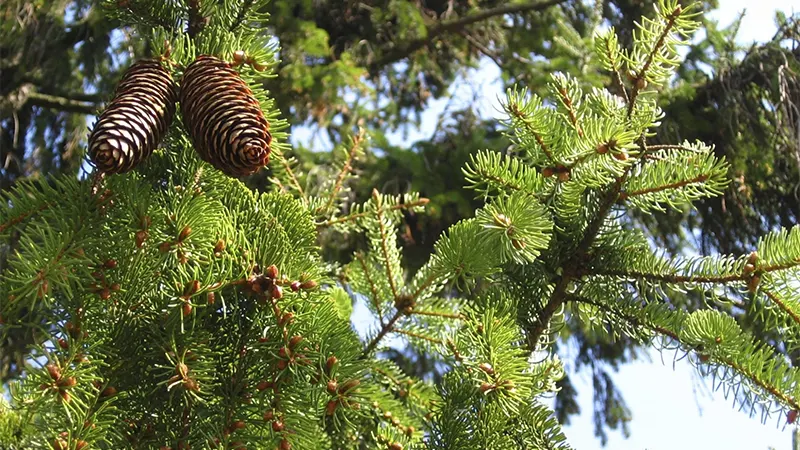
| Foliage: Needle-like, dark green, glossy leaves |
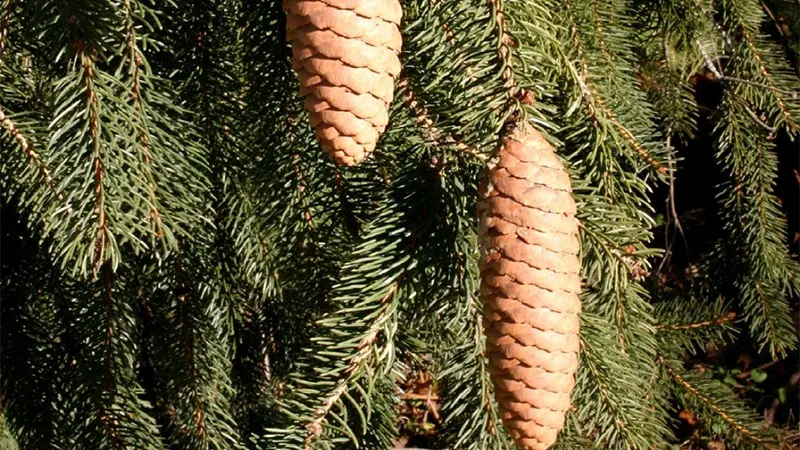
| Cones: Long, cylindrical brown cones hanging downwards |
| Norway Spruce Growth Rate: Fast-growing landscape tree |
| Lifespan: Can live for several hundred years under ideal growing conditions. |
| Ornamental Appearance: Used for privacy screening, windbreak, and natural backdrop. |
| Prevents Soil Erosion: The strong root structure helps in binding the soil. |
| Economic Benefit: Its wood is used in construction, to make furniture and musical instruments, and the pulp is used to make paper. |
| Christmas Symbol: Popular as a traditional Christmas tree across Europe and North America. |
| Air Purification: The leaves of the tree absorb pollutants and other impurities, hence purifying the air. |
One can say that the Northern Spruce tree stands as a symbol of endurance, beauty, and utility. The combination of strength and charm makes it one of the most admired and valued trees worldwide.
Taxonomic Overview of the Norwegian Spruce Tree
If you are a garden enthusiast or a seasoned botanist, it is ideal to know more about the botanical background of the tree. Without any further delay, let us understand the scientific classification of this conical evergreen species.
| Taxonomic Overview of Norway Spruce Picea abies | |
| Kingdom | Plantae |
| Clade | Tracheophytes |
| Clade | Gymnospermae |
| Division | Pinophyta |
| Class | Pinopsida |
| Order | Pinales |
| Family | Pinaceae |
| Genus | Picea |
| Species | P. abies |
There are many Norway Spruce saplings available throughout Europe. It also has many cultivars, and each species has a different cone size and structure, making each subtype unique in its own essence.
Ideal Growing Conditions Needed for Norway Spruce Tree
Before you bring the Picea abies Norway Spruce to your backyard, it is essential to understand the ideal growing conditions it requires to flourish.
Given below are some basic requirements of the genus for your ease.
| Growing Conditions Required for Spruce Norway | |
| Sunlight Exposure | Full sunlight is ideal, but it can also tolerate partial shade. |
| Water Needs | Frequent watering is required during the initial growing stages. |
| Soil Type | Prefers growing in moist, permeable, acidic soil type. |
| Hardiness Zone | 3-7 USDA |
| Norway Spruce Size | 40-80 ft tall & 25-30 ft wide |
| Fertilizer Needs | A slow-release fertilizer works best for the genus. |
This Norway Spruce for sale is generally a hardy species, but can be susceptible to some pests like spider mites, aphids, and bagworms. With proper care, our Norway Spruce seedlings can grow and flourish into majestic conifers.
User Reviews and Ratings
Henry Fretz: I spotted these beautiful cones hanging downwards from the tree. They look so stunning.
Rating: ⭐⭐⭐⭐⭐
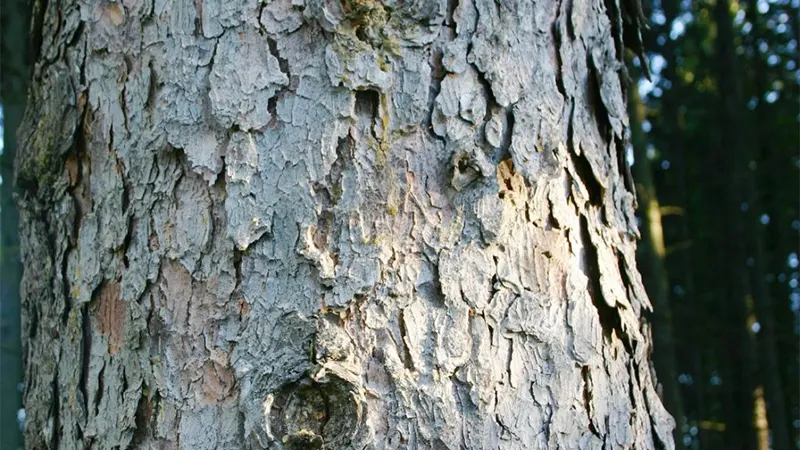
Regina Thomas: Even the bark of the Norway Spruce tree is unique in its own sense.
Rating: ⭐⭐⭐⭐⭐
Markus Penn: The needle-like leaves of the tree look so exquisite.
Rating: ⭐⭐⭐⭐⭐
Britney Fergus: The dense bushy structure of this Norway tree is so eye-catching.
Rating: ⭐⭐⭐⭐⭐
How big do Norway Spruce trees get?
Norway Spruce trees usually grow 40–80 feet tall and 25–30 feet wide.
What are the disadvantages of the Norway Spruce?
The shallow and wide root system of this Norway tree is its biggest drawback. It can make it difficult for other plants to get proper water and nutrition.
How tall will a 5-year-old Norway Spruce get?
Under proper growing conditions, a 5-year-old Norway Spruce will grow about 5 to 15 feet tall.
What is the growth rate of a Norway Spruce?
With a fast growth rate, the Norway Spruce grows up to 2–3 feet per year.
Where to plant a Norway Spruce?
The Norway Spruce should be planted in areas having fertile, permeable soil type with abundant sunlight.
Is Norway Spruce invasive?
In some regions, due to the bushy and spreading structure of the genus, it is considered an invasive species.




Emily Carter –
The Norway Spruce I ordered from YourHomify arrived in decent condition. It had a few slightly bent branches from shipping, but nothing too serious. After planting it, it seems to be doing okay. I think it just needs some time to settle in.
Daniel Wilson –
Really happy with the Norway Spruce I got from YourHomify. It arrived looking fresh and was a good size for the spot I had picked out. It’s planted now and already looks great in the yard. Looking forward to watching it fill out.