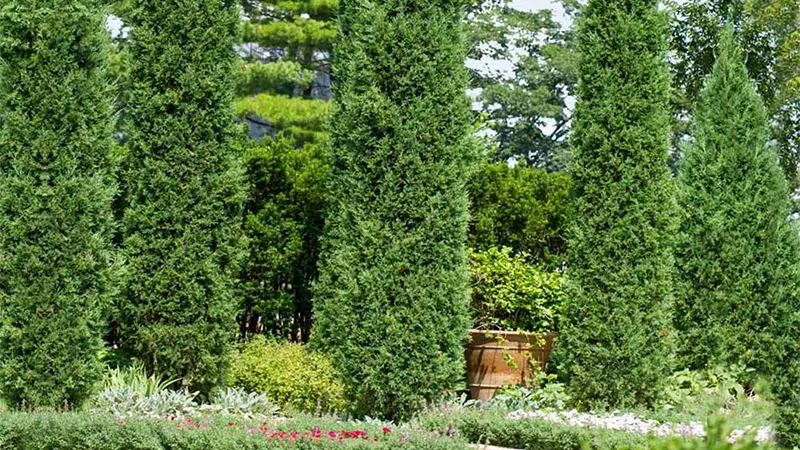
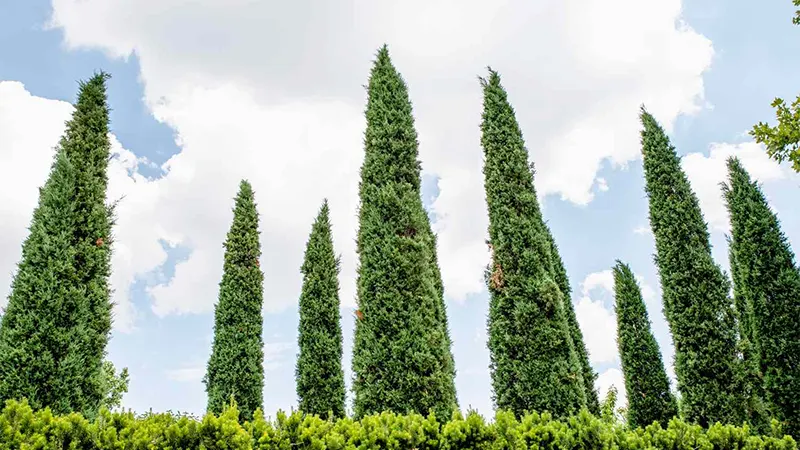
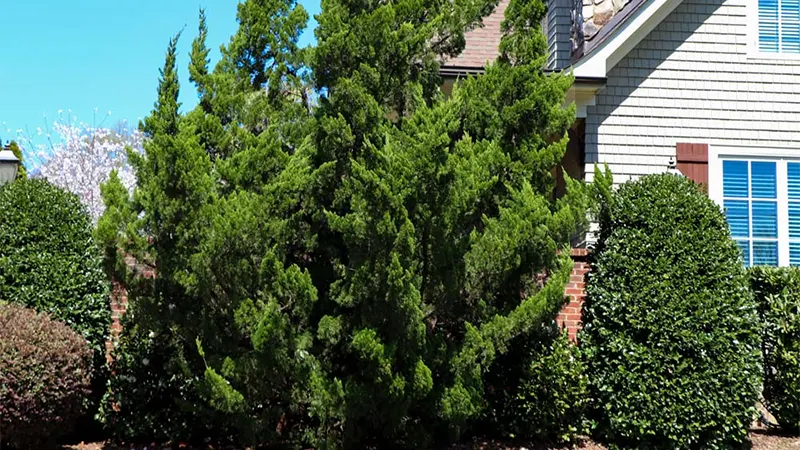
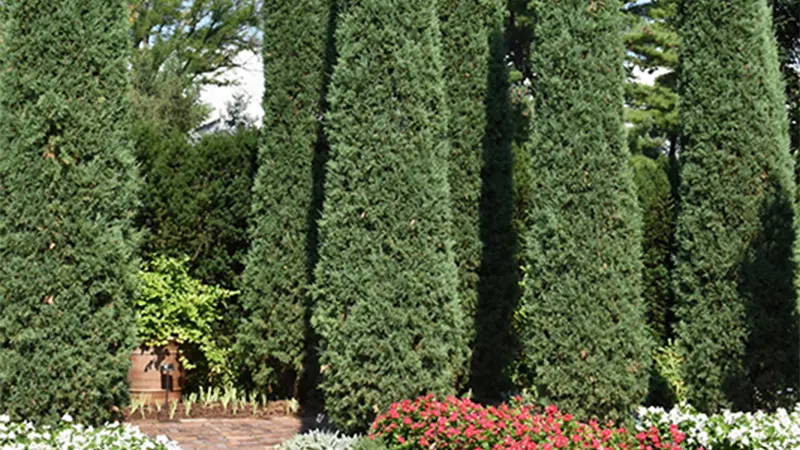
Taylor Juniper trees, botanically known as Juniperus virginiana ‘Taylor’ offers abundant verdant display with their fragrant, lush green foliage and sleek vertical structure. Famous for its fast growth and low maintenance needs, the tree is well deserving as a specimen, accent, hedge, and screen for gardeners.
Key Features and Benefits of the Taylor Juniper Tree
The Juniper Taylor tree has a moderate to fast growth rate, generally adding 12-24 inches every year to the height.
Thanks to the strong central leader, the tree is tolerant of ice and snow.
It requires minimal fertilizer once a year in early spring to support the new growth.
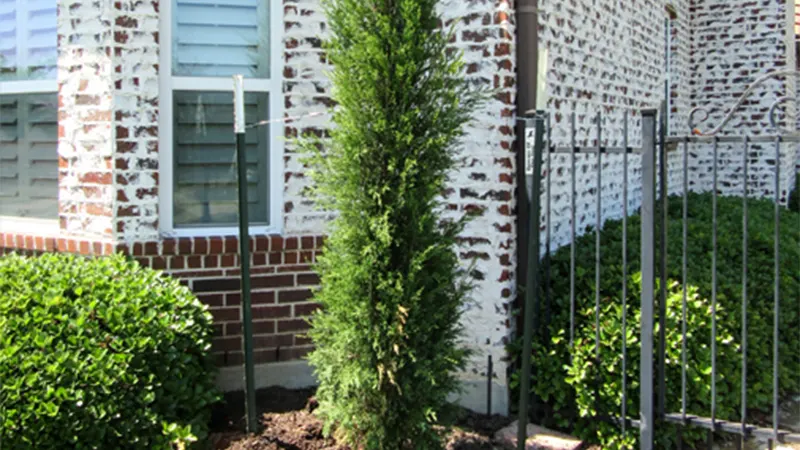
Possesses shallow, fibrous, and non-invasive root structure, making it suitable for tight urban areas.
Care Guide, Advantages, and Disadvantages of the Taylor Juniper Tree
Growing Zone
USDA hardiness zones 3-9
Sunlight Exposure
Requires more than 6 hours of full sun to maintain its columnar form and dense foliage
Water Needs
Regular watering is needed in the first 2 years to establish roots. The fully grown tree is drought-tolerant and needs water only in prolonged dry spells.
Soil Type
As long as the soil is well-drained, it is adaptable to many soil types like sand, loam, and clay.
Advantages
Disadvantages
Need little to no pruning to maintain the dense columnar shape.
Do not tolerate wet soil and do not thrive in spots with standing water.
Provides high adaptability to rocky and clay soil types and can resist salt sprays and urban pollution.
Can be affected by pests like bagworms, webworms, and aphids, and diseases like cedar apple rust.
Generally, resistant to deer and toxins produced by the black walnut trees.
Need direct sunlight exposure; without it, they become sparse and thin.
The foliage remains green all year round and does not splay even in harsh winters.
Like most junipers, they are highly combustible due to volatile oils and trapped debris.
Frequently Asked Questions
How fast do Taylor Juniper trees grow?
They are moderate to fast-growing trees adding up to 12-24 inches of height every year.
How far apart should I plant Taylor Juniper trees?
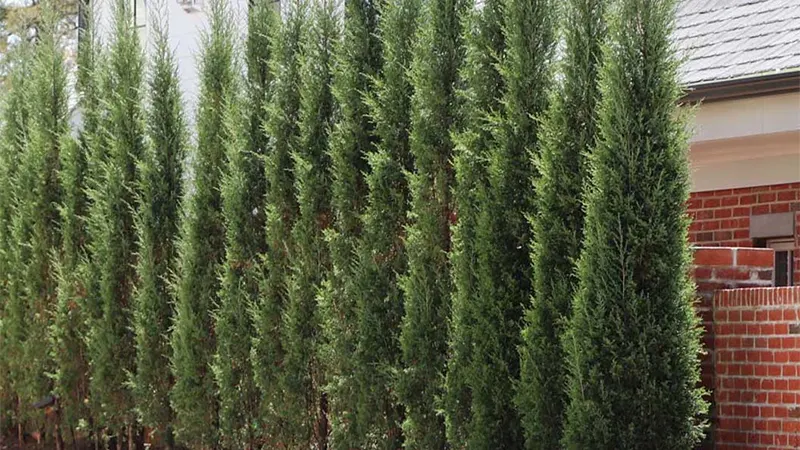
If you want to create a dense privacy hedge or screen, then consider planting 3-6 feet apart. For an even thicker wall, 3-4 feet spacing is recommended.
Does the Taylor Juniper tree get diseases?
Though generally found to be tough, the tree is susceptible to diseases like cedar apple rust and phomopsis blight.
How do I prune a Taylor Juniper tree?
In this tree, pruning is not necessary, but if you are planning to do it, then consider trimming the conifer in spring and avoid cutting the old, bare wood.
Is the Taylor Juniper tree drought-tolerant?
Yes! The grown-up Taylor Juniper trees are considered highly drought-tolerant, only requiring moisture in the extreme dry conditions. However, frequent watering is required in the early establishment phase.
Reviews
6 reviews for Taylor Juniper Tree | A Dense Columnar Conifer Tree
Rated 5 out of 5
Harry Little –
I have used these evergreen conifers as a privacy screen. The dense grey-green foliage provides all-season colour and elevates the beauty of my garden.
Rated 5 out of 5
Ava Green –
Ordered this tree a week ago. Satisfied with the quality and the timely delivery. Looking forward to adding this to my front lawn.
Rated 5 out of 5
Isla Clark –
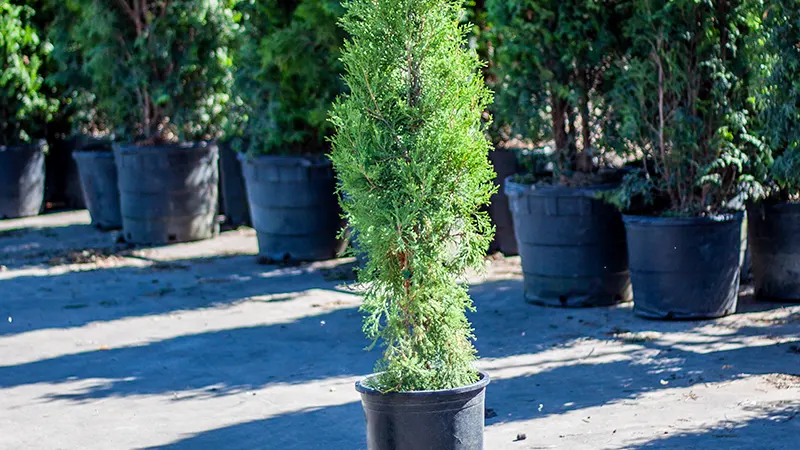
Planted this tree in a large container a year ago. Surprisingly, it has grown significantly with minimal effort from my side.
Rated 5 out of 5
Alfie Spencer –
The tree is highly praised for its narrow and upright shape and rich green foliage, which works in both residential and commercial areas.
Rated 4 out of 5
Andrew –
I bought the Taylor Juniper Tree from YourHomify for a narrow space along my yard, and it turned out to be a great fit. The tree arrived healthy and nicely shaped. I really like its upright growth and clean appearance.
Rated 4 out of 5
Bob –
The Taylor Juniper arrived in good condition and looked fresh right away. I wanted something evergreen that wouldn’t take up too much horizontal space, and this was exactly what I needed. It looks great in its new spot.




Harry Little –
I have used these evergreen conifers as a privacy screen. The dense grey-green foliage provides all-season colour and elevates the beauty of my garden.
Ava Green –
Ordered this tree a week ago. Satisfied with the quality and the timely delivery. Looking forward to adding this to my front lawn.
Isla Clark –
Planted this tree in a large container a year ago. Surprisingly, it has grown significantly with minimal effort from my side.
Alfie Spencer –
The tree is highly praised for its narrow and upright shape and rich green foliage, which works in both residential and commercial areas.
Andrew –
I bought the Taylor Juniper Tree from YourHomify for a narrow space along my yard, and it turned out to be a great fit. The tree arrived healthy and nicely shaped. I really like its upright growth and clean appearance.
Bob –
The Taylor Juniper arrived in good condition and looked fresh right away. I wanted something evergreen that wouldn’t take up too much horizontal space, and this was exactly what I needed. It looks great in its new spot.