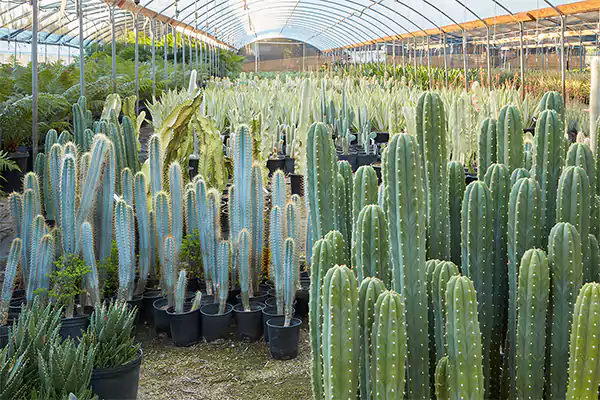
San Pedro Trichocereus is a fast-growing columnar cactus native to the Andes Mountains of South America. It is known for its tall green stems, large white flowers, and impressive adaptability. This desert plant has become a popular choice among many cactus growers around the world.
In this guide, I have covered its botanical classification, care tips, growing conditions, and other important facts to help you understand more about this unique species.
Quick Answer
San Pedro Trichocereus, also known as Echinopsis pachanoi, is a fast-growing columnar desert plant native to the Andes Mountains of Peru and Ecuador. It belongs to the Cactaceae family and is highly sought after for its green stems and white, night-blooming flowers.
A Brief Overview of San Pedro Trichocereus
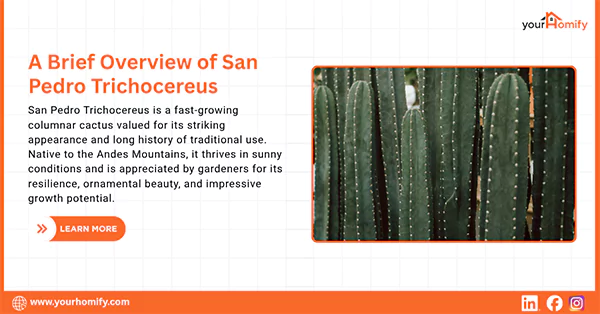
San Pedro Trichocereus, also known as Trichocereus pachanoi, is a famous, rapidly growing, upright cactus appreciated for its rich historical significance and striking appearance.
It typically grows in an upright structure with a height of 10-20 feet. The species has bright to dark green stems and also features large, fragrant white flowers that usually bloom at night.
| Feature | Details |
| Common Name | San Pedro Cactus |
| Scientific Name | Trichocereus pachanoi or Echinopsis pachanoi |
| Plant Type | Columnar Cactus |
| Family | Cactaceae |
| Native Region | Andes Mountains of Peru and Ecuador |
| Mature Height | 10-20 feet tall |
| Stem Color | Bright dark green |
| Growth Rate | Fast-growing |
| Flower Color | White |
| Bloom Time | Usually summer, flowers open at night |
Recommended Product
View all products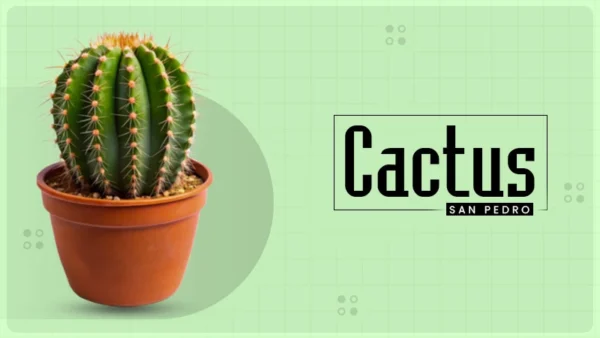
Common Name San Pedro Cactus, Huachuma Maintenance Low Native Region The Andean mountains of South America (Peru, Ecuador, and Bolivia) Average Height 10-20 feet tall Plant Type Evergreen, columnar cactus Average Width 3-6 feet wide San Pedro Cactus Echinopsis Pachanoi has a history of over 3000 years and has been revered as a sacred cactus for decades. It is deeply rooted in cultural and spiritual practices from ancient times, marking itself as a living piece of historical treasure. This genus is an ideal visual aesthetic for rock gardens, xeriscaping, or as a statement plant for any landscape. Key Features of the Echinopsis Pachanoi Cactus San Pedro San Pedro Cactus Echinopsis pachanoi grows vertically, in a pillar-like shape. It features 6 to 8 broad, rounded, longitudinal ribs, often having a notched or V-shaped depression. The color ranges from light to dark green, and occasionally a powdery blue-green. It contains the psychoactive alkaloid mescaline, which is traditionally used in shamanic medicine. hey primarily branch from the base, which creates a thicket-like appearance. This plant produces large, white, and hardly fragrant flowers that bloom at night in the summer. Care Guide, Advantages, and Disadvantages of the San Pedro Cactus Echinopsis Pachanoi Hardiness Zone : USDA Zones 8b-10, but can thrive in 8-11 as well. Light Exposure : Full sun to partial shade. Soil Type : Grows best in extremely well-draining, gritty, and mineral-rich soil Water Needs : Water moderately (when the soil is completely dry) Advantages It has a fast growth rate and is resilient, hardy, and easy to propagate. Striking appearance; produces fragrant, large, white nocturnal flowers. Contains anti-inflammatory, analgesic, and antibacterial properties. Contains mescaline, which is historically used for spiritual, ritualistic, and healing purposes. Disadvantages Prone to rot if overwatered, can get sunburned if not acclimatized. They are very sensitive to pests like mealybugs and spider mites. Excessive consumption can lead to severe vomiting and nausea. Mescaline is a controlled substance in many countries, as its high doses can cause paranoia.
Botanical Classification of San Pedro Cactus
Let us quickly take a look at the botanical characteristics of San Pedro cactus flowers for a more in-depth understanding.
| Classification Rank | Details |
| Kingdom | Plantae |
| Clade | Embryophytes |
| Clade | Tracheophytes |
| Clade | Spermatophytes |
| Clade | Angiosperms |
| Clade | Eudicots |
| Order | Caryophyllales |
| Family | Cactaceae |
| Genus | Echinopsis |
| Botanical Name | Echinopsis pachanoi |
The San Pedro Trichocereus belongs to the Cactaceae family, which is commonly known as the cactus family and comprises more than 1500 species primarily found in America.
Members of the Echinopsis genus are known for their ability to store water in their stems, making them highly adaptable to dry and semi-arid conditions.
San Pedro Trichocereus vs. Echinopsis Pachanoi
If you have been exploring the San Pedro cactus, you have probably come across two scientific names: Trichocereus pachanoi and Echinopsis pachanoi.
Don’t worry! Just like you, I was confused initially, but the good news is that usually both terms refer to the same plant. The difference is in the botanical classification of the genus itself, and to understand it in a deeper sense, we need to dig into the history of the cacti.
The Echinopsis genus dates back to the 1700s and mostly had small, clumping cactus blooms under its name, while Trichocereus came into existence around the 1900s and was reserved for long, columnar species.
Many garden enthusiasts thought that the San Pedro cactus would fall under the Trichocereus category until 1974, when H. Friedrich, a renowned botanist, declared that the seeds of both categories have similar characteristics, hence they should not be classified separately. Since Trichocereus came later, it was placed under the Echinopsis but had the same status.
| Features | Trichocereus | Echinopsis |
| Plant Appearance | Tall, columnar | Tall, columnar |
| Growth Habit | Upright growth habit | Upright growth habit |
| Flower | Large fragrant white | Large fragrant white |
| Native | Andes of Peru | Andes of Peru |
For gardeners or novice cactus lovers, both names are correct and widely recognized. The appearance, physical characteristics, care guide, and growing needs of the plants remain exactly the same.
Ideal Growing Environment, Care, and Maintenance Tips
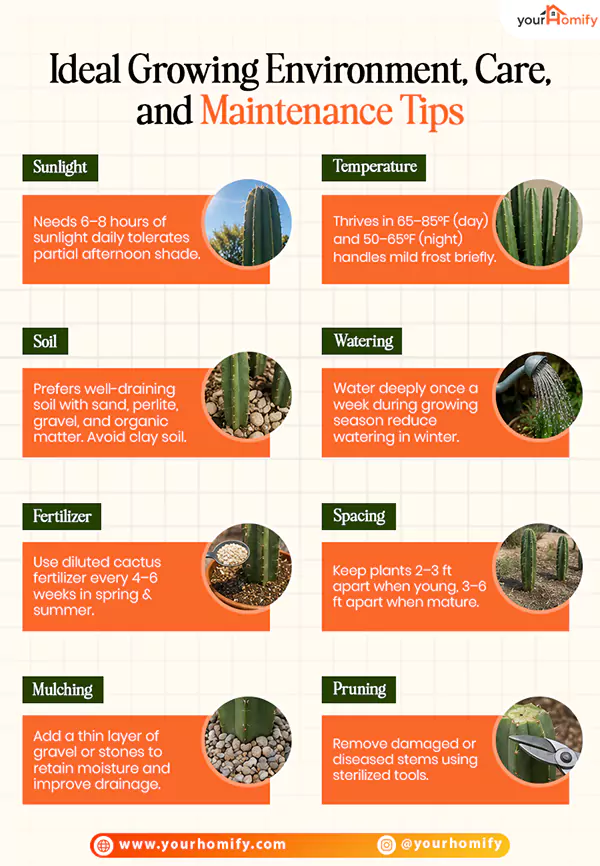
One of the reasons I find San Pedro cactus care rewarding is its adaptability and low-maintenance nature. While it is a tough plant, providing the ideal growing conditions with proper seasonal care can encourage faster growth and beautiful blooms over time.
- Sunlight Requirement: San Pedro thrives in abundant sunlight. It needs a minimum of 6-8 hours but can also be grown in partial afternoon shade.
- Temperature: Cactuses are usually more cold-tolerant than most other flowers. The ideal daytime temperature is 65-85F and the night temperature is 50-65F. It can also tolerate mild frost for a short period of time.
- Soil Needs: San Pedro cactus soil should be well-draining. A proper mixture should contain coarse sand, perlite, gravel, and organic matter for optimal development. I usually avoid planting them in heavy clay soils.
- Watering Schedule: Although drought-tolerant, Trichocereus appreciates proper watering, especially during hot, dry spells. Deep watering should be done once a week during the active growing season.
- Fertilization: Apply a balanced, diluted cactus fertilizer during spring and summer, every 4-6 weeks to maintain the overall health of the species. I stop fertilizing when the plant is dormant, as it can kill the bloom.
- Spacing: Proper spacing helps in improving the airflow and reduces the risk of weed development. Young plants should be planted 2-3 feet apart, and once they start growing and spreading, they should be spaced 3-6 feet apart so that they can spread properly.
- Mulching: I make sure to add a thin layer of mulch around the base of the plant to retain moisture and improve soil drainage. You can use gravel or small stones to prepare the mulch, but avoid touching the base as it can damage the stems.
- Pruning: Trichocereus does not require excessive pruning. Remove damaged stems or diseased growth using sterilized garden tools to avoid any future hassle.
With the right growing conditions, San Pedro Trichocereus can turn into an impressive garden or indoor plant. Once the species is fully established, it requires minimal care and can instantly enhance any landscape.
Common Pests and Diseases Affecting the Pedro Cactus
Even though San Pedro is generally hardy and resilient, it is not completely immune to pests and diseases. I regularly inspect my plant to catch the issues early before they affect the overall health of the species.
- Mealy Bugs: White, cotton-like patches on stems or the back side of the leaves, resulting in a stunted growth rate. This usually happens due to extreme warm conditions or overcrowding.
Solution: Remove with rubbing alcohol and improve the airflow around the plant.
- Spider Mites: You will notice tiny webbing or small yellow, brown patches on stems. This can be due to dry environmental conditions or overwatering.
Solution: Increase humidity around the plant, rinse the affected area properly, and isolate the plant if the damage is severe.
- Fungus Gnats: These are small flying insects around the pots that secrete larvae and can damage the roots of the plant. This usually happens due to overwatering.
Solution: Adjust the frequency of the water and improve soil drainage.
- Root Rot: If you see the roots of the cactus becoming soft, black, and mushy at the base, the plant has likely developed root rot. Excess watering and poorly drained soil are the main reasons for this.
Solution: Carefully remove the affected parts of the plant, add an organic soil mixture to improve the drainage, and replant it if needed.
- Bacterial Soft Rot: This spreads quite rapidly, resulting in foul-smelling stems, stunted growth rate, and wilting flowers. Moisture retained in the soil and overwatering are the main reasons for this.
Solution: Remove the infected area immediately, isolate the plant from others to prevent further infestation, and keep the plant in a spot where it can receive bright direct sunlight.
Most San Pedro pests and diseases can be treated by adjusting the water frequency, improving the airflow, isolating the plant, and monitoring them regularly.
Concluding Remarks
San Pedro Trichocereus is simply more than a striking columnar cactus. Its size, fast growth rate, and alluring night-blooming flowers make it a standout species in the world of cactus. Throughout this guide, I have mentioned the botanical characteristics, physical attributes, care, and maintenance tips of the species for your better understanding.
What I find most astonishing about the Trichocereus pachanoi is how it combines sturdiness with an ornamental appearance and never fails to add a dramatic element to my garden space.
FAQs
Is San Pedro Cactus illegal in the US?
San Pedro Cactus is legal to buy and cultivate in the US as long as it is being used for ornamental purposes. Using the plant to ingest its psychoactive compound can land you in legal trouble.
Can you buy San Pedro Cactus in the US?
Yes, you can buy San Pedro cactus in the US.
Which San Pedro cactus is hallucinogenic?
Echinopsis pachanoi is a primary and closely related species of the Echinopsis genus and is known for having the hallucinogenic compound mescaline.
What is special about the San Pedro cactus?
San Pedro is a tall, columnar, fast-growing cactus native to the Andes of Peru and Ecuador. It is highly appreciated for its toughness and striking white flowers.
Trichocereus pachanoi (San Pedro Cactus) – British Cactus and Succulent Society