


There are a variety of flowers in the world that gardeners have been cherishing for centuries with love and care. It is not possible to discuss all of them in one article. Thus, the best way is to sort them out alphabetically, restricting the scope and making things easier.
Here, we will be listing all the top flowers that start with b. The list has a total of 25 names, including baby’s breath, bachelor’s button, balloon flower, and many more. Let’s begin our discussion.
25 Flowers That Start With B: From Baby’s Breath, Bachelor’s Button, and Balloon Flower to Many Others!
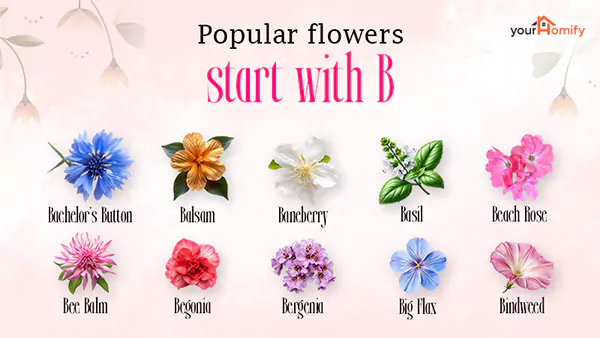
Our list of the major flowers that start with B includes all the top beauties of nature, namely
- Baby’s Breath
- Bachelor’s Button
- Balloon Flower
- Balsam
- Baneberry
- Banksia
- Barberry
- Basil
- Basket-of-Gold
- Beach Rose
- Bee Balm
- Begonia
- Bells of Ireland
- Bergenia
- Big Flax
- Bighead Knapweed
- Billy Button
- Bindweed
- Bird of Paradise
- Bittersweet Nightshade
- Black Bryony
- Black-eyed Susan
- Bleeding Heart
- Blood Root
- Blood-Red Iris
These flowers are briefly discussed below with all the essential information, along with key images.
Baby’s Breath
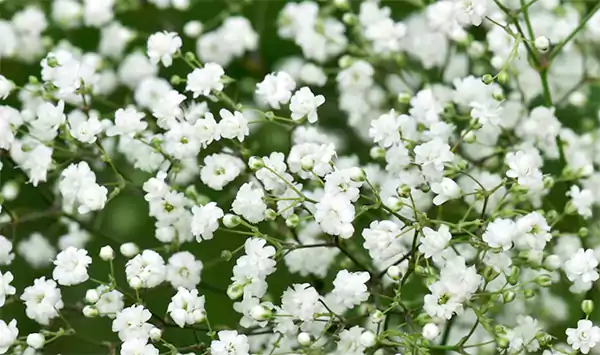
Baby’s breath is the first of the flowers that start with b in our list, and it is also known as Gypsophila. This summer flower is bushy and branching in nature. It boasts many small, delicate flowers on long, thin stems. Tracing back to the genesis, it is native to Eastern and Central Europe.
| Taxonomic name | Gypsophila paniculata |
| Species Type | Herbaceous perennial (comes back year after year) |
| Native environment | Native to dry, sandy, and rocky areas of Europe and Asia |
| Hues | White, soft pink, and light lavender shades |
| Bloom time | Mid-summer to early fall |
| Needs for growth | Needs full sun (at least 6 hours daily) + well-drained, slightly alkaline soil |
| Hardiness | USDA zones 3 to 9 |
| Cultural importance | Symbolizes everlasting love, innocence, and purity |
| Lesser-known fact | Its name, Baby’s Breath, comes from its delicate appearance. |
Bachelor’s Button
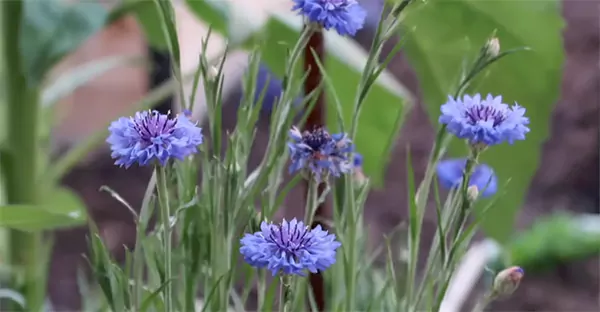
Bachelor’s button is another of the flowering plants that start with b. It is also known as cornflower. These plants are hardy, easy-to-grow annuals. Nature lovers and botanists often recognize them by their vibrant blue, daisy-like flowers. Each stem connecting to a bloom spans up to 2 to 3 feet.
| Taxonomic name | Centaurea cyanus |
| Species Type | Annual wildflower |
| Native environment | Native to Europe and Asia, commonly found in sunny and open areas such as fields, meadows, and roadsides |
| Hues | Primarily, intense blue |
| Bloom time | From late spring through early summer |
| Needs for growth | Loves full sun (6+ hours of direct sunlight) + a well-draining soil |
| Hardiness | USDA zones 2 to 11 |
| Cultural importance | A national flower of Estonia and a symbol of remembrance in France |
| Lesser-known fact | They keep growing until the first frost if deadheaded. |
Balloon Flower
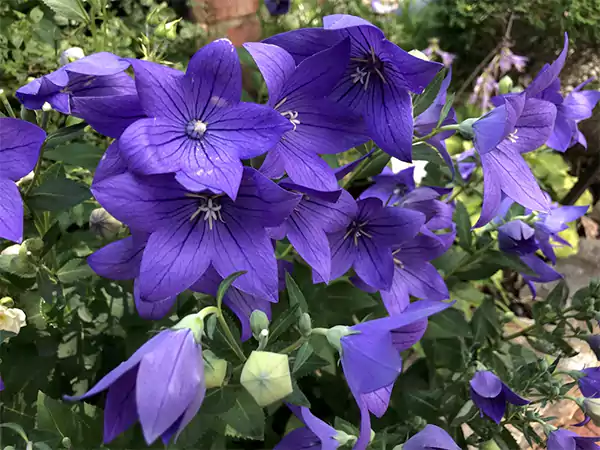
The balloon flower is one of the most common blue flowers that start with b. Its other names are Japanese snowdrop, Chinese snowdrop, Chinese bellflower, and Korean snowdrop. All the buds on this plant start off balloon-shaped, but later turn into five-petal, star-shaped blooms. This ornamental plant is native to East Asia and highly popular among pollinating insects.
| Taxonomic name | Platycodon grandiflorus |
| Species Type | Long-lived herbaceous perennial |
| Native environment | Originally from East Asia, i.e., China, Japan, Korea, and Siberia |
| Hues | Commonly deep blue/violet-blue |
| Bloom time | In the summer, from July through September |
| Needs for growth | Wants full sun but can also handle partial shade + well-drained soil |
| Hardiness | USDA zones 3 to 9 |
| Cultural importance | Due to its medicinal properties, it is widely used in Korean cuisine, known as Doraji. |
| Lesser-known fact | Each bud resembles a balloon-like shape and creates a pop sound when squeezed before full bloom. |
Balsam
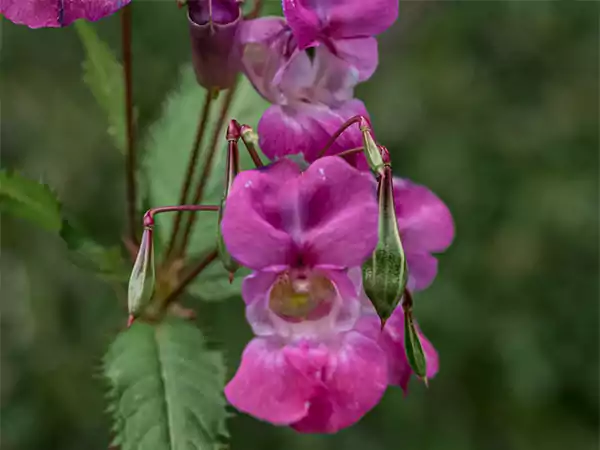
Balsam, scientifically called Impatiens balsamina, is the touch-me-not plant. Due to its name, it is also included in our list of flowering plants that start with b. Being a fast-growing annual angiosperm, it is a popular choice among most household gardeners. Furthermore, native to Asia, it is favored for its vibrant red, pink, white, and purple blooms.
| Taxonomic name | Impatiens balsamina |
| Species Type | Tropical summer annual |
| Native environment | India and Myanmar |
| Hues | Red, pink, purple, white, mauve, lilac, and also sometimes bicolors |
| Bloom time | Summer to early autumn |
| Needs for growth | Requires moist, well-drained soil and partial shade to full sun |
| Hardiness | USDA zones 9 to 11 |
| Cultural importance | In India, it is widely used in the Ganesh Chaturthi festival. |
| Lesser-known fact | It is called “Touch-Me-Not” because the seed pods explode even at the slightest touch when ripe, scattering seeds far and wide. |
Baneberry
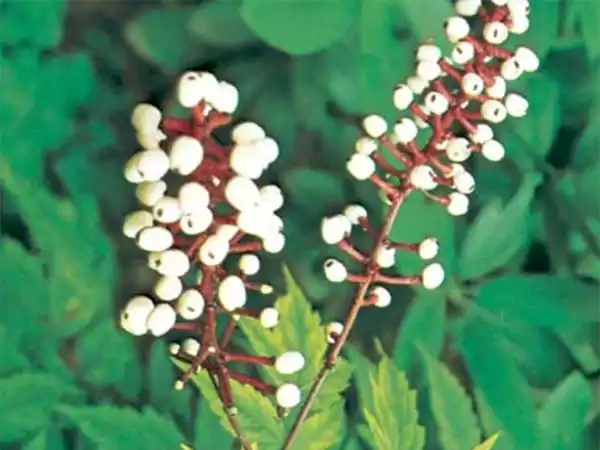
Baneberry, another of the most common flowers that start with b, produces flowers that are ideal for cool, shady places. These thread-like ornamental flowers are perfect for indoor decoration. Baneberry is a genus with Actaea rubra and Actaea panchypoda being the two most common species in this category.
| Taxonomic name | Actaea |
| Species Type | Perennial wildflower |
| Native environment | Shady woodlands, moist forests, and along the banks of streams |
| Hues | Small, fluffy white flowers |
| Bloom time | Late spring to early summer (May-June) |
| Needs for growth | Prefers partial to full shade with rich, moist, and loamy soil |
| Hardiness | USDA zones 3 to 8 |
| Cultural importance | Native Americans used it for medicinal purposes. |
| Lesser-known fact | While highly poisonous to humans, the berries are eaten by birds. |
Banksia
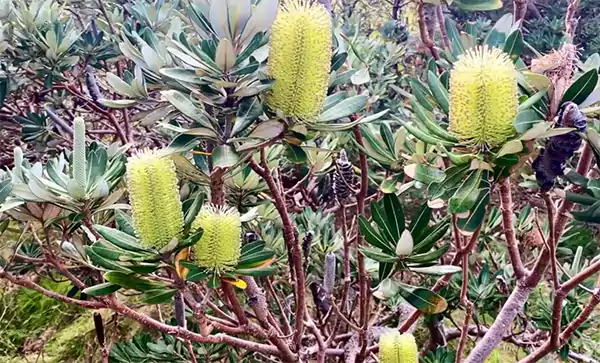
Banksia is another genus on our list of perennial flowers that start with b. It encompasses over 100 species under it, ranging from iconic Australian wildflowers, shrubs, and trees. The trees under this category can reach up to 35 meters tall. Their blooms are typically yellow, orange, red, or pink in color.
| Taxonomic name | Banksia |
| Species Type | Australian native wildflower |
| Native environment | Australia, found in sandy coasts, forests, and shrublands |
| Hues | In shades of yellow, orange, red, pink, and brown or grey |
| Bloom time | Varies by species |
| Needs for growth | Thrives in full sun + requires well-drained sandy soil |
| Hardiness | USDA zones 9 to 11 |
| Cultural importance | They represent the Australian landscape. |
| Lesser-known fact | Many Banksia species have “fire-activated” seeds. |
Barberry
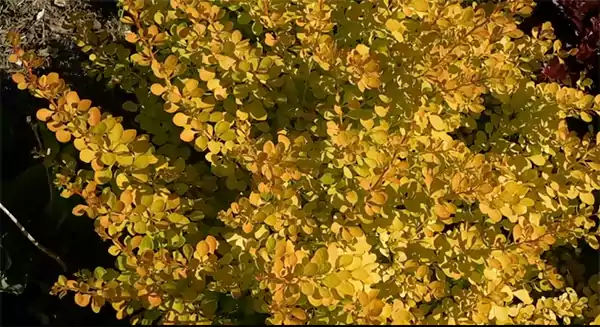
Barberry consists of thorny, deciduous, or evergreen shrubs. Counted among the top flowers that start with letter b, this blooming plant is native to temperate and subtropical regions of Asia. Barberry is renowned for its tart, bright red berries, which are known as Zereshk in Iran. Its beautiful aesthetic can add a new charm to your garden after passing the juvenile phase.
| Taxonomic name | Berberis |
| Species Type | Deciduous or evergreen shrub |
| Native environment | Commonly found in woods, forests, fields, roadsides, and disturbed areas |
| Hues | Bright green, yellow, deep red, or purple |
| Bloom time | In mid-spring, generally from April to May |
| Needs for growth | Prefers full sun with a well-drained soil. |
| Hardiness | USDA zones 4 through 8 |
| Cultural importance | Long used as a natural barrier or hedge because of its sharp thorns. |
| Lesser-known fact | Barberry is a known host for black stem rust, a fungus that can destroy wheat crops. |
Basil
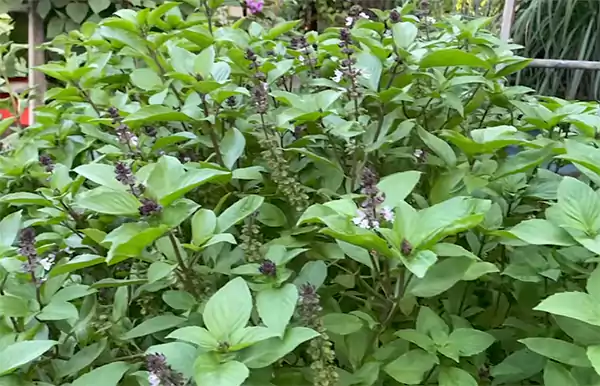
Basil is a popular, aromatic culinary herb in the mint family. It is primarily known for its sweet, pungent flavor, particularly in pesto, salads, and Mediterranean/Thai cuisines. These plants might not be a standalone addition to your garden, but definitely a perfect gift, packed with
numerous culinary and herbal benefits, from nature to be sown among other flower plants.
| Taxonomic name | Ocimum basilicum |
| Species Type | Annual herb |
| Native environment | Tropical regions of Asia and Africa, requiring warm, sunny spots |
| Hues | White, pink, or purple |
| Bloom time | Mid-summer to early fall |
| Needs for growth | Requires full sun, warm temperatures, and well-drained soil |
| Hardiness | USDA zones 9 to 11 |
| Cultural importance | Widely used in Italian, Thai, and Mediterranean cooking |
| Lesser-known fact | It is thought to have been brought to Europe by Alexander the Great. |
Basket-of-Gold
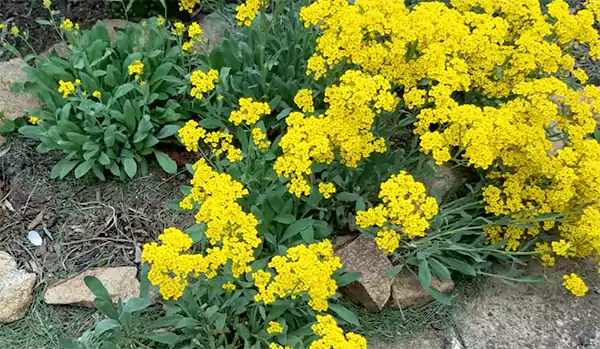
Basket-of-Gold is one of the highly popular, low-maintenance evergreen perennial flowers that start with b. This species produces masses of brilliant yellow, fragrant, spring-blooming flowers. If you have a rock garden, you must consider growing it in there, and it will take your curb appeal to the next level.
| Taxonomic name | Aurinia saxatilis |
| Species Type | Evergreen perennial |
| Native environment | Rocky cliffs and mountainous regions of central and southern Europe and Turkey |
| Hues | Primarily, bright golden yellow |
| Bloom time | Mid-to-late spring |
| Needs for growth | Thrives in full sun and requires well-draining soil |
| Hardiness | USDA zones 3 through 7 |
| Cultural importance | It is a staple of traditional English cottage gardens. |
| Lesser-known fact | The name “Saxatilis” literally means “growing among rocks.” |
Beach Rose
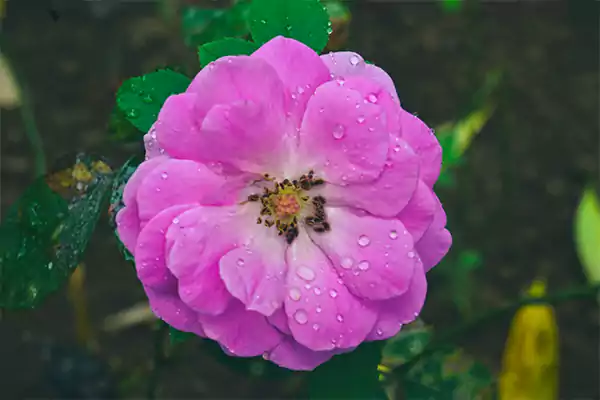
Next item on our list of flowering plants that start with b is Beach Rose. It is a hardy, salt-tolerant shrub. This species is often found on sandy coastal dunes and is known for its fragrant pink or white blooms. Beach roses produce blossoms from May to July, and a well-established shrub can grow up to 4 to 6 feet tall.
| Taxonomic name | Rosa rugosa |
| Species Type | Deciduous shrub |
| Native environment | Sandy beaches, sand dunes, and along coastal roadsides |
| Hues | Dark pink, magenta, lavender, and white |
| Bloom time | Early summer through autumn |
| Needs for growth | Thrives in full sun and well-drained, sandy soil |
| Hardiness | USDA zones 3 to 9 |
| Cultural importance | Symbolizes love, adoration, and rebirth |
| Lesser-known fact | The seeds can germinate even after floating in salt water for days. |
Bee Balm

Bee Balm is also one of the most common flowers that start with b. Many gardeners prefer it for its perennial beauty. The name of this species is Bee Balm, because it is known for its great capacity to attract bees and other pollinators, including butterflies and hummingbirds. Its blossoms are bright, red, pink, and purple in color.
| Taxonomic name | Monarda |
| Species Type | Herbaceous perennial wildflower |
| Native environment | North American ecosystems, including prairies, thickets, open fields, and dry rocky woods |
| Hues | Varies by species, typically lavender, pink, light purple, red, carmine, white, deep purple, etc. |
| Bloom time | Mid-summer through early fall |
| Needs for growth | Prefers full sun, well-drained, moist soil, and good air circulation |
| Hardiness | USDA zones 3 to 9 |
| Cultural importance | Oswego and Blackfoot, Native American Tribes, used it for medicinal purposes to treat colds, sore throats, and skin infections. |
| Lesser-known fact | The plant contains thymol, a natural antiseptic. |
Begonia
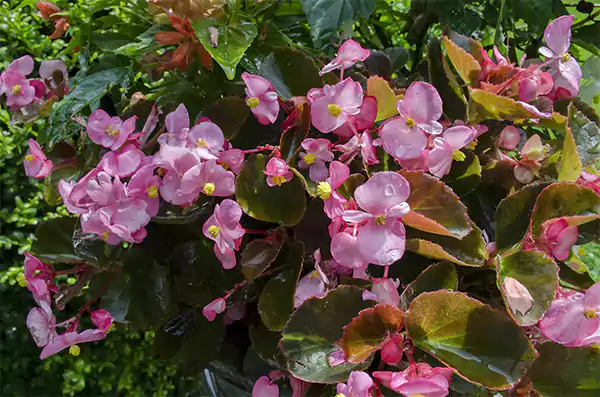
Begonia is a beautiful flowering plant that is blessed with flat and wide petals. There are several types of species under this genus, such as Wax Begonias, Tuberous Begonias, Rex Begonias, Angel Wing Begonias, etc. These blossoming plants are considered symbols of good luck and prosperity.
| Taxonomic name | Begonia |
| Species Type | Perennial annuals |
| Native environment | Native to moist subtropical and tropical climates; typically found in South American, African, and Asian forests’ understory |
| Hues | Bright red, pink, white, yellow, orange, and coral |
| Bloom time | Spring, summer, and fall |
| Needs for growth | Thrives in partial shade and is sensitive to intense, direct sunlight |
| Hardiness | USDA zones 3 to 11 |
| Cultural importance | Popular for their versatility in landscaping |
| Lesser-known fact | Certain Begonia leaves can reduce air bacteria, such as Staphylococcus. |
Bells of Ireland

Bells of Ireland are counted among green beauty flowers that start with b. Their delicate green clusters of cupped petals emit the most unique and peculiar scent, which many cannot describe in words, but just experience. Additionally, these bell plants can get tall enough to provide a sense of strength to your garden.
| Taxonomic name | Moluccella laevis |
| Species Type | Hardy annual |
| Native environment | Turkey, Syria, and the Caucasus |
| Hues | Pale to emerald green |
| Bloom time | From late summer into fall |
| Needs for growth | Prefers full sun to partial shade with moist, well-drained, and nutrient-rich soil |
| Hardiness | USDA zones 2 to 11 |
| Cultural importance | Typically, they are connected with good luck. |
| Lesser-known fact | The “bells” are not actually the petals, but the enlarged sepals that protect the tiny white flowers inside. |
Bergenia
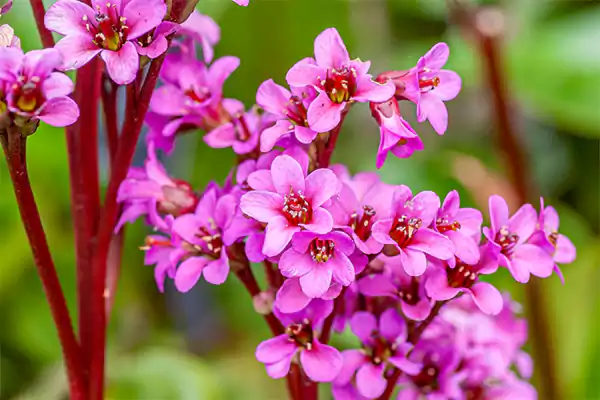
Have you ever spotted little bouquets hovering over the blanket of wide, lush green leaves? Little, charming blossoms in clusters? You have probably found another most cherished species of the flowering plants that start with b. They are Bergenia; due to the large leaves, the plant is also called Elephant Ears. These are the perfect addition to your regular gardens as they lie low to the ground, making the soil bed most attractive.
| Taxonomic name | Bergenia |
| Species Type | Perennial evergreen herb |
| Native environment | Native to central Asia, the Himalayas, and Siberia; they are rock-loving plants. |
| Hues | In shades of pink, magenta, ruby red, purple, or white |
| Bloom time | Late winter to early spring |
| Needs for growth | Thrives in partial shade to full sun, preferring moist, humus-rich, well-drained soil |
| Hardiness | USDA zones 3 to 8 |
| Cultural importance | Widely used in traditional Ayurvedic and Tibetan medicine |
| Lesser-known fact | Also known as “pigsqueak” because rubbing their thick, leathery leaves together produces a squeakly sound. |
Big Flax
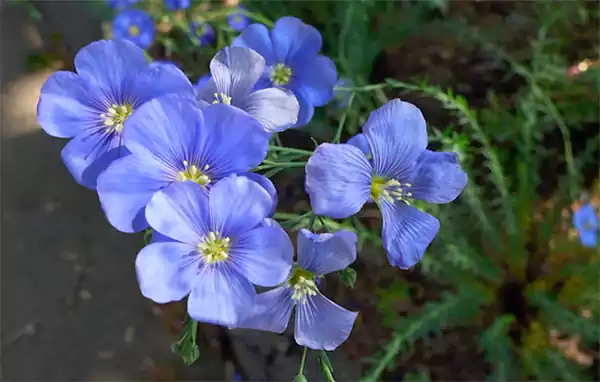
Big Flax is a versatile flowering plant known for its delicate blue-purple blooms. It is another item on our list of flowers that start with b. This plant doesn’t just provide beautiful petals but also edible seeds and fiber commonly used for linen. By nature, it grows quickly, typically 3 feet tall when provided with full sunlight and enough drainage in the soil after watering.
| Taxonomic name | Linum usitatissimum |
| Species Type | Herbaceous annual wildflower |
| Native environment | Open fields, meadows, roadsides, and disturbed soils |
| Hues | Primarily sky blue, but white, red, and pink as well |
| Bloom time | Late spring to late summer |
| Needs for growth | Thrives in full sun and prefers well-drained, fertile to sandy soil |
| Hardiness | USDA zones 4 to 9 |
| Cultural importance | One of the oldest cultivated plants. |
| Lesser-known fact | Each flower only blooms for one day. |
Bighead Knapweed

Bighead Knapweed is a tall, hardy perennial. It is known for its large, bright yellow, thistle-like flower heads. Growing up to 5 feet, it features hairy stems and leaves. It is a preferred ornamental flowering plant among gardeners due to its drought-tolerant capacities. If you live in a dry location, this plant is the best bet.
| Taxonomic name | Centaurea macrocephala |
| Species Type | Herbaceous perennial |
| Native environment | Native to the Caucasus Mountains |
| Hues | Golden yellow |
| Bloom time | Mild to late summer |
| Needs for growth | Requires full sun and well-drained soil |
| Hardiness | USDA zones 3 to 8 |
| Cultural importance | It is considered a noxious weed in areas such as Alberta, Washington State, etc. |
| Lesser-known fact | A single flower head produces up to 200 seeds. |
Billy Button
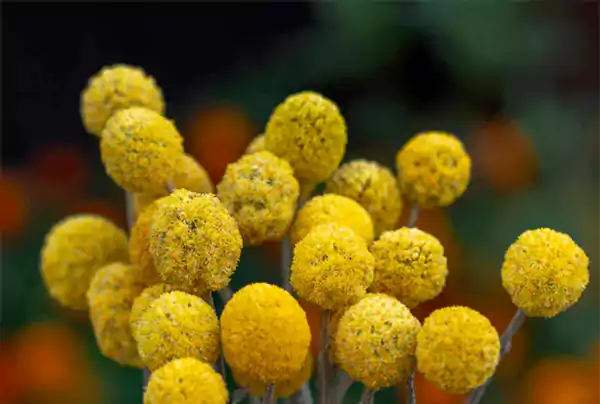
Billy buttons are perennial flowers that start with b. They are cheerful Australian wildflowers known for their bright yellow, globe-shaped blooms on tall, sturdy stalks. These flowers, by nature, look almost like drumsticks. Due to their versatile appearance, billy buttons are widely popular in weddings, bouquets, and garden displays.
| Taxonomic name | Pycnosorus globosus |
| Species Type | Herbaceous perennial |
| Native environment | Dry forests, grasslands, rocky outcrops, and alpine regions |
| Hues | Bright golden-yellow |
| Bloom time | From spring through summer |
| Needs for growth | Needs full sun with no particular soil type requirement |
| Hardiness | USDA zones 8 through 11 |
| Cultural importance | Symbolizes optimism, resilience, and cheerfulness |
| Lesser-known fact | The flower is actually a home to dozens of hundreds of tiny individual florets. |
Bindweed
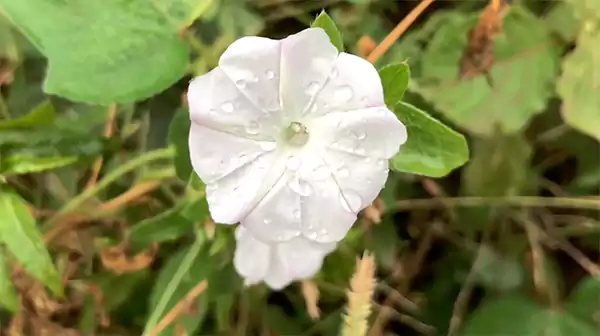
Bindweed is a common, fast-growing flowering plant that acts like a vine. It is listed 18th in this article on flowering plants that start with b. Due to its vining nature, it is the first choice in gardens with established arch trellises. Thus, when the bloom comes, the garden becomes filled with the dangling flowers overhead.
| Taxonomic name | Convolvulus arvensis |
| Species Type | Herbaceous perennial vine |
| Native environment | Thrives in distributed areas, such as roadsides, agricultural fields, gardens, and grasslands. |
| Hues | White or pale pink |
| Bloom time | Mid-summer |
| Needs for growth | Loves full sun but can also tolerate semi-shade with the soil PH ranging from 4 to 9 |
| Hardiness | USDA zones 3 to 10 |
| Cultural importance | It was historically used in Ayurvedic treatment. |
| Lesser-known fact | Its seeds are considered toxic. |
Bird of Paradise
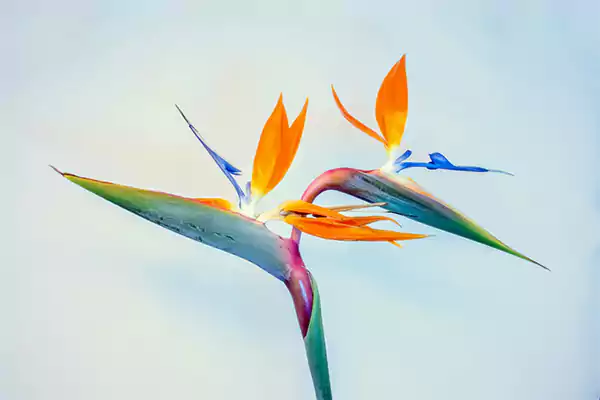
Look at its stunning beauty, and you would instantly want to bring it home. Bird of Paradise is one of the common flowers that start with b and is often known for its beautiful appearance that completely resembles colorful birds in flight. This plant features large, sturdy, banana-like leaves, and doesn’t even need intensive care.
| Taxonomic name | Strelitzia reginae |
| Species Type | Evergreen perennial |
| Native environment | Native to South Africa |
| Hues | Brilliant orange sepals and vivid blue petals |
| Bloom time | From late winter through spring |
| Needs for growth | Prefers full sun to partial shade with well-draining, rich, loamy soil |
| Hardiness | USDA zones 10 to 12 |
| Cultural importance | Official flower of the city of Los Angeles, California |
| Lesser-known fact | The plant is specifically adapted for bird pollination. |
Bittersweet Nightshade
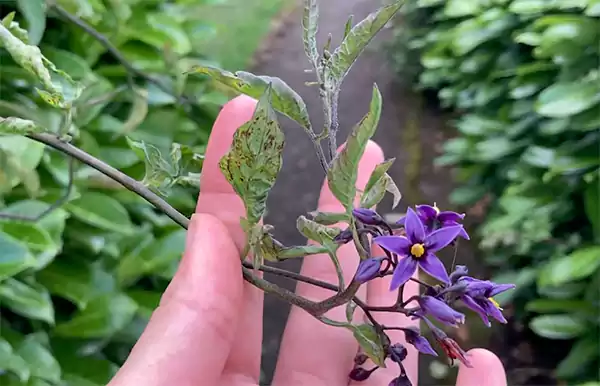
Bittersweet nightshade is one of the blue flowers that start with b. It is a woody perennial vine in the potato family. Although it has beautiful purplish flowers and red berries, all parts of this plant are poisonous to humans and livestock.
| Taxonomic name | Solanum dulcamara |
| Species Type | Perennial vine |
| Native environment | Moist areas, including riverbanks, wetlands, thickets, hedgerows, fencerows, roadside, etc. |
| Hues | Purple |
| Bloom time | Mid-May to September/October |
| Needs for growth | Thrives in nitrogen-rich, moist soils, preferably in partial shade |
| Hardiness | USDA zones 3 to 8 |
| Cultural importance | Historically used in European herbalism to treat skin conditions |
| Lesser-known fact | This plant is commonly known as bitter-sweet due to the term dulcamara. |
Black Bryony
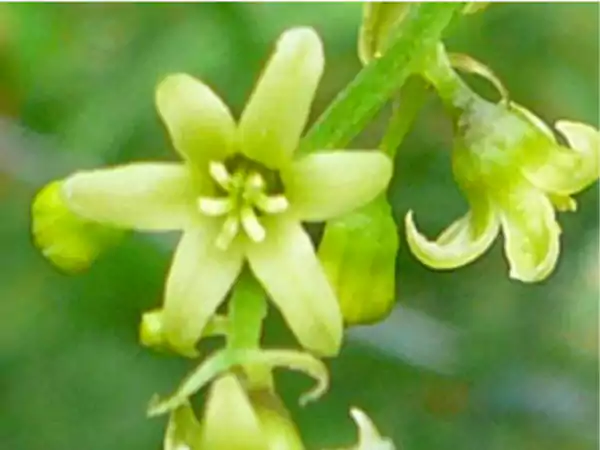
Black bryonys are highly toxic, climbing perennial flowers that start with b, They are commonly found in hedgerows and woodlands. It is a fast-growing climber with twining stems that can even reach up to 2 to 4 meters high. If you spot it in your garden, weed it out as soon as possible.
| Taxonomic name | Dioscorea communis |
| Species Type | Perennial climbing herb |
| Native environment | Hedgerows, woodland edges, scrub, and shady areas |
| Hues | Yellow-green |
| Bloom time | May to August |
| Needs for growth | Prefers shade or semi-shade with moist soil |
| Hardiness | USDA zones 4 to 8 |
| Cultural importance | Historically used for medicinal purposes, even though it is highly poisonous. |
| Lesser-known fact | Its roots can grow up to 60 cm in width. |
Black-eyed Susan

Black-eyed Susan is a hardy sun-loving North American wildflower. It has very beautiful, equally shaped and sized petals connected with a black crown in the centre. This flower resembles the sunflower in its composition.
| Taxonomic name | Rudbeckia hirta |
| Species Type | Biennial or short-lived perennial wildflower |
| Native environment | Prairies, plains, meadows, pastures, and open woodlands are its common thriving places. |
| Hues | Golden yellow petals |
| Bloom time | Mid-summer through early fall |
| Needs for growth | Requires full sun with no soil specifications |
| Hardiness | USDA zones 3 to 9 |
| Cultural importance | The state flower of Maryland |
| Lesser-known fact | Native Americans historically used the plant medicinally to treat cold symptoms. |
Bleeding Heart
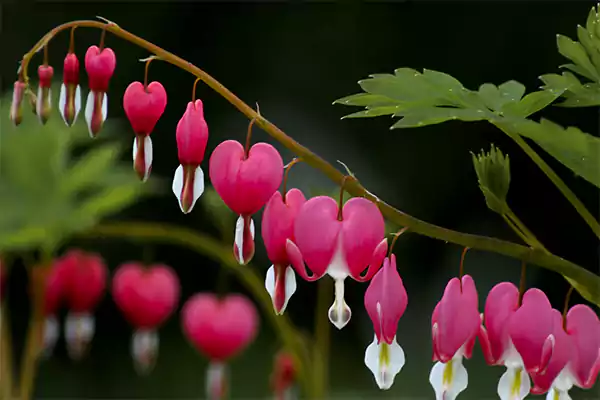
Look at the mesmerizing beauty of these dropping blossoms. They are like hearts cut open in shape. Thus, bleeding heart is one of the uniquely shaped common flowers that start with b. You might want to decorate your garden with this gift of nature, but sadly, it is a poisonous creature of God. It is harmful when eaten and also irritates when rubbed against the skin.
| Taxonomic name | Lamprocapnos spectabilis |
| Species Type | Herbaceous perennial |
| Native environment | Native to moist, woodland environments in Eastern Asia |
| Hues | Pink and white |
| Bloom time | Late spring to early summer |
| Needs for growth | Prefers partial to full shade with moisture and well-draining soil |
| Hardiness | USDA hardiness zones 3 to 9 |
| Cultural importance | In various Asian folklores, it represents unrequited love or a broken heart. |
| Lesser-known fact | The plant is toxic if ingested. |
Blood Root
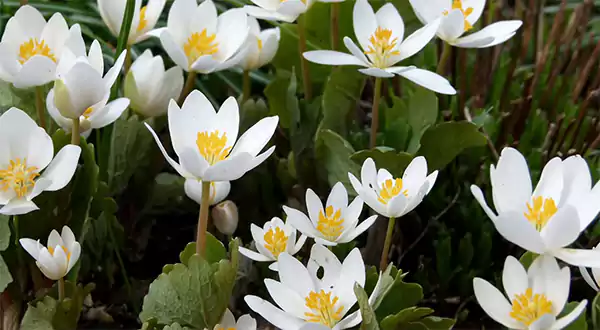
Bloodroot is a spring-blooming herbaceous perennial that features a lotus-like appearance. Each blossom has several mini flower clusters in the centre with various large petals around. These flowers don’t grow lying low to the ground, but some height above with strong supporting stems underneath.
| Taxonomic name | Sanguinaria canadensis |
| Species Type | Perennial herbaceous |
| Native environment | Rich, moist deciduous woodlands, floodplains, and slopes |
| Hues | Pure white petals with a bright yellow center |
| Bloom time | Early spring, typically March to April |
| Needs for growth | Prefers partial to full shade and well-drained soil |
| Hardiness | USDA zones 3 to 8 |
| Cultural importance | Native Americans used it historically for its medicinal properties. |
| Lesser-known fact | This plant is a “myrmecochore,” meaning its seeds are specially designed to be dispersed by ants. |
Blood-Red Iris
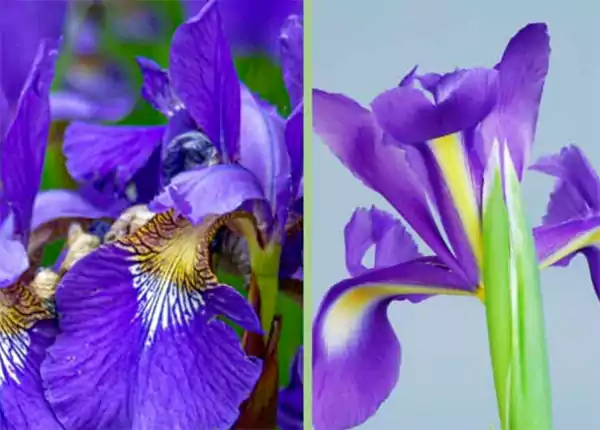
Another one of the blue flowers that start with b is the blood-red iris. In this angiosperm, each flower is like a bouquet itself. This plant features 6-8 cm wide flowers with distinctive, erect, narrow leaves. The blooms are typically reddish-purple or violet-blue.
| Taxonomic name | Iris sanguinea |
| Species Type | Perennial herb |
| Native environment | Native to East Asia, including Russia, Mongolia, China, Japan, and Korea; typically, found in damp meadows, sunny pond banks, etc.. |
| Hues | Reddish-purple, blue-purple, and deep violet |
| Bloom time | In late spring to early summer |
| Needs for growth | Prefers full sun but can tolerate partial shade with slightly acidic loamy soil |
| Hardiness | USDA zones 4 through 9 |
| Cultural importance | It represents wisdom, hope, trust, and courage. |
| Lesser-known fact | The name “Blood-Red” comes from the red-purple color of the spathe valves. |
Conclusion
That has been the list of 25 flowers that start with b. Some of these can be a great addition to your existing gardens, while others are good in words and images only, as they contain poisonous qualities such as bittersweet nightshade, black bryony, bleeding heart, etc. So, be careful while selecting. Read about each flowering plant thoroughly for an informed decision.
Once you’ve worked through this B-letter list, the flowers that start with C are a natural next stop on your A–Z garden tour.
FAQs
What flowers begin with the letter B?
The following are the top flowers that start with the letter B.
- Baby’s Breath
- Bachelor’s Button
- Balloon Flower
- Balsam
- Baneberry
- Banksia
- Barberry
- Basil
- Basket-of-Gold
- Beach Rose
What is a bergamot flower?
It is a North American Wildflower in the mint family known for its “ragged pompom” shaped blooms.
What are the 12 birth flowers?
Carnation, violet, daffodil, daisy, lily of the valley, rose, larkspur, gladiolus, aster, marigold, chrysanthemum, and narcissus are the top 12 primary birth flowers.
What are rare names that start with B?
Balthazar, Bellamy, Bartholomew, Beata, Basilios, and Bernadette are the major rare names that start with B.
Flowers That Start With B– Plant Delights
40 Amazing Flowers That Start With A: Names & Details
[…] details of flowers that begin with the letter A — and once you’ve explored these, the flowers that start with B are just as rewarding to […]