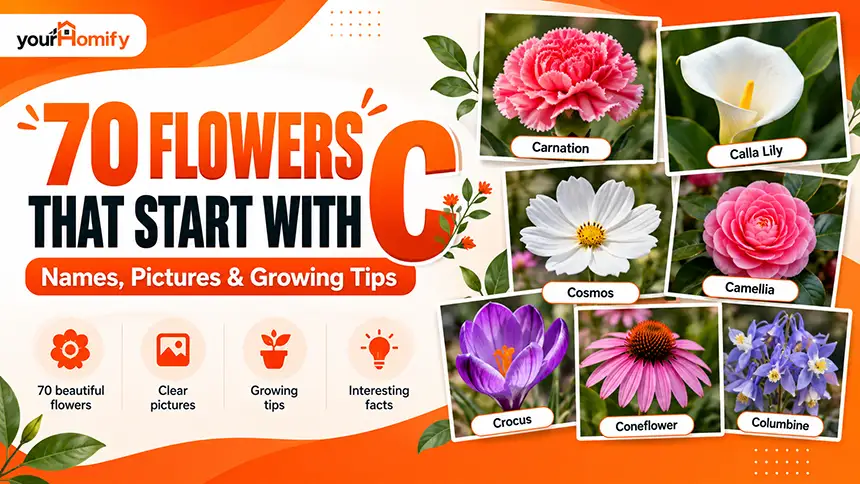
Charming and colorful can be the best words to describe the flowers that start with C. There are various popular flowers like chrysanthemum, carnation, crown imperial, celosia, calendula, and cosmos; each one of them has different colors, textures, shapes, sizes, and scents. Whether you are looking for some beautiful flowers to add to your garden or wanna learn about flowers whose names start with the letter C, you are in the right place.
In this guide, I have discussed 70 beautiful flowers that start with C, with their images and a small description of them.
Quick Answer
Popular flowers that start with C are Calendula, chrysanthemum, carnation, calla lily, and cosmos. Each one of these flowers has a different shape and size; for example, carnation flowers have a ruffled shape, calla lilies have a trumpet shape, and cosmos look similar to daisies.
20 Common Garden Flowers That Start With C
Here is a curated list of flowers that start with C, which can instantly uplift the vibe of any landscape. From classic Carnation to alluring Canna Lily, the table covers it all!
| S. No | Flower Name | Image | Description |
| 1 | Carnation |  | Carnations are native to the Mediterranean region and are mostly known for their vibrant blooms. Botanically called Dianthus caryophyllus, Carnation flowers are mostly used for floral arrangements. |
| 2 | Chrysanthemum |  | Chrysanthemum is originally from China and is also known as the November birth flower. This species is a versatile flower that starts with C and comes in a variety of colors, shapes, and sizes. |
| 3 | Cosmos |  | Cosmos is an October birth flower and is known to symbolize harmony and unconditional love. The species thrives in low-nutrient soil and can be easily taken care of. |
| 4 | Crocus |  | Crocus is a low-growing seasonal flower that starts with C. This spring flower offers captivating visuals if planted in any garden space. |
| 5 | Canna Lily |  | Canna Lily belongs to the Cannaceae family and is the only flowering plant of the group. The vibrant red flowers of the genus are its main attraction. |
| 6 | Calla Lily |  | Calla Lilies are mostly grown for their trumpet-shaped flowers and glossy green stems. Native to Southern Africa, these blooms are cultivated worldwide for their elegant flowers. |
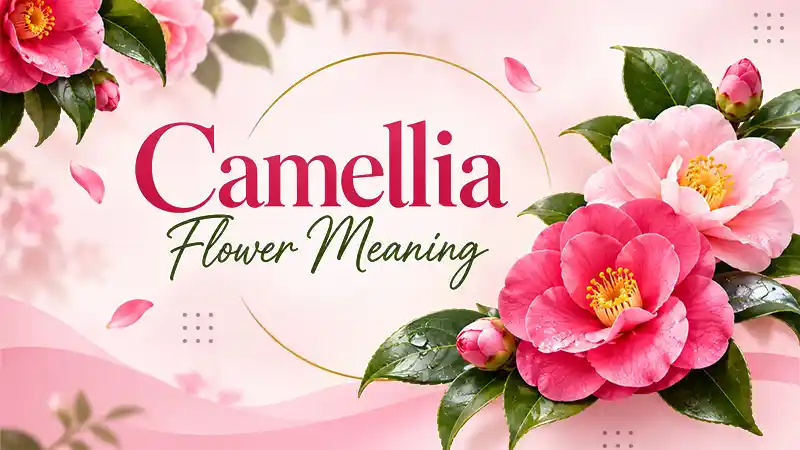
| 7 | Camellia |  | Camellias are known for their large, showy flowers. Particularly grown in China and Japan, these are mostly used as ornamental houseplants. |
| 8 | Columbine |  | Columbine is a uniquely shaped flower and is popular for its glossy, green, and divided foliage. Botanically known as Aquilegia spp, these blooms are mostly grown in the woodlands, rocky areas, and meadows. |
| 9 | Coneflower |  | Native to North America, the coneflower is a perennial species and is mostly used as a border plant. Apart from being low-maintenance, it is highly valued for its medicinal properties. |
| 10 | Coral Bells |  | Coral Bells are widely acknowledged for their heart-shaped leaves found in different hues. Native to the woodlands of North America, these are mostly planted in the front lawns due to the beautiful, delicate flowers. |
| 11 | Coreopsis |  | Coreopsis is a stunning yellow flower that graces large landscapes in the United States. Mostly found in open woodlands, the genus is a hardy, drought-tolerant bloom that attracts many pollinators. |
| 12 | Cornflower |  | Cornflower is an annual flowering plant and holds a deep cultural and historical significance in many European countries. Botanically known as Centaurea cyanus, these are commonly found along the roadside. |
| 13 | Canterbury Bells |  | Canterbury Bells are one of the most alluring bell flowers that start with a C. These long-lasting blooms are native to many European countries and are often used as border plants. Scientifically called Campanula medium, the genus is an annual flowering plant. |
| 14 | Cyclamen |  | Cyclamen is an eye-pleasing indoor plant that blooms all year long if given proper care. Native to Europe, parts of Asia, and Africa, the species is commonly grown as an ornamental houseplant. |
| 15 | Celandine |  | Although Celandines are considered jungle wildflowers, the elegant yellow blooms of the genus have various healing properties. Originally from Europe and Western Asia, these are mostly grown as garden flowers. |
| 16 | Creeping Jenny |  | Popularly called Moneywort, Creeping Jenny is a stunning ornamental plant. Scientifically called Lysimachia nummularia, the genus is low-maintenance, easy to grow, and can be grown as a hanging plant. |
| 17 | Chinese Lantern |  | Originating from Europe and Asia, the Chinese Lantern is a hardy perennial plant that is famous for its orange flowers, which are better known as lantern blooms. The rose gold bud in the center is its most striking feature. |
| 18 | Crocosmia |  | Crocosmia belongs to the Iris family and is famous for its funnel-shaped flowers found in different hues. Native to Southern and Eastern Africa, this species is prized for its ornamental value. |
| 19 | Cineraria |  | Cineraria is widely cultivated due to its shiny and vibrant flower heads found in many hues. Often grown as a ground bedding flower, these blooms can be planted indoors and outdoors as ornamental species. |
| 20 | Candytuft |  | Candytuft is a woody perennial shrub that mostly grows in clusters. The long-lasting blooms of the genus make it a popular choice for large landscapes and border cover. |
Each of these blooms has unique features that make it stand out from other genera. From bold and bright to elegant hues, the aforementioned list covers all the flowers.
10 Ornamental Flowers Beginning With the Letter C
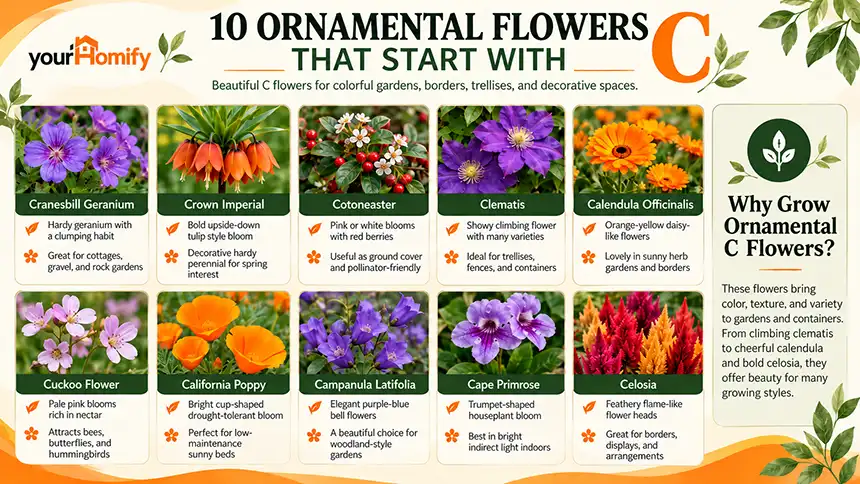
If you are planning to create a vibrant front lawn or a charming backyard, you simply cannot miss flowers that begin with the letter C. Without any further delay, explore the extended list given below for your reference.
21. Cranesbill Geranium
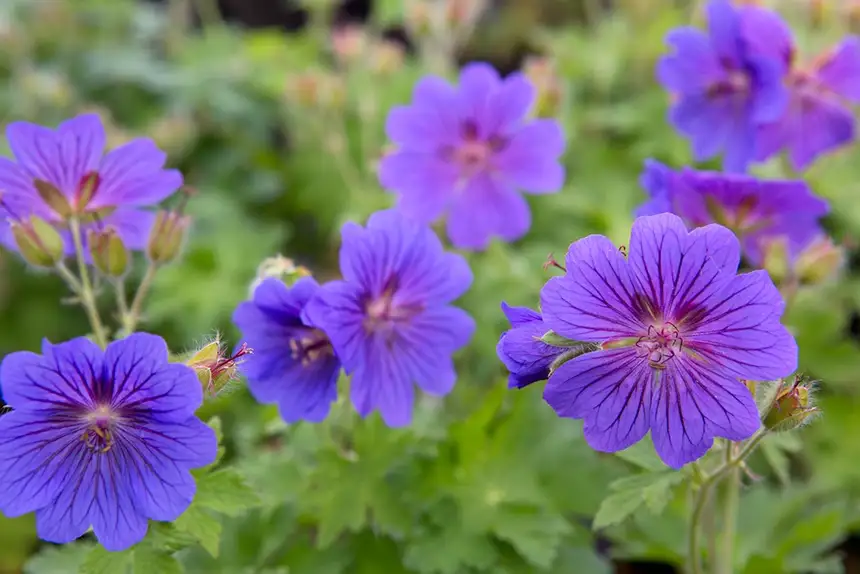
| Native Region | Europe, North America, and parts of Asia. |
| Botanical Name | Geranium sanguineum |
| Care Guide | It requires full sunlight, and can also be grown in partial shade. Tolerates a wide range of soil conditions and needs moderate watering to flourish. |
One of the most popular flowers that start with C is Cranesbill Geranium. Also known as Hardy Geranium, these blooms generally have a clumping or mounding growth habit.
Preferably grown in cottages, rock gardens, and gravel gardens, the dark purple or nearly black flowers of the genus add a stunning pop of color in any landscape.
22. Crown Imperial
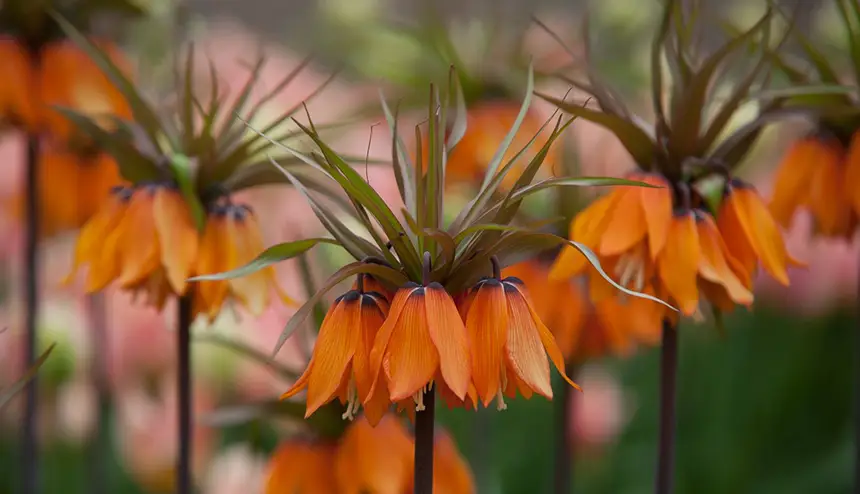
| Native Region | Mountainous regions of Turkey, Iran, and Central Asia. |
| Botanical Name | Fritillaria imperialis |
| Care Guide | Thrives in full sunlight or partial shade and can be grown in a permeable soil type with a range of pH levels. Regular watering is needed during the initial growing stages. |
The Crown Imperial is one of the rare flowers that start with C and is commonly called the upside-down tulip. Glossy leaves surround a stout stem with a vibrant orange flower, making it one of the most charming blooms. Apart from being a hardy perennial, the Crown Imperial is often grown as a decorative garden flower because of its uniquely shaped bloom.
23. Cotoneaster
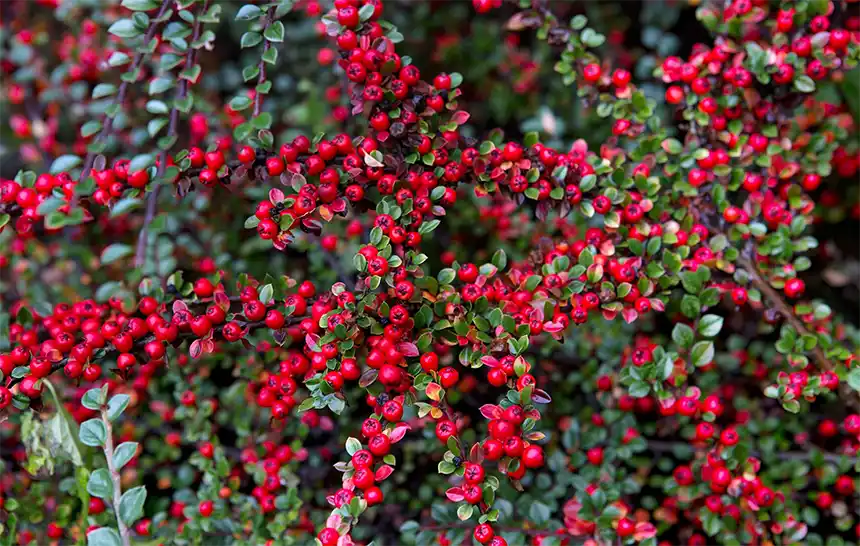
| Native Region | Temperate regions of Europe and Asia. |
| Botanical Name | Cotoneaster salicifolius |
| Care Guide | Prefer growing under direct sun exposure, but can be kept in areas having partial shade. Adapts to a wide range of soil types and does not need much watering since it is drought-tolerant. |
In this extended list of flowers that begin with C, Cotoneaster is the most eye-pleasing species. Known for its glossy leaves, the plant bears alluring pink or white flowers during spring and produces bright red berries in fall or winter.
Although it is a low-growing species, it is quite invasive and is often used as a ground cover plant. These plants are often added to gardens because they attract pollinators, such as bees and butterflies.
24. Clematis
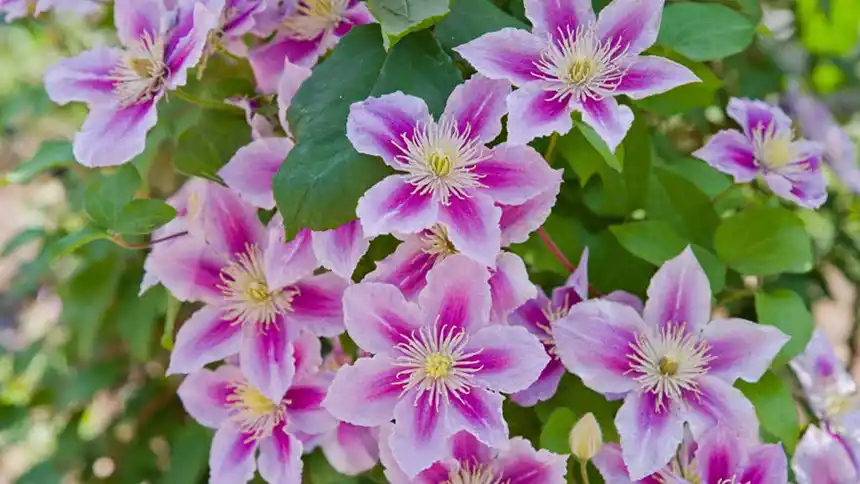
| Native Region | Temperate regions of the Northern Hemisphere, particularly Asia and North America. |
| Botanical Name | Clematis spp. |
| Care Guide | Grows best in cool, moist, and well-draining soil. Try planting the genus in a spot where it can get filtered sunlight. Moderate watering is enough for the flower to flourish. |
Popularly known as Leather Flower or Virgin’s Bower, Clematis is a perennial species belonging to the buttercup family. There are nearly 400 species of this genus, and it can grow up to 1–18 feet tall. Additionally, the large, showy blooms of Clematis make it an attractive plant in any landscape.
The genus can also be grown in narrow spaces, containers, or vertical areas as an indoor plant. Make sure to handle the bloom carefully during the initial growing stage, as the stems of the plant are very fragile.
25. Calendula Officinalis
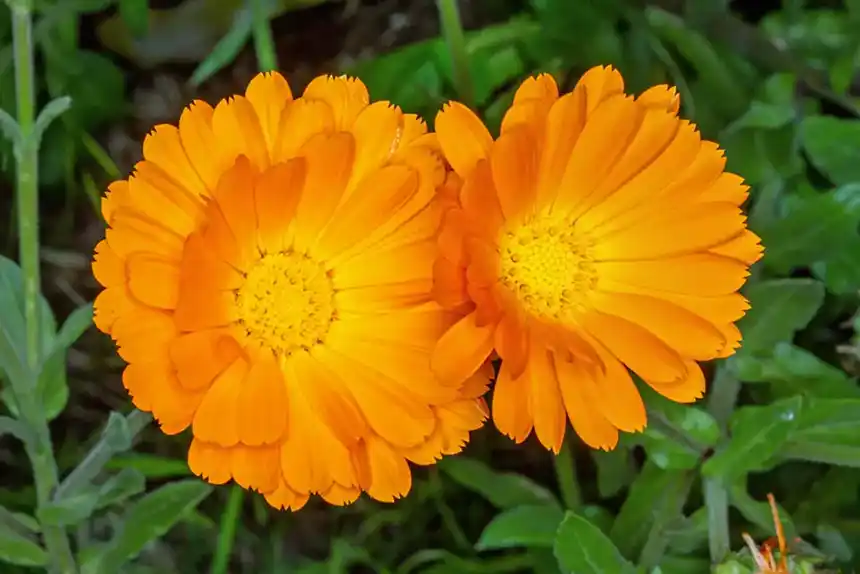
| Native Region | Mediterranean Region (though cultivated worldwide) |
| Botanical Name | Calendula Officinalis (Pot Marigold, English Marigold) |
| Care Guide | Prefers growing in abundant sunlight. Thrives in well-draining, fertile soil type and requires average watering, only to keep the soil moist. |
Calendula is one of the most exquisite flowers starting with the letter C. Known for its orange-yellow daisy-like blooms, this species is also used for many culinary practices. The petals of Calendula are used in salads for decorative purposes and to make herbal tea.
Also known as Pot Marigold, this genus is a perennial herb and can grow up to 80 cm tall. Though the bloom is easy to care for, it does have certain requirements to flourish.
26. Cuckoo Flower
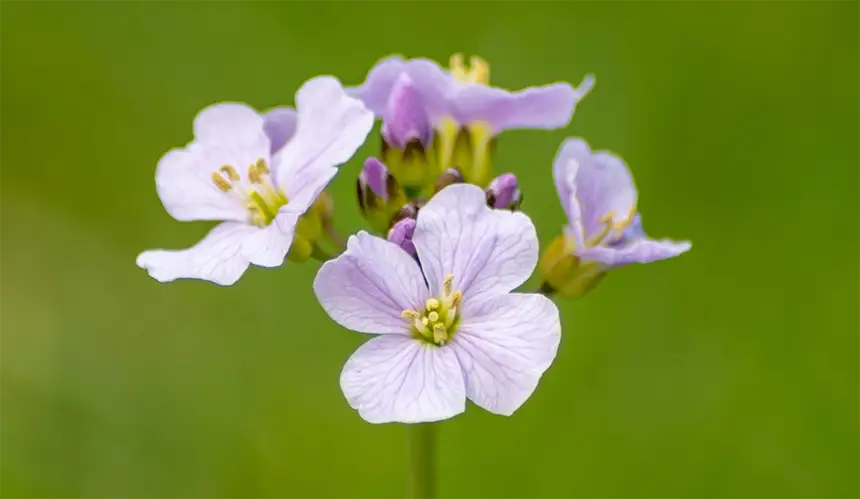
| Native Region | It grows profusely in Europe and Western Asia. |
| Botanical Name | Cardamine pratensis |
| Care Guide | Prefers growing under direct sun exposure with frequent watering, especially during hot summer days. The genus flourishes in nutrient-rich soil, which is acidic in nature. |
If you are looking for astonishing plants that start with C, the Cuckoo flower cannot be missed. The four-petaled blooms in pale pink color provide nectar to pollinators and attract bees, butterflies, and hummingbirds to the garden space.
Historically, the leaves of the genus were used for various medicinal purposes. The antiscorbutic properties present in the foliage of the Cuckoo Flower were used to treat ailments like skin rash and asthma. Its low-maintenance nature makes the genus loved by many novice plant lovers.
27. California Poppy
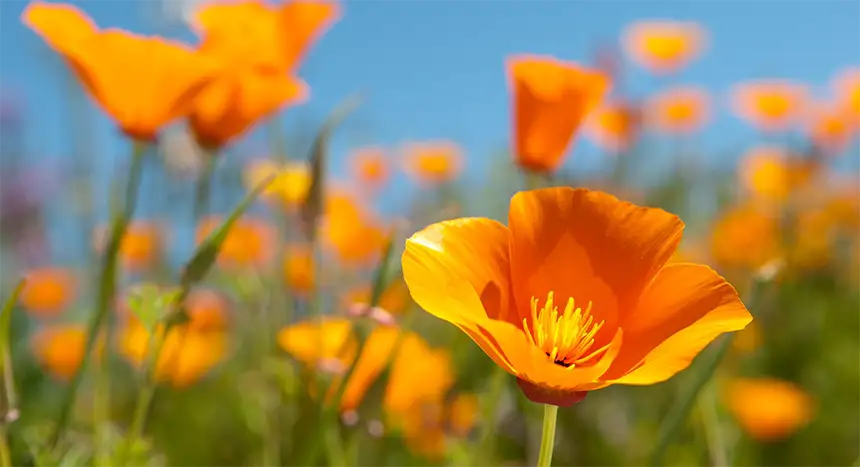
| Native Region | Western United States and Mexico |
| Botanical Name | Eschscholzia californica |
| Care Guide | Thrives under full sun exposure and well-draining, fertile soil. Once the plant is established, water only when the topsoil feels dry. Apply a layer of organic mulch to boost the overall health of the genus. |
California Poppy is a short-lived perennial flower that begins with the letter C. It is an annual species known for its bright, cup-shaped blooms that can instantly uplift the vibe of any garden space.
Being a low-maintenance and drought-tolerant flower, California Poppy is widely cultivated to add a pop of color and also for its ability to attract pollinators. Even the leather-like, glossy green leaves of this orange flower are absolutely eye-pleasing.
28. Campanula latifolia
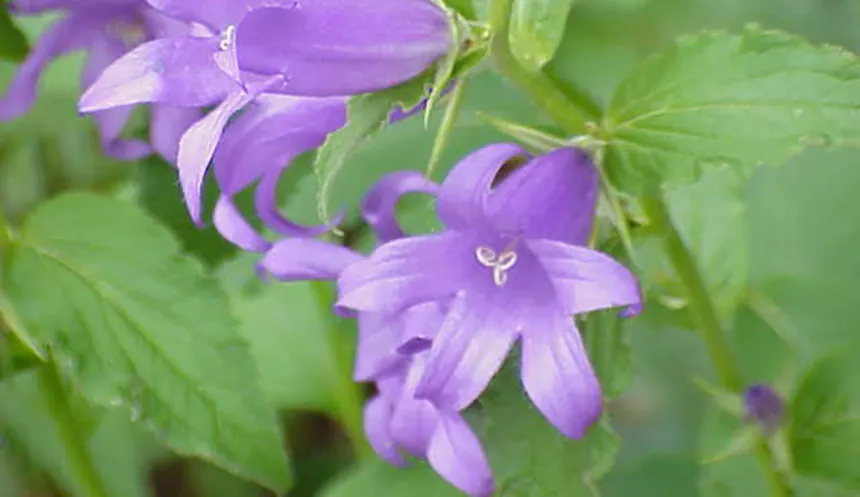
| Native Region | Temperate regions of Europe, Western Asia, and the Himalayan region of India and Nepal. |
| Botanical Name | Campanula Latifolia |
| Care Guide | Usually planted during Spring, the bloom grows best if planted in areas having abundant sunlight. Use a permeable soil type and keep it evenly moist with moderate watering only. |
Popularly called “Great Bellflower” or “Large Bellflower”, Campanula Latifolia is yet another beautiful bloom that starts with the letter C. It is a wild perennial species mostly found in the jungles with spikes on its leaves. The purplish-blue bloom of the genus makes it a sight to behold.
If you are planning to add an elegant species to your front lawn, there is nothing better than Campanula Latifolia. Commonly found in woodlands, meadows, and rock gardens, this clump-forming perennial generally blooms in midsummer.
29. Cape Primrose
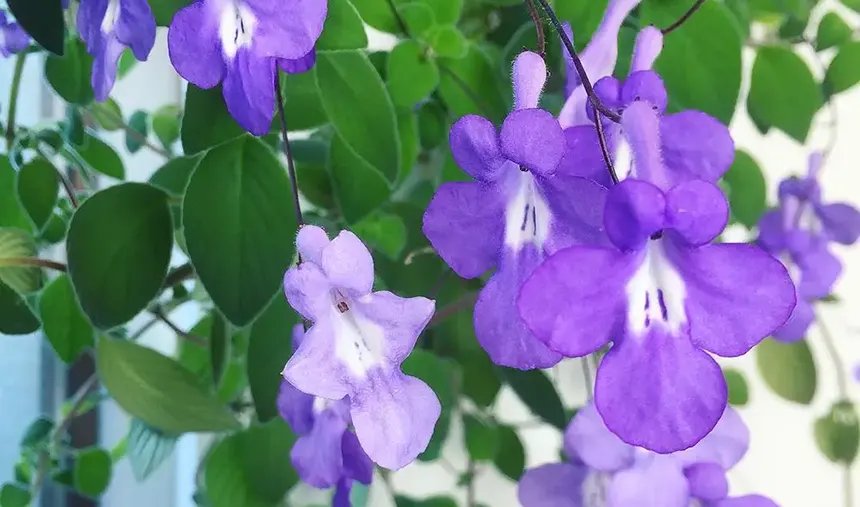
This trumpet-shaped purple flower is widely acknowledged for its purple bloom and shiny dark green leaves. Mostly grown as a houseplant, Cape Primrose can be found in many different hues, such as pink, white, black, and even in brown tones.
Although this beauty does not have any special care demands, it is prone to certain pests. Make sure to use a good-quality liquid fertilizer to prevent pest infestation.
| Native Region | Mountainous regions of Africa |
| Botanical Name | Streptocarpus |
| Care Guide | Best grown in bright indirect light. Try to place the plant near a west-facing window. Water only when the top 2–3 inches of soil feel dry, and try using a general potting mix for optimal growth of the genus. |
30. Celosia
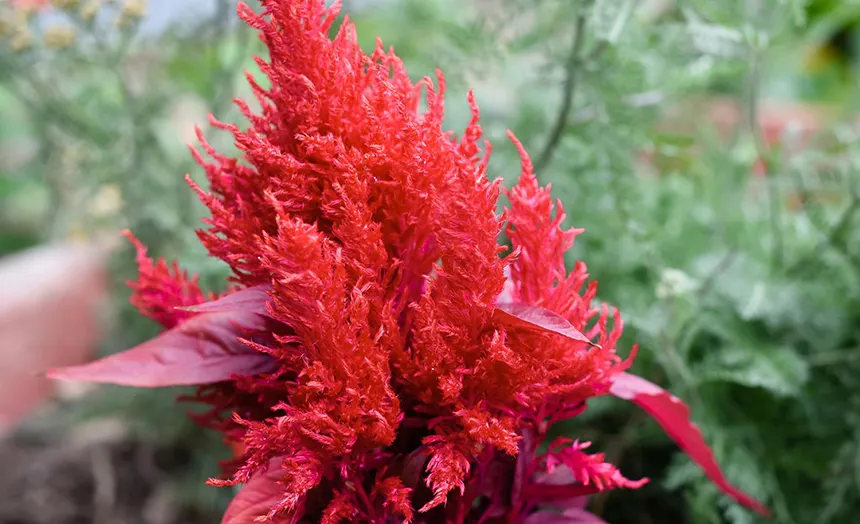
This flower that starts with C is known for its uniquely shaped, feather-like blooms. Celosia flowers are yet another striking bloom that is mainly grown for ornamental purposes. The blooms of the genus are either used for floral arrangements or dried for amazing artwork.
Often grown with companion plants like Zinnia, Marigold, or Petunia, the bloom of the flower looks like a flame and is surely a head turner if planted in the front lawn.
| Native Region | Mainly cultivated in warmer regions, especially in Tropical Africa. |
| Botanical Name | Celosia argentea |
| Care Guide | Requires full sunlight to thrive. Grows best in nutrient-rich organic soil that does not hold much water. Does not require much watering, and be sure to use containers with proper drainage holes. |
Did You Know?
Celosia plants species Celosia argentea var. Cristata is commonly known as cockscomb or the brain flower because the bloom looks like brains.
Now that you know about some of the fascinating flowers starting with C, it can be easy for you to pick the right blooms for decoration or for gifting purposes.
10 Lesser-Known Flowers That Begin With The Letter C
In this section, we have mentioned some more exotic flowers that have their names start with the letter C. Let’s quickly examine some of these blooms in detail and review their key aspects.
| S. No. | Flower Name | Image | Key Aspects |
| 31 | Cardinal Flower |  |
|
| 32 | Clarkia |  |
|
| 33 | Clover |  |
|
| 34 | Cockscomb |  |
|
| 35 | Clivia |  |
|
| 36 | Cuphea |  |
|
| 37 | Catmint |  |
|
| 38 | Chionodoxa Frobesii |  |
|
| 39 | Camellia japonica |  |
|
| 40 | Christmas Cactus |  |
|
From Cardinal to Christmas Cactus, the above-mentioned list clearly shows the diversity in the floral world. Each bloom promises to bring elegance and joy to the surroundings they are being planted.
5 Flowering Shrubs That Start with Letter C
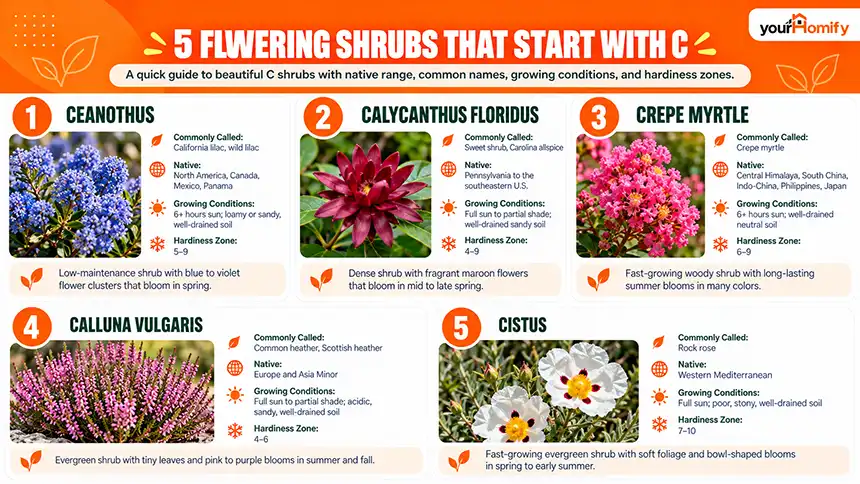
Flowering shrubs are multi-stemmed, woody plants that produce colorful blooms for many years. Take a look at the flowering shrubs whose names start with the letter C.
41. Ceanothus
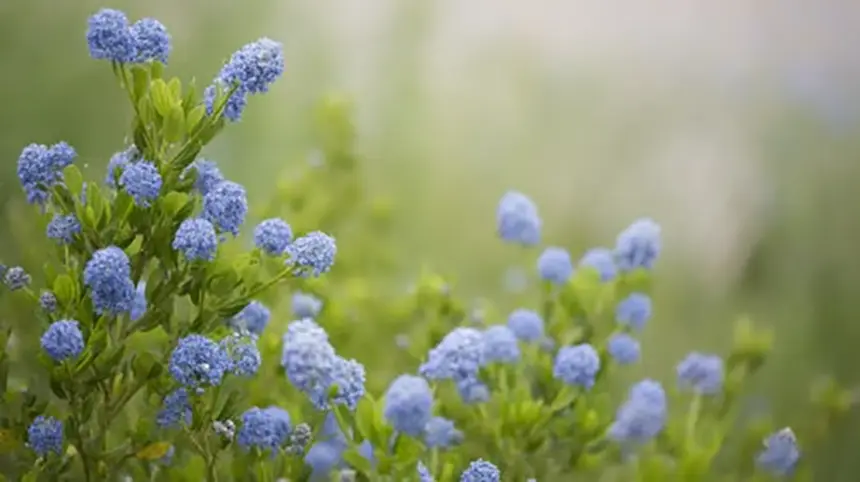
| Native | North America, Canada, Mexico, or Panama |
| Commonly Called | California lilac or wild lilac. |
| Growing Conditions | This plant needs 6+ hours of direct sunlight with partial shade for 2 to 6 hours. It prefers loamy and sandy soil that has good drainage. |
| Hardiness Zone | 5 to 9 |
Ceanothus produces clusters of small flowers in shades of blue and violet. It produces spike-like clusters of blue flowers in the spring season. This is a low-maintenance plant that grows fast when young and dislikes root disturbance or heavy pruning.
42. Calycanthus Floridus
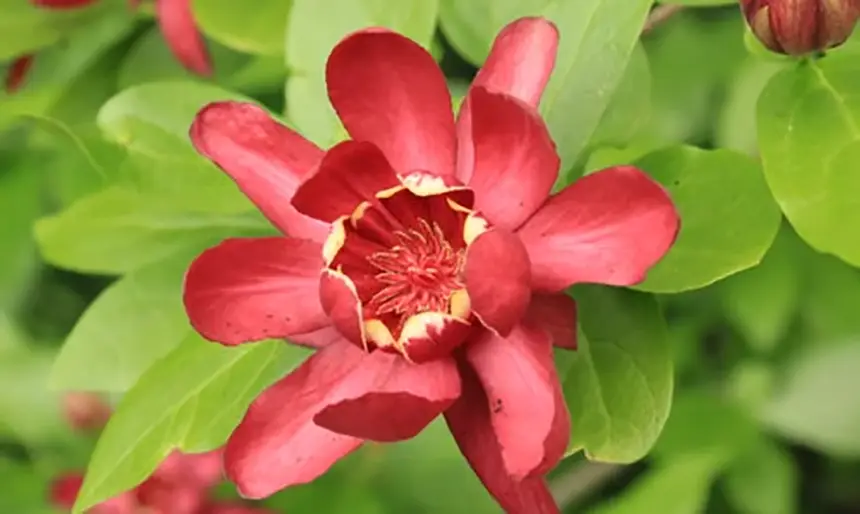
| Native | Pennsylvania to the Southeast U.S.A |
| Commonly Called | Sweet shrub, spicebush, bubby blossom, sweetbetty, Carolina allspice. |
| Growing Conditions | This plant needs 6 hours of full sunlight or 4 to 6 hours of partial shade. Use acidic or alkaline soil that is well-drained and sandy. |
| Hardiness Zone | 4 to 9 |
Calycanthus Floridus are dense shrubs that reach 6 to 9 feet in height. This plant produces a strap-like maroon to red-brown flower that has a sweet fragrance like banana or strawberry. The flowers bloom in mid- and late spring.
43. Crepe Myrtle
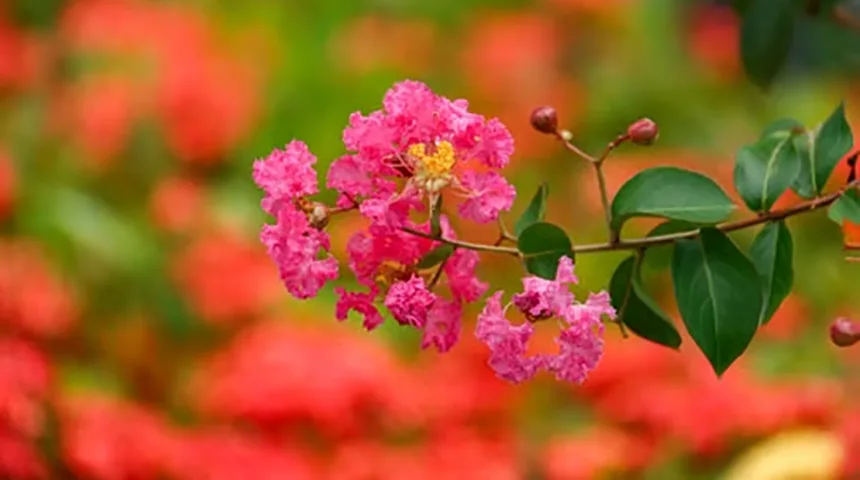
| Native | Central Himalaya to S. China and Indo-China, Philippines, Japan |
| Commonly Called | Crepe myrtle |
| Growing Conditions | The plant needs 6+ hours of direct sunlight for proper growth; it prefers well-drained, neutral soil. |
| Hardiness Zone | 6 to 9 |
These are woody shrubs that grow rapidly and reach 6 to 30 feet in height and width. Crepe myrtle is a multi-stemmed shrub with small leaves and irregularly shaped with 6 petaled flowers, they usually blooms in the summer season.
44. Calluna vulgaris
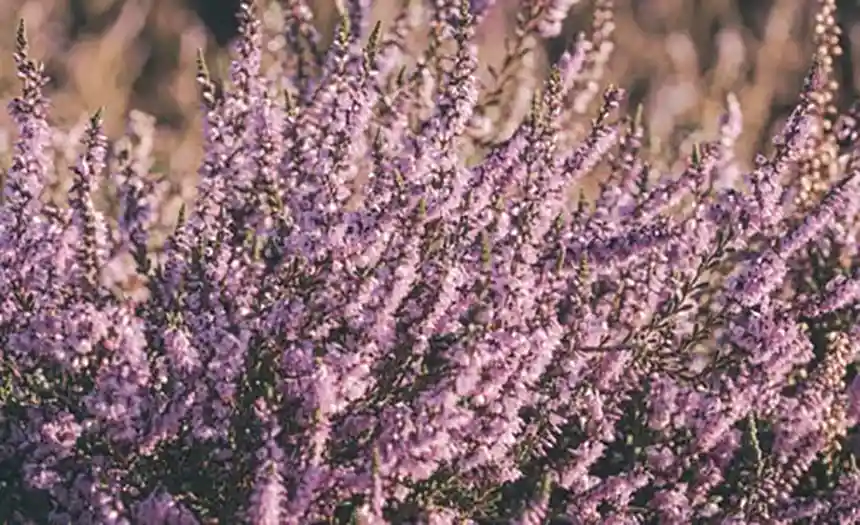
| Native | Europe and Asia Minor |
| Commonly Called | Common Heather, Heather Scotch, Heather, Scottish Heather |
| Growing Conditions | The plant needs 6 hours of direct sunlight and 2 to 6 hours of partial shade. The soil needs to be acidic, loamy, and sandy with good drainage. |
| Hardiness Zone | 4 to 6 |
Calluna is an evergreen shrub that blooms in the summer and fall seasons. This plant has thick mats with tiny, scaled leaves. It produces urn-shaped flowers in pink to purple in the fall and summer seasons.
45. Cistus
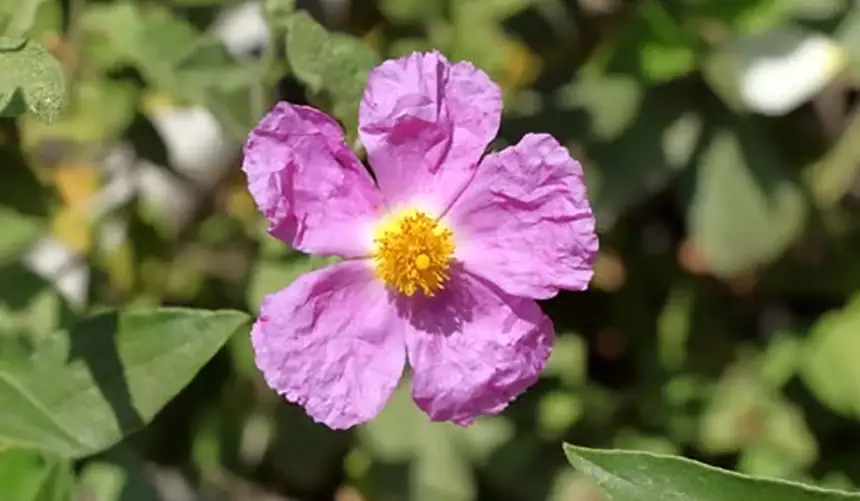
| Native | Western Mediterranean |
| Commonly Called | Rock rose |
| Growing Conditions | This plant needs full sun for 6 hours and well-drained, poor, stony soil. Some of the varieties can tolerate chalky and alkaline soil also. |
| Hardiness Zone | 7 to 10 |
Cistus is a fast-growing evergreen shrub. It blooms in the spring and early summer; the leaves of this plant are soft green, gray, or silver, and the flowers are bowl-shaped, five-petaled flowers. The flowers usually bloom in white, pink, or purplish pink shades.
5 Herbal Flowers That Start with the Letter C
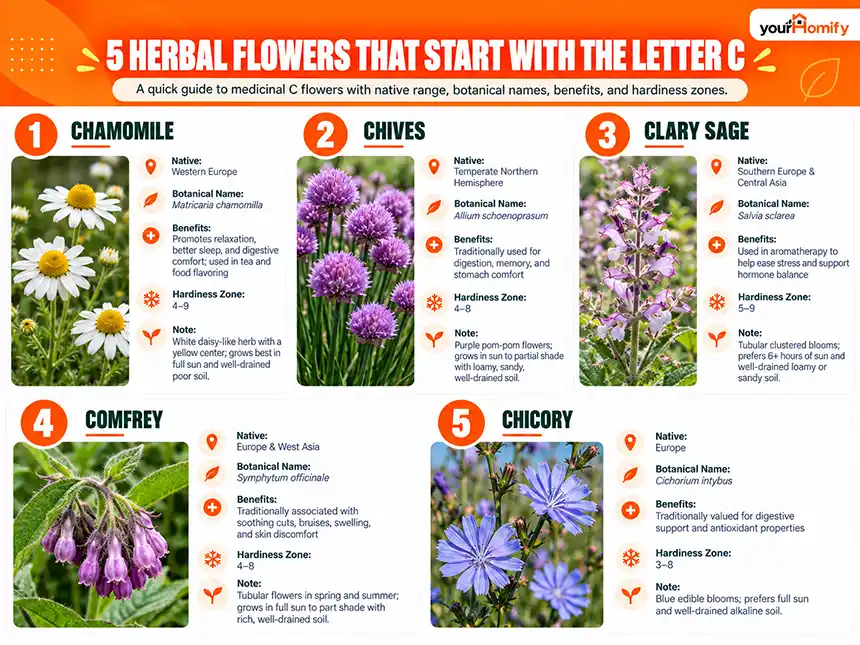
Here, I have discussed about 5 flowers that start with the letter C and are used as medicinal plants from old times. So you can have some herbal plants as an option for your garden.
46. Chamomile
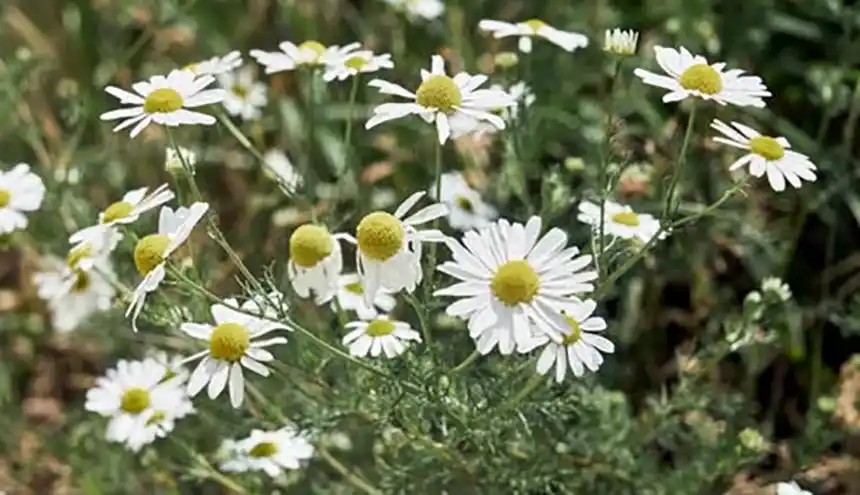
| Native | Western Europe |
| Botanical Name | Matricaria chamomilla |
| Benefits | Used as a tea, beer, and food flavoring, it promotes relaxation, improves sleep, and soothes digestive comfort. |
| Hardiness Zone | 4 to 9 |
Chamomile is an evergreen perennial herb plant, a species of the daisy family. It is an edible plant that blooms white flowers with a yellow center in early to midsummer. This plant needs full sun and well-drained, poor soil.
47. Chives
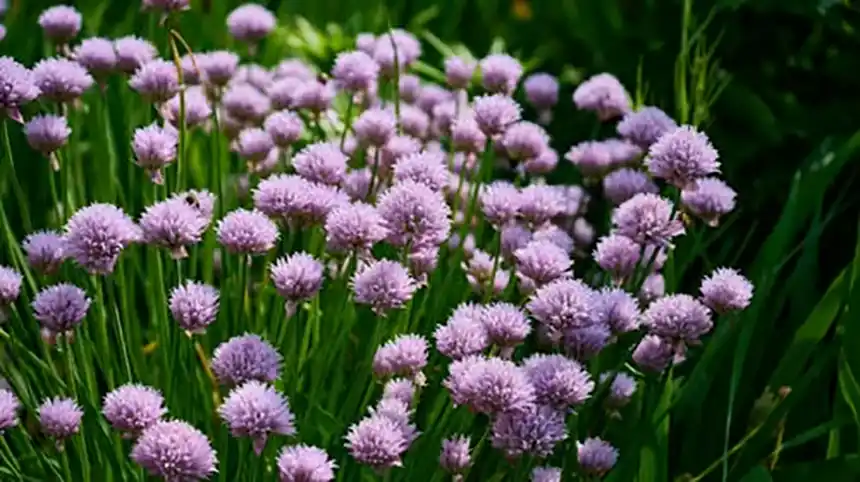
| Native | Temperate Northern Hemisphere |
| Botanical Name | Allium schoenoprasum |
| Benefits | It is used to treat anaemia, stimulate digestion, improve memory, and upset stomach. |
| Hardiness Zone | 4 to 8 |
Chives are a perennial plant that produces multiple spike-like petals in round-shaped flowers in purple and lavender colors in the spring and summer season. Grow in full sun or partial shade with loamy and sandy soil for good drainage.
Did you know?
In old times, people used the dried branches of chive as protection from evil, and it was also used in storytelling.
48. Clary Sage
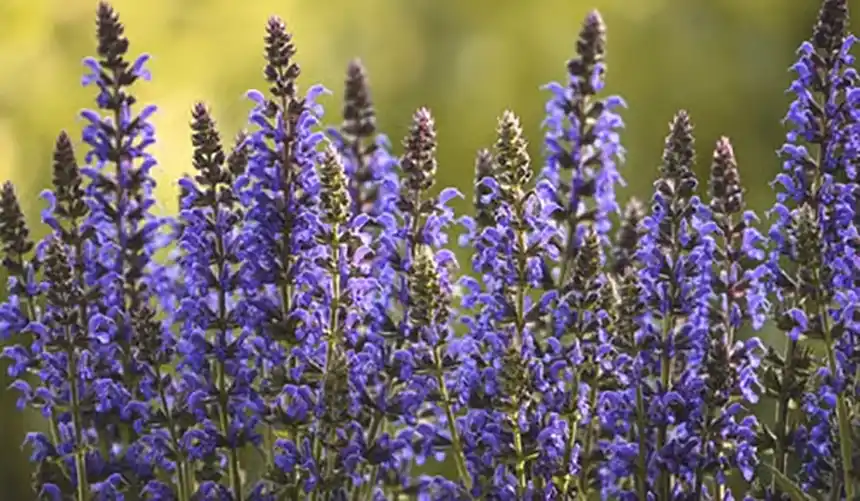
| Native | Mediterranean region of southern Europe and central Asia. |
| Botanical Name | Salvia sclarea |
| Benefits | The oil of this plant is used in aromatherapy; it helps lower blood pressure, reduce stress, and balance hormones. |
| Hardiness Zone | 5 to 9 |
Clary sage is a biennial perennial plant that blooms with lipped or tubular-shaped flower clusters that look like a panicle. This plant usually blooms in the spring and summer season. To grow, provide 6 hours or more of full direct sunlight and good drainage, loamy, sandy soil.
49. Comfrey
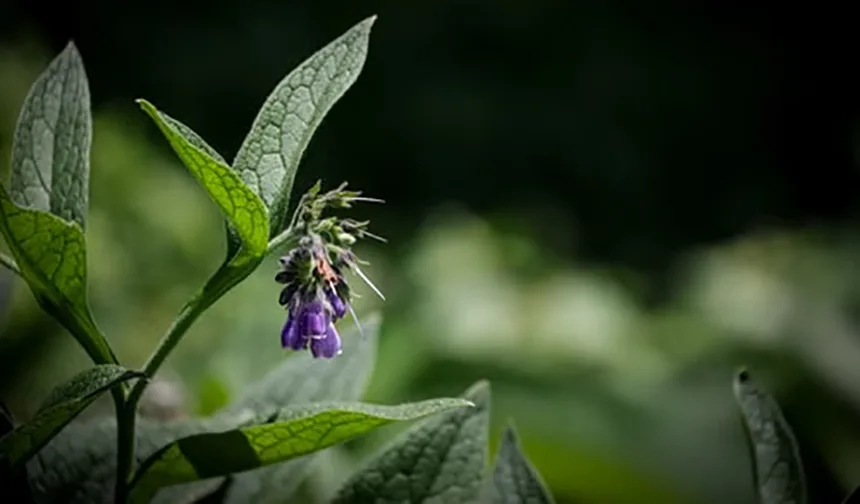
| Native | Europe and West Asia. |
| Botanical Name | Symphytum officinale |
| Benefits | Used as a medicine for injuries. The leaves are said to be used to treat rashes, swelling, cuts, and bruises. |
| Hardiness Zone | 4 to 8 |
Comfrey is a herbal perennial plant. It produices tubular shaped flowers clusters in a cyme shape, and they bloom in the spring and summer seasons. Provide 6 or more hours of full sunlight and 2 to 6 hours of shade, and use good drainage, loamy, and highly organic soil.
50. Chicory
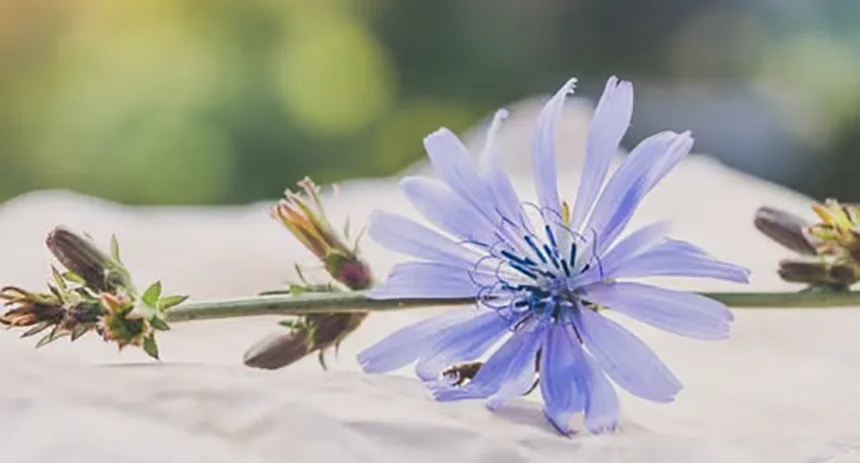
| Native | Europe |
| Botanical Name | Cichorium intybus L |
| Benefits | This plant is antifungal, immune-stimulating, and antioxidative; the roots help relieve constipation, reduce skin inflammation, and lower the risk of liver disorders and cancer. |
| Hardiness Zone | 3 to 8 |
Chicory is a herbaceous perennial plant that blooms annually and is edible. It produces saucer-shaped flowers that have 7 to 20 petals and usually blooms in fall and summer seasons. This plant prefers full sun for 6 hours or more and well-drained alkaline soil.
20 Exotic and Unusual Flowers That Start With the Letter C
Not every flower makes the top list; that’s why I have covered 20 unpopular flowers that you may not have heard about, but these are equally beautiful and unique, so let’s take a look at them.
| S. No. | Flower Name | Image | Description |
| 51 | Caladium | 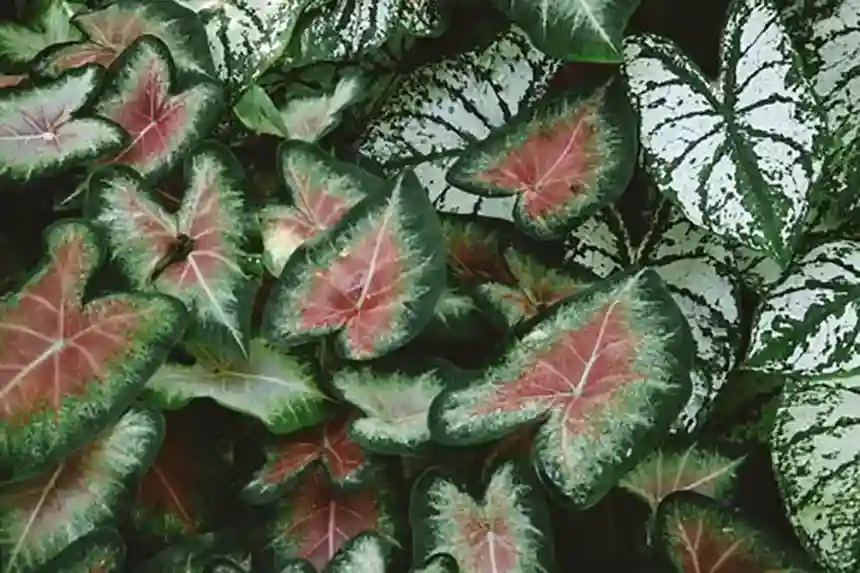 | Caladium is a tropical perennial plant that has colorful and heart-shaped leaves. This plant was found in the forests of South and Central America. It is commonly known as angel wing, heart of Jesus, and elephant ear. |
| 52 | Calceolaria | 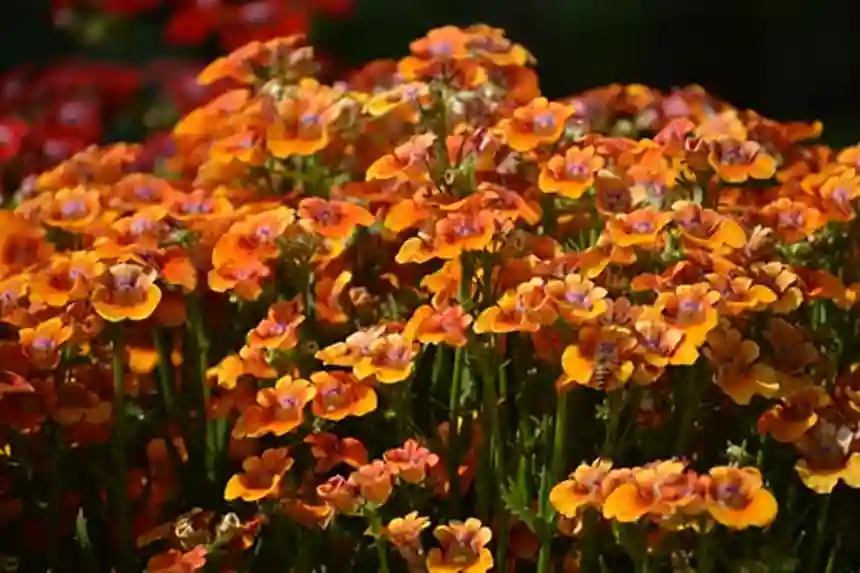 | Calceolaria is commonly known as slipper flower, pocketbook, or lady’s purse because of the unique yellow and red-shaped flowers that are slipper shaped underside; the leaves are grouped in whorls and are deep green in color. It is a herbaceous plant native to Northwest Brazil. |
| 53 | California Pepper-tree | 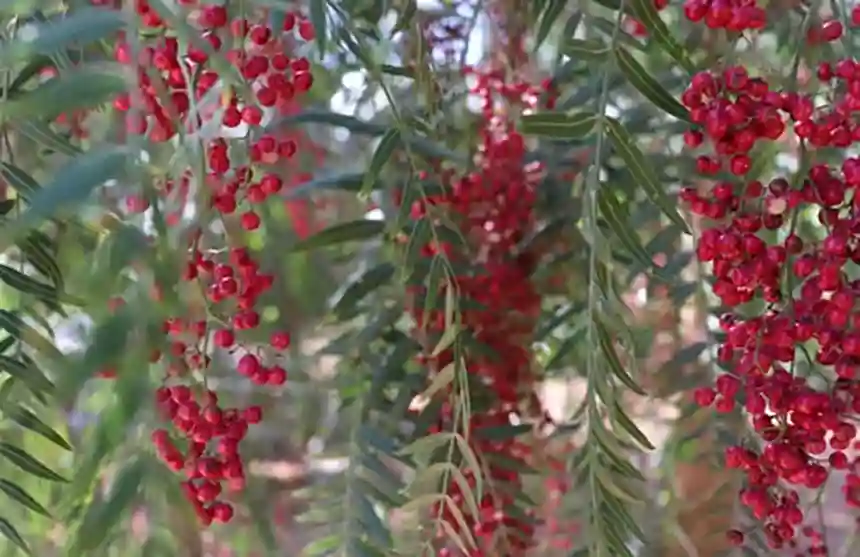 | The scientific name of Schinus molle is California pepper tree. It is an evergreen shrub or tree that has a light aroma of pepper tea. These are found in Central and Southern California. It produces pink fruits that are also used as spices after drying. |
| 54 | Calycina | 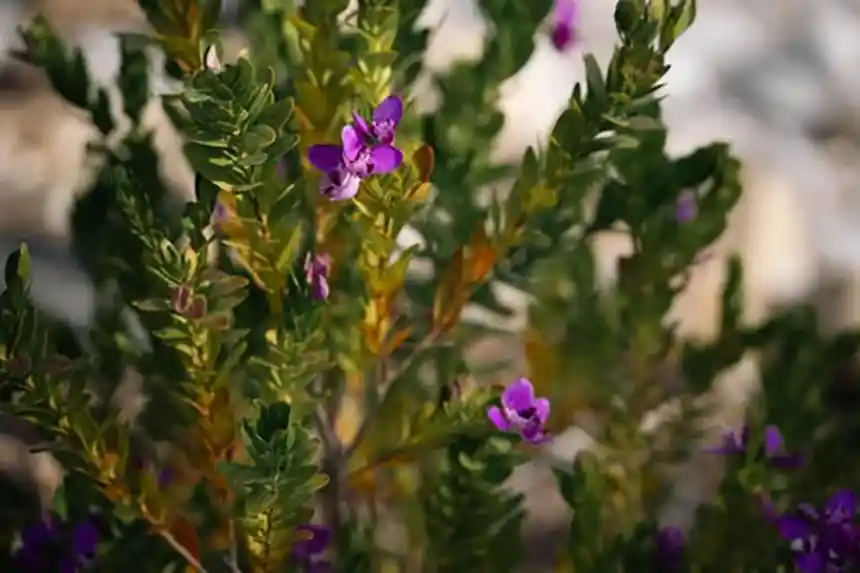 | Calycina is an aromatic evergreen shrub that is commonly known as white pitcher sage. It produces small, cup-like, 5-petal fused flowers that have rich nectar, and the bloom in spring and early summer. This plant is California native. |
| 55 | Cáscara Sagrada | 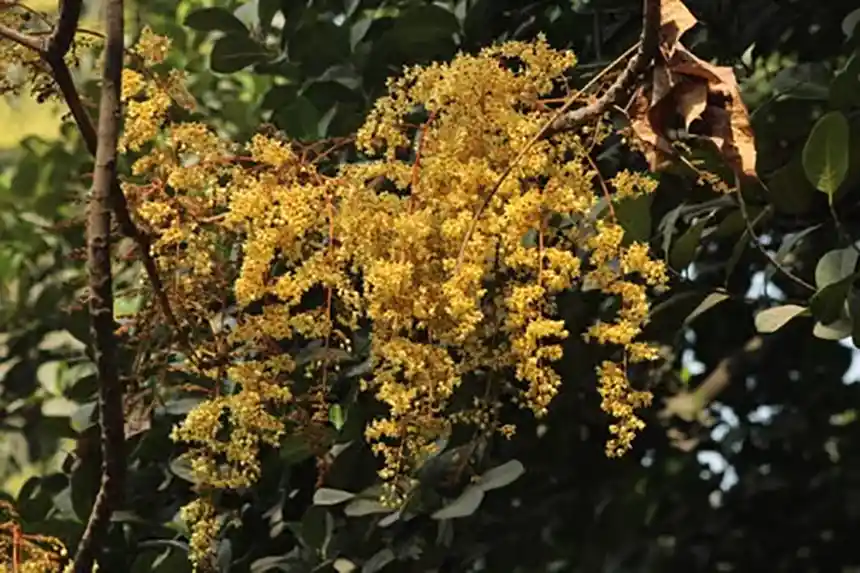 | The botanical name for Cascara Sagrada is Rhamnus purshiana. This plant is commonly known as bearberry and cascara. It produces 5-petaled flowers that grow in small clusters, cup pr umbled shape. They bloom for small period in the spring season. |
| 56 | Cattail | 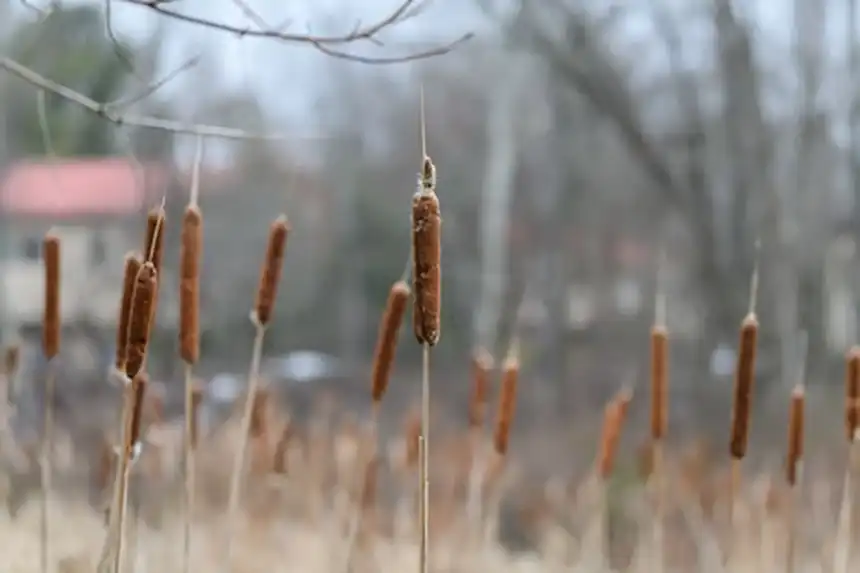 | The cattail plant’s botanical name is Typha latifolia. They commonly bloom between May and August. It produces tiny flower clusters that grow straight like a cigar and usually grow beyond the leaves. These are aquatic plants that are usually found in rice fields. |
| 57 | Cattleya Orchid | 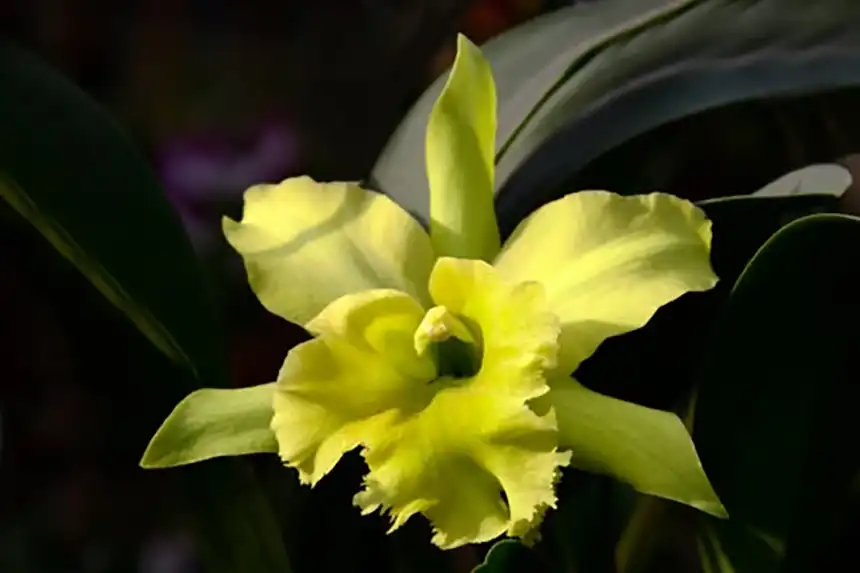 | Cattleya orchid is commonly known as Brazilian orchid, corsage orchid, or cat orchid; these plants are native to the American tropics from Costa Rica to Argentina. It produces large flowers that have ruffled petals and narrow, wide sepals, mostly between spring and mid summer season. |
| 58 | Chincherinchee | 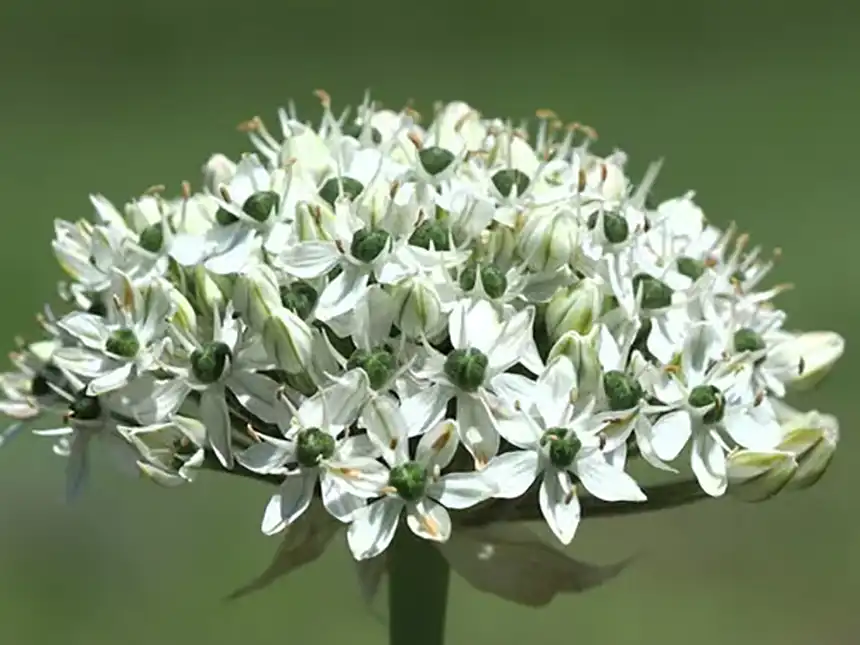 | Chincherinchee is a perennial plant, it’s botancial name is Ornithogalum thyrsoides. This plant is native to the Cape Province of South Africa. It blooms in the spring and summer seasons, usually in a star shape with 6 petals. |
| 59 | Chinese Evergreen | 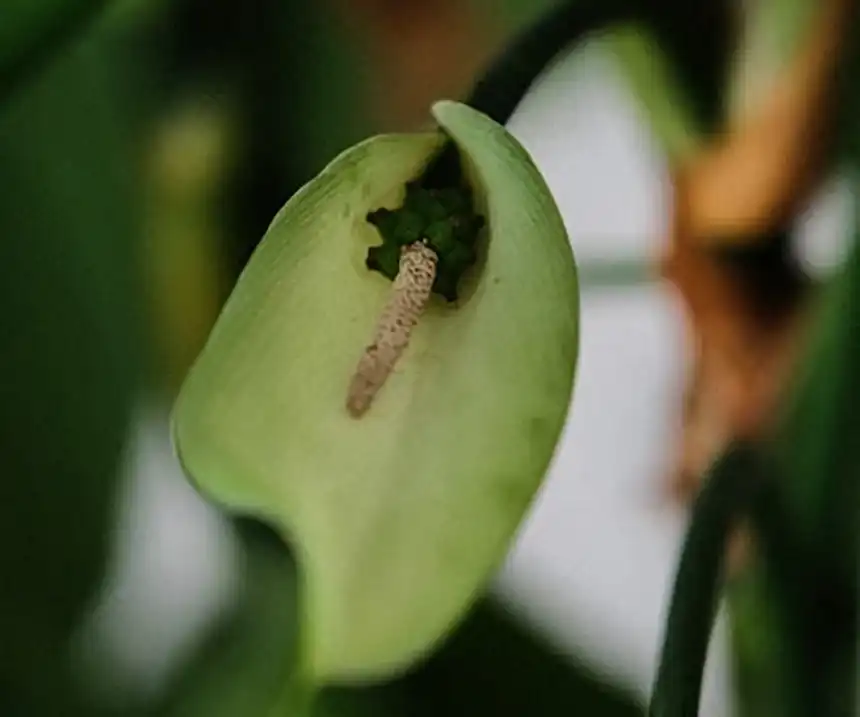 | The scientific name for Chinese Evergreen is Aglaonema. It is a herbaceous perennial plant that is native to the tropical and subtropical regions of Southeast Asia and New Guinea. It produces small, spoon-shaped flowers resembling a peace lily in the summer and fall seasons. |
| 60 | Cleome | 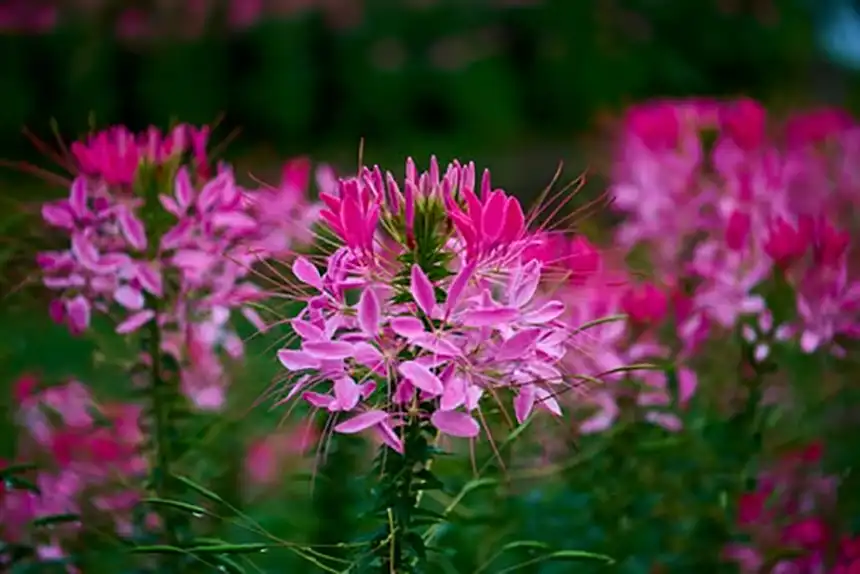 | Cleome is commonly known as spider flower or bee plant. These are annual perennial plants that are native to North and South America, Australia, Africa, Europe, and Asia. It produces star-shaped flowers that have 4 to 5 petals and bloom in the fall or summer season. |
| 61 | Coleus | 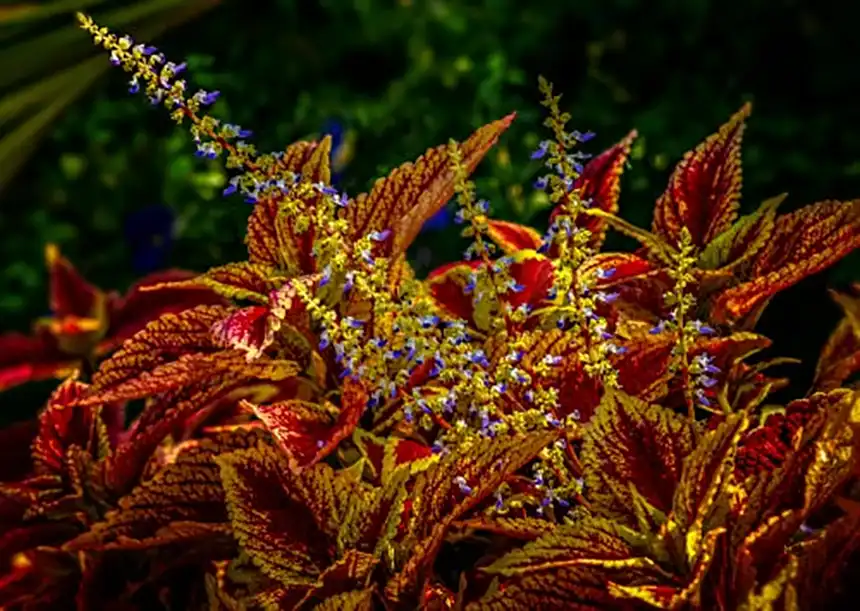 | The scientific name for coleus is Coleus scutellarioides. It is native to the tropical and subtropical region of Asia to northern Australia. Coleus is an annual or herbaceous perennial plant that produces lipped-shaped blooms in the fall and summer seasons. |
| 62 | Croton | 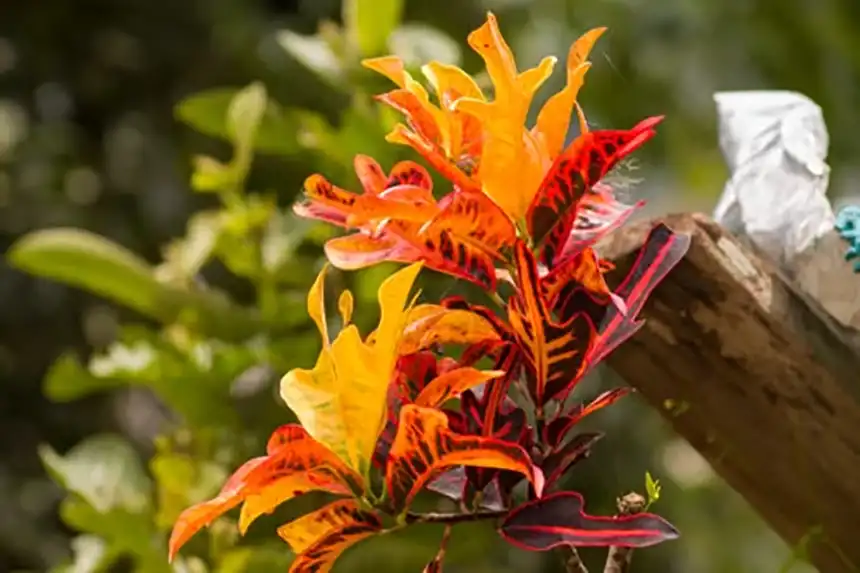 | The scientific name for the plant garden croton is Codiaeum variegatum. This is an evergreen shrub that is native to Malaysia, pacific island, and northern Australia. It produces small, pale green or white star-shaped flowers in spring and early summer. |
| 63 | Curly Willow | 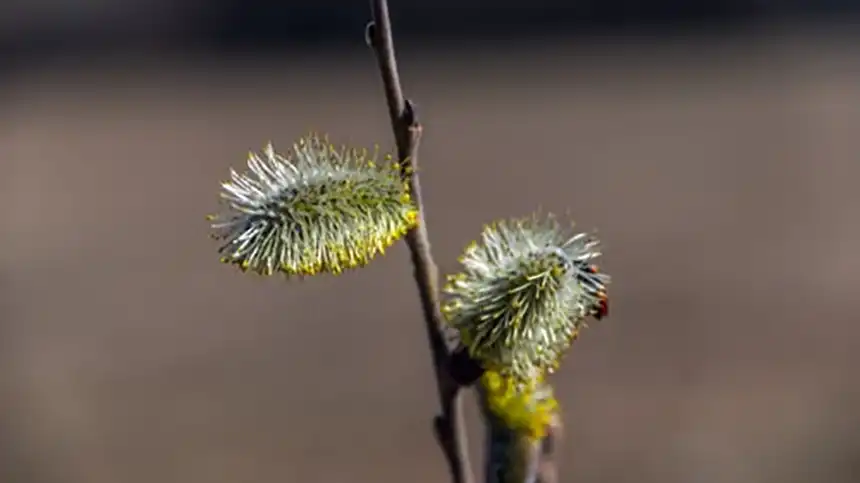 | The botanical name for curly willow is Salix matsudana. This is a fast-growing deciduous tree and is natively from Asia. The flowers are arranged in clusters on slim, cylindrical branches, dropping like catkins. They usually bloom in the spring season. |
| 64 | Cupflower | 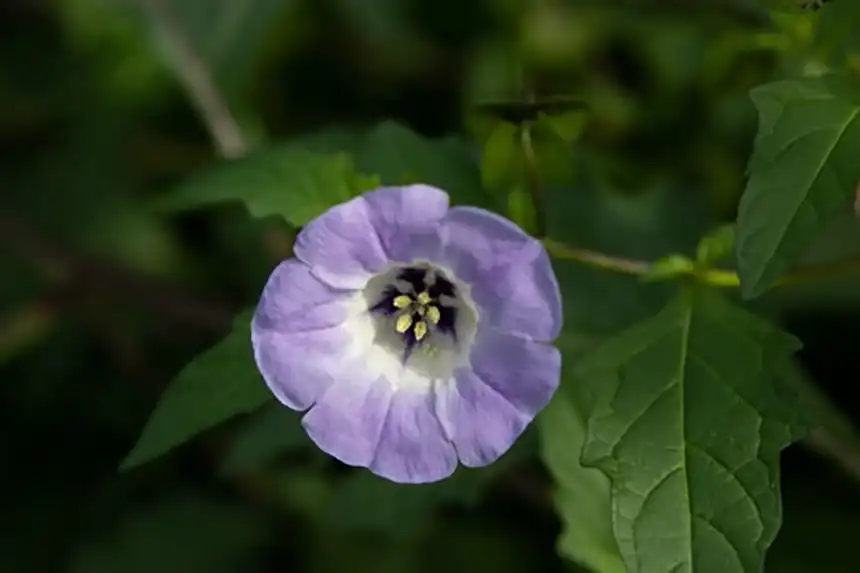 | The botanical name for cup flower is Nierembergia linariifolia. These are tender perennial plants that bloom annually and are native to south-central Bolivia, Brazil, and northern Argentina. It produces 1 to 3-inch-wide cup-shaped flowers that usually bloom in the fall and summer seasons. |
| 65 | Cymbidium | 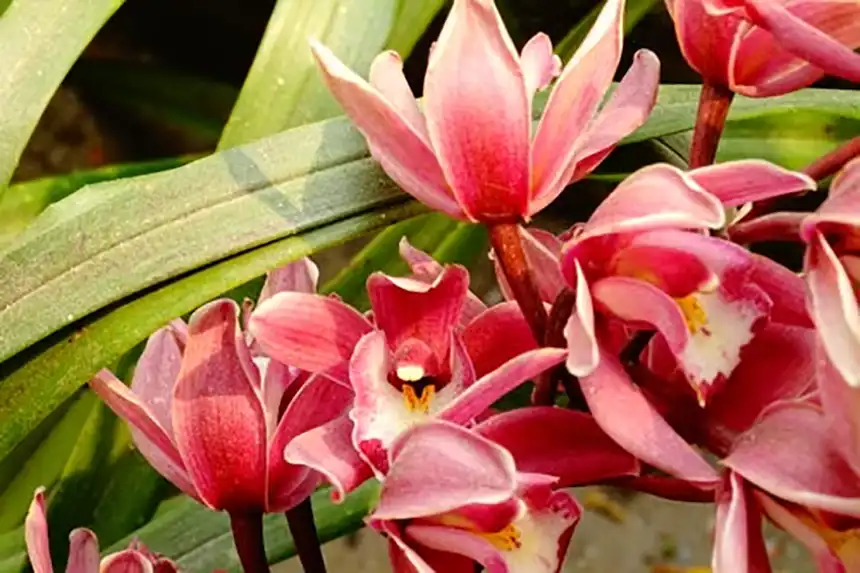 | Cymbidium is commonly known as the boat orchid. It is a perennial plant that natively belongs to the tropical and subtropical regions of Asia and Australia. This variety usually produces long-lasting flowers that have a distinctive 3-lobed lip. They usually bloom in spring, summer, and winter. |
| 66 | Crinum | 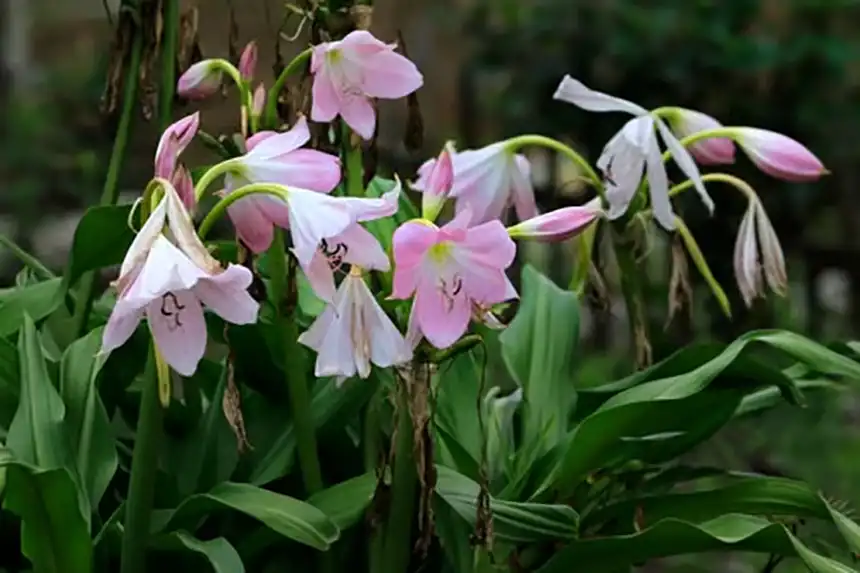 | Crinum plant is commonly known as the cape lily, cemetery plant, and spider lily plant. These are bulbous, perennial plants that natively belong to tropical and subtropical regions of Asia, Australia, America, and Africa. It produces funnel- or trumpet-shaped, lily-like flowers with 6 petals in summer. |
| 67 | Convallaria majalis | 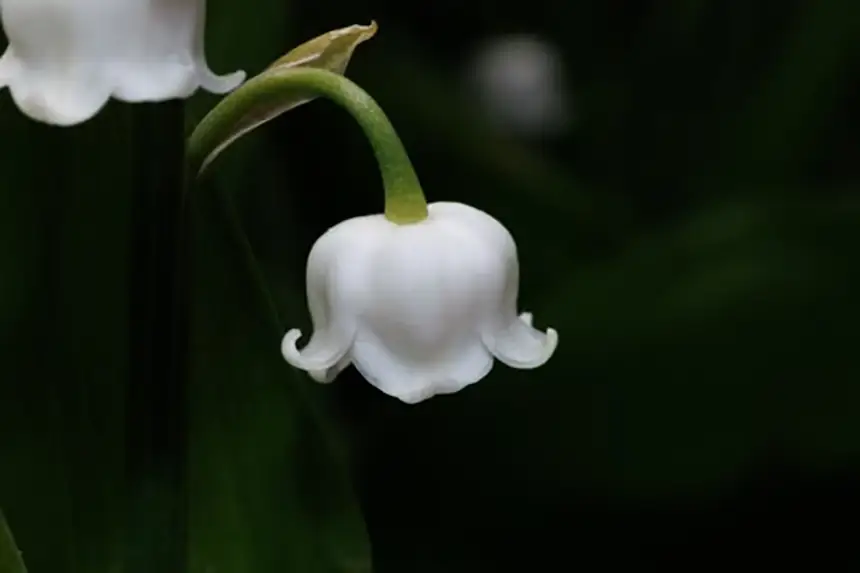 | This plant is commonly known as lily of the valley. Convallaria majalis is a rhizomatous perennial plant that is native to Eurasia. It produces a slender cluster of small bell-shaped white flowers with fused petals mainly during the spring and summer seasons. |
| 68 | Coral Vine | 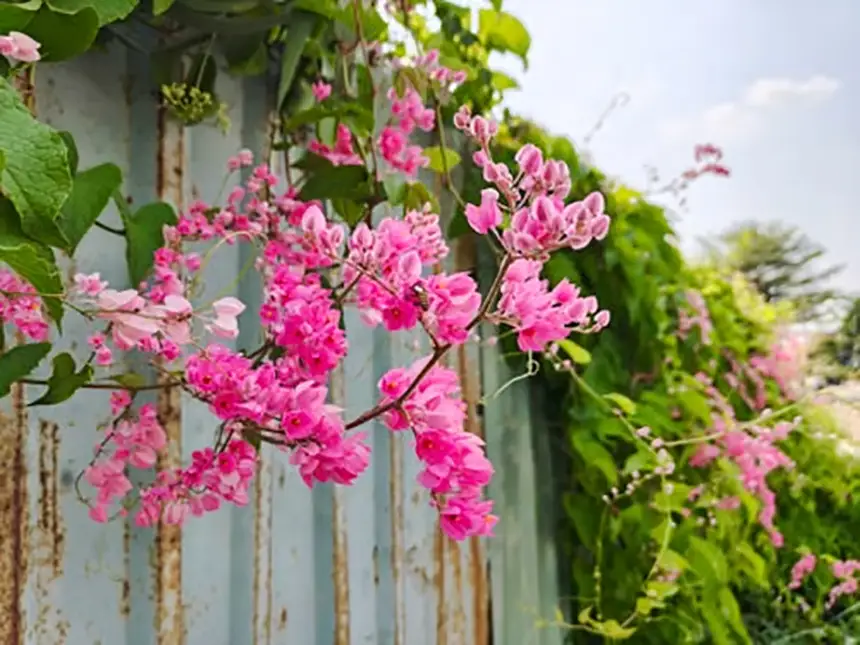 | The scientific name for Coral Vine is Antigonon leptopus. This is an evergreen, fast-growing tropical climbing vine that has tuberous roots and is native to Mexico and Central America. It produces small and vibrant flowers grouped in long, dropping clusters from spring to fall. |
| 69 | Cup and Saucer Vine | 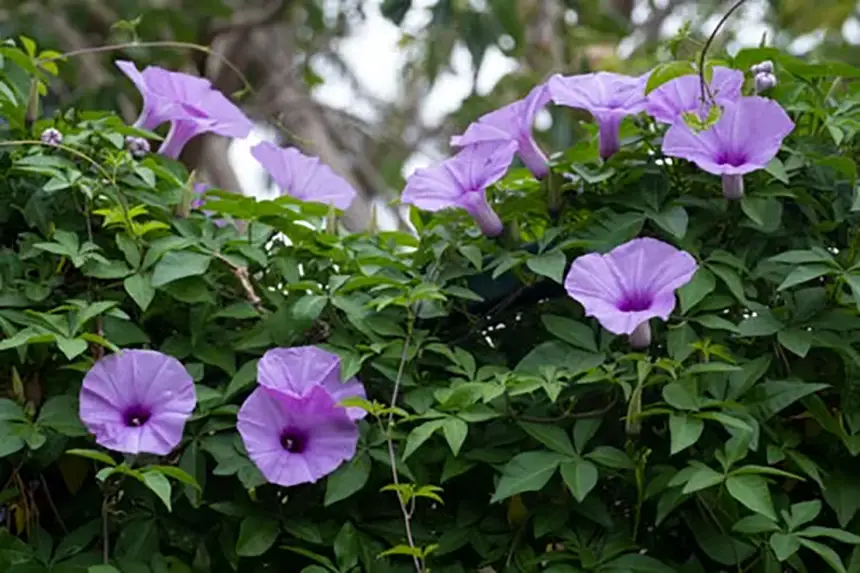 | Cobaea scandens is the scientific name for cup and saucer vine. These are tender subtropical perennials that belong to Mexico and tropical South America. This variety produces bell, cup, funnel, or saucer-shaped flowers with fused petals in the fall and summer. |
| 70 | Clitoria Ternatea | 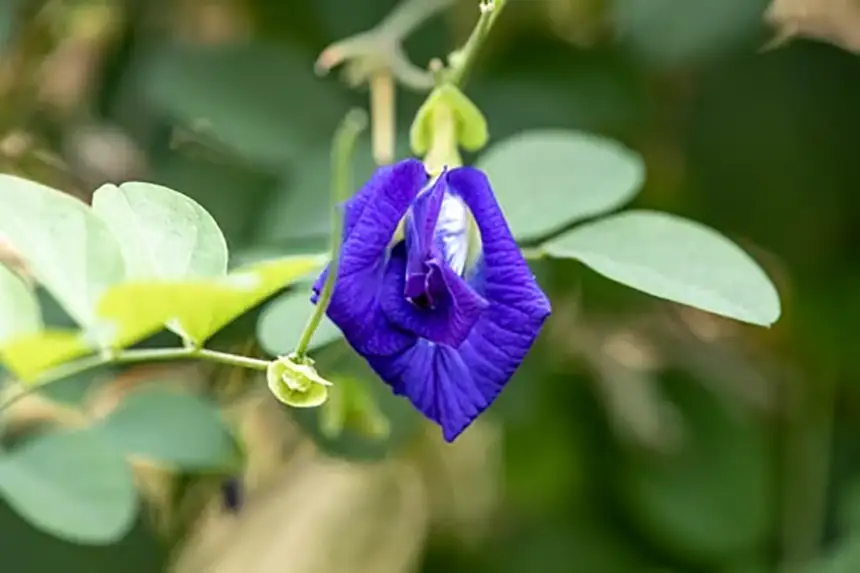 | Clitoria ternatea is commonly known as blue pea and butterfly pea. These are deciduous, perennial, trailing vine that is native to tropical Africa and eastern Asia. It produces clear blue flowers with a yellowish center; they bloom usually between summer and fall. |
Did you know?
Orchid seeds are as fine as dust, and they also don’t have any stored food, so they take help from a specific fungus that helps in germination.
Conclusion
There are over 80 varieties of flowers that start with C. From the ruffled petals of Carnations to the unusual shapes of Cockscomb and Crown Imperial, these flowers offer much more than just beautiful colors. Some, like Cosmos and Coreopsis, are excellent choices for sunny gardens, while Clematis and Coral Vine can bring life to fences and vertical spaces.
If you are selecting flowers for your garden, then you should also look at these points other than the appearances. I have discussed their blooming season, sunlight requirements, and growing conditions. With 70 different flowers covered in this guide, you can explore familiar favorites and discover lesser-known plants that suit your garden and personal preferences.
FAQs
What kind of lily starts with C?
The calla lily is a popular type of lily flower that starts with the letter C. This is an elegant perennial plant that is found in southern Africa. It is known for its trumpet shaped spathes and sword- or arrow-shaped foliage.
What are some annual flowers that start with the letter C?
California poppy, calendula, celosia, and cosmos are popular annual flowers that start with the letter C. Candytuft, clarkia, cleome, cornflower, calibrachoa, corn flower, and cuphea are also annual flowers.
What is a pink flower that starts with the letter C?
Carnation is a pink flower whose name starts with the letter C. These are large and beautiful flowers that are like roses, it is known as a symbol of maternal love.
What is a common name for a tropical plant that starts with the letter C?
Popular tropical flowers that start with the letter c is corton, calathea, canna lily, and caladium. All these flowers have different features, like some are bright, multicolored, some grow large, and some have patterned foliage.
What are some garden perennials that start with the letter C?
Coreopsis, coneflower, catmint, chrysanthemum, clematis, coral bells, and columbine are some garden perennial flowers whose names start with the letter C.