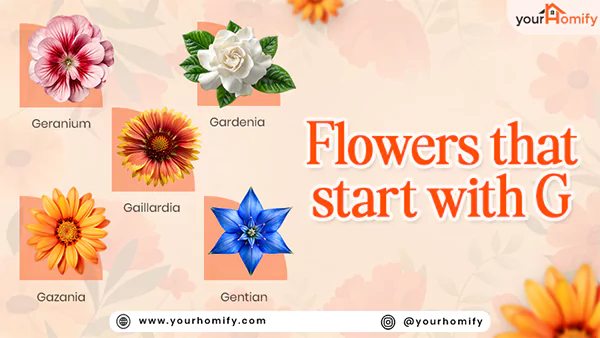
Many botanical marvels can bring instant beauty, color, and joy into our lives, and exploring them alphabetically can be a fun and educational experience. Flowers that start with G come in a wide range of colors, shapes, and meanings, making them perfect for gardens, gifts, and decoration.
In this article, I have curated a complete list of stunning blooms that start with the letter g, along with their symbolism and types, before moving on to the flowers that start with H later in this A–Z series.
Quick Answer
Some of the best flowers that start with G are geranium, gladiolus, gardenia, gazania, geum, gloriosa lily, galanthus, galium, and globe amaranth. These are easy to care for and can be planted both indoors and outdoors.
Complete List of Top 12 Flowers That Start with G
Explore a complete list of flowers that start with G, including vibrant blooms and hardy varieties that can instantly enhance the aesthetics of any garden space.
- Geranium
- Gladiolus
- Gardenia
- Gazania
- Gentian
- Geum
- Gypsophila
- Gaillardia
- Goldenrod
- Grape Hyacinth
- Gloriosa Lily
- Galanthus
It has always been a fascinating experience for me to learn more about some astonishing botanical marvels in alphabetical order. Click here if you are curious to explore more articles on similar topics.
Top 12 Flowers That Start with G
Given below is a list of 12 mesmerizing blooms that begin with the letter G and are extremely easy to care for.
Geranium
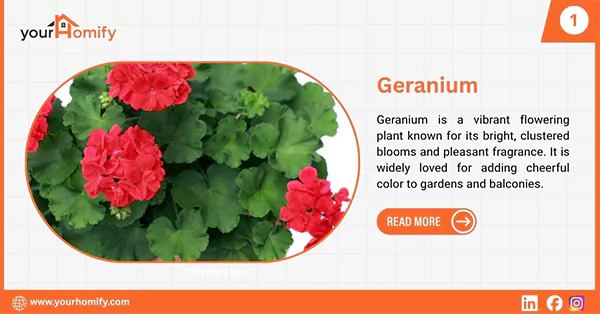
- Botanical Name: Pelargonium graveolens
- Flower Type: Perennial flowering plant (often grown as an annual in many gardens)
- Bloom Season: Spring to fall (year-round in warm climates)
- Growing Zones: USDA Zones 9–12 (commonly grown as annuals in cooler zones)
- Origin: Native to South Africa, Europe
- Color: Red, pink, white, purple, orange, and bi-colored varieties
- Height: 12–36 inches (varies by variety)
- Soil Type: Well-drained, fertile soil; tolerates sandy or loamy textures
- Maintenance Level: Low to moderate
Geraniums bloom for long periods and grow easily in beds, pots, and hanging baskets. These summer flowers symbolize comfort and hospitality in many cultures, especially in European window displays.
Their basic growing conditions include full sun, moderate watering, and pruning for healthy growth. Adding more, this plant is highly valued for its aromatic smell, like lemon, rose, and mint found in the different varieties, which can help deter pests such as mosquitoes and other house insects.
Gladiolus
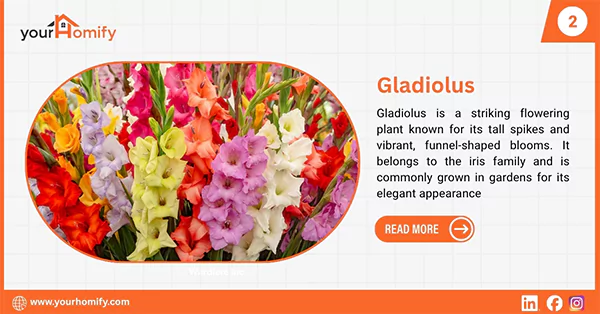
- Botanical Name: Gladiolus spp.
- Flower Type: Perennial flowering plant with funnel-shaped blooms
- Bloom Season: Late spring through fall (depending on the planting time)
- Growing Zones: USDA Hardiness Zones 7–10
- Origin: Primarily South Africa, also found in Mediterranean regions
- Color: Red, pink, white, purple, orange, and even lime green
- Height: 30-60 inches (varies by variety)
- Soil Type: Prefers growing in sandy or loamy soil texture
- Maintenance Level: Low to moderate
The Gladiolus is a perennial plant, also known as sword lilies in some regions, and is often used for gifting purposes. It is also used as a medicinal plant in many Mediterranean regions.
Some varieties of this plant are toxic to animals and humans. They can cause skin irritation in people, and if ingested by cats or dogs, the leaves may lead to intestinal problems.
Did You Know?
Gladiolus is the official August birth flower and is known to symbolize strength, character, faithfulness, and sincerity.
Gardenia
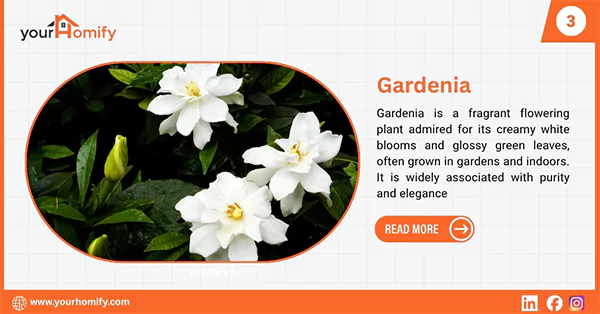
- Botanical Name: Gardenia jasminoides
- Flower Type: Bushy shrubs; commonly used as container plants
- Bloom Season: Late spring through early summer
- Growing Zones: USDA Hardiness Zones 7–11
- Origin: Tropical and sub-tropical regions of Asia
- Color: Primarily white, turning to creamy yellow as they age
- Height: 24-90 inches (varies by variety)
- Soil Type: Requires rich, acidic, permeable soil with a pH of 5.0-6.0
- Maintenance Level: Moderate to high
Gardenia is a popular evergreen shrub with creamy white flowers and glossy, dark green leaves that make a stunning contrast and can easily transform any garden space. This flower that starts with g is often grown for its intoxicating scent.
Beyond gardening, this bloom is widely used as an ornamental houseplant. They are known to represent purity, love, and refinement. Did you know that during Victorian times, Gardenias were typically used to send secret love messages between two people?
Gazania
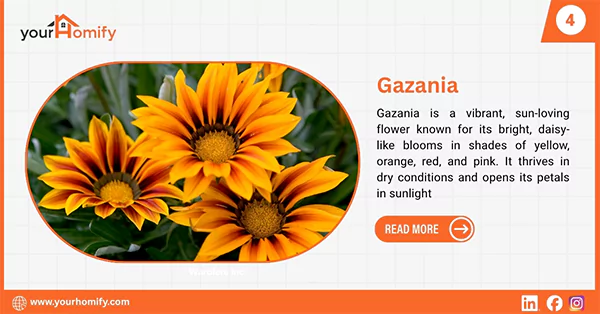
- Botanical Name: Gazania rigens (L.) Gaertn
- Flower Type: Herbaceous perennial (grown as an annual in colder regions)
- Bloom Season: Late spring through summer, extended into autumn
- Growing Zones: USDA Hardiness Zones 9–11
- Origin: Southern Africa (Mozambique, South Africa)
- Color: Bright shades of yellow, orange, red, and often bicolored
- Height: 12-18 inches (varies by variety)
- Soil Type: Well-draining, sandy, loamy, or nutrient-deficient soil
- Maintenance Level: Low
Gazania is a beautiful yellow flower, popularly grown for its daisy-like blooms, making it a stunning addition to large landscapes and rock gardens. The genus is commonly known as “treasure flower” or “African Daisy” and is said to be a pollinator magnet.
According to the Plants and Flowers Foundation, Holland, Gazania is a prestigious member of the daisy family, and it has over 30 wild species. It is drought-tolerant and can easily tolerate hot summers without much demand.
Gentian
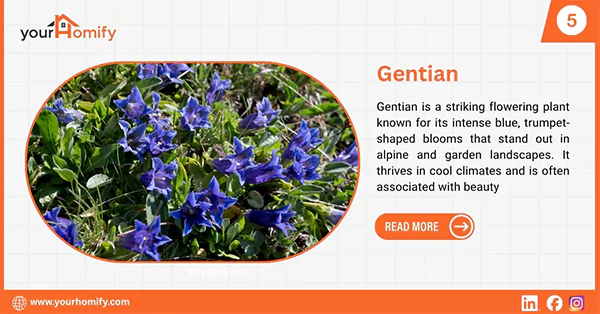
- Botanical Name: Gentiana spp.
- Flower Type: Low-growing perennial herbs; bell-shaped flowers
- Bloom Season: Varies by species (mostly spring blooming)
- Growing Zones: USDA Hardiness Zone 3-8
- Origin: Temperate and Alpine regions of Europe, Asia, & America
- Color: Violet, purple, white, and yellow
- Height: Depends on the species (36–48 inches)
- Soil Type: Moist, well-draining, humus-rich soil
- Maintenance Level: Generally low maintenance
Gentian is a perennial flowering plant best known for its violet, trumpet-shaped blossoms. Widely cultivated for its striking beauty, this flower that starts with G is a popular choice among many gardeners and plant enthusiasts when it comes to gifting.
Some stunning cultivars of the bloom are known to survive in the harsh climatic conditions of the Alps and the Rocky Mountains. The vibrant petals of the genus seem to shine in the dark, enhancing the aesthetics of your garden.
Geum
- Botanical Name: Triticum aestivum L.
- Flower Type: Semi-evergreen perennial bloom
- Bloom Season: Late spring through summer (consistent deadheading)
- Growing Zones: USDA Hardiness Zone 3-7
- Origin: Europe, Asia, Africa, and North/South America
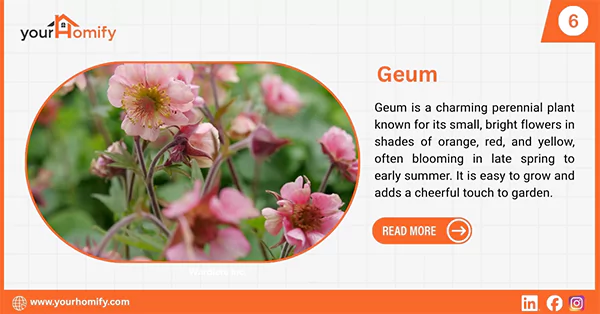
- Color: Shades of bright red, orange, yellow, white, and pink
- Height: 9–24 inches
- Soil Type: Well-draining, fertile, moist soil
- Maintenance Level: Low to moderate
Belonging to the rose family, Geum is appreciated for its bright, cup-shaped flowers. Ideally used for rock or cottage gardens, some widely popular varieties of this flower are named after unique cocktails such as ‘Alabama Slammer’, ‘Blazing Sunset’, ‘Fire Storm’, and ‘Mai Tai’.
While geum is an outdoor plant, it can be successfully grown in containers and ceramic planters indoors, as long as they receive moderate watering and bright indirect light.
Gypsophila
- Botanical Name: Gypsophila paniculata
- Flower Type: Herbaceous perennials or annuals
- Bloom Season: Primarily summer, from June to August or early autumn
- Growing Zones: Hardiness USDA Zone 3-9
- Origin: Europe, Asia, North Africa, particularly on rocky steppes
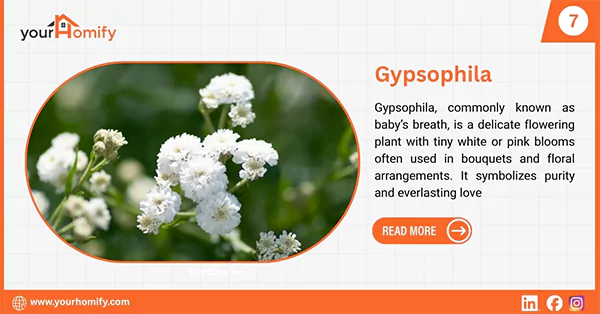
- Color: White and pale pink
- Height: 24-36 inches
- Soil Type: Well-draining, sandy or loamy soil with pH 7-7.5
- Maintenance Level: Moderate to high maintenance
Gypsophila, also commonly known as Baby’s Breath, is known for its delicate and clustered white or pink filler flowers. These tiny blooms are said to have a mild fragrance and are mainly used to create bouquets or floral arrangements.
It is a versatile, low-maintenance flower that symbolizes innocence and everlasting love, which is the main reason it is widely used in wedding decor. Planning to add more shade perennials to your garden space? Click here to explore 30 low-light garden plants.
Gaillardia
- Botanical Name: Gaillardia spp.
- Flower Type: Fast-growing, short-lived bushy perennial
- Bloom Season: Late spring through fall (May to October)
- Growing Zones: USDA Hardiness Zone 3-10
- Origin: Native to North and South America
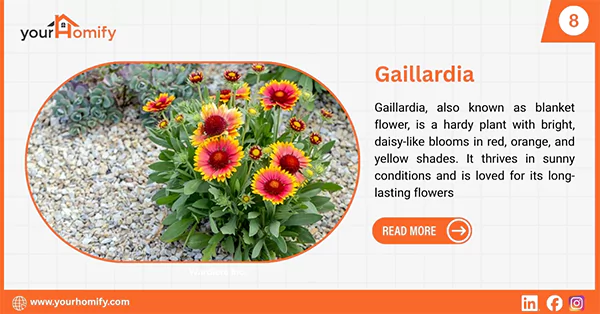
- Color: Fiery shades of red, orange, and yellow with bicoloured patterns
- Height: 12-36 inches
- Soil Type: Prefers poor, sandy, or rocky soils and is permeable in nature
- Maintenance Level: Low to moderate
Gaillardia, commonly called Blanket Flower or Indian Blanket, is a genus of hardy, drought-tolerant wildflowers widely appreciated for its daisy-like blossoms. Gaillardia is one of the most astonishing flowers that start with g. The bushy and upright structure of the genus makes it a perfect addition for any garden or indoor space.
For prolific flowering, avoid using heavy fertilizers. The center of the bloom is a major nectar source for many pollinators like bees, birds, and butterflies.
Goldenrod
- Botanical Name: Solidago spp.
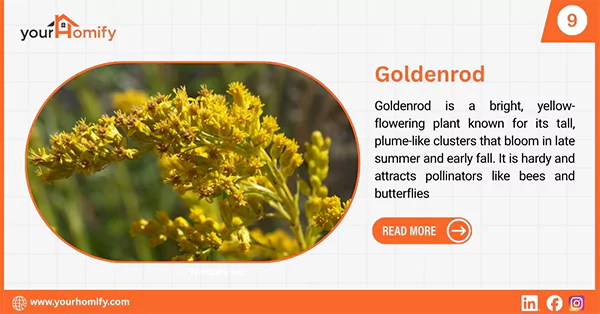
- Flower Type: Herbaceous perennial arranged in pyramidal clusters
- Bloom Season: Late summer to late autumn (August to October)
- Growing Zones: USDA Hardiness Zone 3-9
- Origin: North America, Mexico, South America, and Eurasia
- Color: Bright yellow transitions to golden yellow as the plant ages
- Height: 12-72 inches (depends on the variety)
- Soil Type: Highly adaptable; tolerates well-draining rocky or clayey soil
- Maintenance Level: Low maintenance and pest-resistant
Goldenrod is a late summer-blooming plant, which is also known as a powerful pollinator magnet. It is resilient in nature and has over 100 species, which are mostly native to North and South America.
Goldenrod is often mistaken for the cause of fall allergies, but its ability to withstand harsh climatic conditions makes it a symbol of perseverance, durability, and resilience.
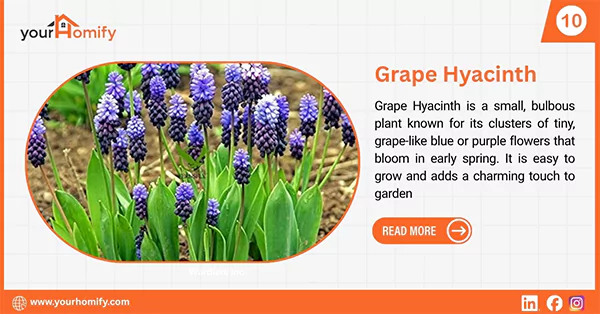
Grape Hyacinth
- Botanical Name: Muscari (also known as Muscari neglectum)
- Flower Type: Small bulbous perennials, grass-like leaves
- Bloom Season: Early to mid spring (April to May)
- Growing Zones: USDA Hardiness Zones 3-9
- Origin: Mediterranean region, Asia, and Caucasus
- Color: Cobalt blue, pale blue, white, pink, and yellow
- Height: (depends on the variety)
- Soil Type: Well-draining soil; fertile sandy and loamy types
- Maintenance Level: Low maintenance
Grape Hyacinth is a perennial bulbous plant with dense, fragrant spikes in various shades. Being a popular spring flower, it is often found blooming in rock gardens or woodland settings.
Since they bloom in early spring, they are often symbolised for rebirth, new beginnings, and new life after frosty winters. In many parts of Europe, the bloom is often used in many culinary dishes.
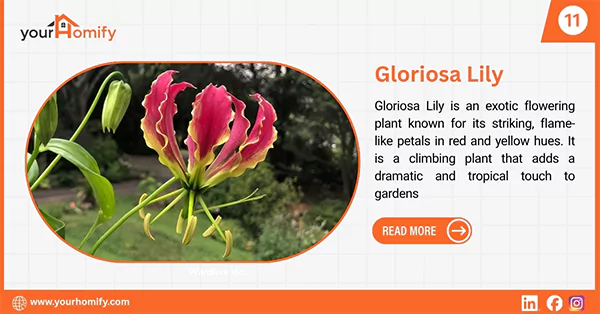
Gloriosa Lily
- Botanical Name: Gloriosa superba
- Flower Type: Scandent climbing herbaceous vine
- Bloom Season: Early to mid spring (April to May)
- Growing Zones: USDA Hardiness Zones 8-12
- Origin: Tropical regions of South Africa and Asia
- Color: Green, bright red, scarlet red, orange, and often yellow
- Height: 36-96 inches (depends on the variety)
- Soil Type: Well-draining soil; fertile, sandy, loamy with acidic pH
- Maintenance Level: Moderate to high maintenance
Gloriosa Lily is a tropical climbing plant known for its flame-like red and yellow petals. All parts of the genus are toxic to pets and humans, so handle them carefully. Many cultivars of this flower that start with g are used as ayurvedic medicinal herbs.
It is generally grown outside, but in controlled environments, it can also be planted as a houseplant. The wavy-petaled flowers of the bloom resemble fiery lanterns and are extremely visually appealing.
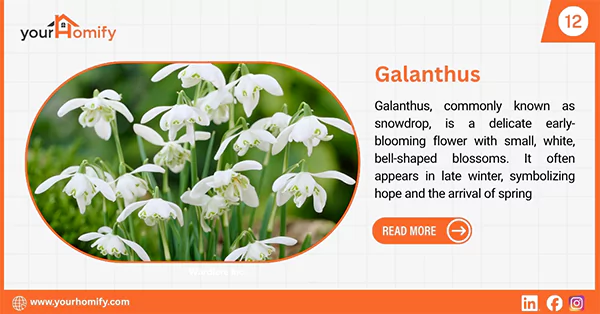
Galanthus
- Botanical Name: Galanthus spp.
- Flower Type: Low-growing, clumping herbaceous perennial
- Bloom Season: Late winter to early spring (January to March/April)
- Growing Zones: USDA Hardiness Zones 3-9
- Origin: Large area of Europe and Southwestern Asia
- Color: White flowers with green markings on the inner side
- Height: 3 – 12 inches
- Soil Type: Prefers moist, well-draining, humus-rich soil
- Maintenance Level: Low to moderate
Galanthus, commonly known as snowdrops, are early blooming bulbs with nodding white, bell-shaped flowers that appear in late winter. I personally like planting them in my garden space as they symbolise hope and resilience.
Snowdrops are often used to convey sympathy or offer consolation to those passing through difficult times. They are also used in many Christian religious feasts, representing the purification of Mary.
Conclusion
Researching the flowers that start with g has helped me discover a wide range of beautiful and meaningful blooms. Each blossom offers something unique, from vibrant colors to symbolic meanings, making them perfect for different occasions.
I follow a simple care guide, and with adequate sun exposure, moderate watering, and a thriving soil mix, I get to witness all this stunning flora.
Whether it is Galium, a medicinal plant, or Gladiolus, an official August flower, this list gives me a better understanding of flowers.
FAQs
What are some of the most popular flowers that start with G?
Some astonishing flowers that start with the letter g are gardenia, gladiolus, gerbera daisy, grape hyacinth, geum, gloriosa daisy, and gazania.
Are there any flowers that start with the letter G and are also drought-tolerant?
Yes, several flowers can be grown excellently in hot or dry climatic conditions. Some examples are gaura, gazania, globe thistle, and gloxinia.
Do any G flowers bloom in the shade?
Yes, many shade-loving plants start with the letter G. Some popular examples are gardenia, goat’s beard, Gloxinia, galanthus, geranium, and golden knee.
Are blooms that start with g easy to care for?
Yes, almost all the flowers that start with g are easy to care for. You simply need to make sure that the blooms get proper sun exposure, moderate watering, and well-draining soil for optimal growth.
Can flowers that start with the letter G be used for gifting purposes?
Yes, absolutely! Flowers that start with the letter G can be used for landscaping and gifting purposes. Each bloom has a rich meaning and is often gifted to express different emotions.