If growing indoor plants is your vibe, then the ficus plant will not disappoint you. I can assure you that the ficus plant care is minimal and rewarding, with benefits that you will love.
In my experience, if cared for properly, the ficus plant with its glossy green leaves lasts longer than you expect and adds that natural element to your living space. Come along and explore the maintenance guide with common care mistakes and their solutions.
Quick answer
Ficus plant care involves providing the plant with bright, indirect sunlight, moderate watering, acidic to neutral soil, and a warm temperature. An additional tip would include regular pruning for an even structure.
What is the Ficus Plant?

Ficus is a plant genus in the mulberry family that has over 900 species of plants under it. Mainly grown as houseplants, different varieties of ficus grow up to a maximum height of 10-100 feet, depending on the species, and are easy to care for.
Also known as the Indian banyan tree, it is believed that Buddha gained enlightenment sitting under the ficus tree.
In many cultures, the ficus tree is associated with the idea of good luck and prosperity. Apart from the cultural symbolism, the ficus tree is a popular indoor plant, which is listed as an air-purifying plant, making it a low-maintenance, beneficial plant to bring home.
Before learning how to take care for ficus plants in pots, take a look at the taxonomy for a better understanding:

| Botanical name | Varies per species |
| Kingdom | Plantae |
| Division | Magnoliophyta |
| Class | Magnoliopsida |
| Order | Urticales |
| Family | Moraceae Gaudich |
| Genus | Ficus L. |
How to Care for the Ficus Plant? My Go-To Tips for a Healthy Ficus Tree
Primarily, the ficus plant requires bright, indirect sunlight and moderate watering, with a dose of monthly fertilizer for healthy growth.
Take a look at the basic ficus plant care tips:
1. Sunlight Requirements

- Indoor ficus plant care requires bright, indirect sunlight for 6+ hours.
- Placing them in direct sunlight will scorch the leaves.
- Note that a ficus is not a low-light plant and should be kept away from complete shade.
2. Watering
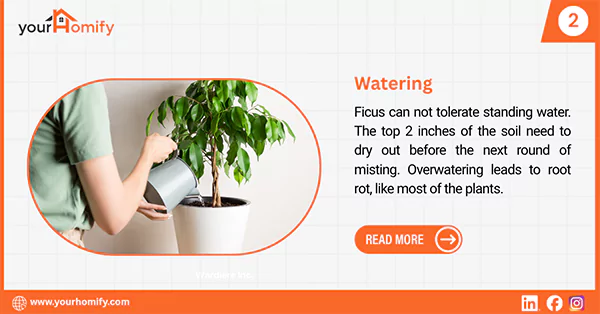
- The ficus plant has moderate to low-watering needs.
- Water once a week when the top inch of the soil feels dry, as overwatering can lead to root rot.
3. Soil Type

- The preferred soil type for the ficus plant is a well-draining mix with enough drainage holes and an acidic pH (5.0-7.0).
4. Fertiliser

- Mainly, all the varieties of the ficus plant are heavy feeders and need to be fed with a balanced, high-phosphorus fertilizer once a month.
- Do not feed the plant in winter, as it goes dormant, and fertilising can shock it, causing damage.
5. Temperature

- Ficus is a tropical plant that thrives in temperatures between 18 and 27°C and 60% humidity.
- To achieve adequate humidity, I place a water tray filled with pebbles near the plant. You can also place the ficus tree in a bathroom, as that is beneficial too.
- Keep the plant away from the AC, fans, and heaters, as they make the leaves droop.
6. Pruning
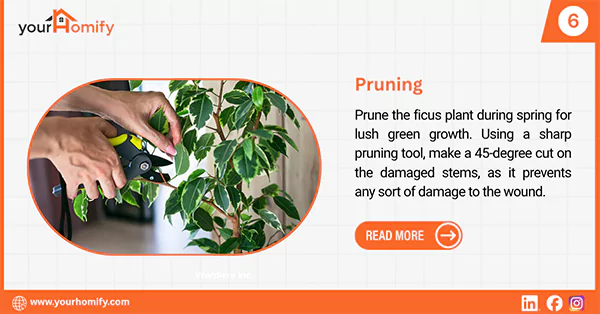
- The best time to prune the ficus tree is in late winter or early spring to promote lush new growth.
- If your aim is a better structure and not new foliage, summer might work for you the best.
- Use a sterilized pruner to cut any excess branches, especially those that are dead or damaged.
- Make a 45-degree cut because it prevents water from sitting on the cut and causing rot.
Wear gloves while pruning or handling the plants in general to avoid any damage.
How to Repot the Ficus Plant?

Repotting the ficus tree plant every 2 years is one of the most important care tips and can be done easily using the following steps.
Follow along and explore how I repot my ficus tree successfully:
- The best time to repot the ficus plant is in spring because any movement in winter can shock the plant.
- Take the ficus plant and gently remove it from the old pot without damaging or removing any part.
- Loosen up the soil a bit to let the roots grow naturally.
- In a new, 2-inch-larger pot with enough drainage holes, gently place the new plant in the pot and fill it back with the soil mix.
- Water the plant thoroughly and place it in bright, indirect sunlight.
How to Propagate the Ficus Plant?
Propagating is the best way to get multiple plants from one without the hassle of purchasing a new one.
Take a look at my easy propagation steps for the ficus tree:

1. Take a pot with enough drainage holes for excessive water to drain out and avoid waterlogging.

2. Remove the plant roots from the pot and cut them gently into two or more parts, depending on the size.

3. In the new container, add some potting mix with compost and cocoa chips for better aeration and drainage.
4. Place the roots in a rooting hormone to accelerate the root establishment.

5. Now, place the pot with roots and fill it back with soil and cocoa chips or mulch on the top to retain moisture.
6. Water the plant thoroughly and protect it from direct sunlight.
Remember to water the plant properly before propagating to ensure the plant does not die.
What are the Popular Ficus Plant Varieties?
Ficus is a plant genus with over 800 plant varieties, which are differentiated based on leaf shape and growth habit.
While the weeping fig is the most famous ficus variety, take a look at some common types of ficus that you can grow at home:
1. Ficus benjamina

- Botanical name: Ficus benjamina
- Height: Up to 50 feet
- Leaf shape: Oval
- Special features: It is also known as the weeping fig.
Also known as the weeping fig tree, this variety of the ficus is native to Asia and Australia. They have an aggressive root growth system and are considered a symbol of peace and prosperity in many cultures.
2. Ficus lyrata
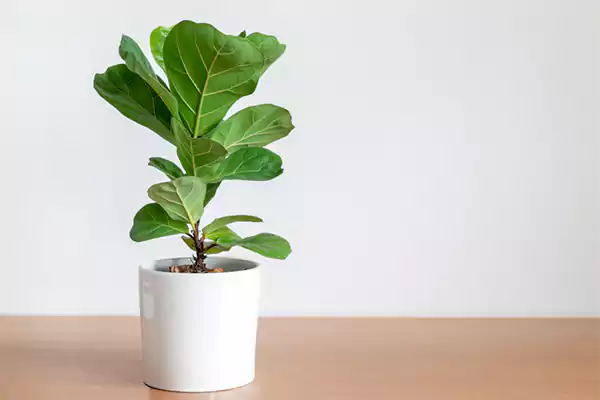
- Botanical name: Ficus lyrata
- Height: Up to 10 feet
- Leaf shape: Lyre-shaped, broad leaves.
- Special features: Ficus lyrata purifies air.
The Ficus lyrata is an indoor plant variety that grows fruit when grown outdoors. Commonly known as the fiddle-leg tree, it gets its name from the fiddle-shaped leaves. These plants can live up to 50 years.
3. Ficus elastica
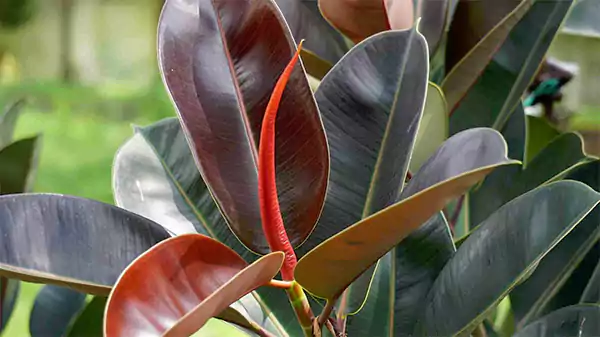
- Botanical name: Ficus elastica
- Height: Up to 10 feet tall; can be 100 feet if planted outdoors.
- Leaf shape: Oval
- Special features: Also known as the rubber plant due to the milky sap the broken leaves produce.
Popularly known as the rubber plant, this plant is a symbol of wealth and abundance. Although it has a slow growth rate, the ficus elastica is considered a perfect plant for new gardeners because of its low-effort care.
4. Ficus Audrey
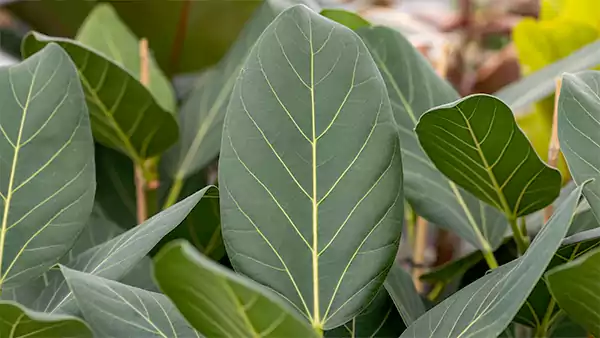
- Botanical name: Ficus benghalensis.
- Height: Up to 100 feet
- Leaf shape: Oval
- Special features: Ficus audrey is easier to plant than other varieties.
Native to India, the Ficus audrey is known as the Indian banyan tree and is considered easier to plant and care for. These broad and glossy leaves are popular indoor plants with air-purifying qualities.
5. Ficus microcarpa

- Botanical name: Ficus microcarpa
- Height: Up to 10 feet tall; can be 100 feet if planted outdoors.
- Leaf shape: Alternate
- Special features: It has various aerial roots growing from the main trunk, giving it a unique look.
The ficus microcarpa is a popular variety of the ficus plant, which is also known as the Chinese banyan tree, and is popular for its aerial roots attached to its trunk. These are widely grown as bonsai trees indoors.
What are the Common Ficus Plant Care Mistakes That You Must Avoid?
Overwatering the ficus plants is the most common care mistake that gardeners make, which causes yellowing leaves and eventually kills the plant.
Here are 4 common ficus care mistakes with easy solutions:
1. Direct Sun Exposure
- Contrary to most plants, ficus plant care is best done through providing it with bright, indirect sunlight.
- Place the plant near an east-facing window.
- Direct sun exposure can lead to scorched leaves.
2. Choosing the Wrong Pot
- Always choose a pot with drainage holes, as the ficus plant does not like standing water.
- A terracotta pot with a drainage hole that is 3 inches larger than the root ball always works.
3. Overwatering
- The trick for adequate watering is to let the top inch of the soil dry out and then water.
- Soggy, standing water leads to root rot.
4. Incorrect Temperature
- The Ficus plant loves warm temperatures and cannot tolerate frost; hence, always maintain a temperature between 18 and 27°C with 50-80% humidity.
Did you know?
According to the ASPCA, the weeping fig tree is toxic to pets. Hence, keep your pets away from this plant.
Concluding Remarks
Learning how to care for a ficus plant was an easy and rewarding journey, which made planting even easier and enjoyable. The most common mistake I have seen gardeners make while caring for the ficus plant is to place it in direct sunlight; avoid that, and you are good to go.
My final advice for ficus plant care would be to strike a perfect balance in care tips and not go overboard with any step.
FAQs
What is the sunlight requirement of the ficus plant?
The ficus tree requires bright, indirect sunlight to survive.
How many times do I need to fertilize the Ficus plant?
Mainly, the ficus plant needs to be fertilized every month with a balanced fertilizer, except during winter.
Is the ficus the national tree of India?
Yes, Ficus Audrey is the national tree of India.
When should I repot the ficus tree?
The best time to repot the ficus tree is in the spring.
Which fertilizer should I use to feed the ficus plant?
A balanced, slow-release, phosphorus-rich fertilizer works well for the ficus plant.
How to grow weeping fig (Ficus benjamina) – BBC Gardeners