


TN planting zones are divided into 5 major parts: 6a, 6b, 7a, 7b, and 8a. This implies that all the different parts of the state have varying climates, which is due to its geographic features. This difference has resulted in different TN zones and hence a unique gardening schedule for each zone.
High-altitude areas of Tennessee experience harsh winters and short planting windows, with their last frost date occurring somewhere in mid-May. Whereas western Tennessee, which has Memphis, has the shortest frost periods and a long planting season.
If you are curious about what to plant in Tennessee and how every part has a different planting window, come along as I share a detail about what planting zone is Tennessee in, along with some common flowers to grow.
Quick answer
Tennessee is divided into 5 plant hardiness zones from 6a to 8a, as per the updated 2023 hardiness zone map. While most of the state is covered under 6b to 7b, the different parts of the state have varying planting schedules as they have different last frost dates. West Tennessee has the longest planting window, with its last frost date occurring between late March and early April.
What Is The TN Planting Zone?
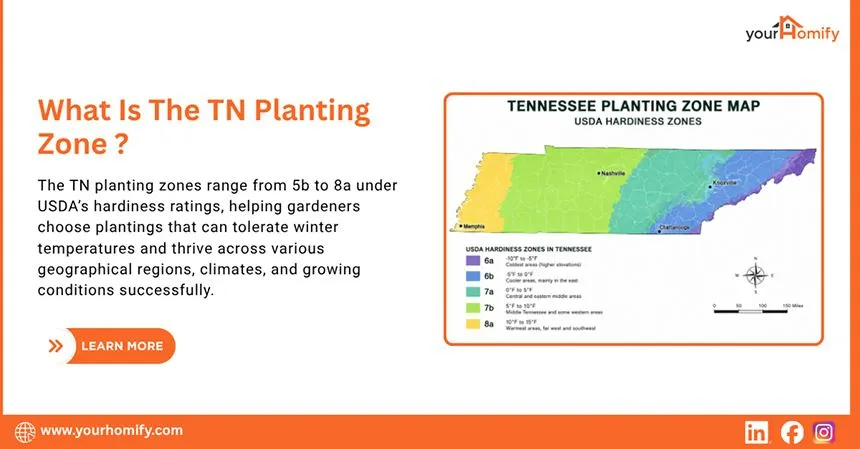
According to the USDA hardiness zone map, the state of Tennessee is divided into 5 major growing zones, from 6a to 8a. This reason for such a varied planting zone is due to the geographical factors. The state has the Great Smoky Mountains in the east, which makes the region cooler than the rest of the state.
The state has subtropical weather with mild winters and humid summers. This state mainly falls under zones 6b-7b, which means the minimum winter temperature will be between -5°F and 10°F.
What Is The USDA Hardiness Zone?
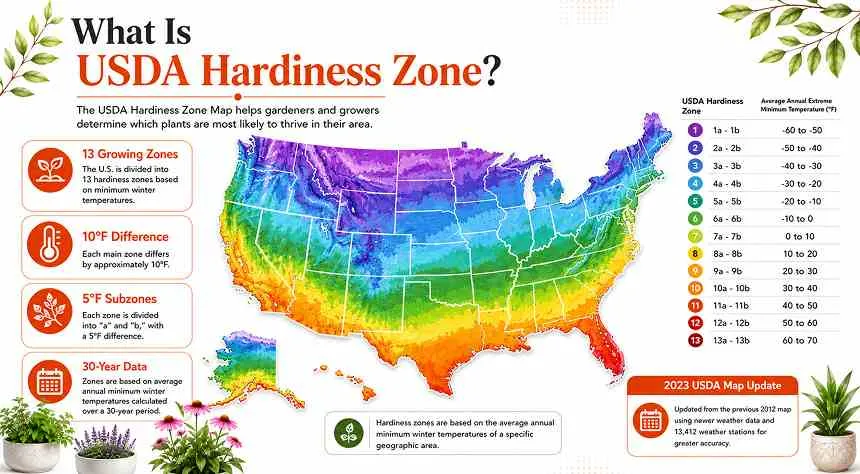
USDA hardiness zone is a geographical parameter that is used to determine the appropriate plants for a particular location. The United States is divided into 13 growing zones, which differ by 10°F. Many of these zones are further divided into parts “a” and “b,” differing by 5 degrees. This system is based on the annual minimum winter temperature over a 30-year period. It segregates the country into many parts, which helps analyze the cold tolerance of plants. Selecting plants based on the hardiness zone ensures proper growth of the plant.
The USDA hardiness zone map was recently updated in 2023 after 2012. This revision was done due to the new weather differences. The data collected while creating this hardiness map took into account 13,412 weather stations for more precise information.
What Are The Tennessee Zones By Region?
Tennessee is divided into 5 growing zones and 2 time zones. The state mainly includes zones 6a, 6b, 7a, 7b, and 8a along with Eastern and Central time zones, which differ by 1 hour. It is divided into 3 geographical regions: the Blue Ridge Mountains (east), the Central Basin, and the Gulf Coastal Plain in the west.
Take a look at the Tennessee zones by region:
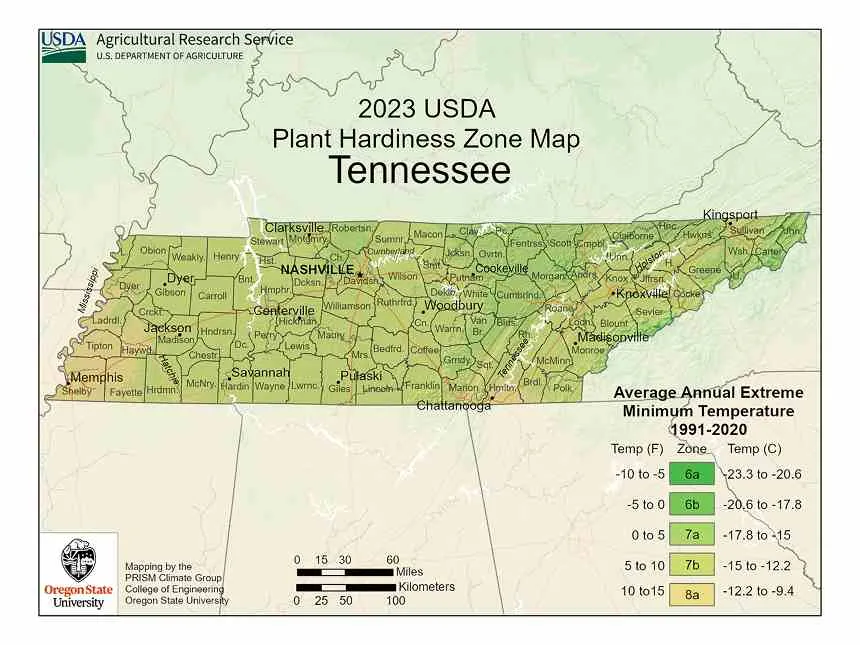
West Tennessee: Bordered by the Mississippi River in the west and the Tennessee River in the east, the western part of the state comes under zones 7b to 8a. Memphis is one of the central hubs of the region. It has the longest growing window in the entire state with short frost periods. The frost period generally extends up to late March to early April. Some recommended plants for this zone are purple coneflowers and bald cypress.
Middle Tennessee: Middle Tennessee comes under 7a-7b zones. The annual minimum temperature of these zones is 0°C to 10°F. The Nashville region on the map marks Middle Tennessee, with Franklin and Williamson surrounding it. The average last frost date extends to mid-April, up to the 15th of the month. As compared to the other regions, the center of the state experiences cooler weather than the west and warmer than the east. Common plants to grow in middle Tennessee are coneflowers and oakleaf hydrangea.
East Tennessee: This part of the state comes under the 6a-7b zones, which implies moderate winters. The last frost date falls mid-April to early May, giving an average planting window for gardeners. Knoxville and the surrounding areas like Chattanooga and Kingsport make up eastern Tennessee. Some popular flowers you can grow in the East Tennessee regions are creeping phlox and eastern redbud.
High Altitude Regions: Some of the high altitude regions come under East Tennessee, like the Great Smoky Mountains. These elevated areas fall under 6a-6b zones and experience comparatively harsh winters. The last frost dates in these areas occur around early to mid-May. Some common plants to grow in these areas are Black-eyed Susans, creeping phlox, and yarrow.
How To Find Your Tennessee Zone by ZIP Code?
The best two tools to find your Tennessee zone are the USDA Plant Hardiness Zone Map and the National Gardening Association. Both of these sites are reliable and can give you an accurate analysis of your zone.
Take a look at these steps to find your zones properly, especially if you are a beginner:
Step 1: Select a preferred site for checking the zone. Some popular options are the USDA Plant Hardiness Zone Map and the National Gardening Association.

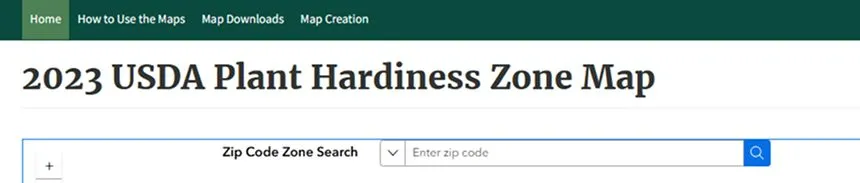
Step 2: Enter the ZIP code in the box provided. This varies for the entire region of Tennessee and ranges from 37010 to 38589. The tool to check the exact ZIP code for your region is the USPS tool.
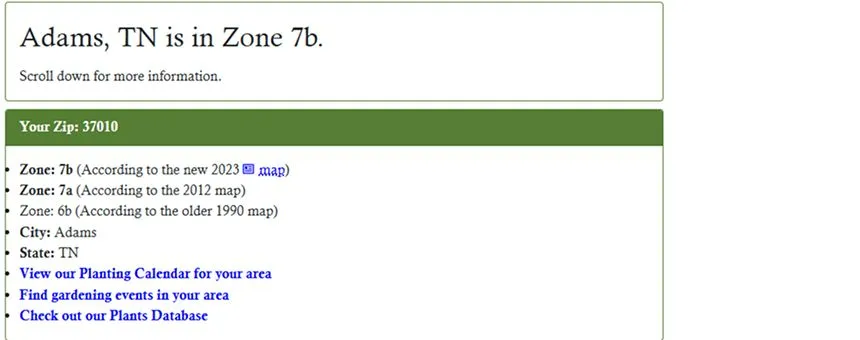
Step 3: After you have entered the ZIP code, it will mention the city name, hardiness zone, and the recommended gardening calendar. You can select your plants based on the hardiness zone.
YourHomify Tip
These gardening tools are reliable but may not always be accurate. They can vary as per the microclimate of the region. Additionally, the hardiness zone takes into consideration the lowest winter temperature and not the summer heat.
What Are The Ideal Plants For Tennessee?
Some popular plants to grow in Tennessee are Tennessee coneflowers, black-eyed susans, hydrangeas, marigolds, and zinnias.
While the gardening tools help you understand your gardening schedule better, here are some common plants you can grow in TN zones:
1. Tennessee Coneflower
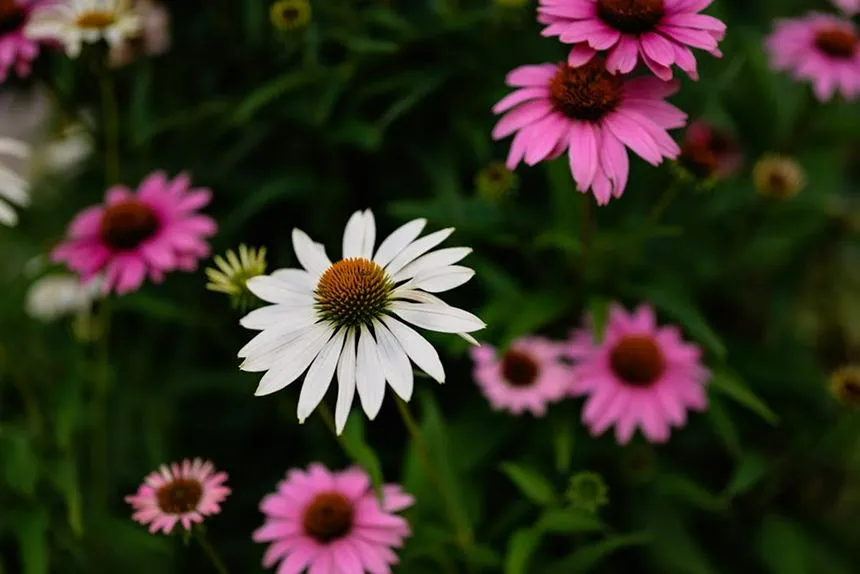
Tennessee coneflowers are a native wildflower best grown in regions of the Central Basin. These herbaceous perennials grow as tall as 1-2 feet and feature 3-inch large cone-shaped flowers. Grown mostly for purple flowers, these blooms flower from June to August. The Tennessee coneflowers are a symbol of resilience and perfect for home and backyard gardens. They can be used as cut flower arrangements and can last in a flower vase for up to 10-12 days with proper care.
2. Black Eyed Susans
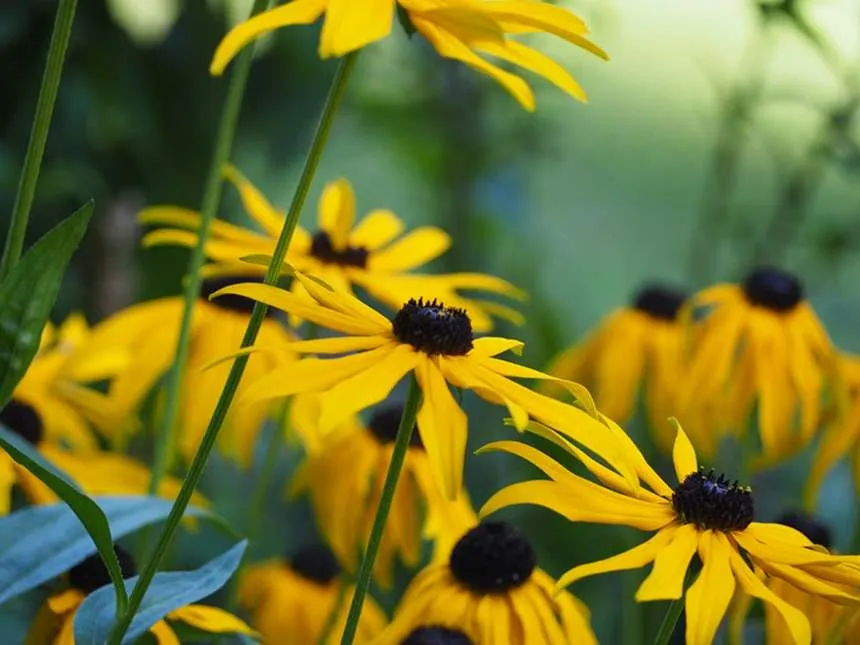
Black-eyed susans are a wildflower native to North America. These flowers grow up to 1-3 feet with 3-inch-long yellow flowers with a black centre. They bloom 3-inch-large in september and have a mild fragrance. Ideally grown in the Middle and East Tennessee, black-eyed susans attract a variety of pollinators like bees and butterflies.
Their unique flower shape makes them perfect for flower arrangements, lasting up to 10 days.
3. Hydrangea
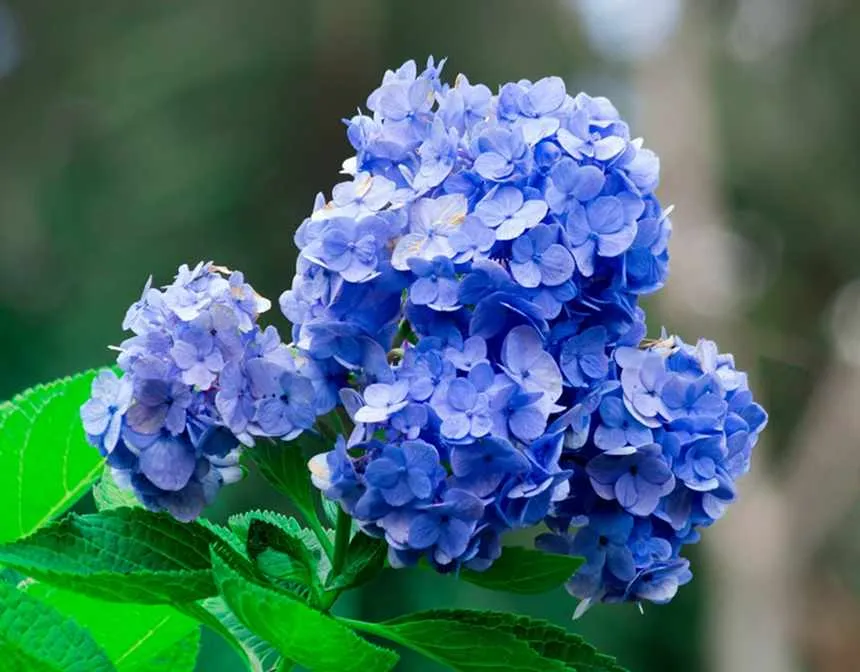
Hydrangea is a genus of flowering plants featuring pom-pom-like rounded blooms. These flowers are ideally planted in East and Middle Tennessee. They grow as tall as 1-5 feet, depending on the variety, with 2-4 inches large flower heads.
While there is no prominent scent in hydrangeas, they grow in a variety of colors, like pink, white, blue, and purple, making them extremely versatile for different flower arrangements. They bloom from June to August and are perfect wedding flowers. The average vase life of hydrangeas is up to 2 weeks.
4. Marigold
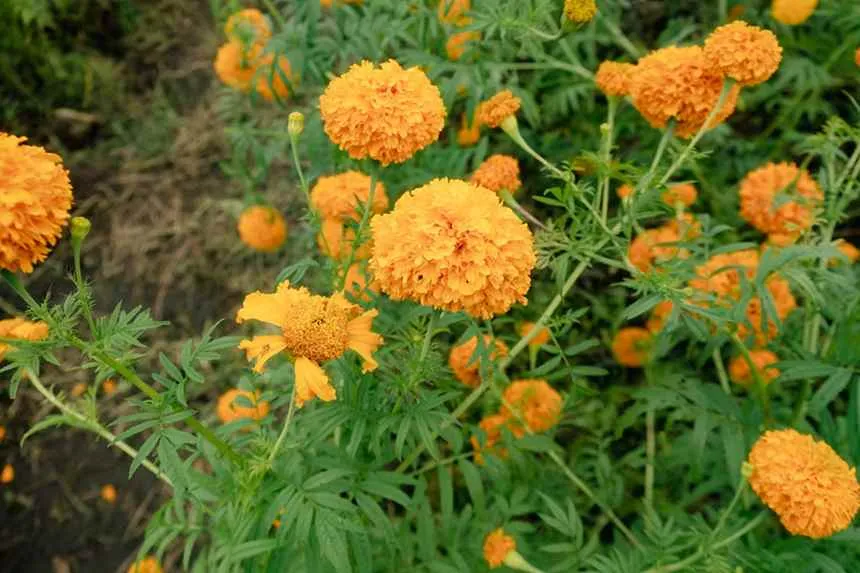
Marigold is also known as the October birth flower, native to America. These orange flowers are shaped like a pom-pom. They grow up to 4 feet tall and feature 2- to 5-inch flowers that have a fruity scent. These daisy-like flowers are best grown in west Tennessee and are great pollinator magnets.
In many Asian countries, cut marigolds are used in traditional festivities, as their vase life extends up to 14 days with proper care. Marigolds, apart from this, are also great mosquito repellant plants.
5. Zinnia
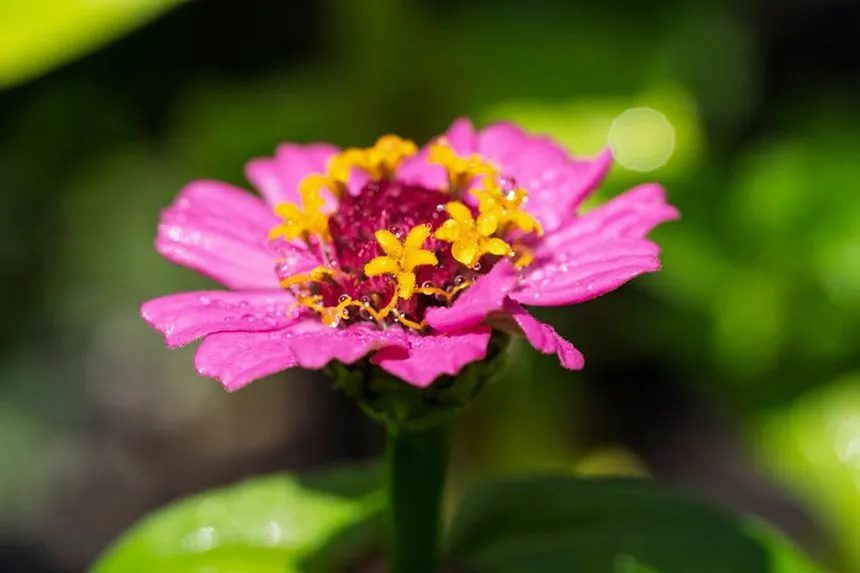
Zinnias are a summer flower native to Southwestern America. They grow up to 5 feet with 1-6-inch flowers that bloom from June to October. These pom-pom-like flowers are grown in west and central Tennessee due to high heat tolerance. These pollinator-friendly flowers have no distinct fragrance but are frequently used in flower arrangements due to their good vase life up to 2 weeks and more if properly maintained.
Concluding Remarks
Conclusively, the TN zones are divided into 5 major parts and 3 regions, extending from 6a to 8a, from east to west. All of these regions witness different lowest winter temperatures, which affect the type of plants used in the area. The updated 2023 map took into account 13,412 weather stations for a more accurate weather analysis.
Most of the state falls under 6b to 7b zones and experiences a subtropical climate. Be mindful while planting by picking plants that are compatible with the frost window of the region.
FAQs
What states are in zone 3?
The northern parts of the United States like, Alaska, Colorado, Minnesota, and 10 other states fall under zone 3. They primarily experience harsh winters with their lowest temperature ranging from -40°F to -30°F.
What time zones are we in TN?
There are 2 time zones in Tennessee: the Central Time Zone covering the western and central regions of the states like Nashville,while the Eastern Time Zone covers the eastern regions, like Knoxville.
Where is zone 7 in Tennessee?
Zone 7 is found in a lare part of Tennesse, mainly covering the Middle tennessee surrounded by Nashville, Daividson and Clarksville, along with parts of eastern and western regions.
Where is zone 8 in Tennessee?
Zone 8 in Tennessee is found in fewer regions mainly the southwestern parts of the state including Memphis and Mississippi river which experience mild winters.
Why was the USDA hardiness zone map updated in 2023?
The USDA hardiness zone was updated in 2023 to make weather data more accurate, by collecting data from more weather stations, along with analyzing climate change, which can impact gardening choices.

Tomato Varieties: 10 Best Types for Every Garden
[…] Different hardiness zones also require varying types, as the heat tolerance levels of all the varieties vary drastically. My advice for beginners is to check and understand your use and requirements, along with considering the local conditions, before selecting the variety. […]