Tiger lily (Lilium lancifolium) is a plant that originated in Asia and then spread across the world. The plant is famous due to the vibrant orange color of the flower; it also has black spots on it. However, it is also available in red, white, pink, purple, and yellow colors. Gardeners usually grow this plant due to its shade and characteristics, and also because this plant increases pollination.
In this guide, learn about the tiger lily plant and its characteristics, growing requirements, planting process, tips for care, and ways to control spread; also, know the common issues in planting tiger lilies.
Quick Answer
To grow tiger lilies, plant the bulb 4–6 inches deep in soil mixed with sand, clay, and loam, spacing bulbs 8–12 inches apart. Choose early spring or fall for planting, and place the plant in full sun to partial shade. Water about 1 inch per week, keep the soil well-drained, and it will bloom by early to mid-summer. Tiger lilies propagate easily and spread quickly, so remove bulbils if you want to control their growth.
What is a Tiger Lily and Its Characteristics?
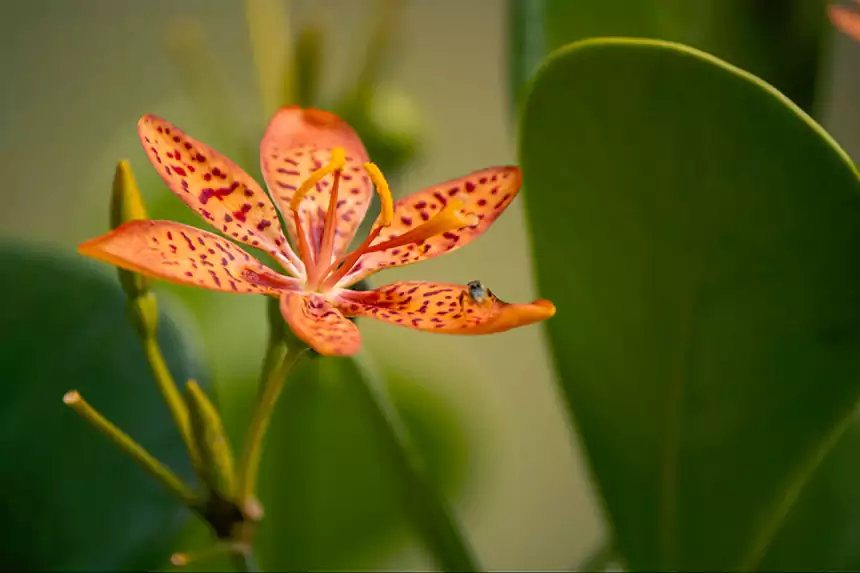
Tiger lily is a hardy bulbous perennial plant that has long stems and is known for its bright orange flower that has black spots that look beautiful. Lilium lancifolium is its biological name. Now, this is found in the US the most, but it’s considered to have originated in semi-mountainous regions of Asia. You can also find Tiger lily (Lilium lancifolium) is an herbaceous perennial lily native to parts of East Asia, including China, Japan, Korea, and eastern Russia
This plant attracts different insects and hummingbirds for pollination. The plant reaches several feet tall, However, they are toxic for humans and pets, especially for cats. Gardeners like tiger lily for the vibrant flowers, reddish staples, and stamens. It attracts different insects for pollination that increases diversity in the garden.
Tiger Lily Characteristics
| Feature | Tiger Lily |
| Botanical name | Lilium Lancifolium |
| Plant type | Herbaceous perennial |
| Flower color | Usually orange with dark spots |
| Height | About 2–5 feet |
| Sun | Full sun to partial shade |
| Soil | Well-drained soil |
| USDA zones | 3–8 |
| Bloom time | Summer |
What are the Growing Requirements for Tiger Lily?
Tiger lilies are best planted in early spring or fall; they grow easily in soil mixed with sand, clay, and loam. They grow easily in places that have proper drainage. While planting, you must place them 8 to 12 inches apart from each other and 4 to 6 inches deep. Take a look at all the requirements for growing a tiger lily.
Soil: The soil mix impacts the plant growth a lot; tiger lily needs acidic soil that doesn’t hold water. Sandier soil is better for these plants. Clay soil is also a good option, but its water-holding nature can be an issue, and it also takes longer to grow. For tiger lily growth, 5.5 to 6.5 pH is best. If you don’t have the proper soil, you can also add compost and agricultural sand to improve drainage.
Planting Depth: You have to plant the bulb 4 to 6 inches deep. If you are planting various bulbs, place them 8 to 12 inches apart. The bulb should face upwards. Cover it fully with the soil, with light hands.
Best Time for Planting: The most suitable season for planting tiger lily is in the early spring or fall season. Tiger lilies can spread readily, particularly through bulbils, they grow very easily in almost all the natures, but in preferred condition they grow faster and healthier. The blooming also happens in the early summer season.
Preferred Place for Planting: You can plant it in any place, like a garden or a small pot. Choose a location that receives full sun to partial shade. Tiger lilies perform best with several hours of direct sunlight each day, although they can tolerate some shade. The soil must have proper drainage. This plant attracts pollinating bees and insects; it is recommended to keep it outside or near windows. This plant looks very beautiful in the garden and also increases pollination in the garden.
How to Plant Tiger Lily Bulbs?
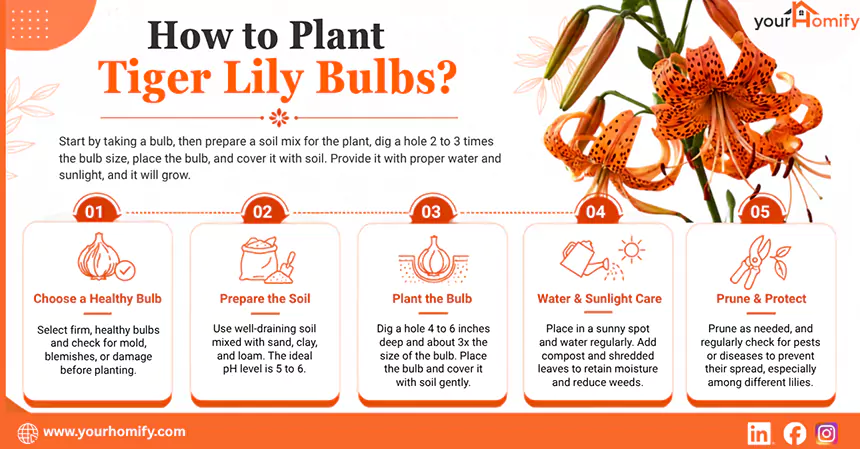
Start by taking a bulb, then prepare a soil mix for the plant, dig a hole 2 to 3 times the bulb size, place the bulb, and cover it with soil. Provide it with proper water and sunlight, and it will grow. Here is a step-by-step guide for planting a tiger lily bulb.
Step 1: It is important that you choose a healthy bulb for planting. Check for mold, blemishes, or damage before purchasing or taking it. This will be the first major step for a healthy plant.
Step 2: Prepare the soil. If you are planting in a pot or on land, use soil that has a mix of sand, clay, and loam, with a pH of 5 to 6. Also, ensure that the soil has proper drainage.
Step 3: Dig a hole 4 to 6 inches deep and 3x the size of the bulb. Now place the bulb inside and cover it with soil with light hands.
Step 4: Provide proper sunlight and water to the plant, apply a layer of compost and shredded leaves for preserving moisture, suppressing weed growth, and preventing the changing season.
Step 5: Provide proper pruning to the plant, check for pests and any kind of disease from time to time, and stop its expansion. If you have different types of lilies planted in your garden, then be extra careful, because pests and diseases can transfer.
How to Care for Tiger Lilies
In aftercare, providing proper sunlight and water to the plant is important. Adding fertilizers, pruning from time to time, and providing proper temperature and humidity are very important.
Watering: This plant doesn’t need too much water; this plant survived droughts at times. You may have to water once a week; if the soil is dry, you can water extra. Younger bulbs will need more water than the mature ones. If the area is receiving regular rain, then there is no need for additional watering.
Sunlight: Tiger lilies grow best in full sun to partial shade. Give them several hours of direct sunlight each day for healthy growth and flowering. In hotter climates, some afternoon shade can help protect the plant from excessive heat. This plant thrives in the sun; growing in a pot can be more effective for the plant. If you are planting them in a garden or farm, then plant them in a place where they get peak sunlight in the evening.
Fertilizer: Providing compost twice a year will be enough for the plant; they don’t need fertilizers. However, if the plant quality is bad or it is alkaline, then you can add liquid fertilizer if you need quick growth of the plant; then you can add fertilizers. Apply mulch to the soil in late spring to cool the root area during the summer season.
Pruning: Deadheading the plant will encourage continuous blooming and also save the plant energy on seeding. Every few years, divide the overcrowded clumps in the fall or early spring season to stop overcrowding and promote growth.
Temperature and Humidity: These plants grow best in a humid and dry environment; however, the plant should be moisturised enough. Humidity ranges between 40% and 65% are perfect for the growth of tiger lily. They start growing in spring and become dormant in fall and summer. However, for those living in USDA zones 3 to 8, temperature is not an issue.
How to Control the Spread of Tiger Lily Plants?
These plants spread very quickly due to their weedy nature. It can only be stopped by removing the bulbils. Bulbils help in the spread of the plant; you can use them for easy propagation.
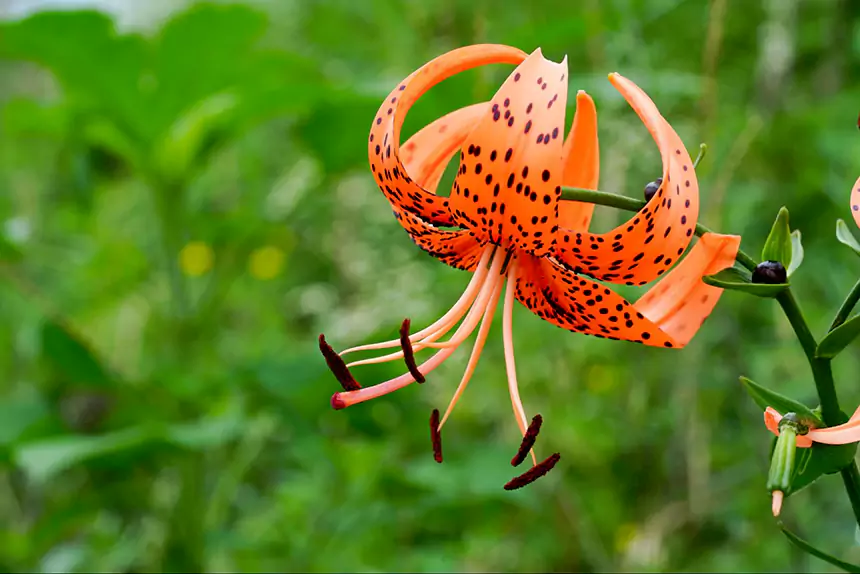
Bulbils form along the stem at the leaf axils. These bulbils take a year to grow. If you don’t like the spreading, you can just remove the bulbils in mid to late summer. Cut the flowers while drying so the plant doesn’t invest energy in seeding. In the fall or spring season, dig the area around the flower and take out all the bulbs and bulbils.
Common Issues While Planting Tiger Lilies
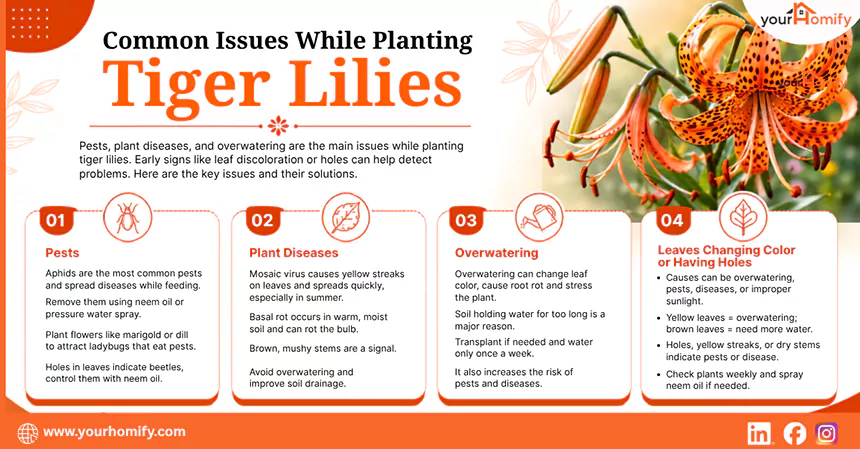
Pests, plant diseases, and overwatering are the main issues while planting tiger lilies. There can be some early signs like changing color of leaves or having holes in them. Here I have discussed the main issues with tiger lilies and their solutions.
Pests: Aphids are the most common pests of the garden; they transmit plant diseases during feeding. You can remove these insects with neem oil or pressure water treatment. You can also add plants that attract ladybugs to the garden so they can eat the pests and your plants can grow without stress. If there are small holes on the leaves, this is a sign that there are beetles in the garden. These can also be avoided with neem oil.
Plant diseases: The most common diseases in tiger lilies are mosaic virus and basal rot. You can see yellow streaking on the leaves due to Mosaic virus; however, it is not that harmful for this species in most cases, but it spreads in the garden very quickly, especially in summer if there are pests.
Basal rot is mostly found in warm and moist soil, and in summer it can rot or damage the bulb of the plant. If there is a brown and mushy stem, then this is a signal. To save it, don’t overwater and make the drainage better.
Overwatering: Do not overwater the plant; it can change the color of leaves, cause rooting, and also affect the plant. If the soil is holding water for longer, it can also be a reason. Transplant the plant and only water once a week; it is best for the plant. Overwatering can also increase the risk of pests and disease.
Leaves changing color or having holes: It can be due to overwatering, disease, pests, and improper sunlight. If your leaves are changing color to yellow, then you are overwatering the plant; if it is browning, then it needs extra water. Holes on the leaves can be due to pests, and yellow strips on leaves or dry stems can be due to disease. You must check the plant once every week, and if you find anything, spray neem oil.
Conclusion
Tiger lily is an easily growing, hardy bulbous perennial plant that is originally from Asia but has later spread internationally. The flowers’ vibrant color attracts people. It also helps in pollination, so gardeners love it. The planting process is simple, and it also doesn’t have too many care points or restrictions.
There are chances of pests and disease, so being attentive to the plant is important. They also spread very quickly; you can remove the bulbils of the plant to stop it.
FAQs
Where should I plant tiger lilies?
Plant tiger lilies in a location that receives full sun to partial shade. Choose well-drained soil and avoid areas where water remains around the bulbs.
Do tiger lilies spread?
Yes. Tiger lilies can spread through bulbils that develop along the stems near the leaf axils. These bulbils can develop into new plants if they fall to the ground.
Are tiger lilies aggressive?
Yes, they are an aggressive grower, and if you leave they will grow like a weed. If you want to stop it, remove the bulbils and pluck the flower after blooming.
Does tiger lily like sun or shade?
Tiger lilies prefer full sun to partial shade. They grow best with several hours of direct sunlight each day, although some afternoon shade is beneficial in hot climates.
How to grow tiger lilies from bulbs?
Take a bulb and prepare the soil mix that has clay, loam, and sand. Now plant the bulb 4 to 6 inches below, cover with soil, and take care of it.
- Lilium lancifolium (Tiger Lily) – Plant Toolbox- North Carolina Extension Gardeners