Roses are a gardener’s delight that can instantly elevate the look of a garden and have been used as ornamental flowers and indoor plants for years. However, they are susceptible to various pests and diseases, which are mainly caused by overwatering, fungi, bacteria, and unhygienic conditions, which lead to stunted growth and reduced blooms.
The factors that affect these diseases are poor circulation, excessive moisture, and overcrowding. If you have planted a rose bush in the garden, come along and explore the common rose diseases along with their symptoms and common preventive measures.
Quick answer
Powdery mildew, Black spot, Botrytis Blight, Mosaic, Rose Rosette, and Anthracnose are the various rose diseases. Among these, Black spot is the most common rose disease that is caused by a fungal pathogen and can cause premature wilting and yellowing of leaves. Rose diseases are mainly caused by moist conditions, poor garden hygiene, and improper spacing. Some of these infestations are irreversible and do not have a cure but can be prevented through proper garden maintenance.
What are the Common Rose Diseases? Symptoms and Cure
Black spot is the most common rose disease, followed by rose rosette. The main cause of rose infestations is poor garden hygiene. While some can be treated easily, some of these diseases have no cure.
Take a look at the 5 popular rose diseases:
1. Black Spot
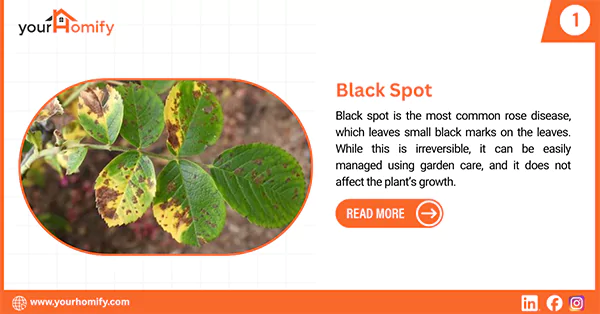
- Scientific Name: Diplocarpon rosae
- Symptom: Black spots on the leaves
- Treatment: No permanent cure, but it can be managed by organic oils and garden care.
One of the most commonly spotted diseases in roses is the black spot. This fungal disease is caused by Diplocarpon rosae, which is accelerated due to wet, humid conditions and unhygienic garden conditions.
Many gardeners treat this as a purely cosmetic issue, but I like to get rid of them to avoid further damage. Additionally, contrary to popular belief, fungicides are not completely effective for long-term control of black spots, as claimed by NCBI.
Warning
Home remedies like milk spray and apple cider vinegar can be more harmful than useful for your rose bush.
2. Powdery Mildew
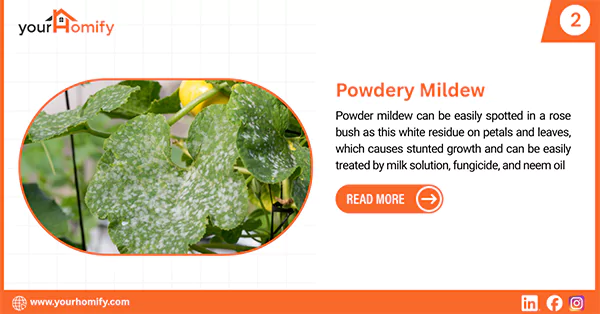
- Scientific Name: Does not have a single scientific name and varies as per fungi (Erysiphaceae, family name)
- Symptom: White, powder-like substance on the leaves and discoloration
- Treatment: Potassium bicarbonate spray, Milk solution, or Neem Oil
Powder mildew is also a fungal disease that is caused by Podosphaera pannosa, further encouraged by overly moist conditions, which does not necessarily kill the rose bush, but can cause stunted growth.
While powdery mildew likes moist conditions, it does not encourage rain, unlike the listed diseases. In some cases, rain can completely wash away the infection if it has not spread drastically.
3. Botrytis Blight
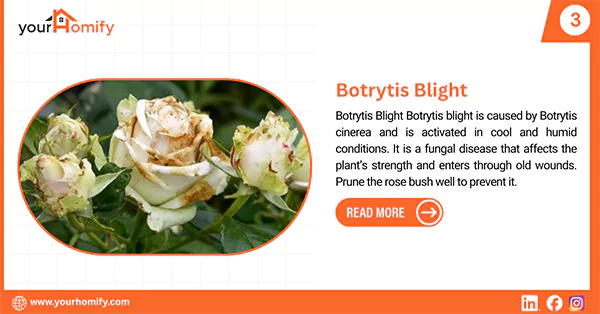
- Scientific Name: Botrytis cinerea
- Symptom: Black and grey petals
- Treatment: Fungicide and neem oil
The Oklahoma State Extension claims that the Botrytis Blight is triggered by cool and wet environmental conditions. This fungal disease is caused by Botrytis cinerea and enters the plant through old wounds, caused by improper pruning or dead leaves.
The optimal temperature for this fungal infection to spread is 60°F, and it can also spread due to overwatering.
YourHomify Tip
Apart from the chemical solution, apply a good layer of organic mulch to strengthen the plant as a preventive measure against botrytis blight.
4. Mosaic
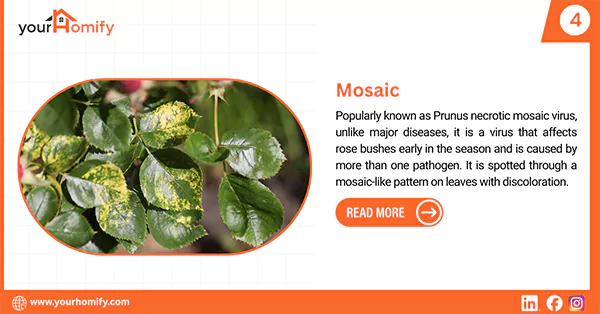
- Scientific Name: Mosaic virus
- Symptom: Yellowing leaves
- treatment: Discarding the plant
Also known as prunus necrotic, the mosaic virus is caused by more than one pathogen. Unlike the rose rosette, this is a virus that weakens the life of the plant and disables it from producing big and healthy flowers.
While the mosaic virus does not have a permanent treatment, it can be ineffective in most cases without spreading to adjacent plants.
YourHomify Tip
While the mosaic virus can be infective on most rose bushes, I would recommend discarding the plant as soon as you detect any sign of infestation.
5. Rose Rosette
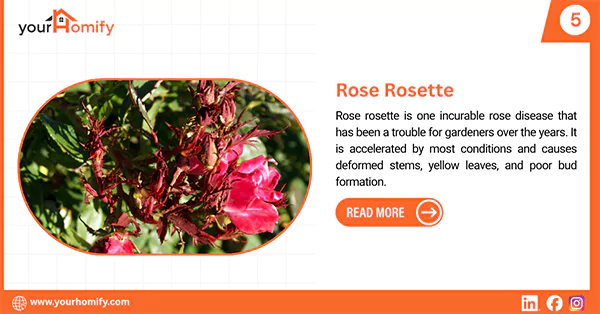
- Scientific Name: Rose rosette emaravirus
- Symptom: Deformed stems and petals
- Treatment: No cure
Rose Rosette is a fungal disease that is caused by a fungal pathogen called Podosphaera pannosa. This disease is also called witches’ broom roses and is spread by the eriophyid mites. It causes deformed stems and is one of the most common infestations in roses.
6. Anthracnose
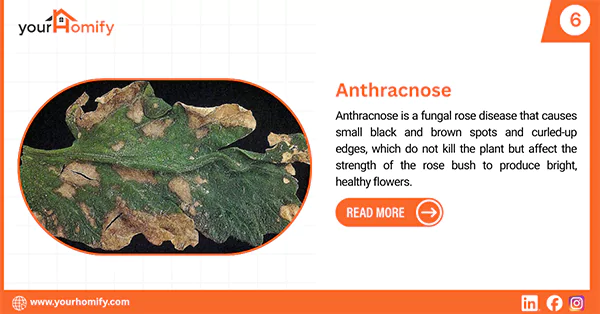
- Scientific Name: Sphaceloma rosarum
- Symptoms: Small black/brown spots and discoloration
- Treatment: Pruning
Anthracnose is a fungal disease that commonly affects roses, particularly the climbing varieties. Similar to other varieties, this disease also spreads in cold and humid conditions and most commonly emerges in spring in the form of irregular dark marks on the leaves.
It will not cause the death of the plant, but it affects the strength of the plant, which causes weaker blooms.
*Cosmetic issue refers to a problem that primarily affects the looks of the flowers rather than their growth and development.
Common Preventive Measures for Rose Diseases

Maintaining proper garden hygiene is the most effective step to prevent rose diseases. While any sort of infection can not be prevented completely in all aspects, a well-structured care routine can ensure healthier blooms.
Here is how I prevent most rose diseases from entering my garden and save on future treatment costs:
- Planting disease-resistant varieties: BBC Gardeners World Magazine recommends a few rose disease-resistant varieties like Rosa ‘Charles De Mills’ and Rosa ‘Boscobel,’ which can ensure a beautiful garden without the hassle of keeping an eye on diseases.
- Garden Hygiene: An unhygienic garden is home to viruses and fungi. Always clean the debris in the garden and around rose bushes to prevent any sort of infection from spreading to new plants.
- Proper Spacing: Make sure the rose plants are placed at an appropriate distance, as overcrowding leads to suffocation and poor air circulation, which can kill the plant.
- Pruning: Deadheading the dead and damaged parts as soon as possible before it spreads to other parts of the plants.
- Mulching: Apply a layer of organic mulch to ensure healthier blooms and also prevent soil-borne pathogens.
Concluding Remarks
Conclusively, the rose diseases are caused mainly by fungi and moist conditions. The most common rose diseases are the black spot, which is a fungal disease, followed by the rose rosette and powdery mildew.
While most rose diseases are irreversible, many can be prevented through proper garden hygiene, spacing, pruning, and mulching. My advice to new gardeners starting to grow a rose bush is to choose a disease-resistant variety for a smoother start and better management.
Happy Gardening!
FAQs
What does baking soda do for roses?
Black sooty mold is used to treat rose diseases like powdery mildew and black spot, combined with water or oil. It acts as a fungicide and a preventive measure to treat these infestations.
What do coffee grounds do for rose bushes?
Coffee grounds are an effective fertilizer for rose bushes, which provide nitrogen to the plant.
What do diseased roses look like?
A diseased rose usually has wilted, yellowing leaves, black spots, or powdery residue on its petals.
Can a diseased rose be saved?
Yes, a diseased rose can be saved using effective gardening practices like proper pruning, air circulation, and watering.
Which is the most common rose disease?
Black spot is the most common rose disease, which does not entirely kill the plant but can cause premature wilting.