All the months of the year are linked to special flowers known as birth month flowers. Much like birthstones, these species carry unique meanings, symbolism, and traditions. From the cheerful daffodil of March to the elegant rose of June, each blossom reflects qualities and sentiments associated with people born during that month.
These floral emblems have been cherished for generations and continue to inspire gifts, gardens, and celebrations around the world.
Quick Answer:
A birth flower guide helps you find the bloom traditionally associated with each month of the year. In January, the Carnation and Snowdrop take center stage, while February brings the Violet and Iris. March is represented by the Daffodil and Jonquil, and April’s blooms are the Daisy and Sweet Pea. May belongs to the Lily of the Valley and Hawthorn, whereas June is known for the Rose and Honeysuckle. In July, the Delphinium and Water Lily bloom best, and August follows with the Gladiolus and Poppy. September’s flowers are the Aster and Morning Glory, while October brings the Marigold and Cosmos. November is marked by the Chrysanthemum and Peony, and finally, December closes the year with the Holly and Narcissus.
What Does a Birth Flower Mean?
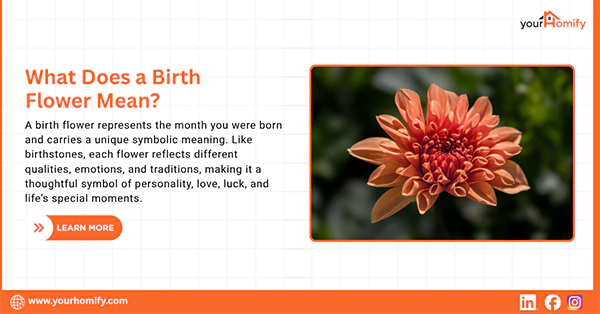
Birth month flowers are traditionally associated with the month in which a person is born, similar to a birthstone. Each month has two or sometimes even more flowers that symbolize certain personality traits or qualities of an individual.
The tradition traces back to ancient Rome, when people first began celebrating birthdays. They would decorate altars with specific seasonal flowers and gift them to bring luck and protection.
Additionally, Victorians used a coded language called floriography to subtly communicate complex emotions.
Most months have a primary and a secondary birth flower. This is usually due to seasonal availability across different geographic regions, giving people more choices for bouquets, jewelry, or gifts.
Birth Flowers for All 12 Months: Meanings and Symbolism
| Birth Month Flowers at a Glance | |
| January | Carnation and Snowdrop |
| February | Violet and Iris |
| March | Daffodil and Jonquil |
| April | Daisy and Sweet Pea |
| May | Lily of the Valley and Hawthorn |
| June | Rose and Honeysuckle |
| July | Delphinium and Water Lily |
| August | Gladiolus and Poppy |
| September | Aster and Morning Glory |
| October | Marigold and Cosmos |
| November | Chrysanthemum and Peony |
| December | Holly and Narcissus |
1. January Birth Flower – Carnation and Snowdrop
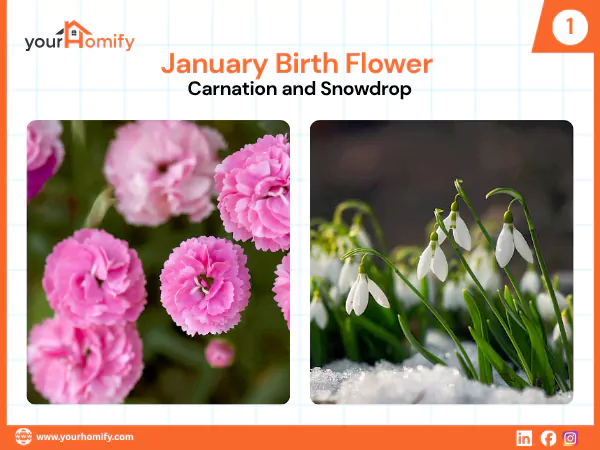
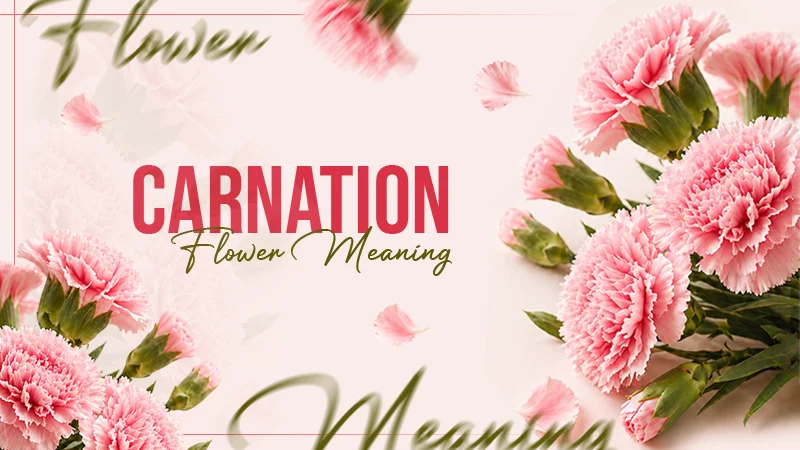
Carnation and Snowdrop are the two official birth flowers for January. The vibrant ruffled petals of carnations and the delicate bell-shaped snowdrops are known for their remarkable resilience, as these are among the rare plants that can withstand harsh winter climates. Both the blooms make highly meaningful gifts as they are associated with emotions like love, admiration, hope, and a long-lasting bond.
2. February Birth Flower – Violet and Primrose
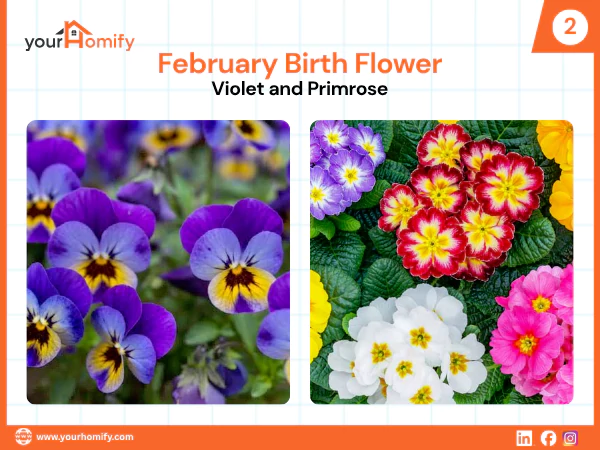
Though February is the shortest month of the year, it carries rich meaning and symbolism through its two birth flowers. Violet and Primrose are regarded as the blooms of love, modesty, and vibrancy. Both carry distinct sentiments and rich cultural significance. For a brief period of time, Iris was considered the secondary birth flower of the month, but it gradually lost its significance.
3. March Birth Flowers – Daffodil and Jonquil
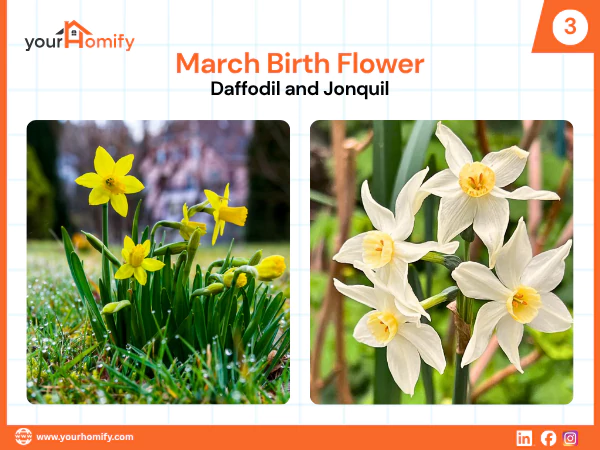
Daffodil and Jonquil are the primary and secondary birth flowers of March, respectively. Both species are known as spring flowers and are associated with renewal and new beginnings. Daffodils are famous for their bright, sunny yellow blooms, representing the end of winter and the return of warmth. Jonquils are often regarded as the showstopper flowers and are known for their grace and elegance.
4. April Birth Flower – Daisy and Sweet Pea
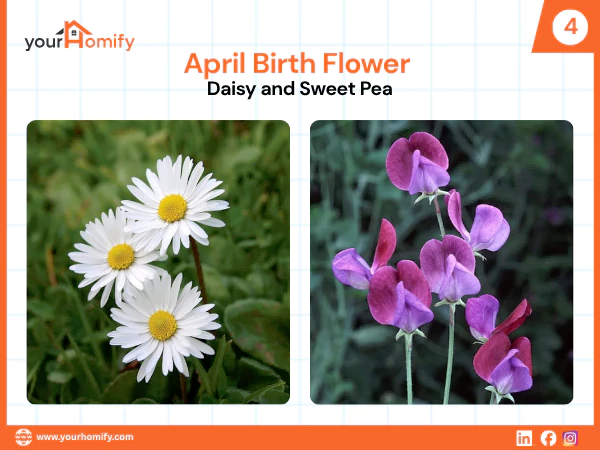
The official birth flowers for April are the daisy and the sweet pea. Both blooms are considered a timeless symbol of innocence, loyal love, purity, and fresh beginnings. The secondary birth flower is known to capture blissful pleasure, kind-heartedness, gratitude, and farewell. It is a climbing plant that features ruffled blooms in a rainbow of shades, including pink, purple, blue, white, and sometimes even red. The sweet and intense fragrance makes them an incredible choice for fine perfumes, luxury lotion, and bridal bouquets.
5. May Birth Flowers – Lily of the Valley and Hawthorn
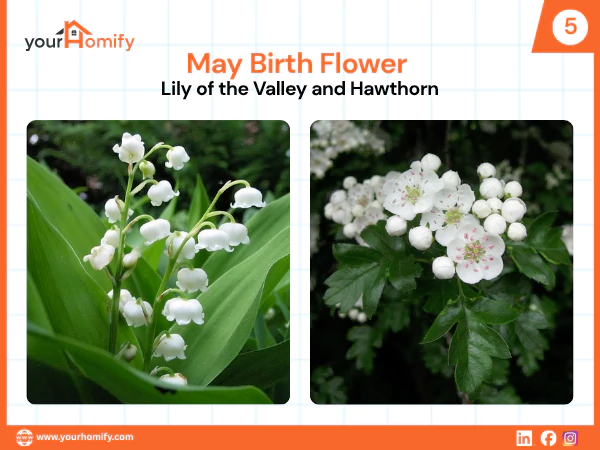
May birth flowers, the lily of the valley and the hawthorn, are two enchanting blooms that beautifully celebrate the peak of spring. The lily of the valley serves as the primary flower and is highly sought after because of its delicate, white, bell-shaped flowers and sweet, intoxicating fragrance. It traditionally symbolizes sweetness, purity, and humility. On the other hand, Hawthorn is a complementary flowering shrub representing hope, supreme happiness, and protection.
6. June Birth Flower – Rose and Honeysuckle
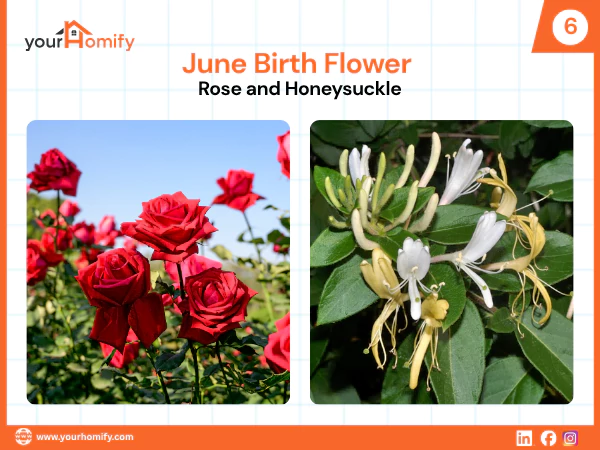
Rose is one of the most cherished flowers in the world. It serves as the primary birth flower for June, and the core meaning of the bloom is love, passion, honor, and beauty. Red roses are associated with emotions like deep romance, devotion, and passion, while yellow ones are linked to friendship, joy, and warmth. Honeysuckle, on the other hand, symbolizes happiness and fraternal love. It represents everlasting bonds and fidelity because of its tight vine structure.
7. July Birth Flowers – Delphinium and Water Lily
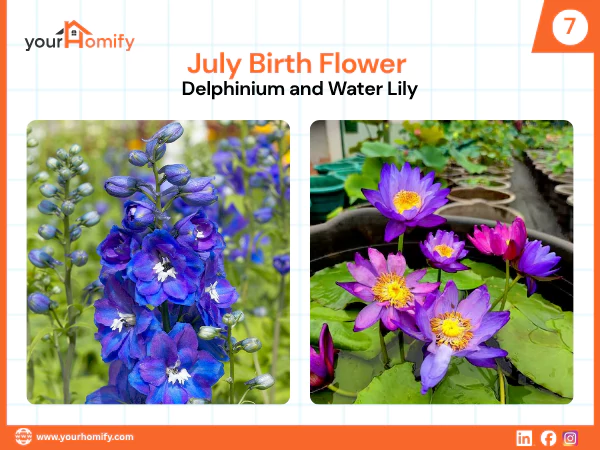
The official birth flowers for July are the Delphinium and the water lily, two spectacular summer blooms that embody the season’s vibrant energy and depth. Delphinium, the primary birth flower, is a striking, dolphin-shaped species associated with positivity and attachment. It is highly prized for its rare, deep blue shades. The secondary birth flower is linked with purity, enlightenment, and inner peace. Together, these blooms represent a balance of joyful energy and calm wisdom.
8. August Birth Flower – Gladiolus and Poppy
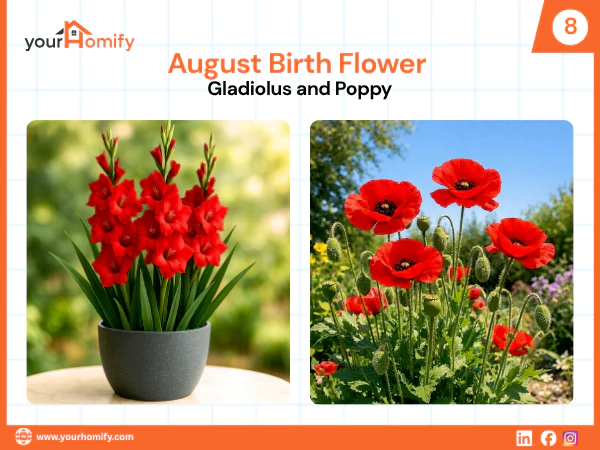
August is represented by two striking birth flowers: the Gladiolus and the Poppy. Gladiolus is known for its tall flower spikes lined with vibrant blooms in shades of red, pink, yellow, orange, and purple. The flower symbolizes strength, integrity, and perseverance. The poppy, with its delicate, papery petals and bright colors, adds a softer touch to August’s flora. It is often associated with remembrance, imagination, peace, and resilience. Together, Gladiolus and Poppy represent courage balanced with creativity, reflecting determination and the power to overcome challenges with grace.
9. September Birth Flowers – Aster and Morning Glory
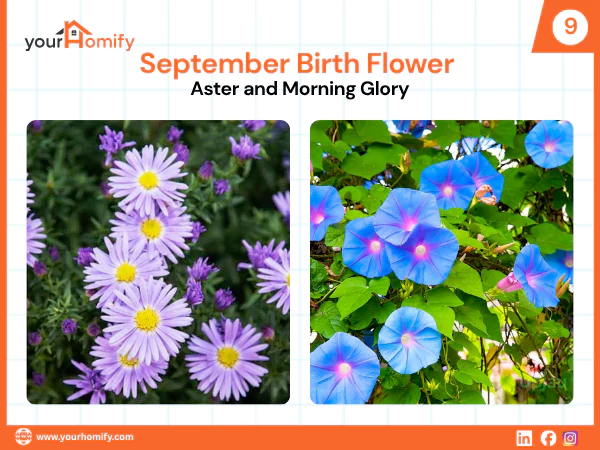
September is linked to Aster and Morning Glory. Aster is a daisy-like bloom known for its star-shaped flowers in shades of purple, pink, blue, and white. Its name comes from the Greek word star, and it symbolizes wisdom, faith, love, and valor. Morning Glory, on the other hand, is a fast-growing vine that produces trumpet-shaped blooms that open in the morning and close later in the day. It represents affection, renewal, and the fleeting beauty of life.
10. October Birth Flower – Marigold and Cosmos
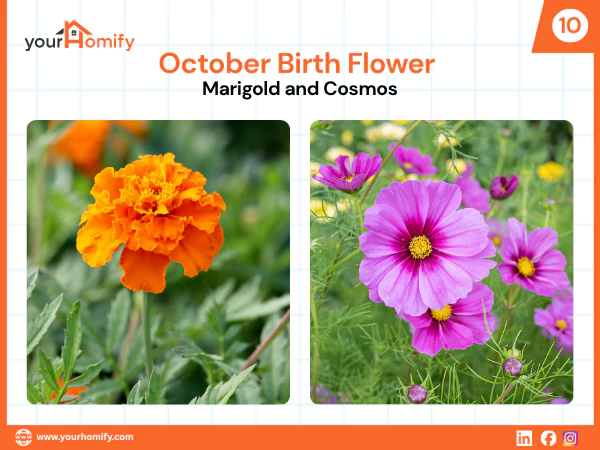
The October birth month flowers are marigolds and cosmos. Marigolds are known for their bright golden, orange, and yellow blooms that bring warmth to autumn gardens. They symbolize passion, creativity, prosperity, and remembrance. Cosmos, with its delicate daisy-like flowers, represents harmony, balance, peace, and order. Together, these October blooms symbolize a life filled with warmth, resilience, joy, and inner balance, making them meaningful floral emblems for people born during this colorful autumn month.
11. November Birth Flower – Chrysanthemum and Peony
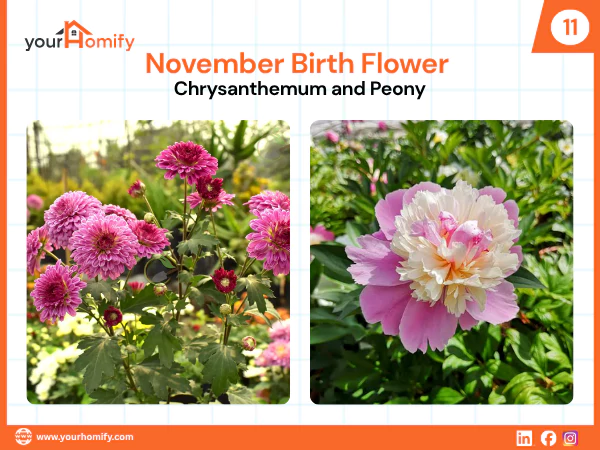
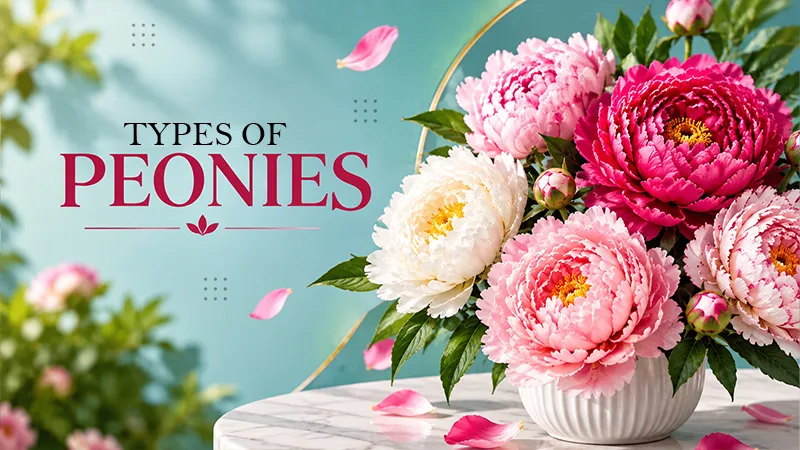
November is traditionally represented by the Chrysanthemum, while the Peony is recognized as a secondary birth flower in some floral cultures. Chrysanthemum is admired for its lush, layered petals available in distinct color shades. The bloom is known to symbolize loyalty, friendship, longevity, and optimism. Meanwhile, peonies are admired for their fragrant blossoms and represent prosperity, honor, compassion, romance, and good fortune.
12. December Birth Flower – Narcissus and Holly
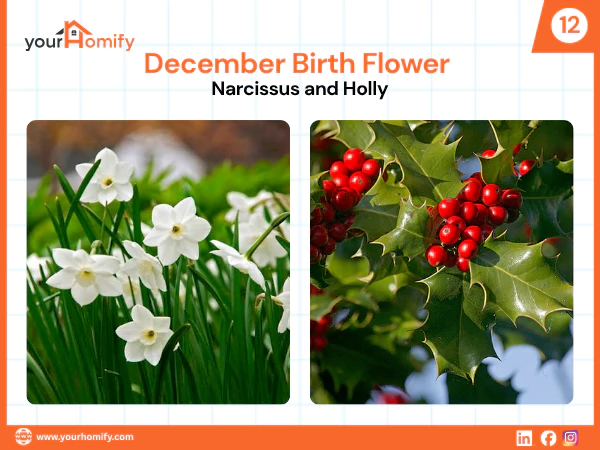
December is known for its cheerful blooms – Narcissus and Holly. Both the flowers embody the spirit of the season, combining renewal and optimism with strength and perseverance, making them meaningful symbols for those born in December. Holly is an evergreen plant and has long been linked with the festivities of the month, and holds a unique history with profound meaning. Narcissus is widely appreciated for its sweet-scented and pearl-white flowers, which are linked to self-reflection, good fortune, purity, and faith.
Conclusion
Birth month flowers are symbolic blooms linked with each month. They carry profound meaning and rich history. Flowers have long been used to express emotions and celebrate important occasions. Each unique bloom associated with a month continues to follow the tradition. Whether you wish to celebrate a special moment or want to use these blooms for gifting, every month gives you distinct options.
FAQs
What do birth month flowers signify?
Each birth month flower carries unique personality traits and is associated with distinct emotions.
Why are there two birth flowers every month?
Each month has two birth flowers to accommodate all the traits of an individual born in that month.
What do January birth flowers signify?
January birth flowers are carnations and snowdrops. Both the blooms are known to signify resilience, strength, and inner courage.
What is the prettiest birth flower?
In the language of flowers, the June birth flower (Rose) and the November birth flower (Peony) are considered the prettiest of all the blooms.
What flower is known to symbolize a baby?
Daisy is generally associated with a baby. Its delicate petals, innocence, and purity are often linked with newborn children.