The data says that only one in ten people in America eats enough fruits and vegetables; if we see this data on a bigger scale, it will sound something like: Only 12.3% of American adults eat enough fruit. Only 10% eat enough vegetables.
The number that you see raises the real concern and is the main reason why “grow your own” is this popular and is given with every advice. It might sound like a lame reasoning and lame advice but this is the only alternative for nine out of ten adults which is not getting enough vegetables.
Everything doesn’t get solved because of the garden, but it is solved because of the vegetables that are produced in them. It is because the vegetables are free, ready, and paid when it is the time to eat them.
Here’s what to actually grow, when it’s ready, and what changes once you’re eating what you planted.
The Numbers Nobody Wants to Believe
The figures are 12.3% for fruit and 10.0% for vegetables, according to the CDC’s own analysis of national survey data. Those numbers barely move by state. West Virginia’s worst and Connecticut’s best still both round down to “most people fail this.”
The most important part in this is also income. The adults who earn less money meet the requirement of fruits and vegetable as half as the adult with more money. The income here is also a very important matter. Most of the adults below the poverty line meet the vegetable needs at almost half the rate of people who are well-to-do. This data tells us that how the willpower is not the reason for them to not eat healthy food; it is just their obligation.
A backyard bed sidesteps most of that. It doesn’t care about your zip code’s grocery selection.
What a Garden Actually Fixes
CDC’s own guide to increasing produce consumption lists gardens as one of ten strategies, and it’s the only one you can run entirely on your own property.
A survey of the gardening program found that the gardeners who are into farming these vegetables reported eating more vegetables, and they also drink less milk, citrus, and sweet drinks than the people who did not garden. Also, none of the people told them to cut the intake of soda. It is just that something better was in their kitchen.
The most important thing that we should learn is Replacing higher-calorie foods with garden produce is not just about willpower but also about the closeness.
Two Crops Worth Growing on Purpose
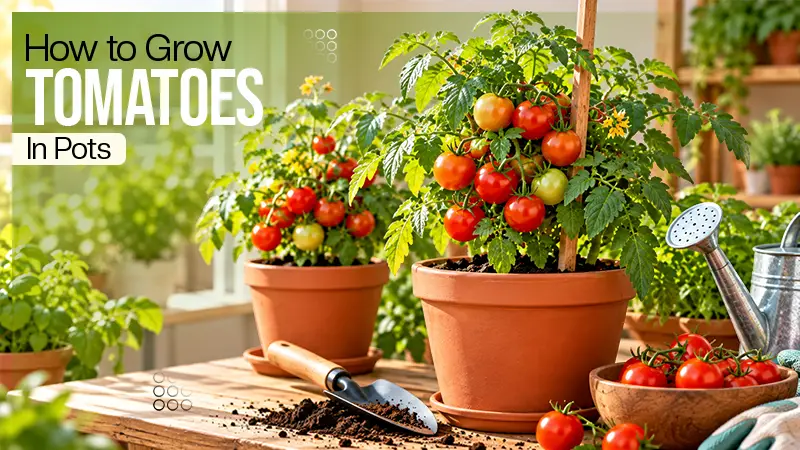
The most basic crops that you can also grow without much expertise and can also use every day are tomatoes and lettuce. Most of the people who grow them think that it is fine but also the least interesting thing you can plant.
Something From Underground
Growing peanuts is a little bit strange and can also be a little tough, and that is exactly the reason they are worth so much.
The flowering of the plants happens above ground, but it bends completely, and when the stem bends, the pods get pushed into the ground. This is also the exact underground growing process most gardeners have never watched happen.
Warm soil, a long season, and patience are the whole requirement. Kids find it fascinating. So do most adults, honestly.
The Vegetable Everyone Skips
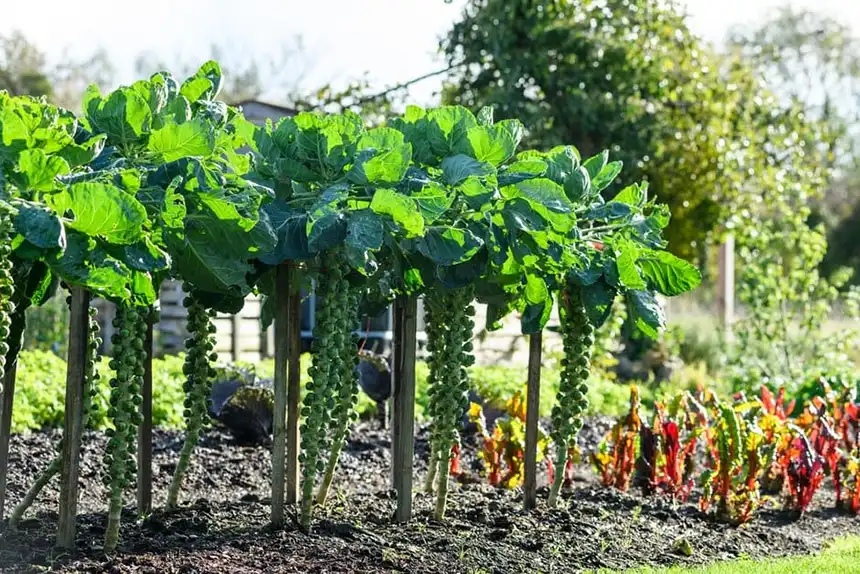
Brussels sprouts are the product that has a branding problem but is very unrelated to how they taste when they are cooked properly and grown properly.
A crop that is grown inside the home and is a nutrient-dense crop like brussels sprouts holds up in cold weather and often tastes sweeter after a light frost, which is the opposite of what most people expect from a vegetable and also we get used to the boiled vegetables when we go out to holiday at someone’s place.
They take a long time to grow. But they mostly take care of themselves once established.
Getting the Setup Right
Buying the wrong tools first, before you know what you’ll actually reach for every week, is the most common way a new gardener quits somewhere around August.
You don’t need much. A hand trowel, a hori-hori or sturdy garden knife, a decent hose, and gloves that actually fit cover most of a season. Being fully equipped for home gardening is less about the tool wall at the hardware store and more about having the six things you’ll reach for weekly within arm’s reach.
Buy cheap on anything you’ll use rarely. Spend on the trowel. It’s the one thing your hand touches every single day you’re out there.
What to Do With the Harvest
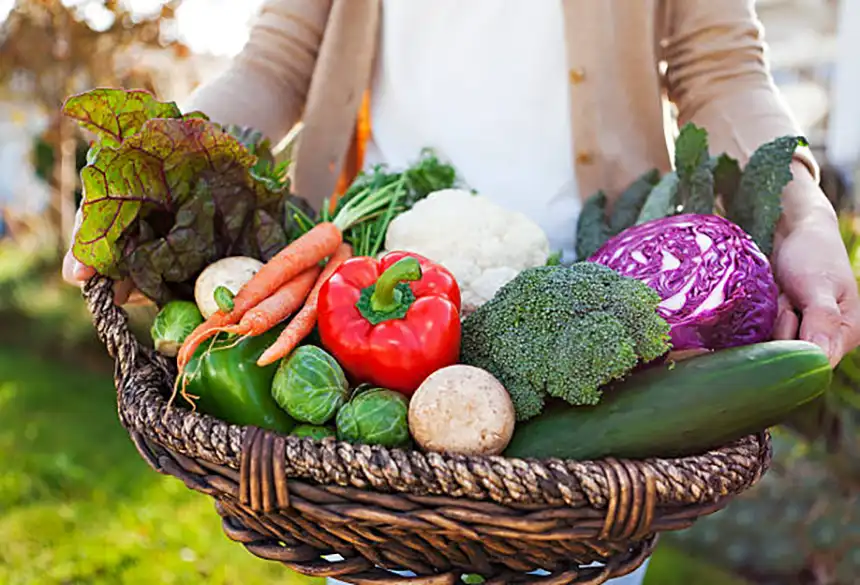
A basket of vegetables isn’t automatically a better diet. What you pair it with matters.
Fat is also one of the things that helps your body absorb some of the things that the vegetable actually offers. And also, the combination of fiber and healthy fats is the exact thing that makes your bowl of vegetables more edible and better when compared to the food without dressing of the food. The viral thing, like seeing a sliced Avocado on a bowl of salad with the lettuce and tomatoes, is not just a trend, but it’s also the way nutrition actually works.
The only downgrade you can see when growing the vegetables in your own garden is that it is all about eating what is already in your kitchen when all the hard work of you trying to grow the vegetables pays off.
The Fiber Gap Hiding in Plain Sight
Adults need 28 to 34 grams of fiber a day, and most Americans eat about half of that most days.
Harvard Health has specifically and buluntly told that adults are falling behind, and are falling very behind, when it comes to eating green vegetables. The very frst reason for this is that you will have to keep your appetite smaller and that means you will have to eat smaller portions. Also, high-fibre foods are hard to chew and require more chewing than normal food.
The recommended daily fiber intake isn’t a number everyone keeps tracking; it just comes out when the natural produce comes out automatically and consciously tracks.
A garden doesn’t hand you 30 grams of fiber. It hands you the vegetables that add up to it without you doing math.
Conclusion
None of the process takes so much time and is time taking. The change that occurs is smaller than people expect and more durable than a diet plan. You start eating what’s ready because it’s ready, not because you decided to be virtuous that week. The peanuts come up when they come up. The sprouts get sweeter after the first cold snap, whether or not you remembered to want them to.
Start with two crops you’ll actually eat. Everything after that is just weeding.
FAQs
Q1. Do I need a big yard to grow enough to matter?
Ans: No. A few raised beds or even large containers can supply a meaningful share of a household’s vegetables, especially for compact crops like Brussels sprouts.
Q2. When are peanuts ready to harvest?
Ans: Roughly 120 to 150 days after planting, once the plant starts yellowing. Pull a test plant to check the pods before harvesting the whole row.
Q3. Do Brussels sprouts really taste better after frost?
Ans: Many gardeners and cooks report exactly that. Cold triggers the plant to convert starches to sugars, which softens the bitterness people associate with the vegetable.
Q4. What’s the single most useful tool for a new gardener?
Ans: A good hand trowel. It’s the tool you’ll reach for every single time you’re in the garden, regardless of what you’re growing.
- CDC — CDC, “Adults Meeting Fruit and Vegetable Intake Recommendations — United States, 2019” (MMWR), for the national fruit and vegetable intake percentages and the income disparity
- CDC — Replacing higher-calorie foods with garden produce, “The CDC Guide to Strategies to Increase the Consumption of Fruits and Vegetables,” for the home/community garden strategy and the urban gardening evaluation findings
- Harvard Health — The recommended daily fiber intake, “Fabulous Fiber,” for the daily fiber target, the national shortfall, and the reasons older adults fall further behind