


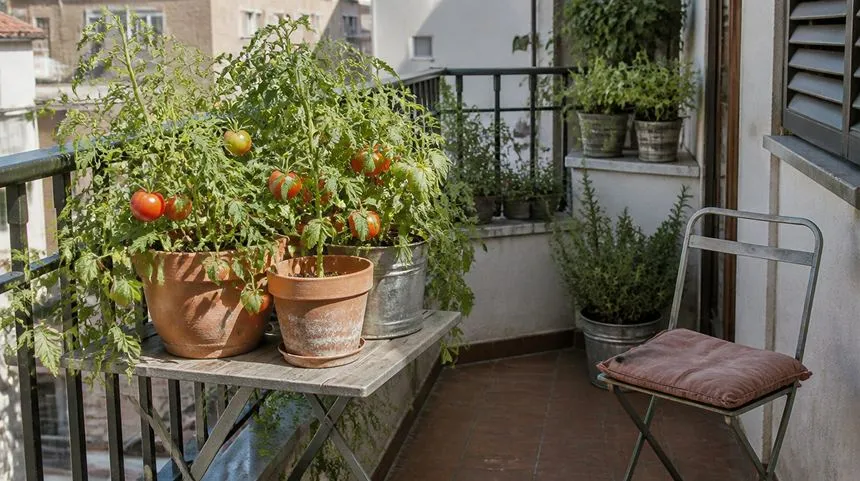
I used to think tomatoes needed a proper garden to grow. Turns out all they need is a decent pot and some patience.
Knowing how to grow tomatoes in pots involves choosing the right variety, using well-draining soil, proper sunlight, regular watering, and staying consistent with the care tips!
Well, it took me many failed attempts to realize what this fruit needed. Now I get a solid harvest every season, and this article covers everything that’s worked for me, from starting with seeds or seedlings to picking the right variety, following the care tips, and finally harvesting and storing your tomatoes.
Quick Answer
To grow tomatoes in pots, choose a large container with drainage holes and use a well-draining potting mix. Start by sowing the seeds in the seed tray and place it in a sunny spot.
Water consistently till it germinates. Feed a proper nitrogen-rich fertilizer every 2-3 weeks once flowering starts, stake early, and harvest once the fruit reaches full color.
Choosing The Right Tomato Varieties
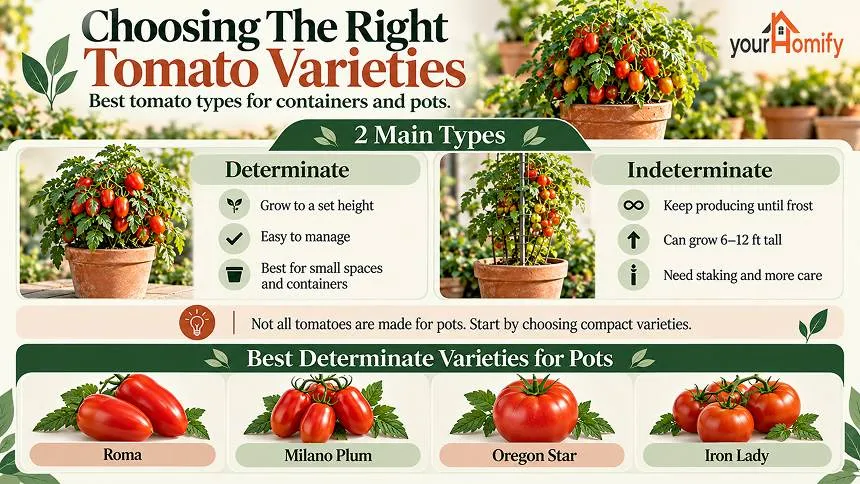
Growing tomatoes in containers or pots is almost similar to growing them in the ground. If you are a beginner, you simply need to take care of a few easy steps, and you are good to go. To my surprise, tomato plants are divided into two categories: determinate and indeterminate.
Not all tomatoes are made for pots, and that’s the first thing you need to sort out before you start planting them in containers.
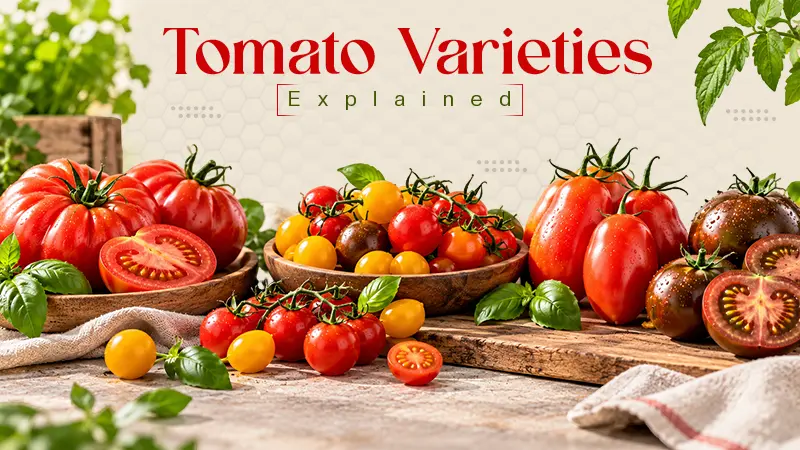
Determinate varieties, also known as dwarf tomato plants, grow to a certain height, which makes them easy to manage compared to indeterminate vining plant varieties. Indeterminate ones keep producing fruit until frost and often grow 6-12 ft tall, which demands extra care.
Honestly speaking, if you have a small garden space yet want to have a large harvest to make sauces, determinate varieties like Roma, Milano Plum, Oregon Star, or Iron Lady are some of the best types.
Did You Know?
According to the Agricultural Marketing Resource Center, tomatoes are the second most consumed vegetable in the US, after potatoes.
How to Grow Tomatoes in Pots Using Seedlings?
To grow tomatoes in pots using seedlings, take a large container, use organic-rich soil, prepare the seedlings, and bury them properly. Stake them early, apply mulch, water regularly, and feed with nitrogen-rich fertilizer for proper growth.
Honestly, it took me a couple of failed attempts. So instead of you going through the same trial and error, here’s the process that I now follow for a successful harvest.
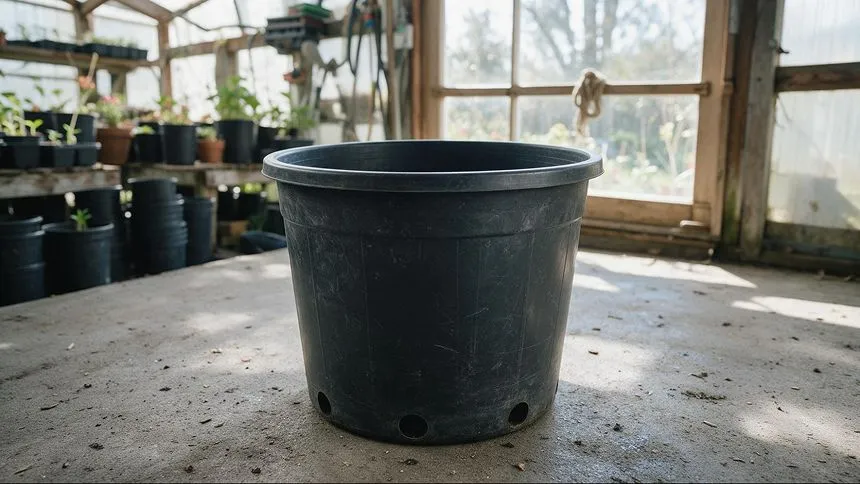
Step 1: Choose an appropriate container. A pot that can hold around 5-7 gallons of soil and supports good drainage works well.
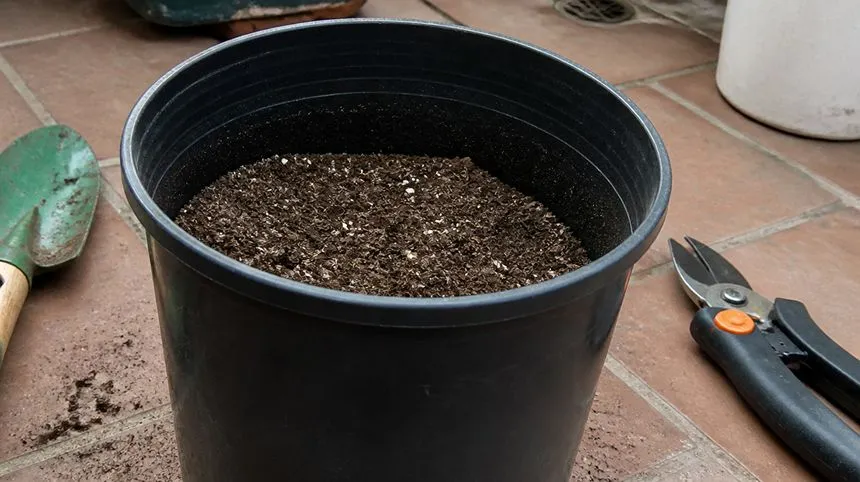
Step 2: Fill the pot with a light and organic potting mix. Don’t use heavy garden soil. I usually mix in a little compost for proper development of the plant. Leave two inches of space at the top of the pot.
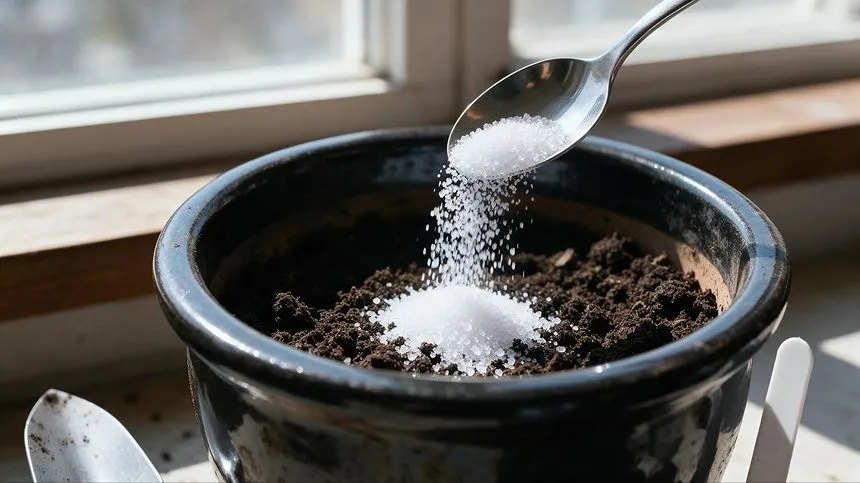
Step 3: Many expert gardeners recommend adding a tablespoon of Epsom salts for magnesium, gypsum, or crushed eggshells for calcium. This makes the soil more nutrient-rich.
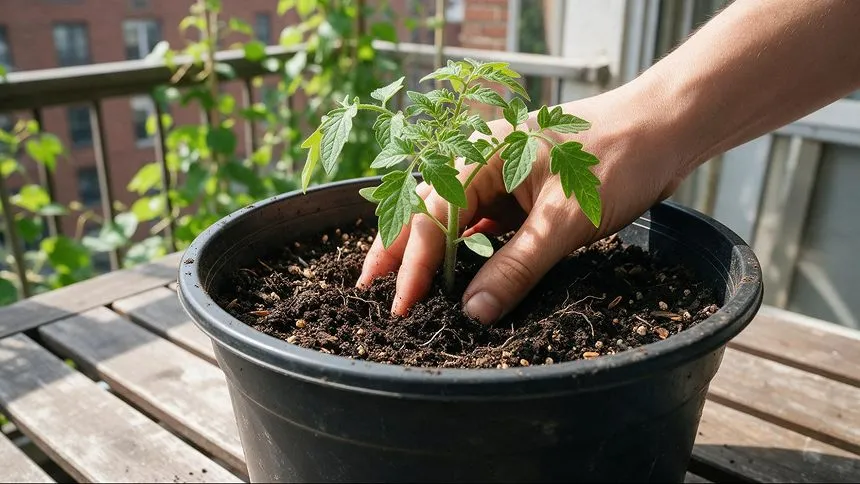
Step 4: Remove the lower leaves from your tomato seedlings. Bury atleast 2/3rd of the stem in the soil so that it can establish a stronger root system.
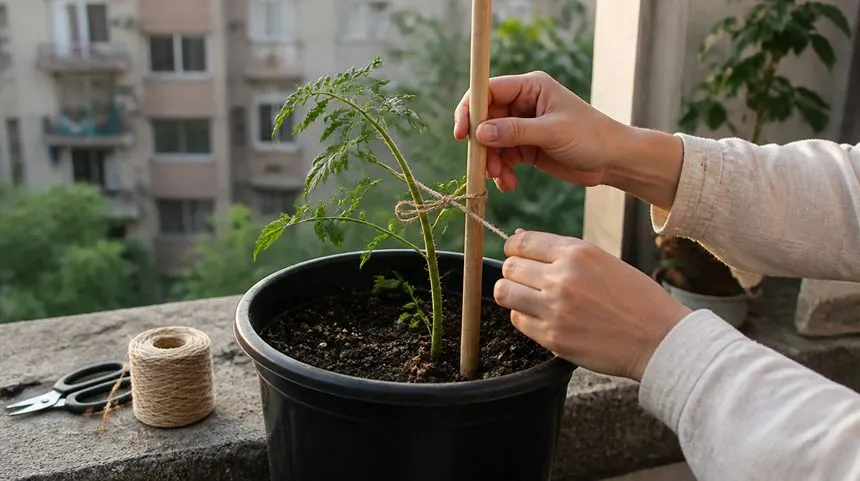
Step 5: Use a proper support system right from the beginning. Tie the main stem to the stake using garden tape. This prevents root damage. It is better to plant only one tomato plant.
Step 6: Move your pot to a sunny spot where it can get at least 6 hours of direct sunlight.
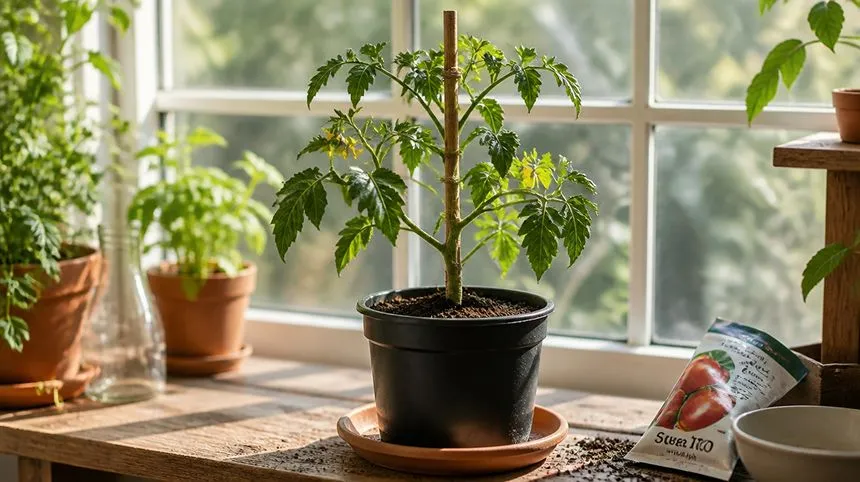
Step 7: Remember that potted soil dries out faster. Water your tomato plant deeply whenever the top 1-2 inches of the soil feels dry.
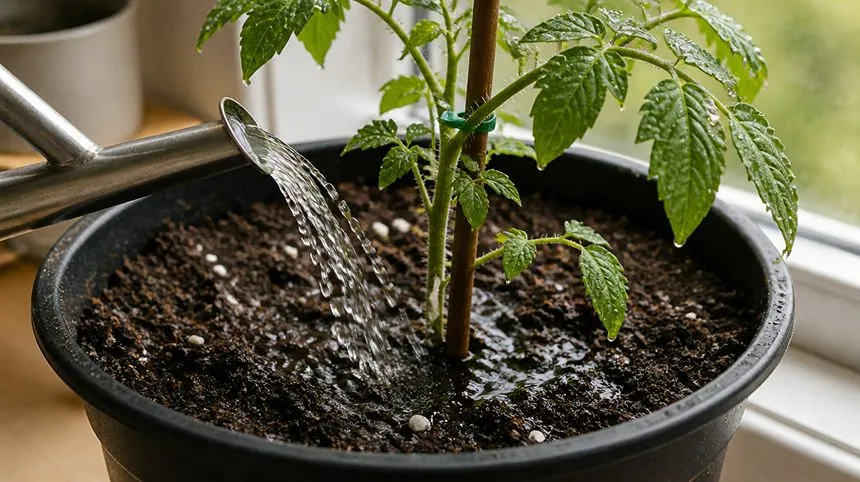
Step 8: Once it begins growing properly, start adding organic fertilizer every 2-3 weeks for proper growth and pest prevention.
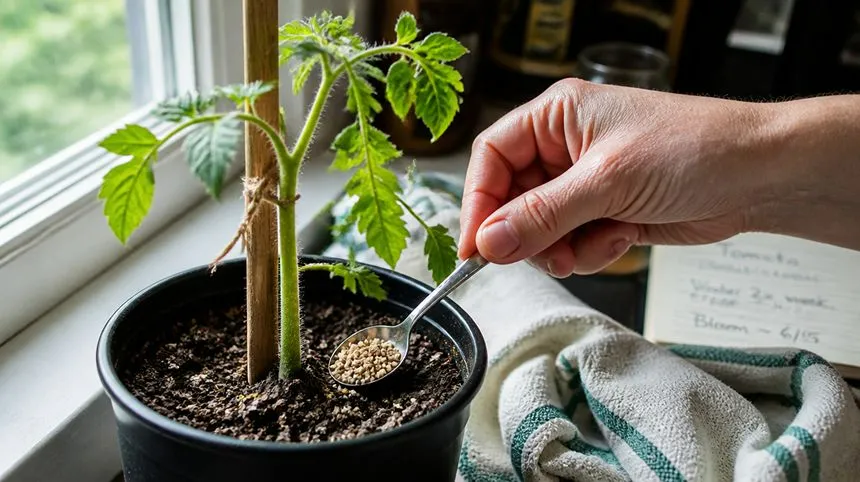
If you are excited to try out your own homegrown produce, you can have your own vegetable garden, and trust me, starting with tomatoes is an excellent decision; it is that easy to grow!
How to Grow Tomatoes in Pots Using Seeds?
To grow tomatoes in pots using seeds, prepare the seed tray and fill it with a seed starting mix. Sow the seeds and allow them to germinate. Give proper care and transplant them to large pots once they sprout properly.
Before you begin the growing process, make sure that the seeds are sourced from a quality place. You can either buy them from an online store or local shops near your home.
Step 1: Start by making a seed mixture. Take a medium-sized bowl, fill it with soil, add a little water, and start kneading till the mixture is moist but not overly soggy.
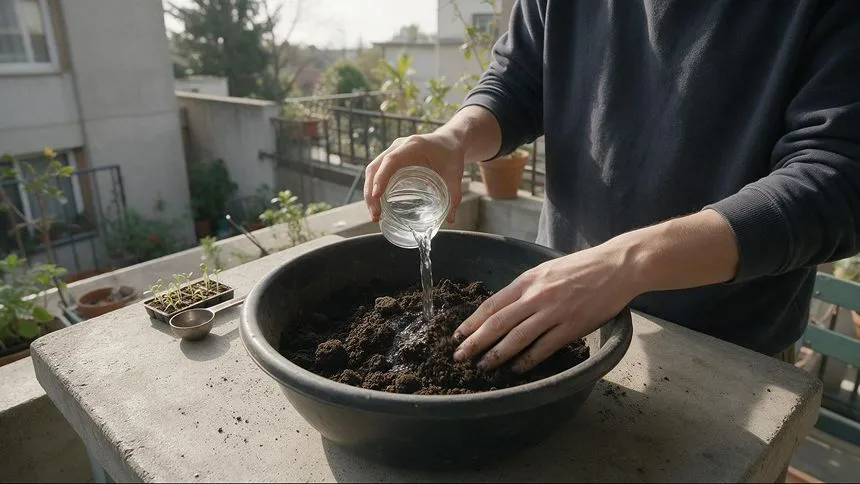
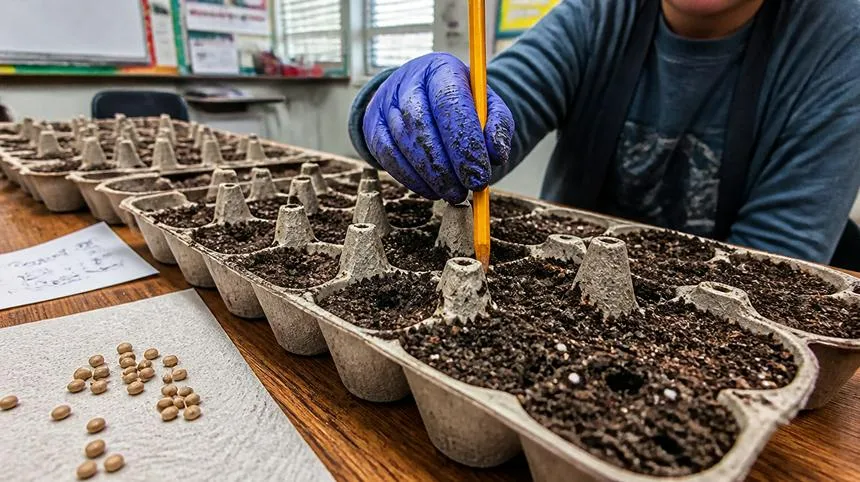
Step 2: You can use a seed tray, or simply an egg carton can also work.
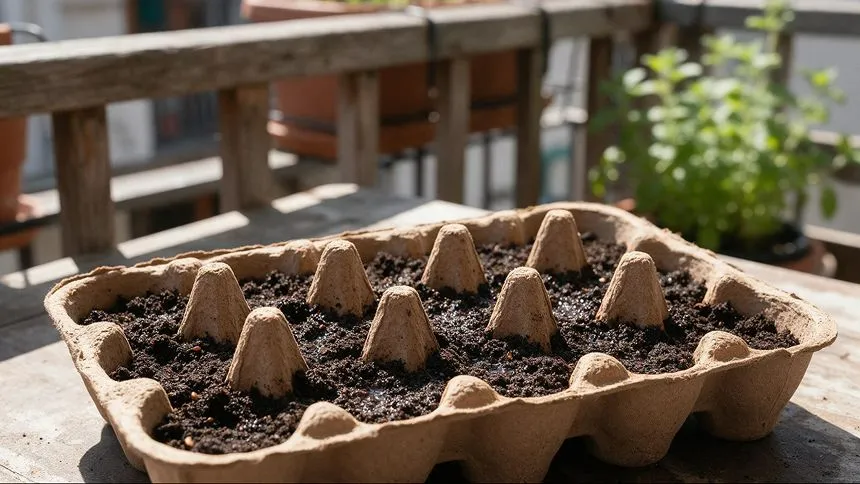
Step 3: Sow the seeds about ¼ inch deep. I use a straw or a pencil to make small holes in the mixture and drop only 2 seeds in each hole. Cover the seeds with the soil mix properly and allow them to germinate.
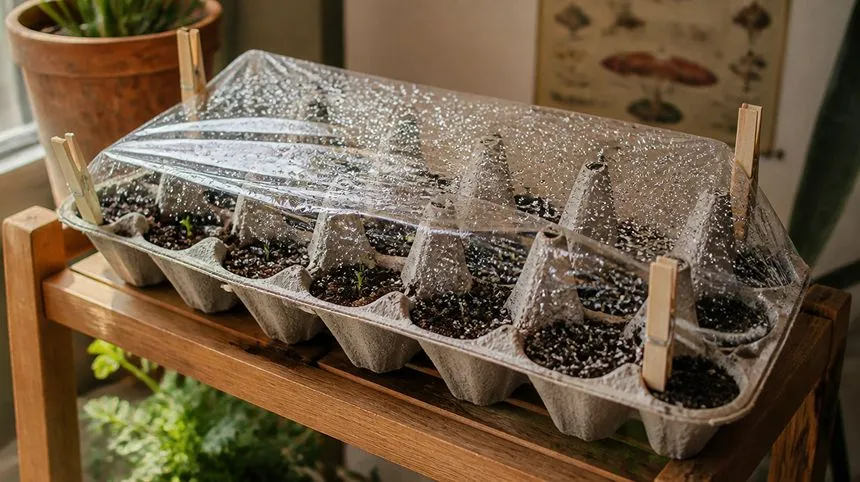
Step 4: Cover the tray with a thin plastic sheet to mimic humid weather. In about 3-15 days, you will notice tiny seedlings emerging.
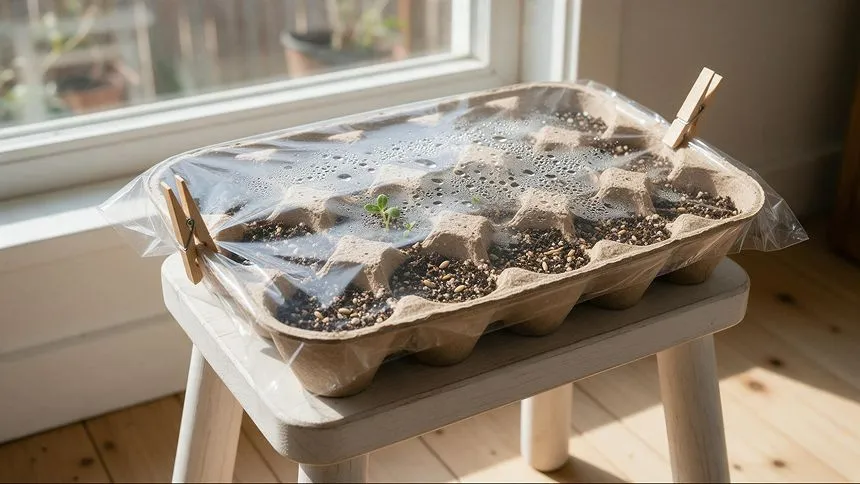
Step 5: As soon as I saw the first two leaves, I kept the tray in an area where it could get a little sunlight. Do not skip this step, or your seedling will turn leggy and might collapse.
Step 6: Once it is all grown up, it is now time to pot it up. Gently loosen the seed mix of your chosen seedling and scoop it out nicely. Do not damage the roots or stem.
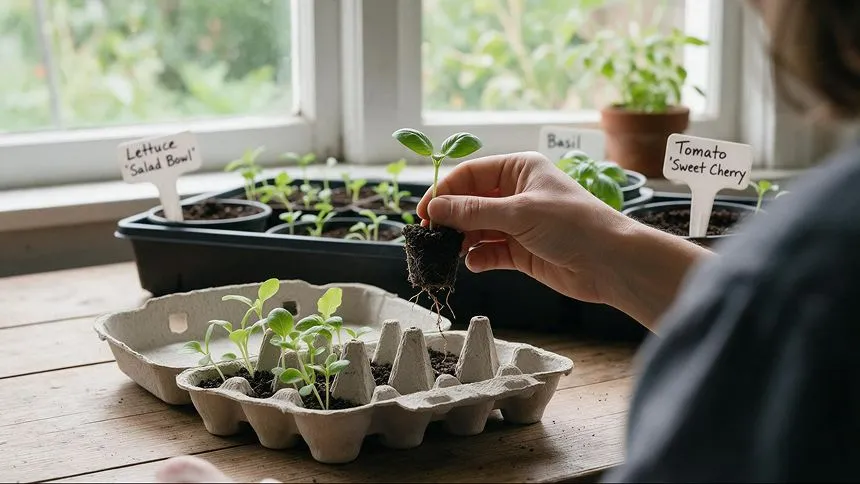
Step 7: Shake off all the extra soil mix and immediately put the seedling in a larger pot. Make sure it can hold around 5-7 gallons of soil.
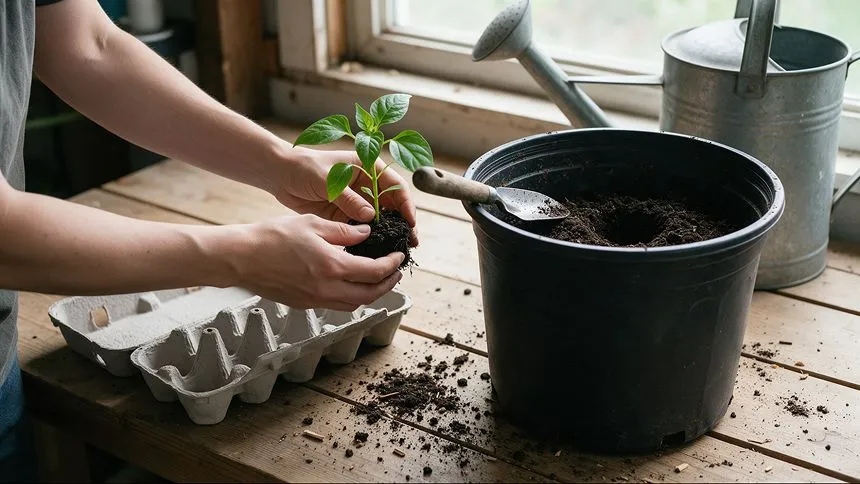
Step 8: Firm the soil around the roots by pressing gently. Water thoroughly so that the potting mixture settles down properly. Do not wet the leaves.
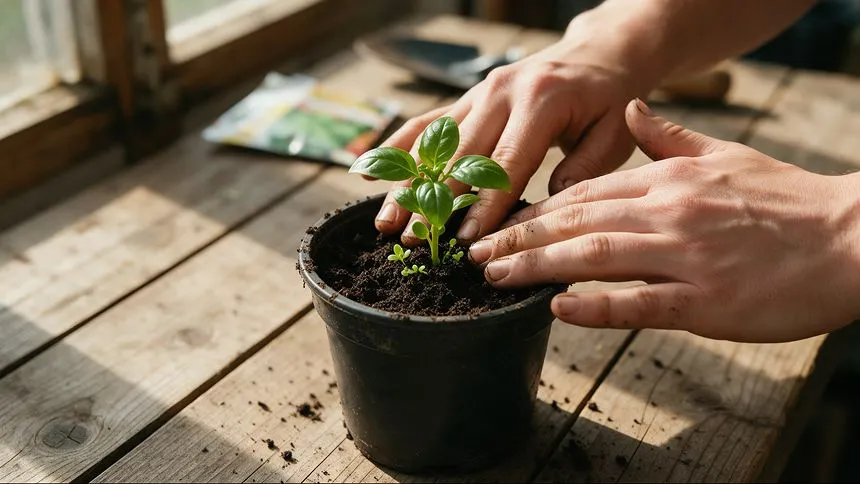
Step 9: Now, if the frost season has passed, you can keep the pot out in the garden. Keep it in a spot where it can get at least 6-8 hours of sunlight. Water it regularly and feed the plant with proper fertilizer.
Want to explore yet another cost-effective gardening hack? Check out how to plant tomato seeds from tomatoes and begin your edible gardening journey!
Ideal Growing Conditions Required to Grow Tomatoes in Pots
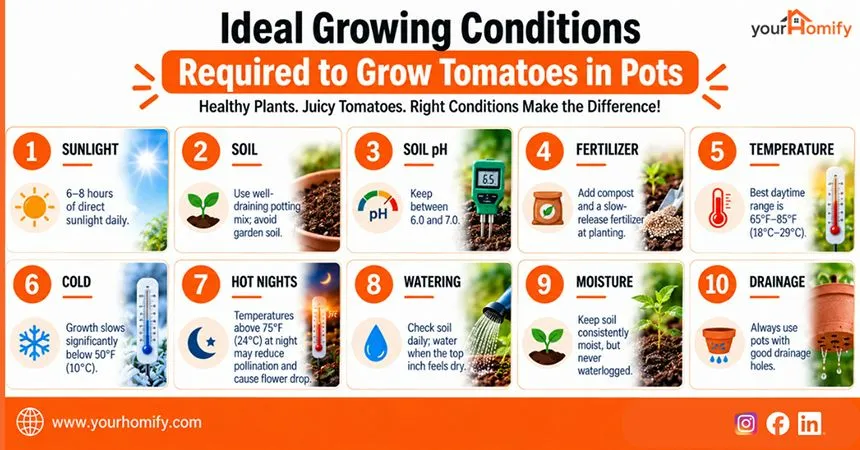
Tomatoes in pots need at least 6-8 hours of direct sunlight, well-draining soil with a pH between 6.0 and 7.0, consistent watering, and daytime temperatures between 65°F and 85°F to grow well and produce fruit.
Sunlight: Tomato plants need 6-8 hours of direct sun daily. I learned this the hard way after a few of my plants that got only 4 hours barely flowered. Planting them in a low-light spot? Add a grow light if growing indoors!
Soil: Skip regular garden soil. It compacts in pots and holds too much water, which leads to root rot. Use a good quality potting mix, ideally blended with compost or aged manure. Keep pH between 6.0 and 7.0. Mix in a slow-release fertilizer at planting time since tomatoes are heavy feeders.
Temperature: Grows best in daytime temperatures of 65°F-85°F. The growth slows down noticeably below 50°F. If the temp during the night is above 75°F, it can stop pollination and cause flowers to drop.
Watering: Pots dry out faster than garden soil, especially in summer. Check the top inch of soil daily and water when it feels dry, rather than following a fixed schedule. Aim for moist, not soggy. Drainage holes plus a saucer underneath make this easier to manage.
Care and Maintenance Tips For Planting Tomatoes in Pots
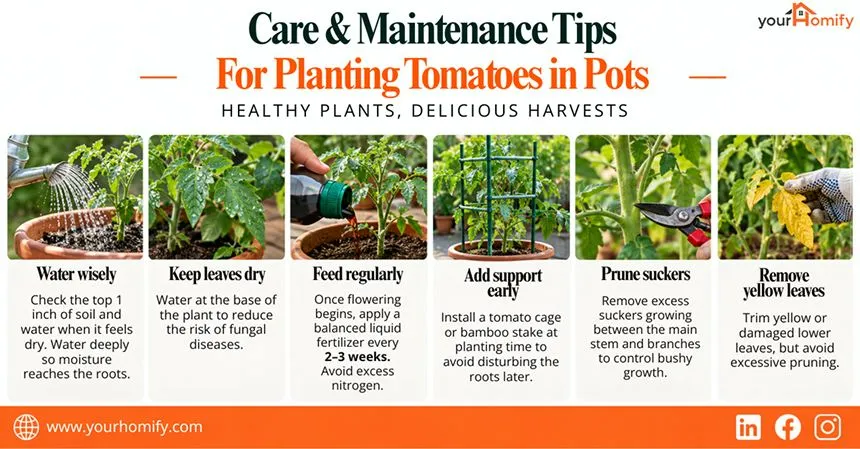
As per my research, caring for potted tomatoes mainly comes down to regular watering, feeding every 2-3 weeks, staking the plant early, pruning suckers, and keeping an eye out for pests. Get these right, and the rest pretty much takes care of itself.
- It is always better to check the soil before watering. Stick a finger about an inch into the soil, and if it’s dry, it’s time to water. What took me longer to figure out is that the water needs to actually reach the roots.
- Ensure that the damp foliage does not cause any fungal infection in the tomato plants. Try not to get the leaves wet while watering.
- Feeding is something I used to overdo as a beginner. I fed one of my early plants too much nitrogen, thinking it would grow faster, and I ended up with this huge leafy plant that barely gave me any tomatoes.
- Once the plant starts flowering, a balanced liquid fertilizer every 2-3 weeks is enough.
- Set up a cage or bamboo stake right at planting time, because doing it late means digging around roots that have already spread out. If you think that the plant is small and manageable, you are mistaken!
- Pinch off the suckers. Those little shoots that pop up between the main stem and the branches turn the plant into an unmanageable bush.
- Remove yellow leaves near the bottom since they’re the major reason for attracting pests. That said, I’ve learned not to get too aggressive with pruning.
When is the Right Time to Harvest Tomato Plants?
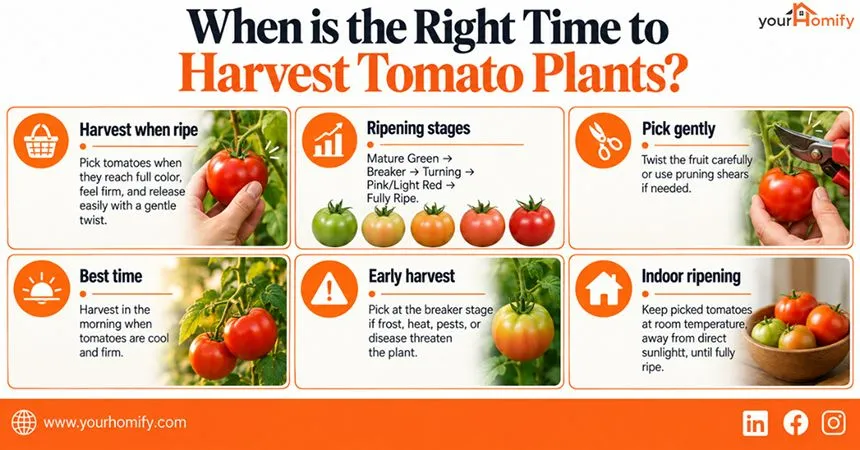
The right time to harvest tomatoes is when they’ve reached their full color, feel slightly firm, and come off the vine with a light twist rather than a forced pluck.
Now, I know it’s easy to get impatient and pick too early! So, here are the different ripening stages you need to learn first.
- Mature Green – Full size, still solid green, not ready yet.
- Breaker Stage – Just starting to show a blush pink color at the blossom end.
- Turning Pink – Color is spreading across 10-30% of the fruit.
- Pink to Light Red – Color covering most of the fruit.
- Fully Ripe – The color is fully developed, and the fruit is firm.
How to Pick
Hold the fruit gently and twist rather than pulling straight down, so you don’t damage the stem or the plant. Use pruning shears if a tomato feels stubborn instead of forcing it off. I usually pick them in the morning when the fruit is cool and firm. Yes! Afternoon heat makes tomatoes more prone to bruising.
You can also harvest tomatoes in the breaker stage if frost is expected. This also works for plants under stress from heat, pests, or disease.
I simply allow them to ripen indoors on my kitchen countertop, away from direct sun. It won’t taste exactly like vine-ripened, but it’s better than losing the harvest to cold or a dying plant, right?
How to Store Tomatoes After Harvesting?
Store ripe tomatoes at room temperature, away from direct sunlight, and use within a week. Refrigeration dulls the flavor and texture, so it’s best avoided unless the tomatoes are overripe.
- Ripe Tomatoes: Keep at room temperature, stem side down. You can keep them on a countertop or on a plate or breathable basket. Do not stack them; spread them in a single layer. It is best to eat these within 5-7 days for peak flavor.
- Unripe Tomatoes: Store at room temperature in a single layer, away from sunlight. Want to know a hack? Place them near a banana to speed up ripening because of the ethylene gas.
If you are planning to store a tomato harvest for the long term, you can freeze them with their skin on for later use. Roasting and freezing in batches works well if you’re dealing with a big harvest.
Canning is another option for people who want tomatoes to last through the off-season.
Common Pest Problems and Fixes
Blossom end rot, dark ring spots, water patches, or no fruit development are some common pest problems and diseases that usually affect tomato plants if not monitored properly!
| Pest/ Disease Name | Symptom | Solution |
Blossom End Rot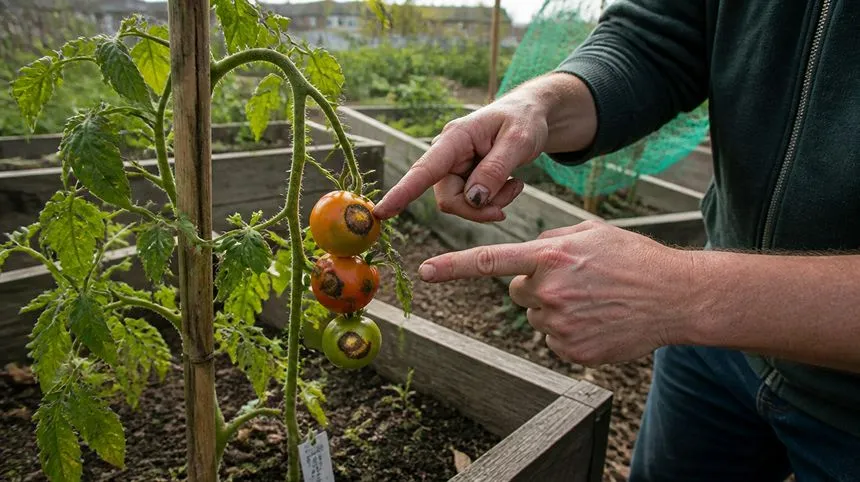 | Spotted black sunken patches on the end part of the fruit? That’s blossom end rot. It may look like a disease, but this happens due to calcium deficiency. | Try adding a calcium-based fertilizer. Water properly so that the chemical can spread evenly. |
No Fruit Development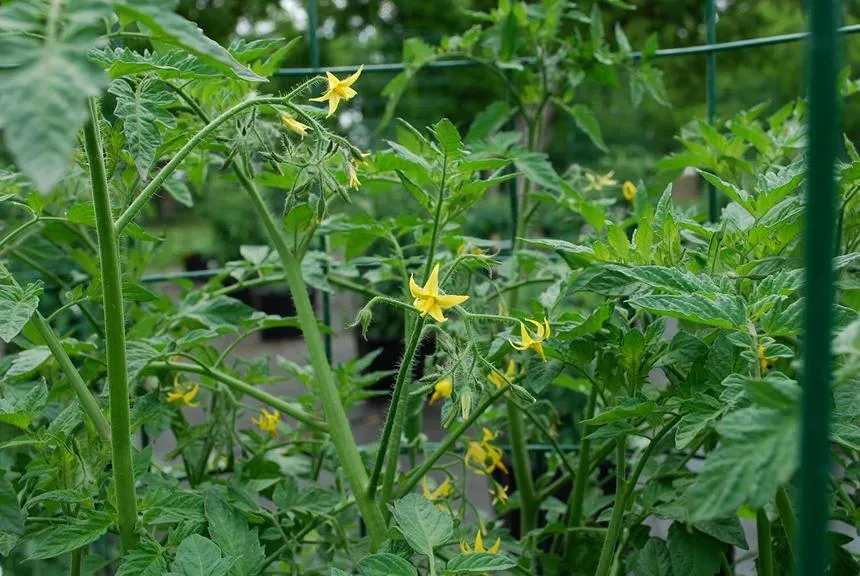 | My tomato plant was dropping flowers before it set any fruit, and temperature is the main reason for it. | Lack of pollination, drought, or root stress can also be some of the reasons contributing to it. Fix these, and you are good to go. |
Dark Ringed Spots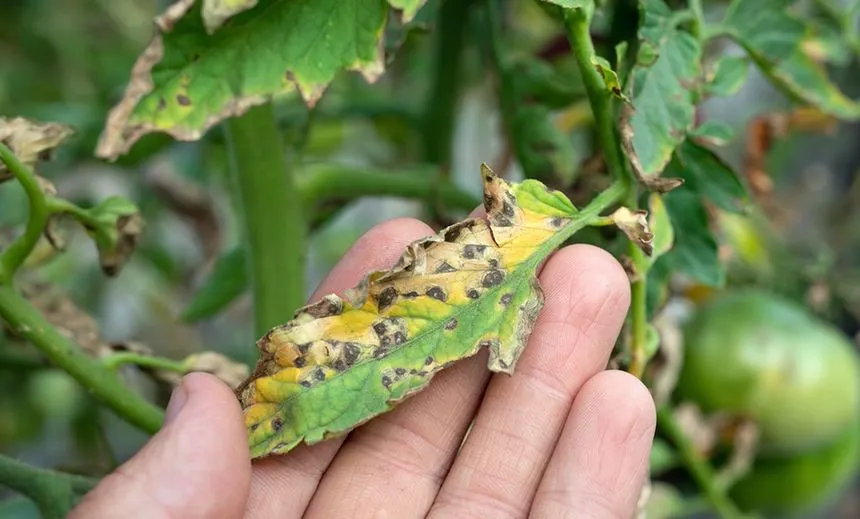 | Ever noticed dark ringed spots on the lower leaves and stems? They are signs of early blight. | Do not wet the leaves when watering the plant. Use a proper fungicide, and you are good to go! |
Water-Soaked Patches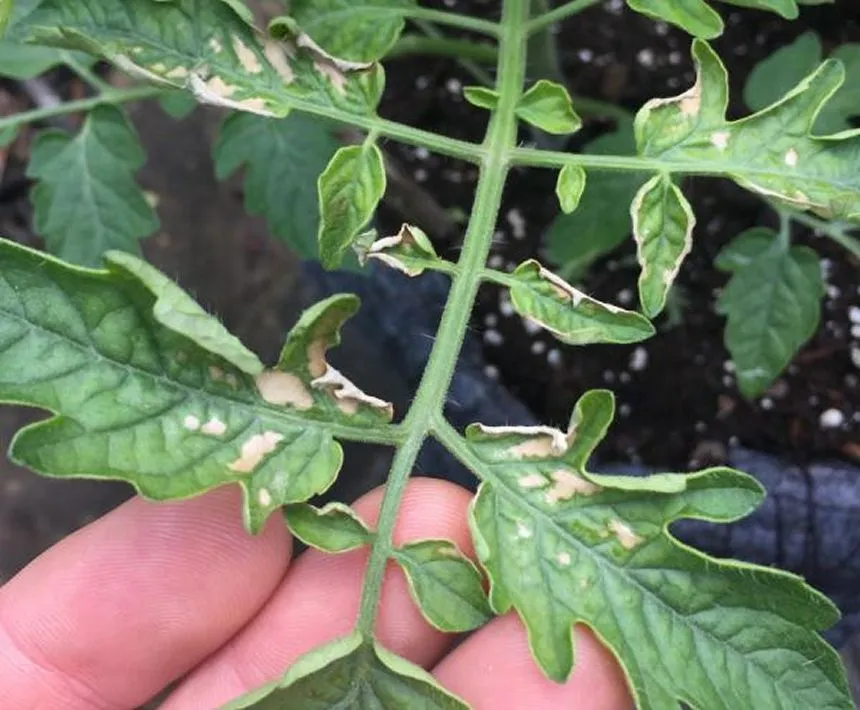 | Water-soaked patches and lesions on stems or foliage are clear signs of late blight. It is caused by a pathogen. This spreads quickly under windy weather conditions. | Isolate the plant as soon as you notice the signs and use a good, copper-based fungicide. |
Final Words
If there’s one thing container tomatoes teach you, it’s that good things really can grow in small spaces. All it takes is the right pot, a bit of sunlight, and monitoring the plant consistently. You do not need to be perfect; regular checking is enough!
Once you taste a tomato you grew yourself, store-bought ones just never will hit the same. Be sure to start small, pick a variety that suits your area, and don’t stress if your first batch isn’t perfect.
FAQs
What do coffee grounds do for tomato plants?
Coffee grounds help provide nutrition to the soil. It improves the soil texture and also enhances the water-holding capacity.
How many tomato plants can I put in one container?
You should ideally plant only one tomato plant per container. This ensures healthy growth and successful harvest.
What should never be planted near tomatoes?
Potatoes, cabbage, broccoli, or walnut trees should never be planted near tomato plants. All of these are heavy feeders and can stunt the growth of tomato plants.
Should tomatoes in pots be watered every day?
If you are growing tomatoes in a pot, they need regular watering, as they can dry out easily.
- How to grow tomatoes – BBC Gardeners World Magazine
- Growing Tomatoes in Containers – IOWA State University
Tomato Varieties: 10 Best Types for Every Garden
[…] from being heat-resistant, they are also resistant to Fusarium wilt, which is a common disease in growing tomatoes. They have a bushy and upright growth habit and take 60-70 days to mature before they are ready to […]