
Turmeric is one of the most commonly grown and used spices worldwide. It has a pepper-like flavour that enhances the taste of any meal. Apart from that, turmeric is also extremely good for the gut and health; with its antiseptic properties, it not only nourishes but also heals, which makes it a popular choice for daily consumption.
While there are various benefits of growing this magical spice, planting it indoors is considered slightly tricky to grow in pots due to its particular growth requirements.
Come along and explore how to grow turmeric plants indoors for a hassle-free houseplant that produces a good yield of turmeric all year.
Quick answer
The turmeric plant is a tropical plant that can be easily planted indoors using rhizomes. Take a few rhizome pieces and place them 2 inches deep in a well-draining soil with organic matter, with at least 12 inches of distance between all the rhizomes.
These warm-season crops need bright, indirect sunlight and high humidity to survive; hence, make sure the growing requirements are met properly.
What is Turmeric? An Age-Old Culinary Spice

Botanically known as Curcuma longa, turmeric is a rhizomatous perennial that is popularly used as a spice in cooking. Part of the ginger family, turmeric is extracted from the main part of the root and is ground into a thin, powdery form and used as a medicinal plant.
Native to the regions of India and Southeast Asia, turmeric is known to have an earthy taste with peppery, bitter undertones and a woody fragrance. While turmeric also plays a significant role in taste, the rich orange-yellow hue also adds a rich colour to the dishes, which prevents them from looking bland, especially in Southeast Asian culture.
As we move further, I will share my personal tips to grow turmeric indoors, both for hot and cold climates, with a simple care guide.
What are the Growing Conditions to Grow Turmeric Indoors?

Turmeric is a tropical plant that has specific light and temperature requirements, which can be a little tricky to replicate.
Take a look at the growing conditions for growing turmeric indoors:
| Sunlight | Bright, indirect sunlight |
| Planting Time | Early spring |
| Container | 12 inches deep |
| Temperature | 12°C – 29°C |
| Soil | Well-draining soil with slightly acidic pH |
| Fertiliser | Potassium-rich fertiliser (heavy feeders) |
How to Grow Turmeric Indoors? Step-by-Step Guide
The turmeric plant thrives in well-draining soil and indirect sunlight. These warm-season plants cannot survive frost and need humidity to survive.
Take a look at these simple growing guides of the turmeric plant:
- Take some fresh turmeric rhizomes and cut them into small pieces. Dry these pieces for 2-3 days, as moisture can lead to root rot while planting, which will damage the yield.
- Now soak them in water and take a well-draining, 12-inch-deep pot with good enough drainage holes, as turmeric cannot survive waterlogged soil.
- Fill up the soil with a well-draining soil mix that has a slightly acidic pH and place the turmeric rhizomes carefully with sprouted buds facing upwards.
- Make sure you place these rhizomes 12 inches apart to allow even growth and a good amount of air circulation.
- Place your plant near a southwest-facing window where it receives bright, indirect sunlight. Do not leave it in direct sunlight; it can scorch the leaves.
- Water the plants regularly, but make sure the soil is not waterlogged, as it can lead to root rot.
- Turmeric is a heavy feeder; feed the plant with a balanced fertiliser during the growing season.
- Since the turmeric plant loves humidity, make sure you place the plant in humid surroundings or keep a humidifier near it.
How to Care for Turmeric at Home? A Seasonal Guide
Mainly, the turmeric plant’s care depends on the area of your planting. In warmer seasons, the plant should be planted as early as early spring, while the colder zones require you to wait until late spring until the soil warms up to avoid root shock.
Take a look at this essential care guide for turmeric that will help you manage the plant better:
Sunlight
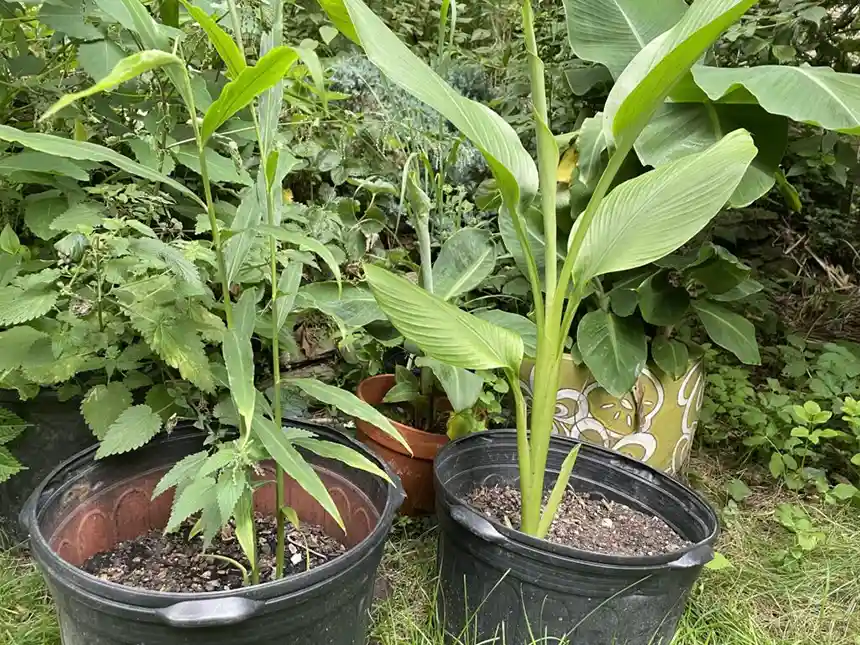
Image description
Turmeric is a warm-season plant and thrives in bright, indirect sunlight, and direct sun exposure can scorch its leaves. If planting indoors, place it near a southwest-facing window for the best results.
- Turmeric is a warm-season crop, and it likes a good amount of sunlight but not direct sun exposure.
- It thrives in bright, indirect sunlight; hence, you can place it near a southwest-facing window for the best results.
- Exposing it to direct sunlight can lead the leaves to burn.
Water
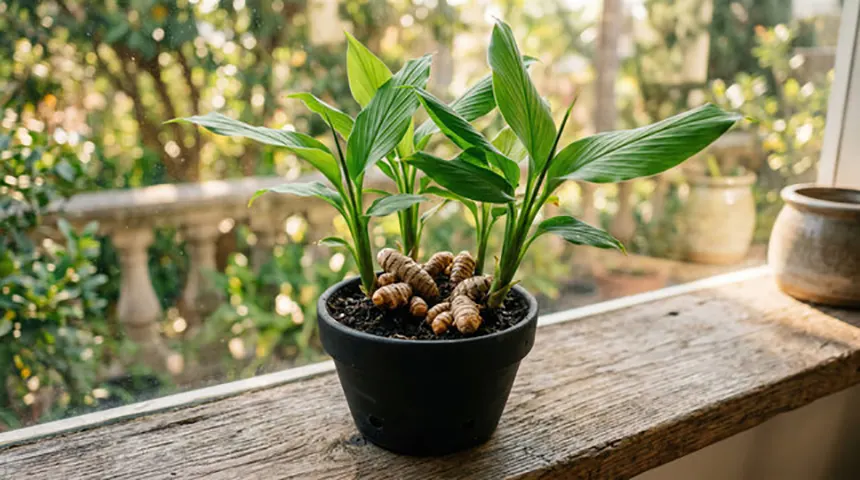
Image description
This tropical plant loves moisture and is not drought-tolerant. Hence, while planting, make sure the plant is watered regularly, but avoid overwatering, as it can lead to root rot.
- The turmeric plant loves moisture and cannot tolerate dry conditions at all.
- Even while planting, the soil is evenly moist for the best results; hence, the plant must be watered once a week.
- Although, make sure the soil is not waterlogged, and do not overwater, as it can lead to root rot.
Temperature and Humidity
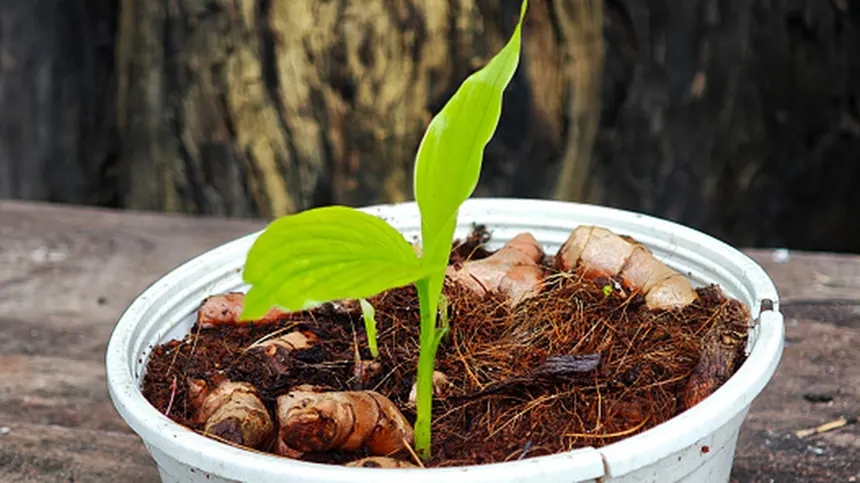
Image description
The turmeric plant thrives in high humidity and temperatures between 68 and 86°F. Although not cold-tolerant, turmeric should be protected from cold temperatures and placed in an area with high humidity.
- The turmeric plant thrives in high humidity and when the temperature is maintained between 68 and 86°F.
- This plant is not cold-tolerant and hence should be protected from cold temperatures.
- Proper humidity should be maintained if planted indoors by placing a pebble tray with water near the pot.
Growing ginger, besides the turmeric plant, is really beneficial, as the ginger plant has the same growing habit and does not compete for nutrients.
How to Harvest the Turmeric Plant?

The most exciting part about learning how to grow turmeric at home is harvesting, which is ideally best done 7-10 months after planting. It is important to harvest at the right time to retain their flavour and colour at their maximum potential.
Take a look at the harvesting turmeric plant:
- Check when the leaves have started to dry and turn yellow; it is time to harvest the turmeric plant.
- Take a garden fork and dig up the roots carefully and separate them individually.
- Remove the excess soil from the rhizomes and store them in an airtight container until use.
- Wash them thoroughly before storing them, and if you are planning to use them in a powder form, sun-dry them for a few days and grind them into a thin powder.
- Store it in an airtight container as well and use it as needed.
How to Propagate the Turmeric Plant?
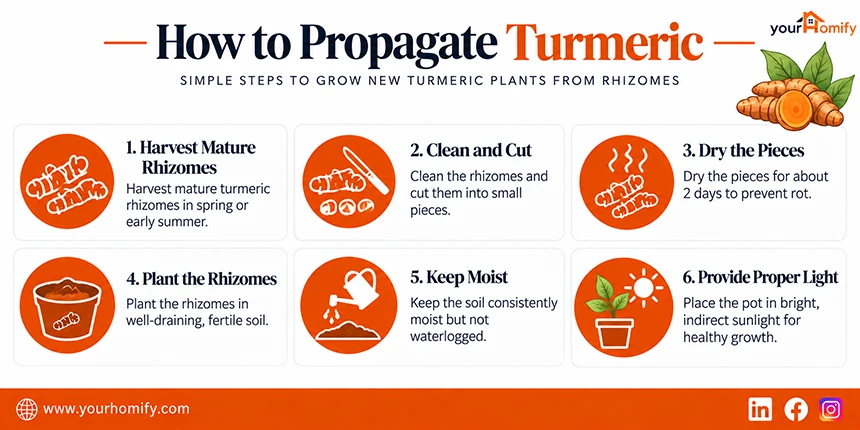
Propagating is the best way to have an endless supply of turmeric all year long. Since they do not grow through seeds but through rhizomes, you can use the harvested turmeric for the best results.
Here are the steps I use to propagate my turmeric plant.
- In spring or early summer, take your turmeric plant and dig it up to harvest the crop.
- Now take these rhizomes, remove excess soil and cut them into small pieces.
- Dry them for at least 2 days to avoid moisture rot, and then dip them in water exactly before planting them to encourage sprouting.
- Take a pot and fill it up with a well-draining soil mix, and place these rhizomes in it.
- Make sure the soil is evenly moist, as the turmeric plant likes consistent moisture.
- Now, similar to the planting guide, place the plant in the bright, indirect sunlight with consistent moisture for the best results.
The difference between propagation and planting is that a plant is propagated through the parts of the already existing plants, and initial planting can be done using commercial roots or rhizomes too.
Concluding Remarks
Turmeric is not only a spice but also a healthy herb that has benefits beyond its culinary uses. When I first planted the turmeric indoors, it felt like a lot of work to replicate the real temperature and growing requirements, but with every step, the process became rather simple.
Make sure the plant receives appropriate sunlight and is properly placed in a large pot that has enough drainage holes to prevent root rot.
FAQs
How long does it take to grow turmeric indoors?
It takes almost 7-10 months to grow turmeric before harvesting it for use.
What are the common problems with the turmeric plant?
The most common problem with the turmeric plant is root rot, which is caused by overwatering; hence, water appropriately.
What is the best time to plant the turmeric plant?
The best time to plant the turmeric plant is early spring when the danger of frost has passed.
When should one propagate the turmeric plant?
Turmeric is ideally propagated 8-10 hours after planting.
- Curcuma longa – NC State Extension
- 2026 Herb of the Year: Turmeric– PennState Extension