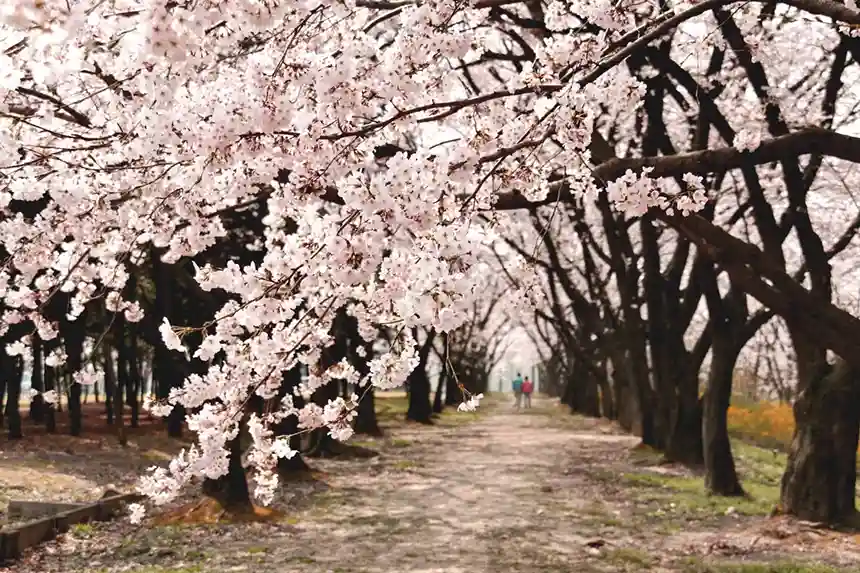
Every spring, stunning white and pink flowers cover the trees, especially in Japan, and attract thousands of viewers worldwide. That’s cherry blossom! They are used for both decor and gifting. But what do cherry blossoms symbolize?
Cherry blossoms are well-known for their breathtaking appearance, but their true power lies in their symbolism. From representing the fleeting nature of life to conveying emotions like renewal, hope, and fresh beginnings, these flowers carry a message that anyone can relate to.
This article explores the symbolism of the bloom in detail. Let us learn what values it holds across cultures, its meaning by color, and some famous cherry tree varieties.
Quick Answer:
The cherry blossom tree typically symbolizes renewal, fresh beginnings, and the arrival of spring. They are known as “sakura” in Japan, representing the transient nature of life. In China, the flower represents feminine beauty and love, whereas in Korea it signifies purity and simplicity.
What Do Cherry Blossoms Symbolize?
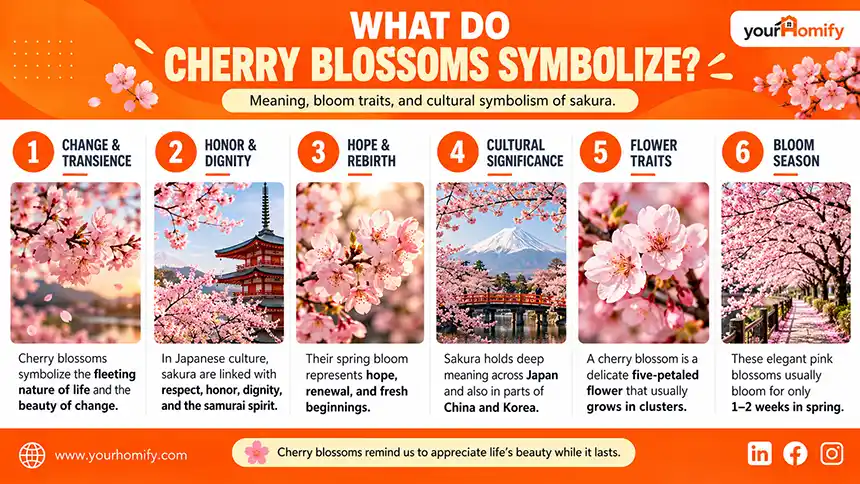
Cherry blossoms represent a powerful lesson of welcoming change. It is one of the most popular Japanese flowers, and the word “Sakura” is deeply rooted in the culture; the fallen leaves or the blossoms represent the short but colorful life of the samurai. They indicate respect, honor, and dignity.
A cherry blossom is a five-petaled flat flower that grows in clusters. It usually blooms for 1-2 weeks in spring and features elegant pink blossoms.
Your trip to Japan is incomplete if you haven’t seen cherry blossoms. But what do cherry blossoms symbolize? Carrying deep cultural values, especially in Japan, China, and Korea. This pink flower represents the transient nature of life. The brief blooming period of the flower symbolizes hope, rebirth, and fresh beginnings.
Did You Know?
According to the BBC United Kingdom, there are around 1 million cherry trees in Japan, and they hold deep cultural significance.
Cherry Blossom Meaning Across Cultures (Japan, China, and Korea)
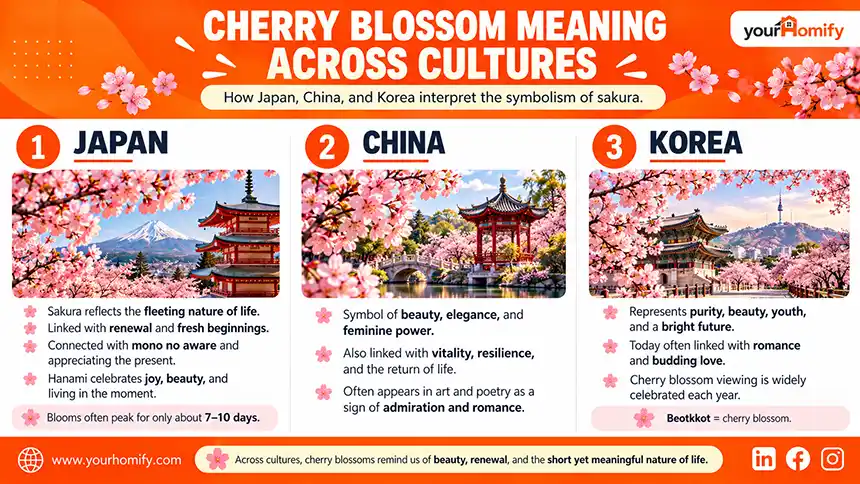
Cherry blossom meaning varies across different cultures, reflecting its significance in historical roots and cultural philosophies.
Let us quickly explore what the bloom symbolizes in different countries and cultures.
1. Cherry Blossom Meaning in Japan: Impermanence and Renewal
- The cherry blossom flower (sakura) represents the fleeting nature of life, rooted in the Buddhist concept of mono not aware. It has a short lifespan, and they typically last for only 7-10 days from the time they open to peak bloom.
- Sakura symbolizes renewal and new beginnings, which is why it is also known as the spring flower of Japan. These usually bloom when the Japanese school and fiscal year begin.
- Because of the fragile and short-lived nature of the species, Japanese people learned to appreciate the present moment and had an awareness of things passing.
- Hanami is a centuries-old tradition in Japan where people gather for a picnic or to celebrate special moments under the blooming trees. This symbolizes happiness, joy, and living in the moment.
2. Cherry Blossom Meaning in China: Femininity and Power
- In Chinese culture, the cherry flowers are linked with power, earthly beauty, and elegance. They hold a special place in traditions; hence, they are associated with the history and philosophy of China. Classical poets from the Tang Dynasty viewed the bloom as an emblem of elegance.
- Being one of the early-blooming flowers in China, cherry blossoms signify vitality, resilience, and the return of life after facing hardships.
- Chinese art and poetry mention the flowers as a metaphor for romantic love and admiration.
3. Cherry Blossom Meaning in Korea: Purity and Love
In Korea, cherry blossoms symbolize purity, beauty, a bright future, and gentle love. Today, distinct meanings are attached to the species and are used to celebrate different occasions. The abundance of Sakura trees across South Korea is due to the legacy of early 20th-century history.
- Unlike in Japan, there is no evidence of the bloom being used in Korean poems or artworks. However, contemporary K-pop culture has reshaped the meaning of the cherry blossom, and now it is freely associated with romance, dating, and budding love.
- In South Korea, the cherry blossom symbolizes innocence, youth, and pure beauty. The flower is also called beotkkot and holds high value, so much so that every year millions of people participate in beotkkot-gugyeong (cherry blossom viewing).
Cherry Blossom Symbolism in Love and Relationships
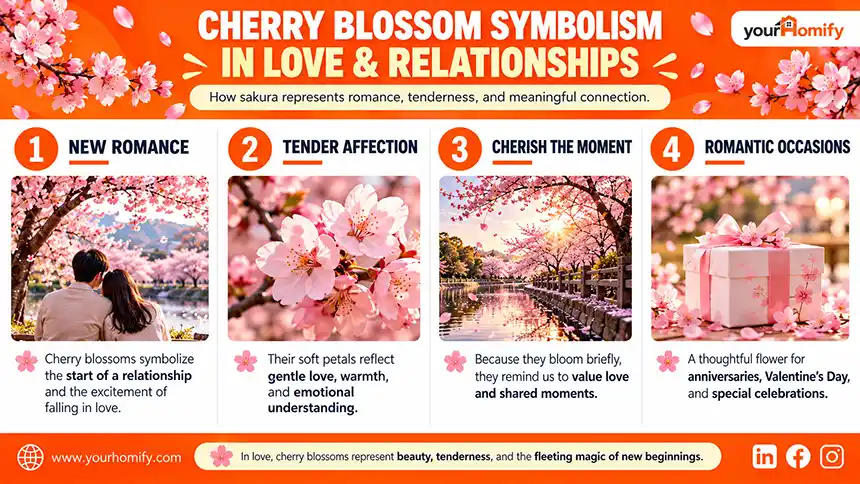
Cherry blossoms symbolize the beauty of falling in love, new beginnings, and budding relationships. Their delicate petals bloom for only a short time, which reminds us to cherish every moment with the people we love.
In relationships, these Japanese flowers represent the beginning of a new romance, the excitement of falling in love, or the chance to build a bond with understanding. The soft petals and stunning appearance of cherry blossoms symbolize tenderness and gentle affection. For a love that is comforting and not dramatic, what’s better than these flourishing pink sakura flowers?
I personally think these blossoms can make a thoughtful choice for anniversaries, Valentine’s Day, or any romantic celebration.
Significance of a Cherry Blossom in Spirituality
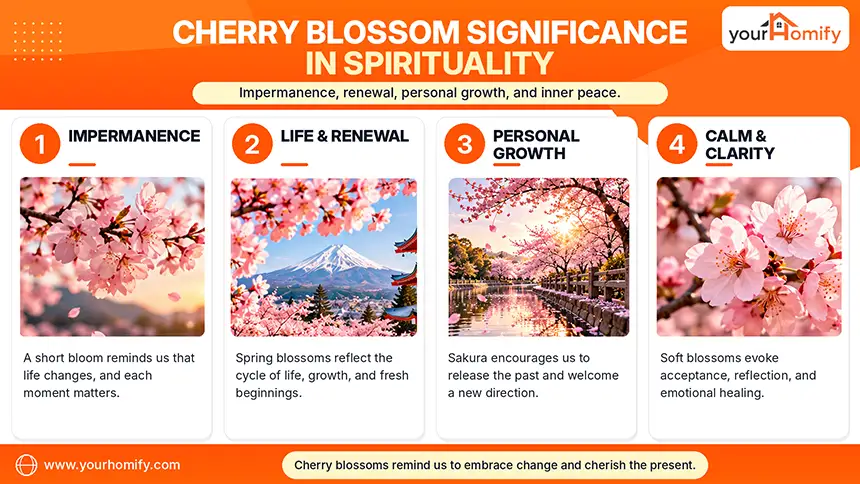
One of the most significant spiritual meanings of cherry blossoms is impermanence: the fact that nothing in life remains unchanged forever. Their brief flowering season represents the cycle of life from birth and growth to renewal.
The challenging growth season symbolizes the hardships and tough times one faces in life. Don’t you think that the elegant appearance of the flower encourages us to let go of outdated beliefs and welcome personal growth or a new approach to life?
Cherry blossom significance is calmness, acceptance, and emotional restoration. It is believed that the soft colors remind us of healing and rediscovering joy. In Buddhism, white sakura are especially used to convey inner clarity and a fresh spiritual beginning.
Sakura Flower Meaning by Color
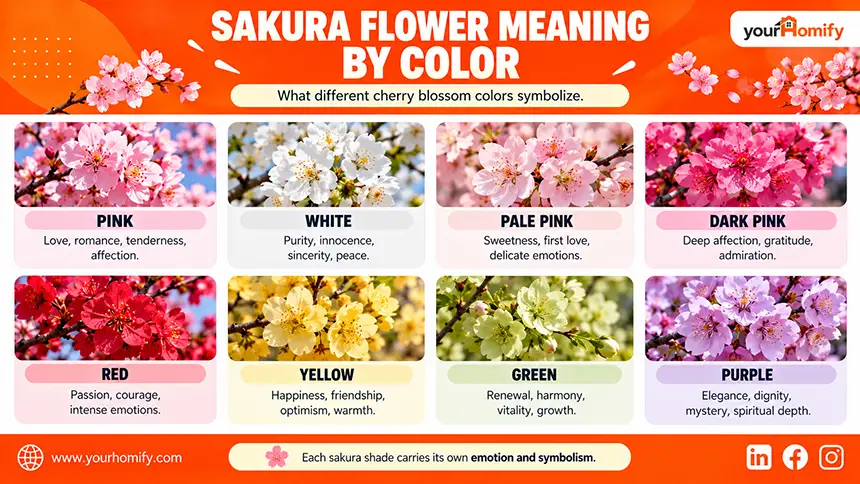
Every shade of Sakura has a different meaning. These are mostly used to represent emotions that you cannot express with words. From the innocence of white flowers to gentle affection symbolized by pink blossoms, each flower color holds its meaning.
| Cherry Blossom Color | Meaning and Symbolism |
| Pink | Love, romance, tenderness, femininity, affection |
| White | Purity, innocence, sincerity, peace |
| Pale Pink | Sweetness, first love, delicate emotions |
| Dark Pink | Deep affection, gratitude, admiration, appreciation |
| Red | Passion, intense emotions, courage, desire |
| Yellow | Happiness, friendship, optimism, warmth |
| Green | Renewal, harmony, vitality, growth, joy |
| Purple | Elegance, dignity, mystery, spiritual depth |
Different Varieties of Cherry Blossom in Japan
If you think all cherry blossoms in Japan look like fluffy pink clouds on dark brown stems, you are mistaken. Japan has over 300 to 600 varieties. Scroll to explore some stunning varieties of this species that make the Sakura season all the more unforgettable.
| Cherry Blossom Variety | Image | Description |
| Miharu Takizakura | 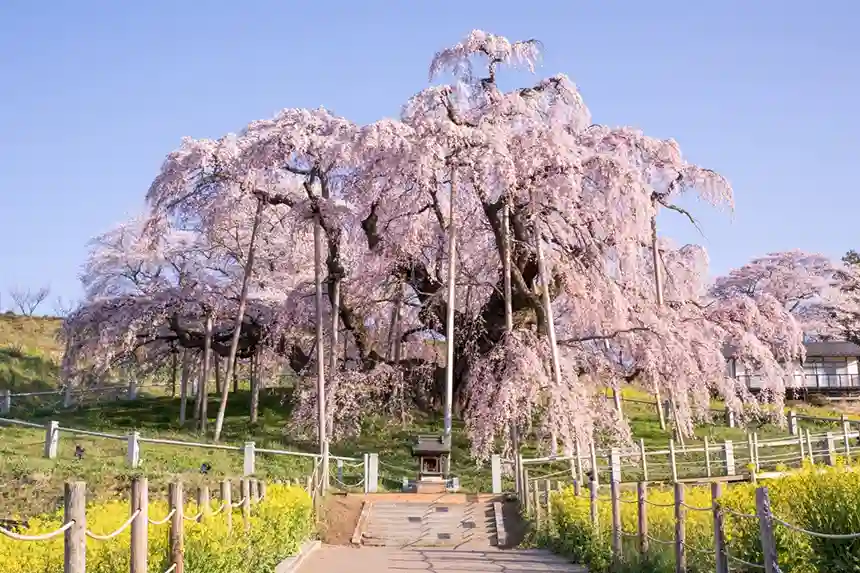 | Miharu Takizakura is considered the single most beautiful cherry tree in Japan. It is located in a town in central Fukushima and is said to be over a thousand years old. |
| Usuzumi Zakura | 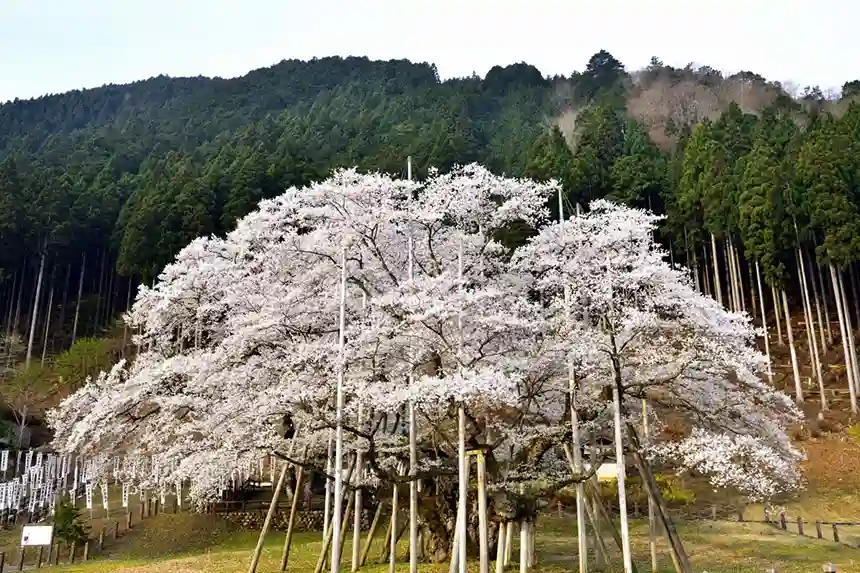 | This cherry blossom tree is 1500 years old and has been declared a natural monument of Japan. Many legends believe that it was planted by Emperor Keitai in the 6th century. |
| Jindai-Zakura | 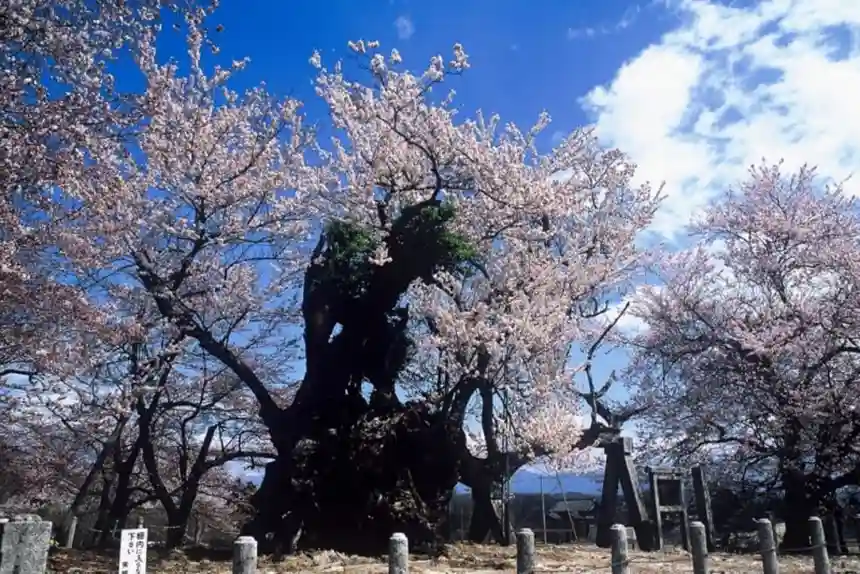 | The Jindai Zakura tree, located near Jisso-ji Temple in Hokuto City, is one of the oldest cherry tree varieties. It is between 1,800 and 2,000 years old. |
| Yoshino Cherry Tree | 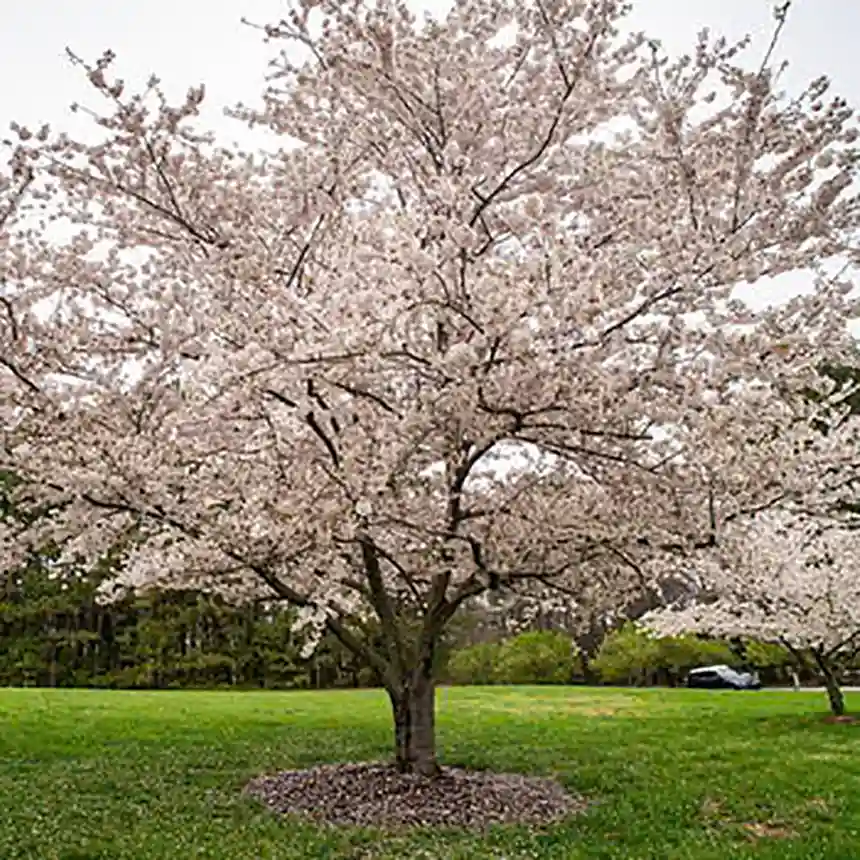 | The Yoshino tree features pale pink flowers that fade to white. It is one of the most widely planted cherry tree varieties. The almond-scented blossoms of the tree typically bloom during early spring. |
| Kwanzan Cherry Tree | 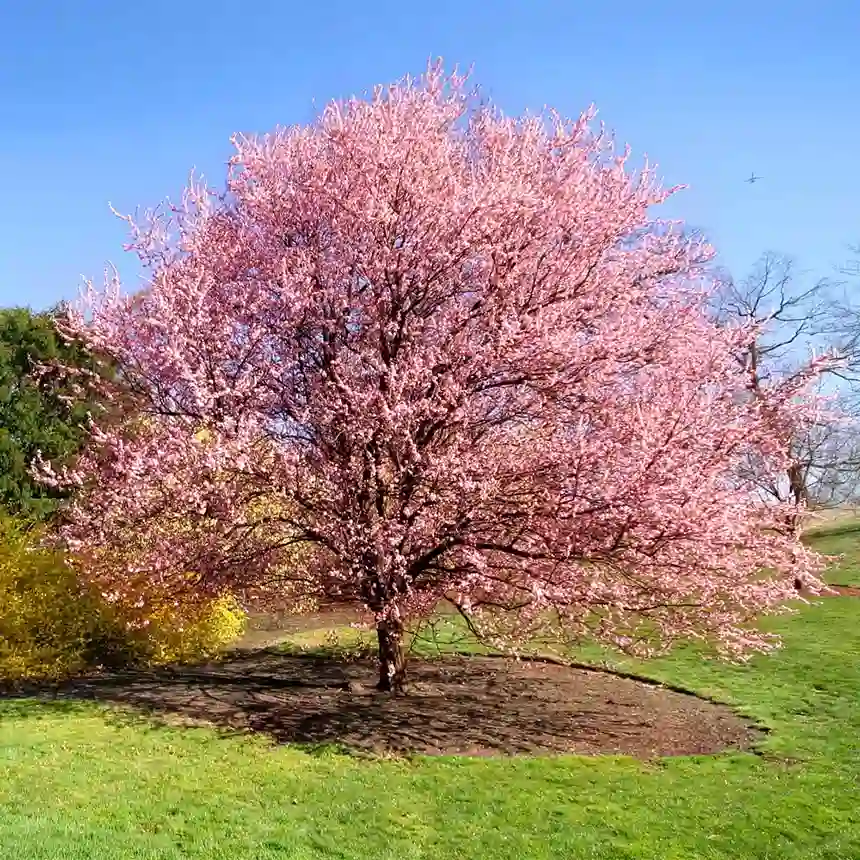 | Kwanzan Cherry Tree is a popular ornamental variety. It usually blooms during late spring, and the color-changing foliage is one of its most stunning features. The species has a short lifespan of around 15-20 years. |
Recommended Product
View all products
Do you also wish to transform your backyard into a spring dream garden? Meet the Yoshino Cherry Tree — nature's miracle tree with soft pink blooms. Also known as Prunus × yedoensis, this alluring ornamental pink tree is famous for its pink and white pastel blooms. The bushy canopy of the species creates a magical cloud-like effect, which instantly elevates the vibe of the entire space. The Yoshino Cherry Blossom is a fast-growing tree and does not demand any special attention; therefore, if you are a novice plant lover, this can be an ideal addition to your home garden. Now, before you bring this seasonal beauty home, it is important to learn more about the features and benefits of the genus. What are the Features and Benefits of the Yoshino Cherry Trees? The Yoshino Cherry tree (Prunus Yedoensis) is native to Japan. It is specifically found on the Honshu islands, and due to its visually appealing traits, it is now widely grown in parts of East Asia, including Korea and China. Known for its pastel pink and blissful white flowers, this is a deciduous tree having spectacular spring blooms. The dark brown branches and fragrant flowers combined make a breathtaking view. Growing up to 30–40 feet tall, the Cherry Yoshino is a medium-sized tree and holds a strong significance in Japanese culture. Apart from being visually appealing, it offers numerous benefits. Let's explore some of them in the following section. Once fully grown, it tends to add an aesthetic value to any landscape. When planted, it instantly becomes a focal attraction and enhances the vibe of the entire space. With a short blooming time, the tree has a deep-rooted importance in Japanese culture and is associated with the fleeting nature of life. During fall, the foliage of the genus mixes with the mulch and provides nutrients to the surrounding soil, making it a suitable mix for other plants to grow, hence supporting the ecosystem. The fragrant flowers of the Prunus Yedoensis Yoshino attract many beneficial pollinators like bees, butterflies, and birds. It is mostly used as a specimen tree and can be planted in backyards, front lawns, in large landscapes, or along street paths. Being more than just a pretty tree, the Yoshino Cherry tree for sale is regarded as a cultural gem. How to Grow and Care for a Yoshino Cherry Blossom Tree? Although many garden enthusiasts believe that the Yoshino Cherry Blossoms does not require much care, it surely needs certain basic growing conditions to grow luxuriantly. Given below is a detailed care guide that you shouldn't skip if you are planning to bring these pink trees to your home garden. Sunlight Exposure: The Yoshino Cherry flowering tree thrives in full sunlight. A minimum of 6–8 hours of bright direct light is needed to flourish. It can also grow in partial shade. Water Needs: Consistent watering is required during the initial growing stages of the plant to establish the root structure. Do not overwater and adjust the frequency of watering once the genus is fully grown. Soil Type: Grows best in well-draining loamy soil with a pH level between 6.0-7.0. Try adding compost or peat moss to the potting mix to enrich the mulch with nutrients. Hardiness Zone: Thrives in zone 5-8 USDA. Although it requires full sun exposure to grow, it can also flourish well in areas having frost temperatures. Fertilizer: A balanced NPK fertilizer in the ratio 12-12-12 works wonders for the Yoshino Cherry trees. Consider using a liquid solution during spring to encourage new growth. The optimal time to plant the Yoshino Flowering Cherry tree is during early spring or fall, and to maintain a healthy growth, be sure to plant them 20–30 feet apart from each other. Pruning is essential for this species to avoid any fungal disease or pest infestation. What is the Scientific Classification of the Flowering Yoshino Cherry Tree? Yoshino Cherry tree, commonly known as Somei Yoshino Cherry, Japanese Flowering Cherry, Somei Yoshino, and Tokyo Cherry, is a hybrid species. It is believed that it is a mix of Prunus speciosa as a father plant and Prunus itosakura as the mother plant. Now, if you are a curious botanist, scroll further and check out the scientific classification of the species. Taxonomic Overview of the Yoshino Flowering Cherry Tree Kingdom Plantae Phylum Magnoliophyta Class Magnoliopsida Order Rosales Family Rosaceae Subfamily Amygdaloideae Tribe Amygdaleae Genus Prunus Species (Botanical Name) Prunus Yedoensis Although the species is generally considered a safe option to plant, the seeds of the tree are slightly toxic to humans and pets and may cause gastroenteritis. Though the tree has some drawbacks, due to its ornamental value, the Somei Yoshino cherry, a widely popular cultivar, is now cultivated around the world. User Reviews and Ratings Review: Spotted this beautiful Yoshino Cherry tree at a garden today. It makes a beautiful canopy. Rating: ⭐⭐⭐⭐ Review: The white flowers look so stunning. It adds a peaceful and refreshing flair to my front lawn. Rating: ⭐⭐⭐⭐⭐ Review: I came across the mesmerizing Yoshino Weeping Cherry tree. The pink and white blooms look so surreal. Rating: ⭐⭐⭐⭐⭐ Review: Even during the fall, the variegated yellow-green leaves of the tree look beautiful. It instantly adds a warm, cozy vibe to the landscape. Rating: ⭐⭐⭐⭐⭐ Frequently Asked Questions How tall do Yoshino Cherries get? The Yoshino Cherry trees can typically grow up to 20–30 feet tall. Where should I plant a Yoshino Cherry tree? Although the species can tolerate frost temperatures, planting them in areas where they can get full sun exposure and the soil is permeable and fertile is the best option. Can you eat the cherries from a Yoshino Cherry tree? No, the cherries produced by the tree are inedible and can cause stomach issues if ingested. Do Yoshino Cherry trees have invasive roots? No, the Yoshino tree does not have an invasive root structure. What is the lifespan of a Yoshino Cherry tree? With proper care, the Cherry trees can have a lifespan of 15–20 years.
- Botanical Name: Prunus x yedoensis
- Zones: 5 – 8
Recommended Product
View all products
Expressing a tale of classic Japanese poetry, the Kwanzan cherry tree’s name refers to “bordering mountains”. Most famously, it is known as "Kanzan" in Western countries, while the original yet rarely used name is “Sekiyama”. The Kwanzan cherry tree is a charming Japanese-originated tree with pink flowers that comes under the rose family. Kwanzan is present in vibrant colors, orange-bronze leaves, and pink blossoms. If you are also thinking of growing a Kwanzan plant in your pot, then read this guide and get light over this beautiful creature! Kwanzan Cherry Tree: The Glory of a Tree From Mountains to Gardens Kwanzan Cherry tree is a sight for sore eyes. Natively, it is found in China, Japan, and Korea, while adapted as Kanzan in Western countries. In appearance, the Kwanzan flowering cherry tree can stand 15–25 feet tall with branches expanding around 15-20 feet and graft into a 4-foot wide trunk. Additionally, the blooming flower is about 2 inches in diameter and contains around 24 to 28 petals. From soft pink to orange and yellow, the Cherry Kwanzan shows a spectrum of colors in different seasons. Overall, this could be an ideal blossoming tree to have a sense of beauty in your wide yard. Taxonomic Insights of Kwanzan Flowering Cherry Tree The Kwanzan shows illustrative features, while it's belonging to the rose family adds a magnificent touch to it. Below are some taxonomic insights into the Kwanzan flowering cherry tree. Taxonomic Insights Kingdom Plantae Division Magnoliophyta Class Magnoliopsida Order Rosales Family Rosaceae (Rose family) Genus Prunus Species Prunus serrulata Botanical Name Prunus serrulata 'Kanzan' Having a proper taxonomic insight into any plant helps you understand the behavior during a plant’s adaptation. Moreover, you can provide the necessary conditions for growing it. Benefits of Having Cherry Kwanzan in your Lawn Cherry Kwanzan can offer you some amazing benefits that can transform your home garden into heaven. Move ahead to know about all of them. Aesthetic Addition: No doubt that the Kwanzan flowering cherry is loved for its aesthetic appearance. When you add it to your garden, the soft pink colour will spark as if the garden is blushing. Low Maintenance: Even though these are giant trees, they require minimal care and effort. During the initial days only, it needs prudence, whereas after growing completely it stays substantial. Natural Air Filter: Like any other perennial plant, the Kwanza cherry tree releases oxygen into the environment and eliminates toxic pollutants. It is even better to have in metro cities with increasing heating and pollution issues. Cultural Symbol: Hailing from the East Asian region, this conifer signifies some cultural beliefs. And so the people of Japan believe that a Kwanzan cherry symbolizes good fortune and a new beginning. A tree is always a boon to humans because it gives endless resources. Similarly, the Kwanzan cherry blossom provides several benefits. Drawbacks You Need to Know Before You Buy Kwanzan Cherry Tree Everything that presents you with hundreds of positive effects might come with some downsides. In the same way, you need to know the drawbacks of growing a Kwanzan cherry tree near your house. Cyanide Poisoning: Cyanide is a poisonous compound found in the Kanzan cherry and can harm any living being. Short Lifespan: This creature can live for 25 to 35 years, which is below average compared to other trees. Pest Attraction: The cherry blossoms have a pleasant smell. However, this fragrance can attract various insects, increasing the risk of pest-causing diseases. Considering these drawbacks will not hinder your thought to buy Kwanzan cherry tree. But you will be cautious and avoid the negative outcomes. Tracing the Ideal Conditions to Grow Kwanzan Cherry Tree The Kwanzan cherry tree is not a high-maintenance vegetal, which means just a few steps can adorn your garden by growing blushing flowers. The cherry Kwanzan plant requires a cool and humid temperature of around 45 degrees Fahrenheit. While, the warmer temperature can cause the early blooming of flowers. Due to its humid environment adaptations, this tree needs to be mulched in loamy soil with proper watering and sufficient sunlight. Similar to any other tree, timely nurturing with minerals and fertilizers will show suitable growth in the Kwanzan cherry tree. If you want to see pink blossoms on your lawn, grow your own Kwanzan cherry tree, but consider these necessary conditions before doing so. User Reviews and Ratings Review: I have grown this in my backyard and it looks so sophisticated. Rating: ⭐⭐⭐⭐⭐ Review: Waiting for the day when this little plant will grow into a house-warming tree. Ratings: ⭐⭐⭐⭐ Review: I ordered it years back, and I could not resist its mesmerizing beauty. That’s why I am ordering another for my restaurant. Ratings: ⭐⭐⭐⭐⭐ Review: This shade is my favorite spot, we click pictures whenever someone visits me. Ratings: ⭐⭐⭐⭐⭐ FAQs Can we grow the Kanzan cherry sapling in the US? Yes, you can grow the sapling between the hardiness zones 5a and 9b. Which is the Kwanzan cherry tree’s country? It originated in ancient Japan. Which country has the best cherry blossoms? Japan is the hub of the best cherry blossoms. How long does it take to grow a Kwanzan sapling? After five to seven years of nurturing, a Kwanzan sapling becomes fully mature.
- Mature Height: 30-40 ft.
- Mature Width: 30-40 ft.
Final Words
In conclusion, cherry blossoms are far more than just pretty flowers indicating the arrival of spring. This species reminds us that life is beautiful but short. I like how this bloom reminds us to live in the moment, welcome fresh beginnings, and cherish every stage of life.
It holds deep value across many Asian countries and has many stunning varieties. You can either use them for decoration purposes or for gifting. Go ahead and make your special days vibrant and fragrant.
FAQs
What does cherry blossom mean in love?
In love and relationships, cherry blossoms are known to symbolize budding admiration and the excitement of falling in love. They represent attachment and infatuation.
Is a cherry blossom good luck?
Yes, cherry blossoms are widely considered a symbol of good luck and prosperity. It is believed in many Asian cultures that the flower brings positive energy and fortune.
Which birth month flower is the cherry blossom?
Although not widely recognized, cherry blossoms are considered the birth month flower for March, alongside jonquils and daffodils.
Why do Japanese people love cherry blossoms?
Japanese people love cherry blossoms because they represent the arrival of spring, fresh beginnings, and the fleeting nature of life.
Which country has the most cherry blossoms?
Japan has the maximum number of cherry blossom trees growing. You will find them in gardens, parks, and along the roadside.
- History of the Cherry Trees—National Park Service, USA
- Cherry trees and their beautiful blossom—National History Museum, UK