Weeds in the lawn are a hassle to deal with, but having to keep an eye on your furry friends while taking care of this situation might seem like a daunting task. However, with proper research, technique, and the right material, dealing with common garden issues is easy.
Follow simple guidelines for weed killers that are safe for pets to avoid a health hazard. The key is to be alert at all times, keep an eye on your pets, and have first aid, along with emergency contacts (RSPCA National Call Centre – 0300 1234 999), on standby so that you can avoid a critical issue quickly.
Quick Answer:
Weed killers that are safe for pets are chosen for their active ingredients, no toxic chemicals, and a quick-drying process. Use natural and organic ingredients such as salt, acetic acid, and citric acid, etc. The weed application requires good weather, proper protective gear and tools, and keeping the furries away. Contact emergency vet services if they touch or consume it.
What Makes a Weed Killer Safe for Pets?
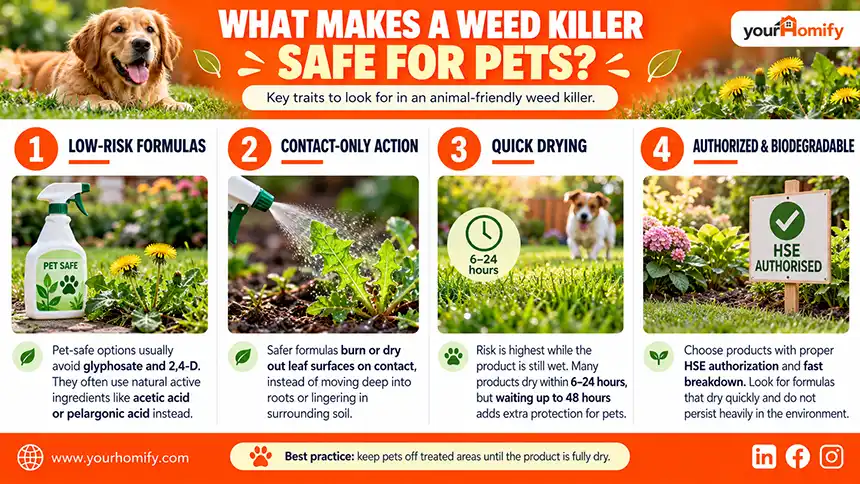
An animal friendly weed killer primarily contains natural active ingredients, lacks systemic or persistent toxins, and has a quick-drying process. Some factors to keep in mind while selecting a pet-safe weed killer are choosing a minimum pesticide-risk-free formula, contact-only action, rapid biodegradation and drying, and HSE authorization.
- Using Minimum Pesticide-Risk-Free Formulas: Traditional weed killers often rely on synthetic chemicals like glyphosate and 2,4-D. A study by ScienceDirect suggests that these chemicals are classified as probable carcinogens, which puts dogs at risk of canine lymphoma and bladder cancer, and can cause problems like skin irritation and toxic poisoning, along with some DNA damage. Pet-friendly weedkiller alternatives usually avoid these compounds and use natural ingredients such as acetic acid or pelargonic acid instead.
- Contact-only Action: Safe formulas work on contact by burning or dehydrating the outer layer of the plant leaves rather than moving deep into the root system or contaminating the surrounding soil permanently. This is especially important because cats and dogs constantly lick their paws and fur, chew on grass, and roll around in lawns.
- Rapid Biodegradation and Drying: According to the Environmental Protection Agency (EPA) in the United States, a professional lawn care company needs to follow the “safe after drying” guideline. This is so the wet product cannot be ingested directly by animals, which are at their highest risk during that time. It should get bound into the plant leaves and soil particles quickly, and the drying time for such a weed killer safe with pets is usually 6 to 24 hours, as per brand claims, but it is better to wait until 48 hours for extra protection.
- HSE Authorization: The UK Health and Safety Executive (HSE) has tightened regulations for what they consider safe regarding local wildlife and pets. This makes it compulsory to replace harsh synthetic chemicals with natural contact-based compounds and use essential oils, iron-based herbicides, or fatty acid soaps instead.
Best Pet-Friendly Weed Killers
Animals might absorb toxins through their paws and skin or by licking their body while grooming. Some of them even tend to consume plants that have been freshly sprayed with weed killer.
To eliminate weeds and avoid the impact of the chemicals on your pets, it is best to use natural and organic ingredients that are sustainable. Such weed killers don’t pollute water, disturb the natural habitat of plants and soil, or harm the surrounding environment.
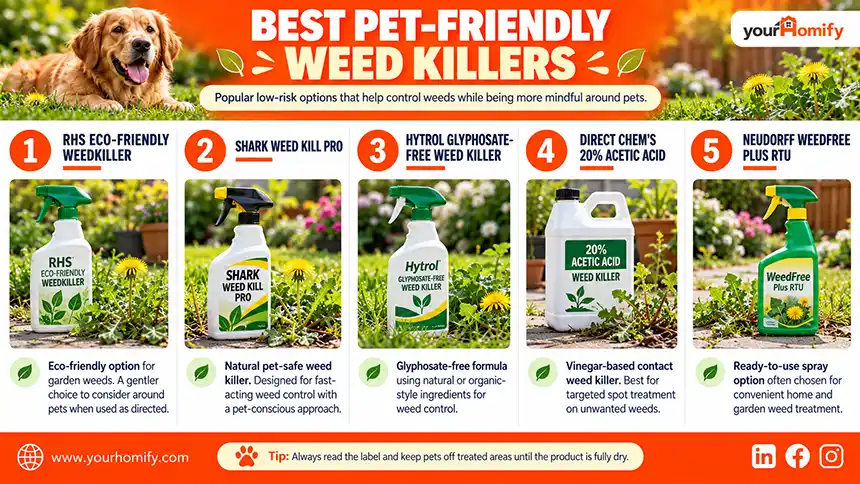
Some of the best pet-friendly weed killers are:
- RHS Weedkiller: RHS Eco-Friendly Weedkiller
- Shark Weed Kill Pro: Shark Weed Kill Pro – Natural Pet Safe Weed Killer
- Natural Organic Weed Killer: Hytrol Ready to Use Glyphosate Free Weed Killer
- Direct Chem’s Weed Killer: 20% Acetic Acid (Vinegar) Weed Killer
- Neudorff’s Weedkiller: Neudorff WeedFree Plus RTU Weed Killer Spray
DIY Pet-Safe Weed Killer Recipes
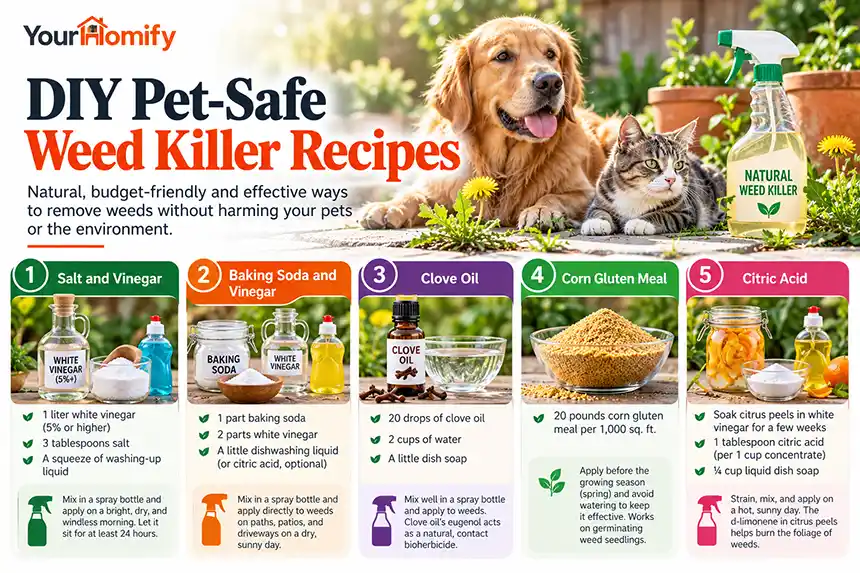
Dealing with weeds is a hassle, and more so when you have pets around. According to RHS, harsh commercial herbicides are not only toxic to wildlife and pets but also to the plant itself; for that reason, natural, homemade weed killers can be used that cost a fraction of commercial products.
After a lot of research from my own experiences and as per the study by the University of California, here are some natural, animal-safe weed killer recipes that I use and have seen perform well.
- Salt and Vinegar: To make this recipe, mix 1 liter of white vinegar (5% or higher acetic acid), add 3 tablespoons of salt, and add a squeeze of washing-up liquid in a spray bottle. This is to avoid the mixture from sticking to waxy leaves. Apply this mixture on a bright, dry, and windless morning for at least 24 hours. It is suggested to use a higher concentration of acetic acid, since 5% is not enough to penetrate the plant cuticles.
- Baking Soda and Vinegar: Use 1 part baking soda, 2 parts white vinegar, and a little bit of dishwashing liquid or citric acid, optionally. Mix the ingredients in a spray bottle and apply it directly to weeds on paths, patios, and driveways on a dry, sunny day.
- Clove Oil: Mix 20 drops of clove oil with 2 cups of water and a little bit of dish soap as a surfactant. Fill the mixture into your spray bottle and apply it properly to the weeds. Since clove oil has a high eugenol concentration, it acts as a non-selective contact bioherbicide.
- Corn Gluten Meal: Corn gluten meal is a herbicide that dries out weed seedlings as they are germinating, so apply 20 pounds per 1000 square feet before the growing season and avoid watering so that the effectiveness stays. It is suggested to use corn gluten meal during the spring season and to remember that this method won’t work for live weeds.
- Citric Acid: Soak your citrus peels in white vinegar for a few weeks until it starts giving off an aroma. Strain it and add 1 tablespoon of citric acid to 1 cup of the citric acid-vinegar concentrate along with a fourth cup of liquid dish soap. The essential oil d-limonene will decrease the number of weeds surrounding the plants by burning the foliage only, making it a weed killer safe with pets. Use it on a hot and sunny day.
Safety Protocols for Pets and Pet Parents

To keep pets safe during yard care, remove all your pets from the area during application, wait until the solution is completely dry, take away all the pet accessories and rinse them before use, ensure proper weather for herbicide application, sanitize your pet’s paws and fur, and finally, store all your products safely.
These are some of the basic protocols that are a must for pet parents and their pets. So, let me walk you through the aforementioned safety measures in detail so that you know how to use weed killers that are safe for pets.
- Remove Everyone from the Lawn: Keep all your pets indoors while mixing, applying, or waiting for pet friendly weed killer sprays to dry so they don’t accidentally touch or ingest any harmful substances.
- Wait for the Solution to Dry: It is always better to overestimate how much time it will take for the herbicides to completely dry. Most products claim that it is alright for the pets to loiter around the plants 6 to 24 hours after application, but it is suggested to keep them off the garden area for 48 hours to ensure there are no lingering effects of the chemicals, despite the brand claims.
- Remove the Accessories and Rinse Them: Leaving the pets’ toys, collars, harnesses, or other accessories such as cans and bowls can cause chemicals to settle on them, creating a hazard. Fabric collars and clothes act like sponges, and if the pet rolls on the grass or brushes against treated weeds, their clothes will absorb the liquid. It is better to remove all such gear and thoroughly wash it using a pet-safe detergent, and let it dry.
- Apply Weed Killer on a Sunny Day: The best time to apply your treatment is during a warm and clear morning or evening so that the chemicals have enough time to dry. A hot and sunny day allows the liquids to evaporate quickly, and it is easier to keep dogs and outdoor cats inside during the nighttime, as the treated areas will be ready to use by the following morning.
- Sanitize Your Pets and Keep an Eye: Wipe down the paws and fur of your pets with warm water and mild soap if they have stepped outside or been in contact with anything from the outside area as an extra precaution against residue transfer. If they happen to breach the perimeter and lick wet weeds, look for signs of toxicity such as drooling, vomiting, diarrhea, lethargy, or loss of appetite.
- Read About and Store Your Products Safely: It is crucial to know about the most common types of dog-friendly herbicides and the active ingredients used in them. Read the labels carefully and implement precise safety protocols during application and storage.
Keep a separate set of lawn tools for weed treatment to avoid cross-contamination. Mix only the exact amount of the recommended solution that is ready-to-use in its original container. Finally, store all bottles in locked spaces.
To discover toxic and non-toxic plants for your feline friends, read about cat-safe flowers here.
How to Apply Weed Killer Safely?

Regarding safe weed control for pets, do not allow them onto the lawn until the weed killer is dry. Clear the area first, and use pre-mixed solutions with protective gear in good weather. Enforce a strict safety window while using targeted spot treatments and clean up properly after use.
The aforementioned steps are recommended by RHS when gardening, and I follow them to keep my furry friends safe, so let me explain in detail how to apply weed killers that are safe for pets, so that you can take care of yours.
Step 1: Clear the Area
Before you apply the dog friendly herbicide, relocate all pets indoors. Remove their toys, leash, bowls, clothes, or bedding from the yard to avoid the absorption of the chemicals.
Step 2: Opt for Ready-to-Use Formulas
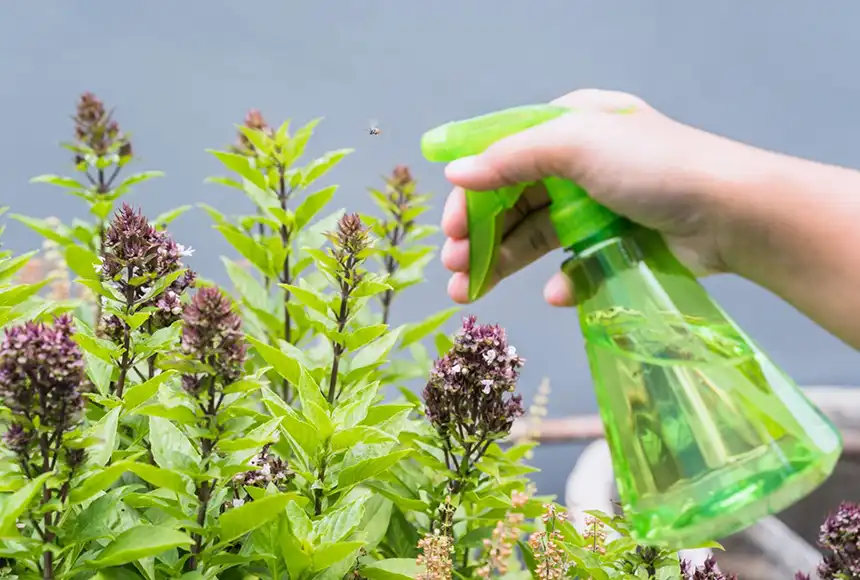
Purchase pre-mixed sprays rather than concentrated liquids, since they are more toxic.
Step 3: Put on Protective Gear and Assess the Weather
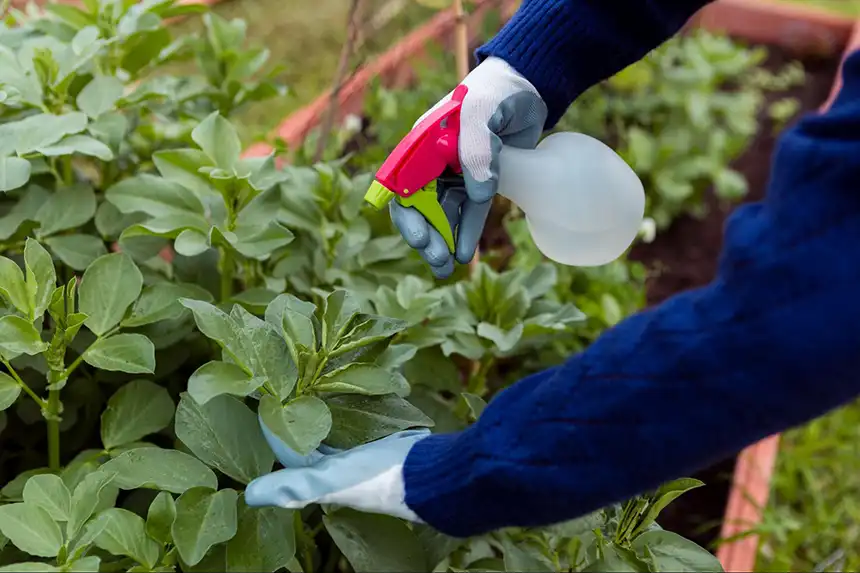
Put on gloves and eye protection before treatment application. Ensure that the weather is sunny and dry so that the substances can dry quickly. Windy conditions might cause the chemicals to drift onto unintended areas.
Step 4: Use Targeted Spot Treatment
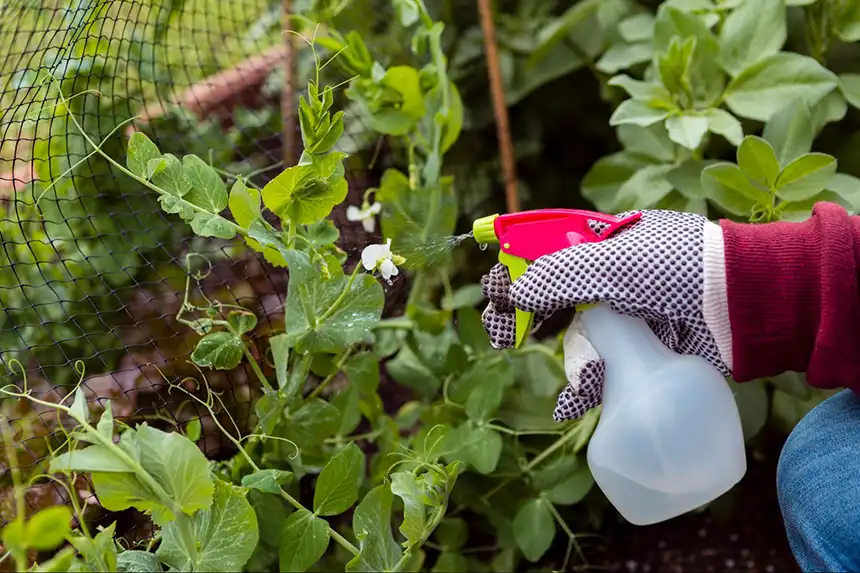
Avoid broad broadcast spraying across the entire lawn. Target individual weeds directly to minimize chemical residue on the grass.
Step 5: Clean Up Thoroughly

Lock all containers securely away in their original packaging. Wash your hands and any exposed skin immediately before interacting with your pets and their belongings.
Gardening Tools Required for Weed Killer Application
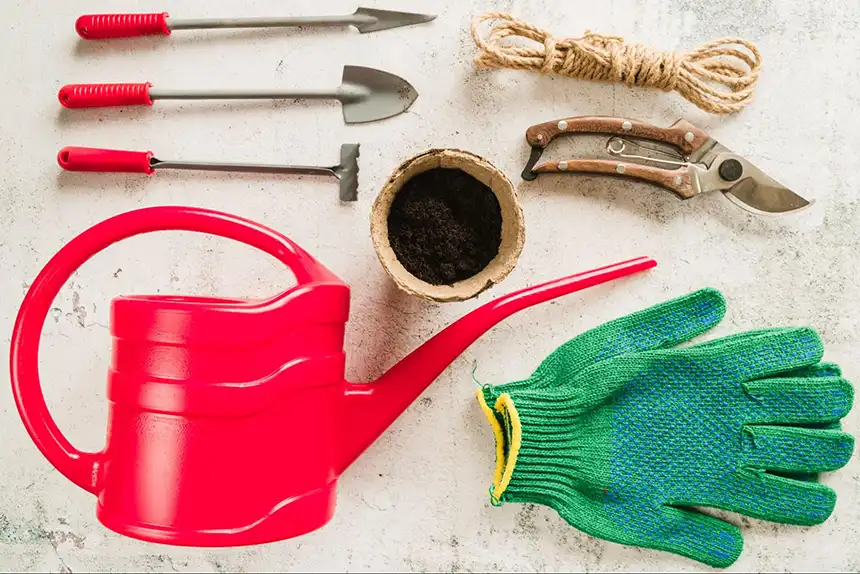
To apply a weed killer, you need a garden sprayer like a compression, pump, or knapsack, a measuring jug or funnel, a PPE kit, and a weed wiper or stem injector for specific spots. Here are some detailed reasons as to why you need such tools:
- Pressure/Pump Sprayer: A 4-5 litre pressure/pump sprayer is ideal for general domestic paths, borders and patios. Use a flat fan nozzle to deliver a low-drift herbicide.
- Knapsack Sprayer: A 15-litre knapsack sprayer is ideal for long pathways and gardens.
- Measuring Jug/Funnel: If you are not able to get pre-mixed solutions readily, measure liquid weed killer concentrates safely with a measuring jug and not kitchen utensils or regular containers. Similarly, a funnel helps pour concentrated treatment into the sprayer tanks without spilling.
- PPE Kit: Use Nitrile or heavy-duty rubber gloves to protect skin, a face mask, and goggles to prevent accidental inhalation or eye splash when mixing the solution. Ensure that your trousers and footwear are sturdy to keep your skin covered from droplets or sudden splashes.
- Weed Wiper/Stem Injector: Handheld devices like a weed wiper or stem injector allow you to apply weed killer directly to invasive species like Japanese knotweed or stubborn lawn weeds without affecting any nearby plants.
What to Do if Your Pet is Exposed to Weed Killer?
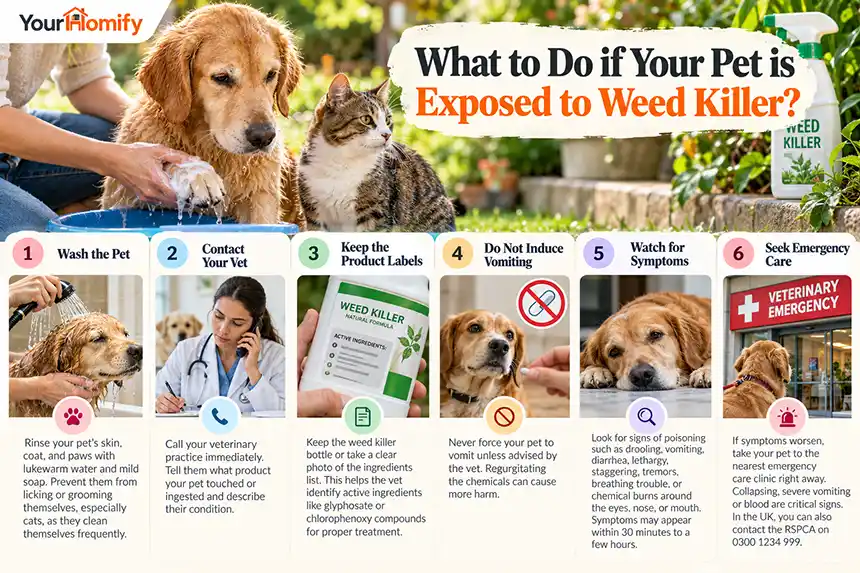
If your pet is exposed to weed killer, wash their paws, fur, and mouth properly and contact the vet immediately. Retain the labels of every product used so that the vet knows exactly what the pet may have ingested or touched, and do not induce vomiting. Watch out for symptoms of poisoning so that you know when to seek emergency care.
Let me take you through each of these non-negotiable steps in detail.
- Wash the Pet: Rinse the skin, coat, and paws gently with lukewarm water and some mild soap in case they come in contact with wet or fresh product to stop further skin absorption or grooming ingestion. Prevent them from cleaning themselves and washing their mouth in case they did ingest it. This is especially important in the case of cats, as they obsessively clean themselves all the time.
- Contact Your Vet: Call your veterinary practice immediately. Describe what product they touched and whether they consumed any of it or not. Give them a brief description of their condition.
- Retain the Labels of the Products: Locate the weed killer bottle or take a picture of the ingredients list, specifically for active ingredients such as glyphosate or chlorophenoxy compounds. These labels could be shown to the vet for proper treatment.
- Avoid Inducing Vomiting: Never force your cat or dog to throw up unless advised by the vet. Regurgitating the chemicals can do more damage than help.
- Watch Out for Symptoms: According to PetMD, it is important to monitor your pets closely for signs of poisoning such as drooling or foaming at the mouth, vomiting, diarrhea, lethargy, staggering while standing, muscle tremors or seizures, breathing trouble, or chemical burns around the senses. These signs may show up anytime within 30 minutes to a couple of hours.
- Contacting Urgent Care: Take your pet to the nearest emergency care clinic if any of the symptoms seem to have worsened over time. Collapsing and vomiting with signs of blood are indicative of a critical state and should be dealt with as soon as possible. Contact the Animal Welfare Emergencies RSPCA on 0300 1234 999.
Read and find out about pet-safe houseplants that can co-exist with your furry friends.
Final Thoughts
Weed killers with certain chemicals are known to be deadly for wildlife and pets. It is best to use organic, natural ingredients that are not only safe but also sustainable long-term. Read the labels of pre-mixed solutions, sanitize your pets’ belongings, and stay vigilant at all times.
Alternatively, you can make your own DIY recipes at home that are cost-effective and use ingredients easily available at your local stores.
FAQs
What will kill weeds but not hurt animals?
Pet-safe weed killers rely on natural, non-toxic ingredients like vinegar, salt, citric acid, essential oil, and corn gluten meal. These ingredients break down easily and prevent growth without leaving harmful residue like glyphosate.
Is there a pet-safe weed killer that won’t kill grass?
Corn gluten meal acts as a pre-emergent that stops new weed seeds from sprouting without hurting grass. Additionally, iron-based herbicides target and kill broadleaf weeds selectively without harming grass, and they are pet-safe once dry.
Will salt and vinegar kill weeds permanently?
Salt and vinegar will not kill weeds permanently. Vinegar burns the top growth of small weeds quickly, but mature weeds will still grow back from their roots. Salt sterilizes the soil and prevents new growth, and both of these combined should only be used around driveways, pathways, and concrete ground.
How long should you wait before letting pets out after applying weed killer?
Wait a minimum of 24-48 hours or until completely dry before letting pets back onto treated lawns. This is to prevent paws and fur from picking up wet residue. If your pet likes to chew on grass and lick itself after rolling on the ground, be more cautious until the product has watered into the soil profile.
Is spraying vinegar on weeds bad for dogs?
Spraying vinegar on weeds can be harmful to dogs if it is high-concentration horticultural vinegar, which can cause chemical burns to a dog’s senses if ingested or contacted while the lawn is still wet.
- Non-chemical weed control | RHS Advice
- Introduction to pesticides and regulation – HSE
- Natural Herbicides: Are they effective? | UC Weed Science (weed control, management, ecology, and minutia)
- Are Weed Sprays Safe if You Have Pets? Safety Tips & Precautions – Australian Animal Poisons Helpline
- Detection of herbicides in the urine of pet dogs following home lawn chemical application – ScienceDirect
- How to Garden Safely | RHS Advice
- What Is Herbicide Poisoning in Dogs? | PetMD