Knowing how to prune roses can make a big difference in the health and appearance of your rose bushes. Roses are among the most beautiful flowers in any garden, but they need regular care to stay healthy and bloom well.
Proper pruning helps remove dead or weak growth, improve air circulation, and encourage more flowers throughout the season. Keep reading to learn how to prune roses step by step, the best time to do it, and common mistakes to avoid.
Quick Answer
To learn how to prune roses, start by removing dead and damaged stems. Cut away weak or crossing branches and trim healthy stems just above an outward-facing bud. It is ideal to prune the species in late winter before the new growth begins.
How to Prune Roses? Step-by-Step Guide
To prune roses, remove dead, damaged, weak, and crossing stems, then trim healthy branches just above the outward-facing buds. Finish by cleaning the area and watering the plant. As per the American Rose Society, all these steps help roses stay healthy and bloom more flowers.
Let us quickly understand the procedure in detail.
Step 1. Wear Gardening Gloves
Put on thick gloves to protect your hands from the rose thorns.

Step 2. Use Clean, Sharp Pruning Shears
Clean tools make smooth cuts and help prevent plant diseases.
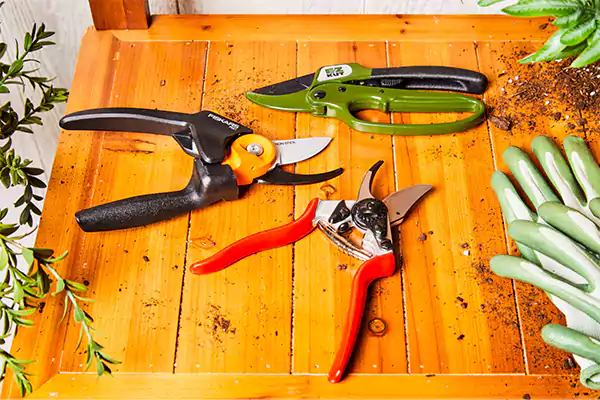
Step 3: Remove Dead and Damaged Stems
Cut away all the brown, dry, broken, and diseased branches, as they will not produce any healthy bloom.
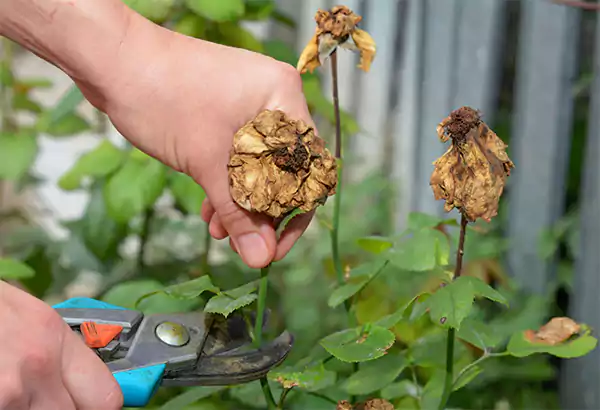
Step 4: Cut Out Weak and Thin Growth
Remove small, weak stems that look unhealthy or infected. This helps rose shrubs focus their energy on strong growth.
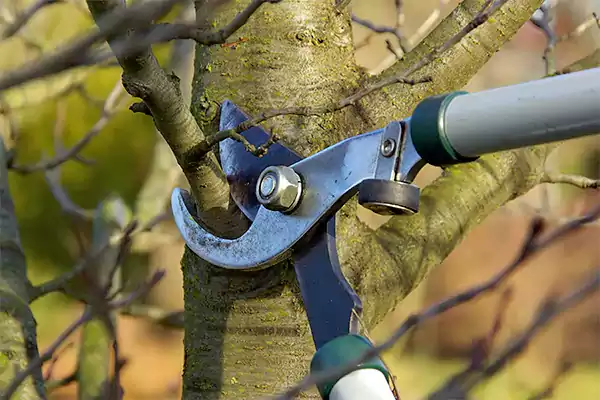
Step 5: Chop Off All the Crossing Branches
Cut the branches that rub against each other. This prevents damage and improves air circulation.
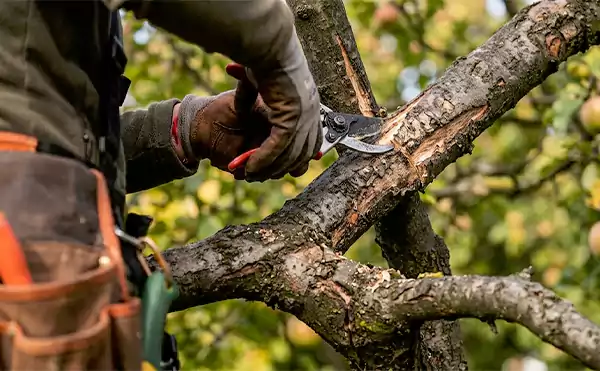
Step 6: Open the Center of the Plant
Remove a few inner stems to create an opening so that sunlight and air can reach all parts of the rose bush.
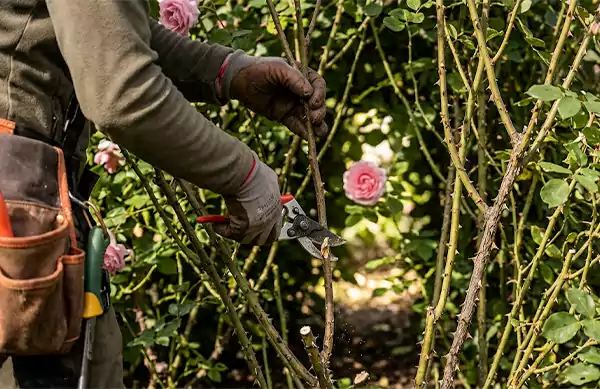
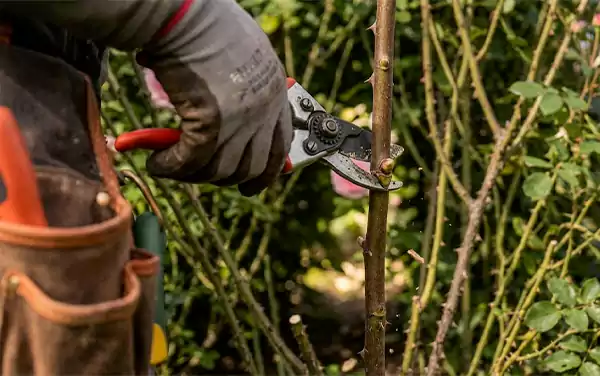
Step 7: Trim Healthy Stems
Cut healthy stems about ¼ inch above an outward-facing bud. Make sure to cut at a slight angle so water can run off easily.
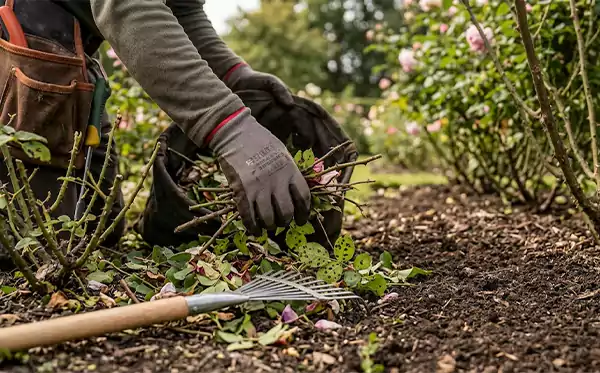
Step 8: Clean up Fallen Leaves and Stems
Remove all plant debris from around the rose bushes to reduce the risk of pest and disease infestation.
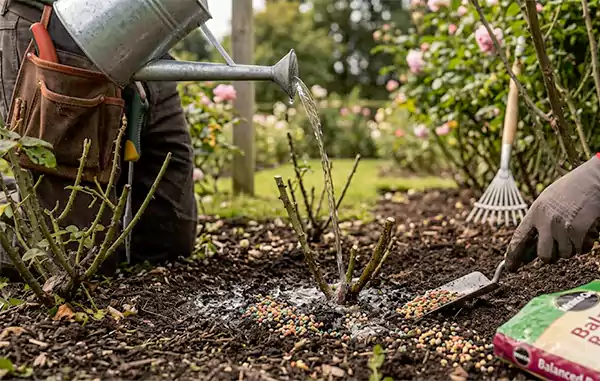
Step 9: Water and Feed the Plant
After pruning, water the plant thoroughly and apply a balanced rose fertilizer to support new growth.
When Should You Prune Roses?
Most roses should be pruned in late winter or early spring before new growth starts. The exact timing depends on your USDA zone, but the goal is to trim them when the plant is still dormant but new buds are starting to swell.
| Rose Pruning Timings by Hardiness Zone | |
| USDA Zones 3-5 | Late March to April |
| USDA Zones 6-7 | February to March |
| USDA Zones 8-9 | January to February |
| USDA Zone 10+ | December to January |
Pruning at the right time encourages healthy stems, better airflow, and more flowers throughout the growing season. Gardeners in warmer regions can usually trim rose bushes earlier in the year, while those in colder areas should wait until the risk of severe frost has passed.
Why is Rose Pruning Important?
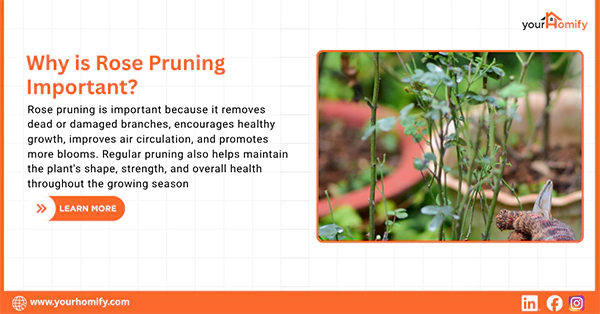
Rose pruning is important because it keeps the plant healthy, attractive, and productive. Over time, rose bushes can become crowded and clustered with old, weak, or damaged stems that can eventually reduce the airflow and sunlight. Pruning removes these unwanted branches, allowing the plant to focus its energy on new growth and bloom production.
Here are some benefits of rose pruning:
- Encourages more flowers and healthier growth.
- Removes dead, damaged, and diseased stems.
- Improves air circulation and sunlight exposure.
- Reduces the risk of pests and diseases.
- Maintains the plant’s shape and size.
- Promotes stronger stems and better quality blooms.
- Rejuvenates older rose bushes for improved appearance.
Without pruning, roses or any other flowers may become overgrown, produce fewer flowers, and develop more health problems. A stronger, bushier, and healthier bloom can produce lush blossoms throughout the growing season.
Common Rose Pruning Mistakes to Avoid
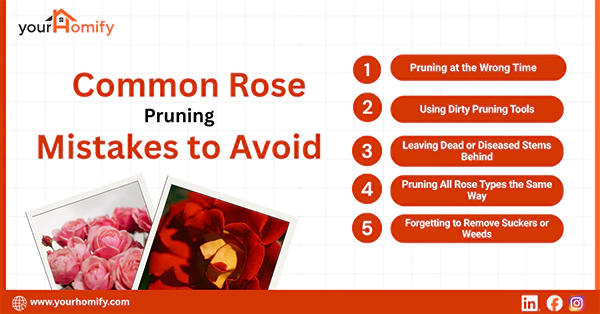
Even though rose pruning is simple, a few common mistakes can weaken the plant and reduce flowering. Avoiding these errors will help your roses stay healthy and bloom beautifully throughout the season.
- Pruning at the Wrong Time: Pruning too early in winter can expose new growth to frost damage, and pruning too late in spring may remove developing flower buds. The best time to perform major trimming is late winter to early spring when new growth is just beginning to appear.
- Using Dirty Pruning Tools: Blunt blades create rough cuts that heal slowly, making roses more vulnerable to disease. Dirty tools can also spread fungal and bacterial infections from one plant to another. Always use clean, sharp pruning shears.
- Leaving Dead or Diseased Stems Behind: Some gardeners either cut back excessive growth or only focus on shaping the plant and forget to remove unhealthy stems. Damaged or infected stems can attract pests and spread diseases to even healthy parts of the plant.
- Pruning All Rose Types the Same Way: Different rose species have distinct pruning needs. For example, climbing roses require lighter pruning than hybrid tea roses. Learning the requirements of your specific rose types helps prevent unnecessary cutting.
- Forgetting to Remove Suckers or Weeds: Suckers are mainly shoots that grow on the stems of the rose bushes and tend to steal energy from the main plant. They can be removed manually, or you can simply chop off the branch.
Skipping post-pruning care is a major mistake that many novice gardeners tend to make. They often forget that trimming rose bushes is part of the care process. It is important to water the plant, apply mulch if needed, and feed it with a balanced fertilizer to produce abundant blooms.
Conclusion
I feel that rose pruning may seem difficult at first, but learning how to prune roses is one of the best things you can do for your plant. By removing dead and damaged stems at the right time, you help your roses grow stronger and stay healthier. It is ideal to use clean tools, and with a few simple pruning steps, even beginners can keep their rose bushes in shape.
FAQs
Should I cut back roses in October?
It entirely depends on the climate of the region you are living in, but in general, performing heavy trimming should be avoided during October.
What are common rose pruning mistakes?
Common pruning mistakes include using dirty pruning shears, trimming at the wrong time, chopping off excessive leaves, failing to remove diseased branches, and leaving the surrounding area as it is.
What happens if you don’t cut back your roses?
If you do not prune roses, the bushes will not die, but they won’t remain visually appealing. For a tidy look and optimal growth, it is important to remove leggy crossing branches and chop off dead or diseased stems.
What month do you cut back rose bushes?
Ideally speaking, late winter to early spring (February to April) is the right time to cut back rose bushes.
What do coffee grounds do for rose bushes?
Coffee grounds work as an ideal organic plant food. It consists of slow-release nitrogen that attracts beneficial earthworms and helps in improving the soil structure.
- Rose Pruning Guide – Royal Horticultural Society
- How to Prune Roses – Mississippi State University Paper
- Steps to Prune Rosese – BBC Gardeners’ World Magazine