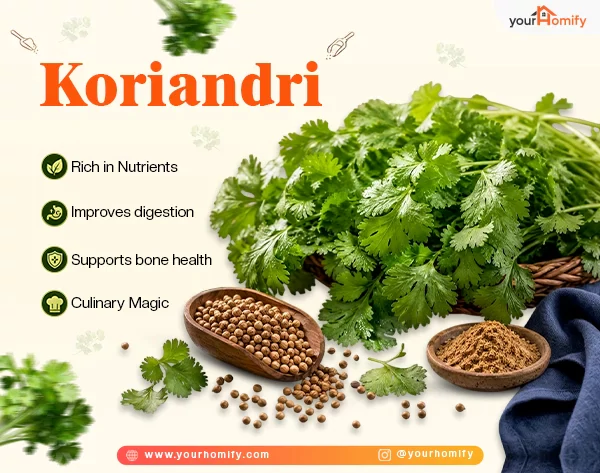
As a gardening and cooking fanatic, koriandri has been a constant in most of my meals. Also known as coriander or cilantro in North America, this aromatic herb offers a blend of fresh fragrance and nutty flavours.
Used as both leaves and seeds, koriander is easy to grow and care for as an annual herb that also offers various health benefits. If you are a fan of herbs and want to learn about koriandri, dive in and explore the features, nutritional value, benefits, and side effects of koriandri in this immersive guide.
Quick answer
Koriandri is an annual herb, also known as coriander or cilantro, which is mainly used for culinary purposes like garnishing. Best planted in spring, koriandri is used both for its seeds and leaves, which makes its uses versatile. Apart from enhancing the aroma of meals, it also has antioxidant properties and helps in managing blood sugar levels.
What is Koriandri? Features and Botanical Specification
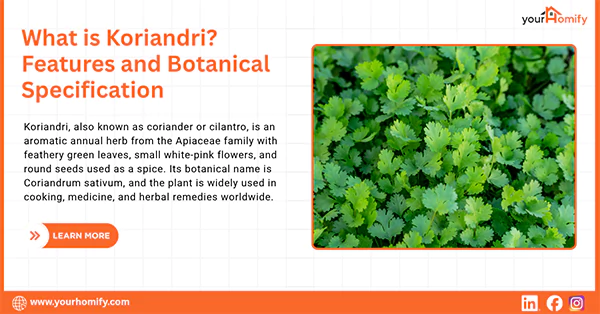
Botanically known as the Coriandrum sativum, koriandri is another name for the culinary herb coriander, which belongs to the Apiaceae family. Native to the Mediterranean regions and Asia, this herb grows green, feathery leaves and white flowers, which are also dried in the form of seeds and are used in cooking for flavour and aroma around the world.
Additionally, koriandri leaves and seeds are both referred to as coriander in Asian countries, while in America, leaves are referred to as ‘cilantro’. Despite the names, the uses, benefits, and growing guides remain the same.
Before diving into the growing and care guide, take a look at the taxonomy of the koriandri for a better understanding:
| Botanical name | Coriandrum sativum |
| Kingdom | Plantae |
| Division | Magnoliophyta |
| Class | Magnoliopsida |
| Order | Apiales |
| Family | Apiaceae |
| Genus | Coriandrum L |
Growing Requirements for Koriandri
I have been growing koriandri as an indoor plant for a long time. Although it can be easily grown at home without much hassle, here are some basic growing requirements that need to be taken care of for healthy growth:
| Sunlight | Full sun to partial shade |
| Soil | Well-draining, sandy, loamy soil |
| Water | Regularly 1 inch per week |
| Hardiness | USDA zones 2-11 |
| Fertiliser | A balanced fertiliser |
How to Grow Koriandri at Home?
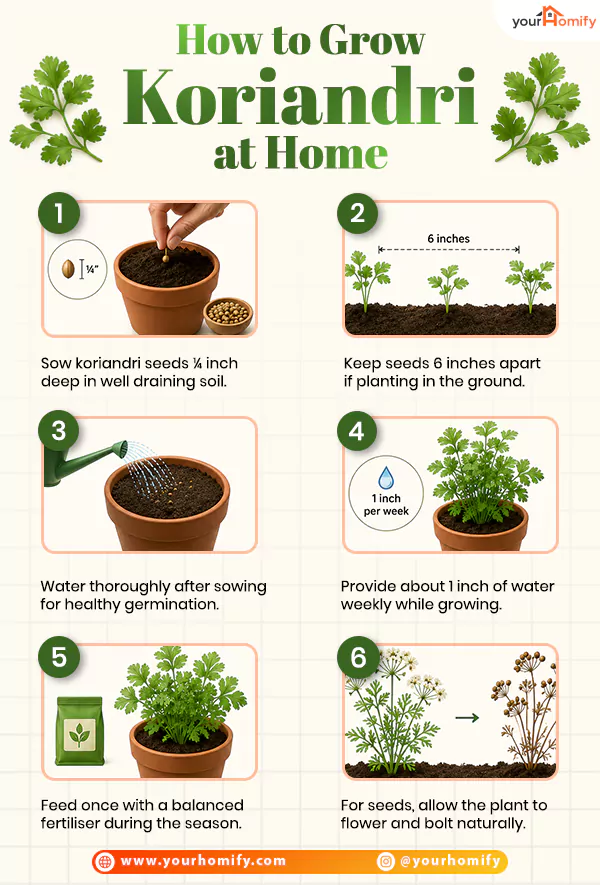
Koriandri is best grown in early spring, most preferably in a small container.
Here is a step-by-step guide for growing koriandri:
- Take some koriandri seeds and plant them in a pot with well-draining soil at least ¼ inch deep.
- If you are planting directly in the soil, make sure the seeds are at least 6 inches apart for even growth.
- After sowing, fill the container with soil and water it thoroughly to ensure proper germination.
- The koriandri plant needs 1 inch of water per week while growing seeds, which is significantly reduced as the plant matures.
- Remember, underwatering will cause the plant to bolt and stop leaf production.
- Feed the plant with a balanced fertiliser once during the growing season. You can completely avoid this step in case the plant is growing directly in the ground.
- If you want to grow seeds, then wait until the plant grows white flowers and starts bolting, which will enable seed production.
How to Harvest the Koriandri Herb?
The best time to harvest koriandri is anytime after the plant reaches a height of 6 inches. Ideally, the best time to snip off your koriandri leaves is in the morning, as the leaves are fresh.
Take a look at my harvesting guide for koriandri:
- Identify fresh and green leaves in the plant and remove the dead ones to avoid damage to the rest of the plant.
- Take garden scissors or pruning shears and snip off the leaves of your choice carefully.
- Make sure you do not remove the entire stem and leave room for new growth as well.
- After harvesting, store the leaves in an airtight container in the refrigerator and use as needed.
Nutritional Profile of Koriandri
Koriandri is the best source of vitamin K and offers a variety of health benefits, such as improving bone and digestive health.
Take a look at the nutritional value of Koriandri:
| Nutrients | Value |
| Protein | 3.5 g |
| Fibre | 4.66 g |
| Iron | 5.3 mg |
| Magnesium | 72.6 mg |
| Potassium | 546mg |
| Calcium | 146 mg |
| Vitamin K | 310mcg |
What are the Culinary Uses of Koriandri?
Consumed in both the form of leaves and seeds, koriandri is used to enhance the aroma of the dishes or give them a final touch. Regardless of the form used, this aromatic herb is a great way to enhance your meals with such low effort.
Here are common uses of koriandri:
Leaves
- Koriandri leaves are most commonly used for garnishing in curries and soups.
- Other than that, in many Asian countries, koriandri leaves are used along with mint leaves to prepare a spicy condiment also called “chutney“.
Seeds
- Unlike leaves, the koriandri seeds are used in powder form in spices and in cooking. It offers a spicy flavour with an earthy aroma.
What are the Benefits of Koriandri?
Koriandri is not only used for aroma and flavour but also offers various health benefits as well, such as boosting immunity and managing blood sugar levels.
Here is a list of health benefits of Koriandri:
- The leaves are credited with antioxidant properties, which help boost immunity.
- Including koriandri in your diet also helps in improving digestive health and reducing bloating.
- Many studies have also claimed that koriandri leaves are great for managing blood sugar levels. However, it is essential to be mindful of consumption.
What are the Side effects of Koriandri?
The usage of koriandri is generally considered safe; however, unmonitored consumption of anything can harm the body in so many ways.
Take a look at some common side effects so that you can consume more mindfully:
- Koriandri can cause allergic reactions in certain individuals through skin irritation and rashes. Make sure you wash your hands after handling them and contact a dermatologist in case of worsening symptoms.
- It is also observed in many cases that consuming koriandri can cause bloating and digestive discomfort.
The side effects listed here vary per individual. Koriandri is safe to consume in small amounts. Consult a medical professional to avoid severe complications.
Concluding Remarks
For a cooking enthusiast like me, koriandri has been a great addition to my kitchen and garden alike. This magical, aromatic herb has been a kitchen staple for many years for people around the world, not only due to its flavour but also its various health benefits.
While growing and consuming the koriandri is relatively easy and beneficial, one should look out for allergies and symptoms and consult a medical professional in case of severe allergies.
FAQs
Is koriandri the same as coriander?
Yes, koriandri is just another name for ‘coriander’, which is a culinary herb used for cooking.
What are the benefits of koriandri?
Koriandri has various health benefits, like boosting immunity, aiding digestion, and managing blood sugar levels.
What is the best time to plant koriandri?
The best time to plant koriandri is early spring.
When to harvest koriandri?
Koriandri can be harvested anytime when the plant reaches a height of 6 inches.
What are the uses of koriandri leaves?
Primarily, the koriandri leaves are used for garnishing and making condiments.
Coriander – Wikipedia