


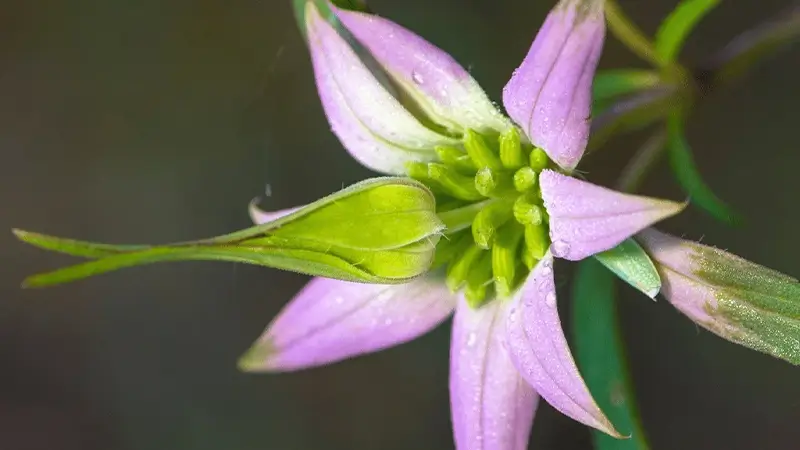


| Common Name | Spotted Beebalm, Dotted Horsemint | Maintenance | Low |
|---|---|---|---|
| Native Region | Eastern United States | Average Height | 1.5-3 feet |
| Plant Type | Native Herbaceous Perennial / Biennial | Average Width | 1-2 feet |
Spotted Beebalm Monarda punctata, is a perennial that gardeners love because of its spectacular wildflower that blooms from summer to fall with a tubular structure. Also called dotted horsemint, it has the ability to attract a wide range of pollinators, including butterflies, moths, and bees.
Key Features and Benefits of Spotted Beebalm
- Traditionally used to treat colds and fevers, as it contains high levels of thymol, offering antiseptic, antimicrobial, and antifungal properties.
- Provides a unique appearance with whorls of yellow and purple flowers surrounded by white to pink bracts, resulting in a spotted look.
- Especially when crushed, Spotted Beebalm Florida leaves emit a pungent, oregano-like scent, earning its name “Horsemint”.
- Thanks to its drought tolerance, it is ideal for sunny, sandy sites, including mass plantings and xeriscaping.
Care Guide, Advantages, and Disadvantages of Spotted Beebalm
- Growing Zone: USDA 4-9
- Sunlight Exposure: Can tolerate full sun to partial shade, and 6-8 hours of daily sunlight ensures the best flowering.
- Water Needs: Regular watering is needed in the first season. Once established, it is highly drought-tolerant.
- Soil Type: Prefers well-drained sandy, loamy, and clayey soils but is somewhat tolerant of dry, poor, and average soils.
Advantages
- The aromatic leaves can be used in teas, as seasoning, and in salads.
- Rhizomatous and clumping growth habit stabilizes soil and helps in erosion control.
- Due to being low maintenance, it rarely requires fertilizers and can thrive in poor soils.
- Highly resistant to deer and rabbits thanks to its strong, aromatic scent.
Disadvantages
- Has potential for self-seeding and overtaking the large areas.
- Risk of diseases like powdery mildew and pests, including spider mites and aphids.
- Can look untamed or “weedy” during early growth stages because of rugged stems.
- As a biennial or short-lived perennial, it lives for only 3-5 years.
Joseph Wilson –
The beautiful plant is highly attractive to a wide range of insects, including bumblebees, wasps, honeybees, and butterflies, serving as a pollinator magnet in the garden.
Patricia Piper –
I planted this perennial some months ago. Particularly captivated by its unique yellow-white flowers densely covered with purple spots. Highly recommended to all the gardeners who are searching for something unique and low-maintenance.
Olivia Stone –
My mother uses the leaves of this plant to make relaxing and fragrant tea. Due to high thymol levels, it offers intense, peppery, and medicinal flavours.
Emily Brown –
The perennial can thrive on dry and sandy soils where other plants fail. This makes it ideal for elevating the aesthetics of sunny and xeric landscapes.
Andrew –
I ordered Spotted Beebalm from YourHomify because I wanted to bring more flowers and natural charm to my garden. The plant arrived healthy and fresh, and I’m excited to see it bloom once it gets established.
Bob Rogers –
The Spotted Beebalm arrived in really good condition. I like its unusual flowers and the fact that it looks different from the typical plants in my garden. It’s settling in nicely so far, and I’m looking forward to seeing it flower.