


Flowers that start with V rarely make it to the list of popular blooms, but when I explored the V-letter flowers, I discovered some of the easiest blooms to grow. Right from my personal favorite, vanilla strawberry hydrangea, to the edible valerian, these plants have all in store for curious gardeners.
So, if you, too, are an anthophile, come along as I share 15 flowers that start with the letter V with features, fun facts, and a care guide, before continuing on to the flowers that start with W.
Reviewed by Simran Kaur: This article has been thoroughly checked for accuracy and authenticity, ensuring the information is reliable, practical, and enjoyable to explore.
Quick answer
The flowers that start with V are verbena, viburnum, viola, Virginia bluebells, vernonia, vanilla strawberry hydrangea, vinca, vitex, Virginia sweetspire, viper’s bugloss, vetch, and many more.
15 Flowers That Start With V: Beautiful Blooms With Images and Features
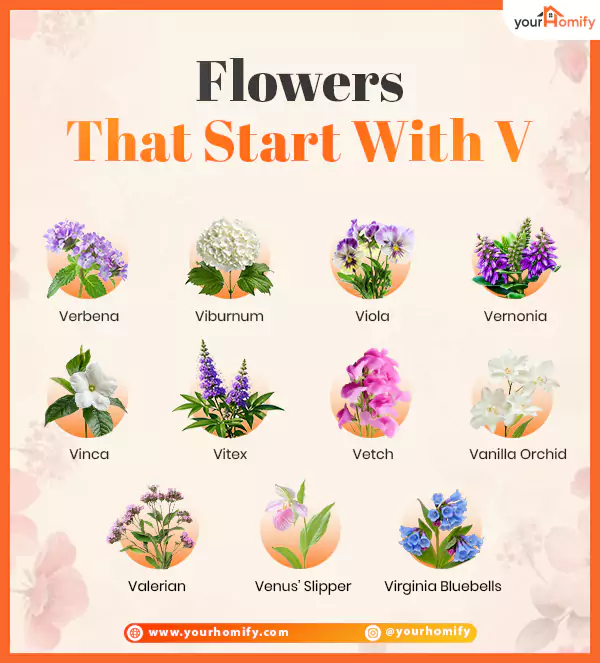
Flowers that start with V are verbena, viburnum, viola, Virginia bluebells, vernonia, vanilla strawberry hydrangea, vinca, and many more, which are popularly grown as garden flowers and used for ornamental purposes.
Here is a list of 15 flowers that start with a V
- Verbena
- Viburnum
- Viola
- Virginia Bluebells
- Vernonia
- Vanilla Strawberry Hydrangea
- Vinca
- Vitex
- Virginia Sweetspire
- Viper’s Bugloss
- Vetch
- Virgin’s Bower
- Vanilla Orchid
- Valerian
- Venus’ Slipper
Verbena
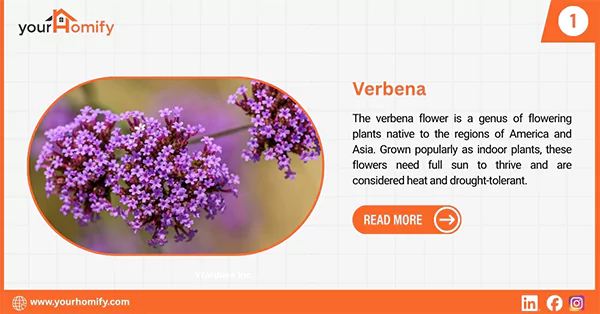
- Botanical name: Verbena spp.
- Native Region: America and Asia
- Hardiness: USDA zones 8-11
- Plant Type: Herbaceous perennial
- Height: Varies per species
- Soil Type: Well-draining sandy, loamy soil
- Color: Purple, pink, red, and white
- Bloom season: Early summer to fall
- Maintenance level: Low
Verbena is a genus of flowering plants that are grown as popular indoor plants in hanging baskets. The meaning of these flowers is associated with healing, protection, and enchantment.
Grown in a cluster of small flowers, they are drought-tolerant and heat-tolerant and require full sun to thrive and are considered pollinator-friendly plants.
Viburnum
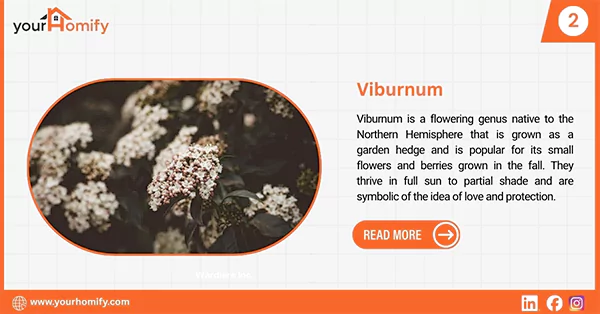
- Botanical name: Viburnum spp.
- Native Region: Northern Hemisphere
- Hardiness: USDA zones 2-10
- Plant Type: Shrubs
- Height: Varies per species
- Soil Type: Well-draining chalky, sandy, and loamy soil
- Color: White and pink
- Bloom season: Spring
- Maintenance level: Low
Viburnum is also a genus of flowering plant from the Adoxaceae family. Commonly grown as garden hedges, these evergreen shrubs show a spectacular display of spring flowers to summer foliage and fall berries, which are safe for consumption.
Additionally, these flowers require full sun to partial shade to grow their pink and white flowers, which are symbolic of the idea of love and protection.
Viola
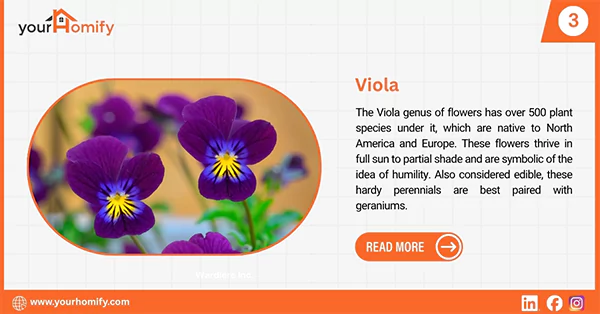
- Botanical name: Viola spp.
- Native Region: North America and Europe
- Hardiness: USDA zones 3-8
- Plant Type: Herbaceous perennial
- Height: Up to 10 inches tall
- Soil Type: Well-draining acidic soil, rich in organic matter
- Color: Purple, orange, red, white, violet, blue, and yellow.
- Bloom season: Spring to fall.
- Maintenance level: Low
The viola genus has over 500 species of shrubs and herbs under it, which thrive in partial shade but not full shade. These hardy perennial flowers are edible and are associated with humility.
As container plants, they are best paired with geraniums.
Did you know?
Pansies are a type of viola, but they have much larger blooms than violas.
Virginia Bluebells
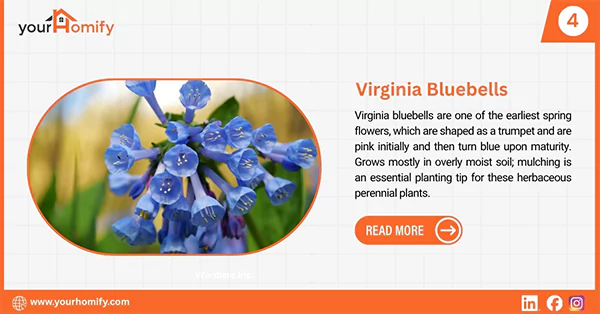
- Botanical name: Mertensia virginica
- Native Region: East America
- Hardiness: USDA zones 4-7
- Plant Type: Herbaceous perennial
- Height: 1-2 feet
- Soil Type: Well-draining sandy, loamy soil
- Color: Pink and blue
- Bloom season: Spring
- Maintenance level: Low
Part of the Boraginaceae family, Virginia bluebells grow bell-shaped pink flowers that turn blue upon maturity. Known as one of the earliest spring flowers, Virginia bluebells typically prefer moist soil and should be planted with a good layer of mulch to retain moisture.
Grows best in dappled sunlight, the meaning of these flowers is linked to everlasting love and beauty.
Vernonia
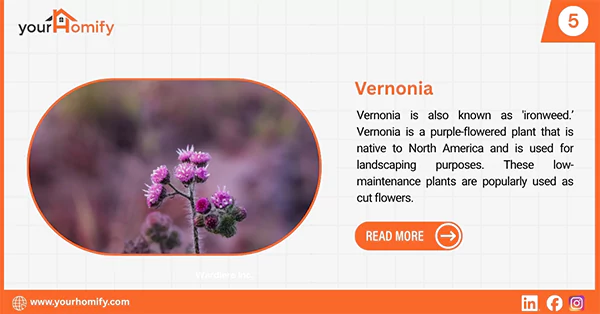
- Botanical name: Vernonia
- Native Region: North America
- Hardiness: USDA zones 3-7
- Plant Type: Herbaceous perennial
- Height: 3-5 feet
- Soil Type: Well-drained humus-rich soil
- Color: Purple
- Bloom season: Summer to fall
- Maintenance level: Low
Also known as ‘ironweed,’ the veronia flower is a purple plant that is perfect for landscaping purposes and prefers full sun to partial shade to grow.
These pollinator-friendly plants are great as cut flowers and are drought-tolerant, and they are also safe from the threat of pests.
Vanilla Strawberry Hydrangea
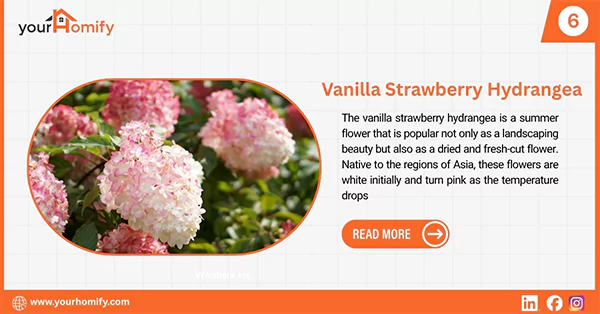
- Botanical name: Hydrangea paniculata ‘Renhy.’
- Native Region: Asia
- Hardiness: USDA zones 3-8
- Plant Type: Shrub
- Height: 6-8 feet
- Soil Type: Well-draining, slightly acidic soil
- Color: Pink, red, and white
- Bloom season: Summer to fall
- Maintenance level: Low
The vanilla strawberry hydrangea is a summer flower that features clusters of white flowers, which turn pink as the temperature drops. Popular as garden flowers, these fragrant flowers are also used in fresh and dried flower arrangements.
Although they look elegant in balcony gardens and indoor decor, according to the ASPCA, hydrangeas are toxic to pets and should be kept away from them.
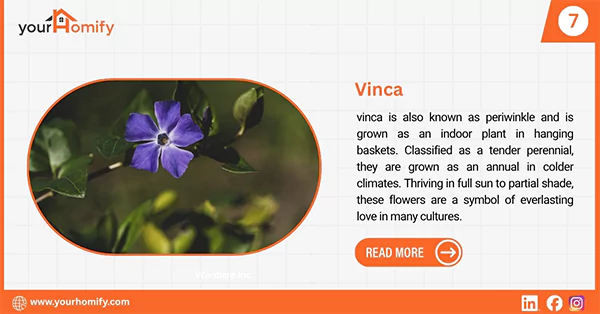
- Botanical name: Catharanthus roseus
- Native Region: Africa
- Hardiness: USDA zones 9-11
- Plant Type: Herbaceous perennial
- Height: Up to 2 feet
- Soil Type: Sandy, loamy soil
- Color: Pink, white, and red
- Bloom season: Spring to fall
- Maintenance level: Low
Popularly known as the periwinkle flower, vinca is a tender perennial from the dogbane family. There are two varieties of this flower: one, the taller one called the vinca major, grown in pots and hanging baskets; and another, the vinca minor, mainly grown as a ground cover.
Vinca thrives in full sun to partial shade and is grown as an annual in colder climates. These flowers are a symbol of everlasting love and are also associated with the Virgin Mary in Christianity.
Vitex
- Botanical name: Vitex spp.
- Native Region: Asian and Mediterranean regions
- Hardiness: USDA zones 5-9
- Plant Type: Deciduous shrub
- Height: 3-20 feet
- Soil Type: Sandy, loamy soil
- Color: Lavender
- Bloom season: Late spring to fall
- Maintenance level: Extremely easy
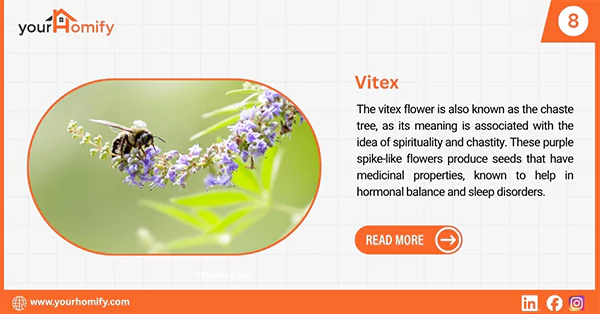
Popularly known as the chaste tree, the vitex flower grows lavender-like, spiky, purple flowers. Ideal to be grown for landscaping purposes, it is a medicinal plant as well because the flower seeds are known to balance hormones and help in better sleep quality.
The meaning of the vitex flowers is associated with the idea of chastity and spirituality.
Virginia Sweetspire
- Botanical name: Itea virginica
- Native Region: Southeastern America
- Hardiness: USDA zones 7-9
- Plant Type: Deciduous shrub
- Height: Up to 5 feet
- Soil Type: Clay or moist soil
- Color: White
- Bloom season: Summer to fall
- Maintenance level: Medium to low
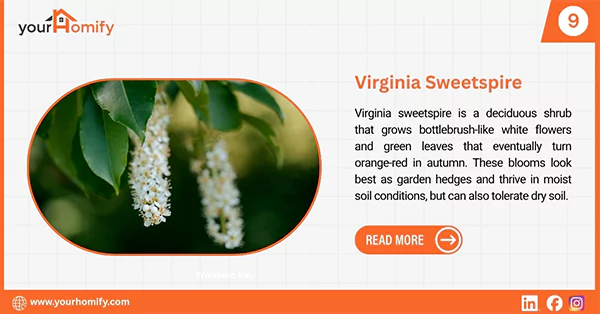
The Virginia sweetspire is a flowering shrub that grows bottlebrush-like white flowers with green leaves, which turn orange-red during autumn. These plants are commonly found near water streams and lakes.
Majorly grown as garden hedges, these flowers thrive in moist soil but can also tolerate dry conditions.
Viper’s Bugloss
- Botanical name: Echium vulgare
- Native Region: Europe, Western and Central Asia
- Hardiness: USDA zones 4-8
- Plant Type:
- Height: 1-3 feet
- Soil Type: Sandy or loamy, well-draining soil.
- Color: Blue
- Bloom season: Spring
- Maintenance level: Low
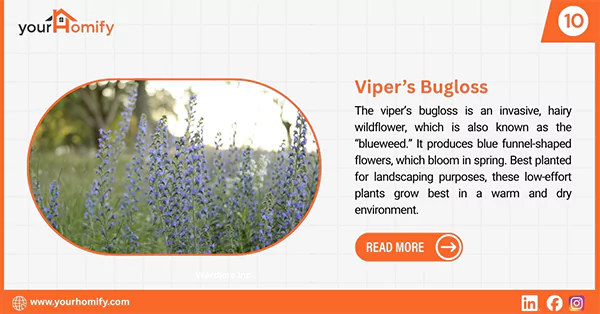
Also known as the “blueweed,” the viper’s bugloss is a hairy invasive wildflower that grows funnel-shaped blue flowers. With their tall, colorful blooms, these flowers are perfect to add a pop of colour to your garden.
This pollinator-friendly plant is perfect for landscaping purposes and can thrive in warm and dry soil conditions.
Vetch
- Botanical name: Vicia
- Native Region: Europe
- Hardiness: USDA zones 4a-8b
- Plant Type: Herbaceous perennial
- Height: 2-3 feet
- Soil Type: Sandy or clay, well-draining soil.
- Color: Purple and violet
- Bloom season: Spring to summer
- Maintenance level: Low
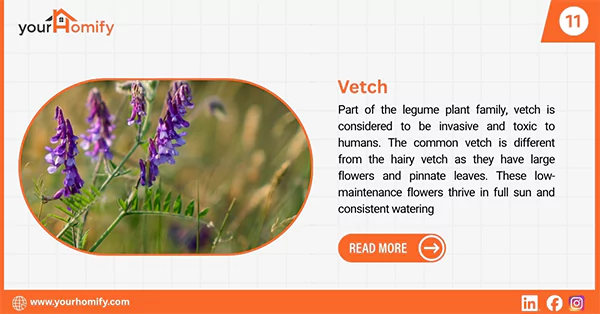
The vetch flower is an invasive plant that belongs to the legume plant family. Often confused with the hairy vetch, these flowers have larger blooms and pinnate leaves.
To grow the common vetch, make sure you plant it in full sun and water it weekly. Additionally, these perennial flowers are toxic to humans; handle them with care.
Virgin’s Bower
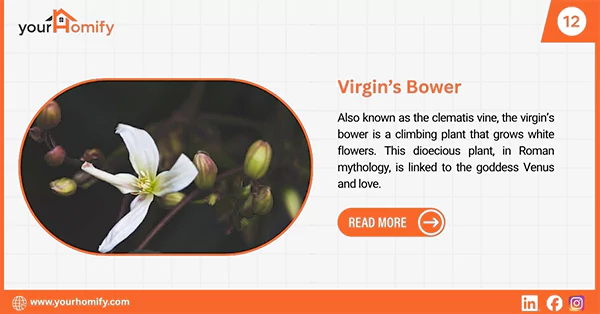
- Botanical name: Clematis virginiana
- Native Region: Eastern North America
- Hardiness: USDA zones 3-9
- Plant Type: Climbers
- Height: 10-20 feet
- Soil Type: Well-draining, sandy, and loamy soil
- Color: White
- Bloom season: Summer to fall
- Maintenance level: Low
Known by the common name “clematis vine,” the virgin’s bower is a climbing plant that belongs to the buttercup family. These summer flowers are dioecious, which means they have their male and female parts on separate plants.
In Roman mythology, this flower is associated with the goddess Venus and the idea of love and affection.
Vanilla Orchid
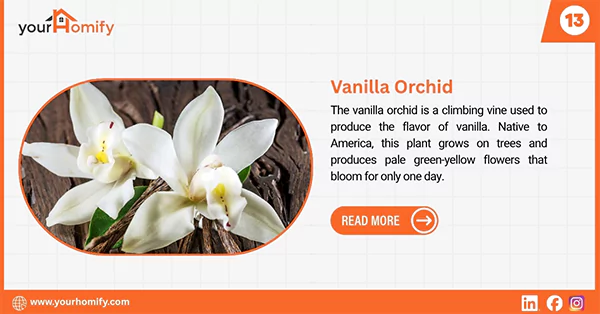
- Botanical name: Vanilla planifolia
- Native Region: America
- Hardiness: USDA zones 11-12
- Plant Type: Climbers
- Height: 8-10 feet
- Soil Type: Well-draining, acidic soil
- Color: Yellow and green
- Bloom season: Spring
- Maintenance level: Low
Part of the orchid family, the vanilla orchid is a climbing vine. The natural source of one of the most aromatic and valued flavors, vanilla, this flower grows pale green-yellow flowers, which are non-toxic to humans and cats.
Additionally, these flowers grow with aerial roots and grow on trees, preferably in full sun.
Valerian
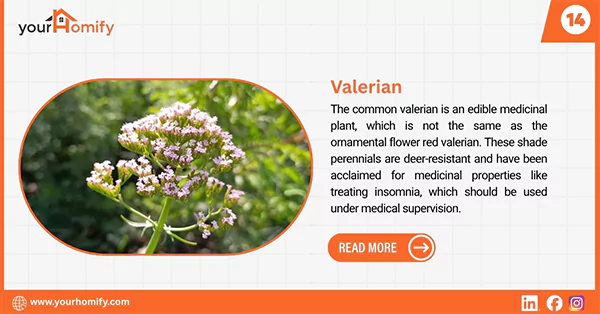
- Botanical name: Valeriana officinalis
- Native Region: Europe and Western Asia
- Hardiness: USDA zones 4-9
- Plant Type: Herbaceous perennial
- Height: 3-5 feet
- Soil Type: Well-draining loamy soil
- Color: Pink, red, and white
- Bloom season: Summer
- Maintenance level: Medium
The common valerian belongs to the family of honeysuckle and is different from the red valerian flower, which is an ornamental flower. This summer flower is an edible plant that is known for its healing properties and is also considered deer-resistant.
Furthermore, research done by NCBI states that the common valerian is effective in curing sleep disorders.
While research statements positively credit the medicinal properties of common valerian, it is essential to consult a medical professional before relying on something blindly.
Venus’ Slipper
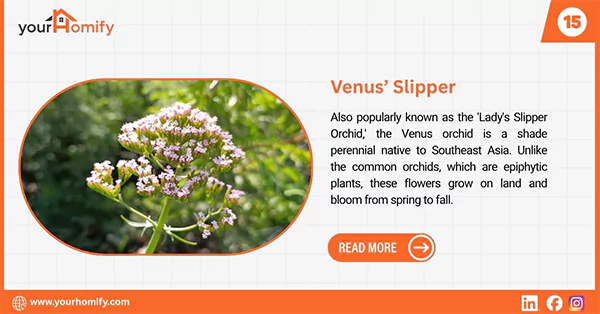
- Botanical name: Paphiopedilum
- Native Region: Southeast Asia
- Hardiness: USDA zones 9-10
- Plant Type: Perennial
- Height: Up to 1 feet
- Soil Type: Orchid mix well-draining soil
- Color: Purple, white, green, gold, purple, and red.
- Bloom season: Spring to fall
- Maintenance level: Low
Also known as the lady’s slipper orchid, Venus’ slipper is a shade perennial which, unlike all the orchid plants, has a terrestrial growing habit. These low-maintenance perennial plants are grown easily as indoor plants.
Every branch of this flower dies back after growing unique slipper-shaped blooms, which are symbolic of the idea of love and admiration.
Concluding Remarks
This list of flowers that start with V has made me explore the flowers that I never came across earlier. Whether it is the purple viola or the fragrant vanilla orchid, these flowers have a special place in the garden from now on.
If you, too, want to move away from the classic old roses and lilies, these flowers that start with a V are your perfect gardening dream.
FAQs
What are the flowers that start with V?
Viola, vetch, valerian, vitex, and virgin’s bower are some flowers that start with letter V.
Are there any toxic flowers that start with V?
Vanilla strawberry hydrangea, and vetches are some toxic flowers that start with the letter V.
What are the perennial flowers that start with a V?
Verbena, viola, and Virginia bluebells are perennial flowers that start with letter V.
Is the viper’s bugloss invasive?
Yes, viper’s bugloss is an invasive flower.
Are red valerian and common valerian the same flower?
No, red valerian is an ornamental flower, while the common valerian is a medicinal herb.
Flowers That Start With W: Types, Facts & Growing Tips
[…] of beautiful blooms suited to different growing zones. I personally prefer them planting next to flowers that start with V for a more defined or organized […]