



Until you are a curious gardener and anthophile, there are rarely any flower names that pop up with the letter U. As gardeners, we are often stuck with growing the popular flowers and forget the variety that exists in the flower world.
I came across some beautiful flowers while discovering the flowers that start with U, and realised what a diverse array of options are available to try at home.
Are you also a curious gardener looking for unique blooms for your garden? If yes, then come along as I explore 20 flowers that start with U, along with their unique features and care guide.
Quick answer
The flowers that start with U are Upright clematis, umbrella magnolia, Ulster Mary, Unguicularis, Upland Ironweed, Ursinia, Urticularia, Uva-Ursi, Uvaria, Uvulvaria, Upright Prairie Coneflower, Uruguayan Firecracker Plant, and many more.
List of 20 Flowers That Start With U
Whether grown in containers or garden borders, these U-letter flowers suit all the landscape styles.
Here is a list of 20 flowers that start with U that can be your next gardening project:
- Upright clematis
- Umbrella Magnolia
- Ulster Mary
- Unguicularis
- Upland Ironweed
- Ursinia
- Uvularia Hirta
- Uva-Ursi
- Uvaria
- Uvularia
- Upright Prairie Coneflower
- Uruguayan Firecracker Plant
- Uinta Cactus
- Upland White Goldenrod
- Upright Myrtle Spurge
- Upright Yellow Flax
- Umbrella Sedge
- Utah Agave
- Ulex
- Ume
1. Upright clematis
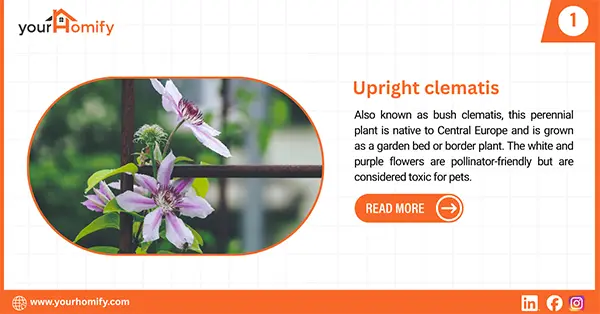
- Botanical name: Clematis integrifolia
- Plant Type: Perennial
- Hardiness Zone: USDA 3a-7b
- Native Area: Central Europe and Asia
- Bloom Season: Late-spring to summer
- Height: 1-3 feet
- Colour: White and purple
- Soil Type: Well-drained loamy soil with organic matter
- Maintenance: Low
Also known as bush clematis, this plant is grown both as a vine and a shrub. Popular as a garden border plant, the upright clematis grows small, star-shaped, white and purple flowers, which are great for attracting bees and butterflies to the garden.
These rabbit and deer-resistant flowers grow best in full sun to partial shade and are toxic to pets.
2. Umbrella Magnolia
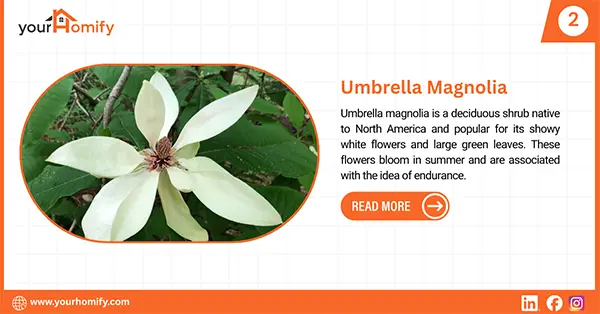
- Botanical name: Magnolia Tripetala
- Plant Type: Deciduous shrub
- Hardiness Zone: USDA zones 4-8
- Native Area: North America
- Bloom Season: Summer
- Height: Up to 30 feet
- Colour: White
- Soil Type: Slightly alkaline soil
- Maintenance: Low
The umbrella magnolia is an understory tree, also known as the umbrella tree, for the shape of its white flowers and large green leaves. This tree thrives in partial to full shade and well-draining soil, as it is intolerant of both wet and dry soils.
Magnolia flower meaning is associated with the idea of perseverance and endurance.
3. Ulster Mary
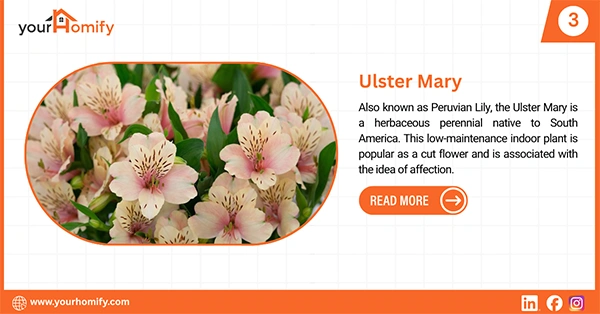
- Botanical name: Alstroemeria
- Plant Type: Perennial
- Hardiness Zone: USDA zones 6-10
- Native Area: South America
- Bloom Season: Early spring and late summer
- Height: Up to 4 feet tall
- Colour: White, yellow, and purple
- Soil Type: Well-draining, slightly alkaline soil
- Maintenance: Low
Popularly known as Alstroemeria, the Ulster Mary is a herbaceous perennial that bears trumpet-shaped flowers in all shades except blue and green. Most commonly grown as an indoor plant, it is popular as a cut flower in flower arrangements and can last up to 2 weeks in a vase.
Discovered by the Swedish botanist Baron Von Alstromer in Europe, the flower features upside-down leaves, associated with the idea of affection, and is non-toxic for pets as per ASPCA.
4. Unguicularis
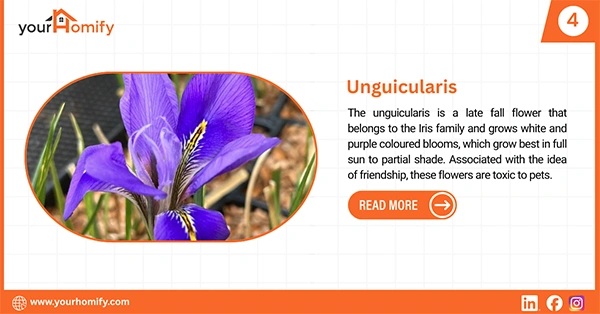
- Botanical name: Iris Unguicularis
- Plant Type: Perennial
- Hardiness Zone: USDA zones 7a-9b
- Native Area: Greece and Turkey
- Bloom Season: Late fall to early spring
- Height: Up to 18 inches
- Colour: White and purple
- Soil Type: Rocky
- Maintenance: Low
Also known as Algerian Iris, the Unguicularis belongs to the Iris plant family and is quite underrated comparatively. These perennial flowers thrive in full sun but can tolerate a little shade as well, and can be planted both in containers and garden borders.
While these fall flowers are easy to care for and thrive with a little pruning, they can have a slightly aggressive growth habit and are toxic to pets.
5. Upland Ironweed
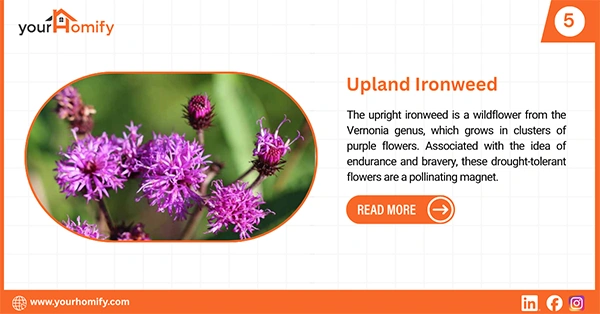
- Botanical name: Vernonia glauca
- Plant Type: Wildflower
- Hardiness Zone: USDA zones 4-9
- Native Area: Eastern and Southeastern America
- Bloom Season: Late summer to fall
- Height:2-10 inches
- Colour: Purple and pink
- Soil Type: Well-draining clay, loamy
- Maintenance: Low
Part of the Vernonia genus, the upland ironweed is a wildflower which mainly grows in woodland and features a spike-like cluster of purple flowers. Popular for their striking, small flowers, they are drought-tolerant once established and considered a pollinator magnet.
The ironweed flower’s meaning is associated with the idea of endurance and bravery.
6. Ursinia
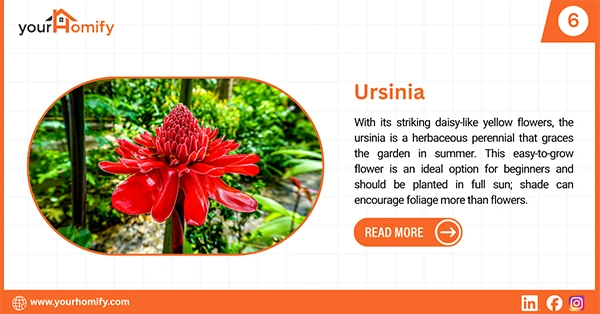
- Botanical name: Ursinia anthemoides
- Plant Type: Herbaceous annual
- Hardiness Zone: USDA zones 9-11
- Native Area: South Africa
- Bloom Season: Summer
- Height: Up to 20 inches
- Colour: Yellow
- Soil Type: Well-draining, sandy loam
- Maintenance: Low
The ursinian flower belongs to the daisy family and grows small orange-yellow summer flowers, which are mainly grown for ornamental purposes and are best grown in full sun.
Named after the German author Johannes Heinrich Ursinia, these drought-tolerant flowers are beginner-friendly due to their uncomplicated care requirements.
7. Uvularia Hirta
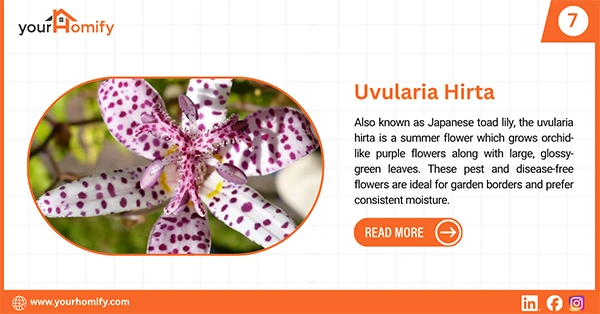
- Botanical name: Tricyrtis hirta
- Plant Type: Herbaceous perennial
- Hardiness Zone: USDA zones 4-8
- Native Area: Japan
- Bloom Season: Late summer
- Height: 2-3 feet
- Colour: Purple
- Soil Type: Humus-rich soil
- Maintenance: Low
Also known as the Japanese toad lily, uvularia hirta is not the same as uvularia, a flowering genus. These shade perennials grow small orchid -like flowers and large, glossy green leaves, which are perfect for woodlands, garden borders and wetlands.
This low-maintenance flower is pest and disease-free, but benefits from mulching and consistent moisture as it can not tolerate dry spells.
8. Uva-Ursi
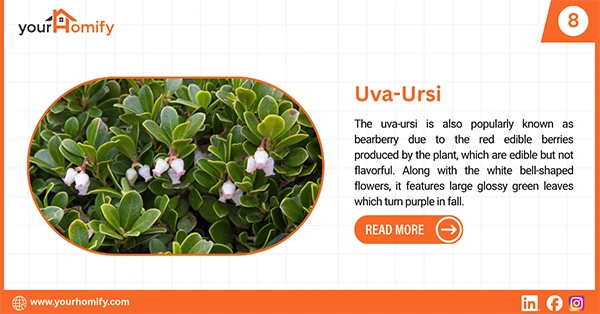
- Botanical name: Arctostaphylos uva-ursi
- Plant Type: Evergreen, trailing shrub
- Hardiness Zone: USDA zones 3-7
- Native Area: North America, Europe and Asia
- Bloom Season: Spring
- Height: Up to 12 inches
- Colour: White
- Soil Type: Sandy, loamy soil
- Maintenance: Low
Commonly referred to as bearberry, the Uva-ursi is a perennial flower from the Ericaceae family. These evergreen shrubs are ideally grown as ground cover in rock gardens and are renowned for their small bell-shaped flowers along with large glossy green leaves.
The large, showy leaves turn purple in the fall and green again in spring, which adds to the ornamental value of the flowers. Along with the elegant foliage, the flowers also feature red edible berries, which are safe for consumption but lack flavour.
9. Uvaria
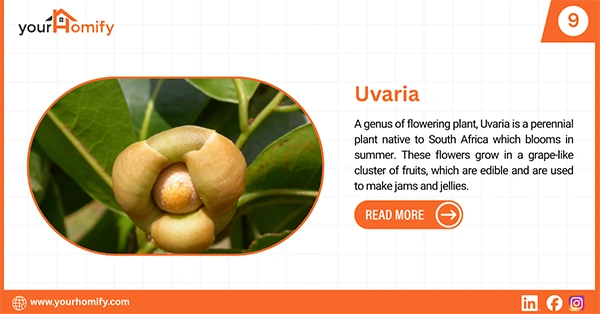
- Botanical name: Uvaria
- Plant Type: Shrubs
- Hardiness Zone: USDA zones 5-9
- Native Area: South Africa
- Bloom Season: Summers
- Height: 3-4 feet
- Colour: Red
- Soil Type: Well-draining humus-rich soil
- Maintenance: Low
Uvaria is a genus of flowering plants which is also most commonly referred to as the red-hot poker. These flowers have a unique flower shape with red and yellow spikes, which are rabbit and deer-resistant and can survive on minimal watering as well.
These cat-safe flowers grow a cluster of edible berries which resemble grapes and are used to make jams and jellies.
Although these flowers are non-toxic for cats, ingestion can lead to mild discomfort, which should be treated under medical supervision only.
10. Uvularia
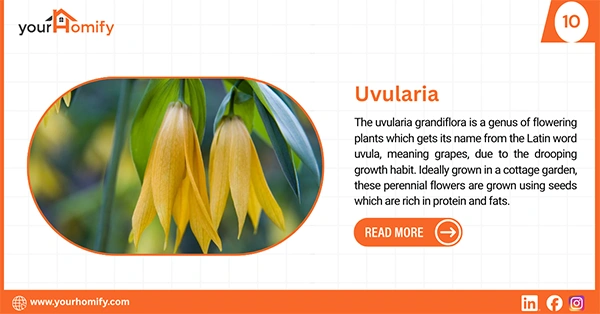
- Botanical name: Uvularia grandiflora
- Plant Type: Perennial
- Hardiness Zone: USDA zones 1-7
- Native Area: East and Central North America
- Bloom Season: Spring
- Height: 1-2 feet
- Colour: Yellow
- Soil Type: Well-draining clay, loamy
- Maintenance: Low
Uvulvaris, also known as Merrybells, is a genus of flowering plants which features bell-shaped yellow flowers ideal for cottage gardens and garden borders. The genus name is derived from the Latin word uvula, meaning grapes, which makes sense due to the drooping growth habit.
Planted best in partial to full shade through seeds, the seeds are highly nutritious, high in protein and fats.
11. Upright Prairie Coneflower
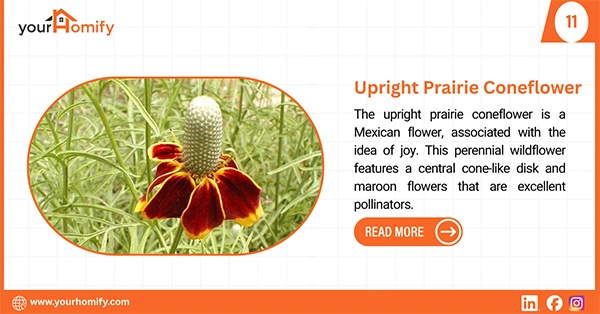
- Botanical name: Ratibida columnifera
- Plant Type: Herbaceous perennial
- Hardiness Zone: USDA zones 4-9
- Native Area: North America
- Bloom Season: Spring to fall
- Height: 1-3 feet
- Colour: Red
- Soil Type: Sandy, loamy soil
- Maintenance: Low
Part of the Asteracea family, the upright coneflower is a Mexican flower and hence is also known as the Mexican hat. This wildflower is most popular due to its cone-like central disk and maroon-red downward-facing petals.
If you are planning to start a garden, this perennial flower is an ideal option due to its hardiness, the ability to thrive in dry conditions, and being a pollinating magnet.
Lastly, the upright prairie coneflower is associated with the meaning of joy in Mexico and is used on special occasions.
12. Uruguayan Firecracker Plant
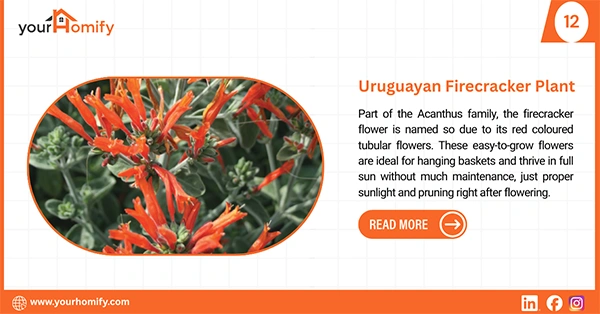
- Botanical name: Dicliptera suberecta
- Plant Type: Herbaceous perennial
- Hardiness Zone: 3b
- Native Area: South America
- Bloom Season: Mid-summer
- Height: Up to 24 inches
- Colour: Red
- Soil Type: Well-draining sandy, loamy
- Maintenance: Low
The firecracker plant belongs to the Acanthus family and is named so due to its tubular red flowers, which resemble firecrackers. These hummingbird flowers are beginner-friendly as they are easy to care for and thrive in full sunlight in hanging baskets.
One care tip is to prune only after flowering, not before that, as it can affect the growth of blooms. Make sure the soil is well-drained, as they are susceptible to root rot, and overwatering can damage the roots.
13. Uinta Cactus
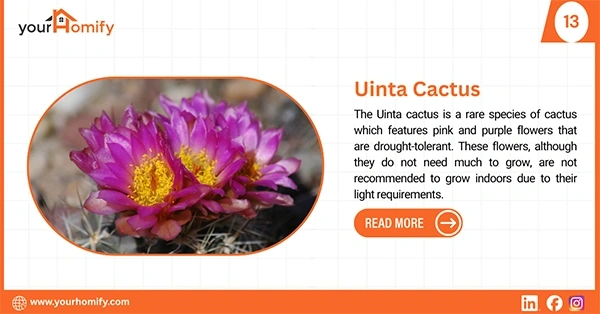
- Botanical name: Sclerocactus wetlandicus
- Plant Type: Cactus
- Hardiness Zone: USDA zones 4-8
- Native Area: Uinta basin
- Bloom Season: Late spring
- Height: Up to 6 inches
- Colour: Purple
- Soil Type: Coarse soil
- Maintenance: High
Uinta cactus is a rare type of cactus that features pink and purple funnel-shaped flowers. Like any cactus, these also survive well with moderate watering and no pruning, just fertilise once a month using cacti plant food, and you are good to go.
While cacti are not difficult to grow indoors, it is generally not recommended to grow a uinta cactus flower indoors due to its high-maintenance nature. Only do so if you can mimic its true growing requirements perfectly.
14. Upland White Goldenrod
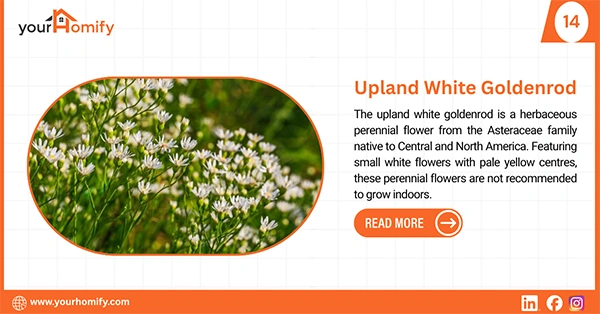
- Botanical name: Solidago ptarmicoides
- Plant Type: Perennial
- Hardiness Zone: USDA zones 3-8
- Native Area: Central North America
- Bloom Season: Late-summer
- Height: 1-2 feet
- Colour: White
- Soil Type: Well-draining sandy soil
- Maintenance: High
Part of the Asteraceae family, the upland white goldenrod is a herbaceous perennial which features small white flowers with pale yellow centres. These flowers are drought-tolerant and excellent pollinators.
They thrive in full sun to partial shade, but are not grown indoors due to their precise growing requirements that are hard to replicate indoors. Apart from being ornamental, these flowers have anti-inflammatory properties and can help with colds and the flu.
15. Upright Myrtle Spurge
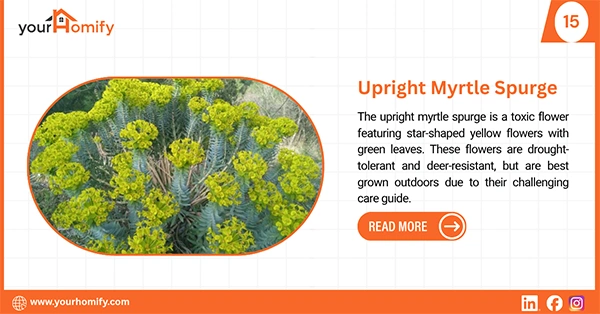
- Botanical name: Euphorbia rigida
- Plant Type: semi-evergreen succulent
- Hardiness Zone: USDA zone 7-11
- Native Area: Mediterranean regions
- Bloom Season: Late winter to early spring
- Height: 1-2 feet
- Colour: yellow
- Soil Type: Well-draining sandy and rocky
- Maintenance: Low
The Upright myrtle spurge flower grows star-shaped yellow flowers with green leaves arranged in spirals. These drought-tolerant blooms are also not disturbed by deer, hence, can be planted outdoors without much hassle.
One care tip is to prune them properly, as they can self-seed if not deadheaded in a timely manner. Be cautious while handling, as the milky sap is toxic for both pets and humans.
16. Upright Yellow Flax
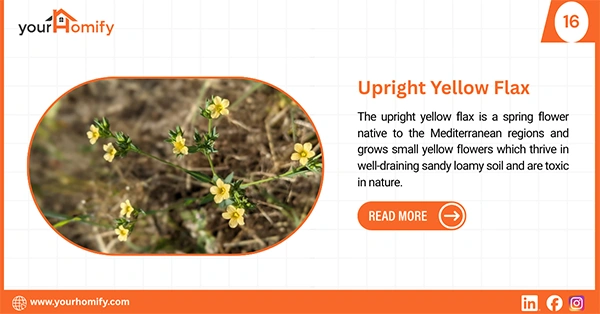
- Botanical name: Linum strictum
- Plant Type: Herbaceous perennial
- Hardiness Zone: USDA 8-10
- Native Area: Mediterranean region
- Bloom Season: Spring to early summer
- Height: Up to 3 feet
- Colour: Yellow
- Soil Type: Well-draining sandy and loamy
- Maintenance: Low
Commonly known as Rigid flax, the yellow flax blooms as the name suggests, grows small yellow flowers. These rare blooms are grown as annual herbs and grace the garden in early spring.
They are best grown outdoors in 6+ hours of direct sunlight and are toxic to humans and pets.
17. Umbrella Sedge
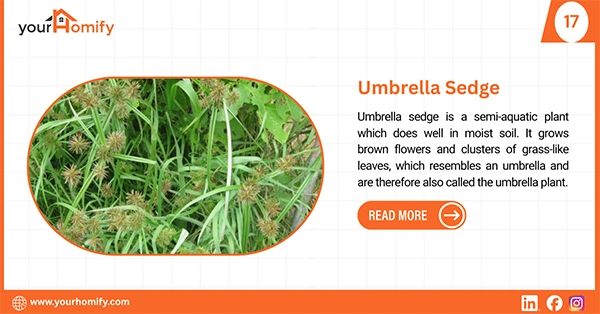
- Botanical name: Cyperus alternifolius
- Plant Type: Semi-aquatic
- Hardiness Zone: USDA zones 8a-11b
- Native Area: Africa and the Arab
- Bloom Season: Spring to fall
- Height: 3-6 feet
- Colour: Brown
- Soil Type: Well-draining, moist soil rich in organic matter
- Maintenance: Moderate
Also known as the Umbrella plant, this perennial plant grows small greenish-brown star-shaped yellow flowers with a grass-like cluster of stems. Ideally grown in a water garden and overly moist soil in full sun to partial shade.
In zones below 8-11, the umbrella sedge plant requires winter protection as it can not tolerate temperatures below 15°F.
18. Utah Agave
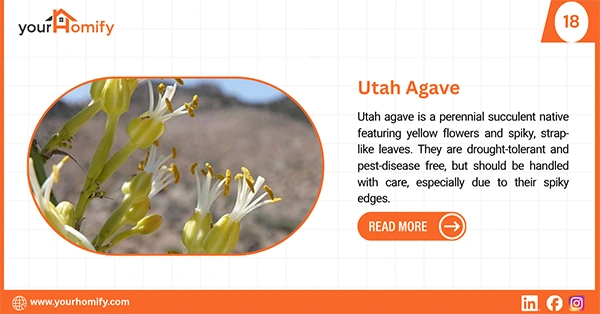
- Botanical name: Agave Utahensis
- Plant Type: Succulent
- Hardiness Zone: USDA 6-10
- Native Area: Utah, Nevada, and Arizona
- Bloom Season: Late spring to early summer
- Height: 10-15 feet
- Colour: Yellow
- Soil Type: Rocky
- Maintenance: Low
The Utah agave is an extremely cold-tolerant plant which is typically grown in rock gardens and prefers full sun to partial shade. These plants typically bloom in fall and produce small yellow flowers and long, strap-like leaves with spiny edges.
This hummingbird flower is deer-resistant and drought-tolerant, but handled with care while planting and careful as the spiky edges can be harmful.
19. Ulex
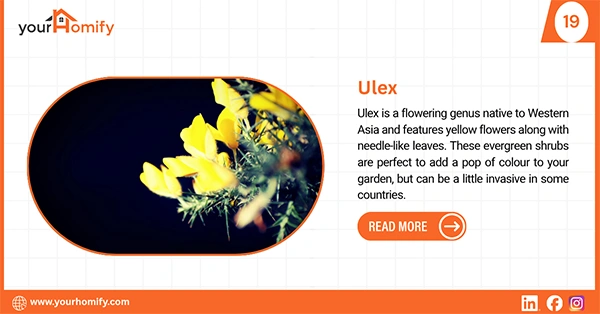
- Botanical name: Ulex europaeus
- Plant Type: Evergreen shrubs
- Hardiness Zone: USDA zones 6-9
- Native Area: Western Asia
- Bloom Season: Early spring to early summer
- Height: Up to 10 feet
- Colour: Yellow
- Soil Type: Sandy, rocky, well-draining soil
- Maintenance: Low
Ulex is a genus of flowering plants also known as common gorse. These evergreen shrubs are part of the pea family and feature yellow blooms and needle-like leaves. Extremely easy to grow, the Ulex flowers are suitable for woodlands and add a pop of colour to the garden beds.
While these flowers are non-toxic to pets, they can cause a little digestive discomfort.
20. Ume
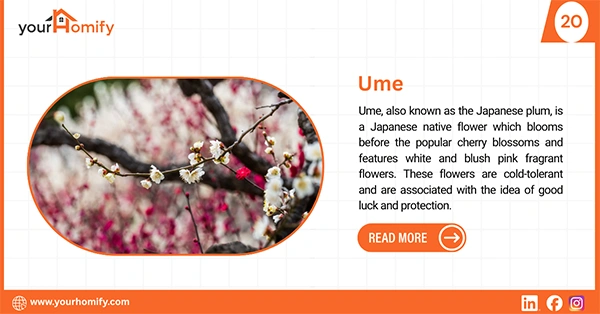
- Botanical name: Prunus mume
- Plant Type: Deciduous tree
- Hardiness Zone: USDA 6-9
- Native Area: Southern China
- Bloom Season: Winters
- Height: 15-20 feet
- Colour: White and pink
- Soil Type: Well-draining acidic soil
- Maintenance: Moderate
Cherry blossoms are not the only flowers that add to the charm of Japan; the ume blooms grace the landscape way before the blossoms arrive. Also known as Japanese Plum, ume grows on a deciduous tree which flowers around January and February.
These small, blush, fragrant pink flowers also bear green, edible fruits which are used to make liquor. Ume has been extremely significant in East Asian art, along with bamboo and pine, for their endurance against cold, and is associated with the idea of good luck and protection.
Concluding Remarks
Flowers that start with U are a fun exploration of blooms that are not celebrated enough. Every bloom has its own set of features that make it stand out individually. While I am a fan of big blooms, so many in the list perfectly balance the extravagance of large flowers with their small, delicate blooms.
Once you’ve discovered these U-letter blooms, the flowers that start with V are a lovely, lesser-known group to explore next.
Go ahead and plant some of these beauties at home this coming spring.
Happy Gardening!
FAQs
What is the rarest flower that starts with U?
Uinta cactus is a rare flower that starts with the letter U.
Are there any toxic flowers that start with the letter U?
Upright clematis and Uvaria are toxic flowers that start with U.
What are the perennial flowers that start with U?
Ulster Mary, Uvaria, and Ursinia are some perennial flowers that start with U.
Is upright clematis and bush clematis the same?
Yes, the upright clematis and bush clematis are the same.
Is Uinta Cactus a toxic flower?
No, the Uinta cactus is not a toxic flower.
- Plants that start with ‘U’– Plant Delight Nursery
- Clematis– North Carolina State Extension
Flowers That Start With T: 15 Types, Meanings & Care
[…] one, the T-letter flowers are a must for both your garden and indoor decor purposes, and the flowers that start with U are next up in this A–Z […]