The peony flower is relatively easy to care for, but if you want to push your plants to produce stronger stems and larger blooms, you need to fertilize them correctly. Whether you are looking for the exact right time to feed your spring garden or searching for the best nutrient alternatives, this guide covers every easy, rewarding step.
If you are curious about the peony fertilizer along with the best time and efficient alternative, dive into this immersive guide and learn about feeding these spring flowers the right way!
Quick answer
The best peony fertilizer is a low-nitrogen and high-phosphorus plant food, which, ideally, should be applied twice, once in early spring and again after flowering. While peonies are not heavy feeders, some plant feeding helps in promoting flower growth and a sturdy stem.
What Is Peony Fertiliser? Meaning and Purpose Explained
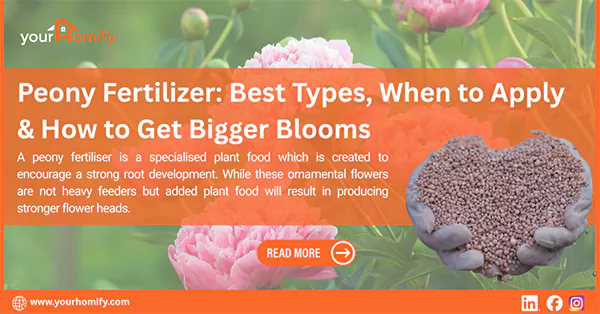
A peony fertiliser is a specialised plant food that is created to encourage strong root development. These ornamental flowers are not heavy feeders but adding plant food will result in producing stronger flower heads.
Flowers mainly benefit from a phosphorus rich fertilizer or a bulb plant food. Anything rich in nitrogen will compromise the flower growth and promote the growth of foliage.
Moving further in the article, I will cover the essential nutrient requirements for peonies along with the best fertilizer options.
Why Do Peonies Need Fertilizer?
Peonies are low-maintenance perennials that do not require active feeding; however, a good dose of appropriate plant food twice a year will do no harm to the flowers.
Take a look at the reasons why it is important to feed peonies:
- It helps promote bushier growth and stronger stems, which prevents the flowers from drooping and looking weak.
- Peonies’ fertiliser also provides the soil with adequate nutrients that are required for the growth of the peonies.
What are the Essential Nutrients for Peonies?
As per my experience, a phosphorus-rich fertilizer has worked the best for healthy blooms.
While flowers need a balance of all the nutrients, take a look at the following nutrients, which are essential for peony flowers, along with their benefits and side effects:
Nitrogen
- Advantage: Promotes strong stems and leaf growth.
- Disadvantage: The energy is diverted mainly to the foliage growth, and the flower health is compromised.
Phosphorus
- Advantage: Makes the plant resilient and helps in creating a strong root system.
- Disadvantage: Excessive phosphorus can cause water pollution, harm marine animals, and soil fixation.
Potassium
- Advantages: Makes the plant hard, produces larger blooms, and sturdier stems.
- Disadvantages: Just potassium-rich plant feeding can lead to nutrient deficiencies.
When to Fertilise Peonies for Healthy Growth and More Blooms
The peony flowers should be fertilized twice a year during the first couple of years to promote stronger blooms. The timing of feeding the plant can make or break the results.
Take a look at the right time to fertilise peonies:
- Early Spring
- The best time to fertilise the peonies is during early spring, preferably March, when the shoots just appear.
- During this time, the plant feeding gives the flower enough energy and nutrients for root formation.
- After Flowering
- Fertilising after the peonies have bloomed is another really crucial care step for peonies.
- Right after flowering, the plant loses most of its nutrients and requires a boost to survive the winter dormancy.
Peonies, after maturing, do not require regular fertilisers. Make sure you significantly reduce the usage of plant food after 2-3 years of planting.
How to Fertilise Peonies for Healthy Growth and More Blooms
Just fertilising at the right time will not help with the peony blooms; it’s important to use the right fertiliser and apply it according to the instructions mentioned on the fertiliser package for the best results.
Step 1: Test Soil pH Before Fertilising Peonies
- Soil testing is the most crucial step before fertilising because it helps us determine what nutrients are required by the flower, which are missing in the soil.
- I generally go for a potassium or phosphorus-rich peony fertilizer instead of a nitrogen-rich one, as a nitrogen-rich fertilizer promotes foliage growth rather than flowers.
Step 2: Apply Fertiliser Around the Plant Base Evenly
- Take the fertiliser of your choice, my preference is a slow-release balanced fertiliser with an NPK ratio of 3-5-5.
- Apply the fertilizer near the drip line of the plant. If you are a new gardener, remember that letting the fertiliser touch the plant stems will cause a plant burn.
Step 3: Water Thoroughly After Fertilising Peonies
- Make sure the peony flower is adequately watered after fertilising to ensure that all the nutrients are perfectly absorbed by the soil.
- Watering also helps prevent root burn that could happen after excessive feeding.
What are the Best Peony Fertilizer?
According to the Internet, a 5-10-5 high potassium fertilizer is the most effective fertilizer for the peonies; not only does it help in making the stems more sturdy, but it also encourages healthy blooms.
While there are many options, take a look at the most efficient peony fertiliser:
Bulb Fertiliser
- The bulb fertilizer is said to have low-nitrogen and high-phosphorus content, which promotes strong root development and encourages strong blooms.
Bone Meal Fertiliser
- Another rich source of nutrients for your plant is the bone meal fertilizer, which is also a great source of phosphorus and calcium.
- These nutrients together help promote root formation and encourage new flowers and fruits in the plant.
- However, note that the bone meal fertilizer does not contain any potassium, so if your soil lacks potassium, apply accordingly.
Balanced Fertiliser
- A balanced fertiliser has an equal amount of nutrients, which ensures that the flower is not devoid of any essential nutrients.
- The balanced fertiliser is great for gardeners who do not yet understand soil deficiencies or selecting a precise fertiliser.
Compost/ Manure
- Compost is an organic solution for the growth and care of peonies. I used organic matter to provide the flower with the nutrients it requires.
- Apply a layer of compost or manure right at the time of planting, as it helps replenish the soil and promote healthy growth.
Common Mistakes While Fertilising Peonies With Their Solutions
Peonies are not heavy feeders, and over-fertilising can cause root burn. While plant feeding is not as difficult as it seems, some common mistakes must be avoided for the most effective results:
| Mistake | Solution |
| Over feeding |
|
| Incorrect NPK ratio |
|
| Feeding during Fall |
|
| Incorrect Application |
|
Concluding Remarks
The peony is an ornamental flower that is widely grown by gardeners and anthophiles around the world. While the peony flower care is extremely easy and rewarding, a little dose of peony fertilizer helps in better nutrient absorption and sturdy, colourful flowers.
One gardening tip I would like to share is that only use a fertilizer for peonies if essentially required, as overdosing can lead to root burn, drastically damaging your yield.
Happy Gardening!
FAQs
Should I fertilize my peonies in the fall?
No, it is generally not recommended to fertilize peonies in the fall as it encourages new blooms which might not survive the winter dormancy.
What is the best fertilizer for peonies?
The best fertilizer for peonies varies depending on the soil deficiencies and the desired results. However, low-nitrogen and high-phosphorus fertilisers work best for these spring flowers.
Why does my peony grow more leaves and fewer flowers?
One reason for more leaves and fewer flowers is a nitrogen-rich peony fertilizer, which promotes foliage growth.
What is the best time to fertilise the peonies?
Ideally, the best time to fertilise the peonies is early spring when the shoots have emerged.
What will overfertilising do to my peonies?
Over-fertilising peonies can lead to root burn.