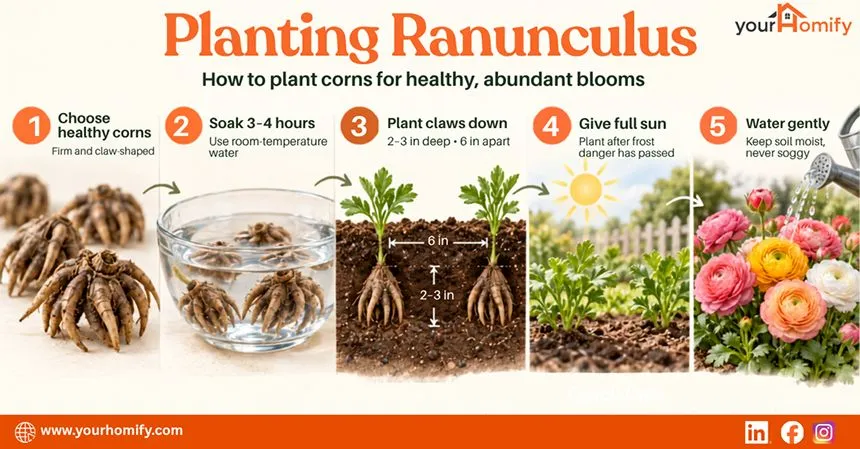
Ranunculus corms are used to grow Ranunculus flowers, which are also known as the Persian buttercup due to their native regions. The corms are often referred to as bulbs due to a common gardening practice of referring to an underground storage unit as a ‘bulb.’ Shaped like a claw, these corms are typically 5-7 cm large for standard varieties and larger for the giant types. Planting Ranunculus bulbs involves pre-sprouting in water (optional) and sowing them in well-draining soil after the danger of frost has passed for colder regions.
If you are keen on learning how to grow Ranunculus, let me take you through a detailed growing guide, factors influencing corm selection, care tips, companion plants, and more insights.
Quick answer
For planting Ranunculus, pre-soak the corms in room-temperature water for 3-4 hours and place them in well-draining, damp soil. After the danger of frost has passed, sow them 4 inches deep in the ground. Make sure the soil is consistently damp and receives 6-8 hours of direct sunlight every day for healthy blooms.
What is Ranunculus? Features of the Persian Buttercup Explained
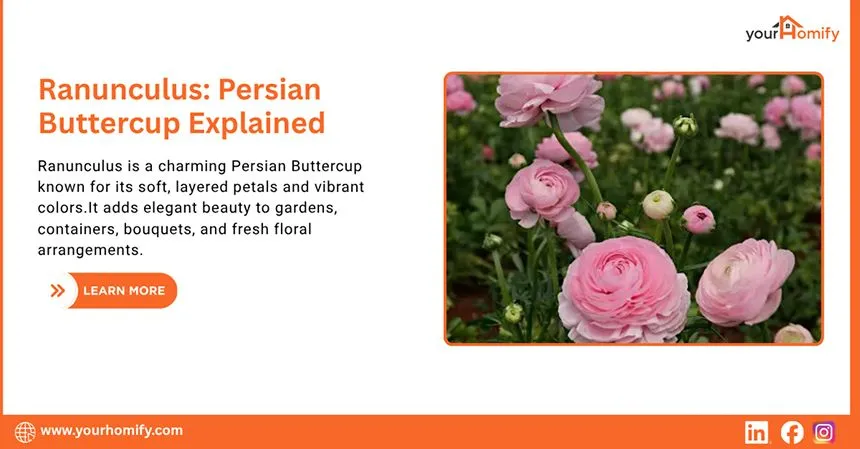
The Ranunculus flower is a tender perennial from the buttercup family that originated in Southeast Asia and is therefore also known as the Persian Buttercup flower. They grow up to a height of 12-24 inches, which can vary depending on the species. These flowers grow in different colors, like yellow, red, pink, white, and burgundy, and have a multi-layered ruffled design with no distinct fragrance.
The Ranunculus plant is a magnet for pollinating birds and insects, hence extremely beneficial for gardens. Also used as cut flowers, Ranunculus blooms can last up to 10-14 days in a flower vase.
Are Ranunculus Corms and Bulbs the Same? Better Alternative for Planting
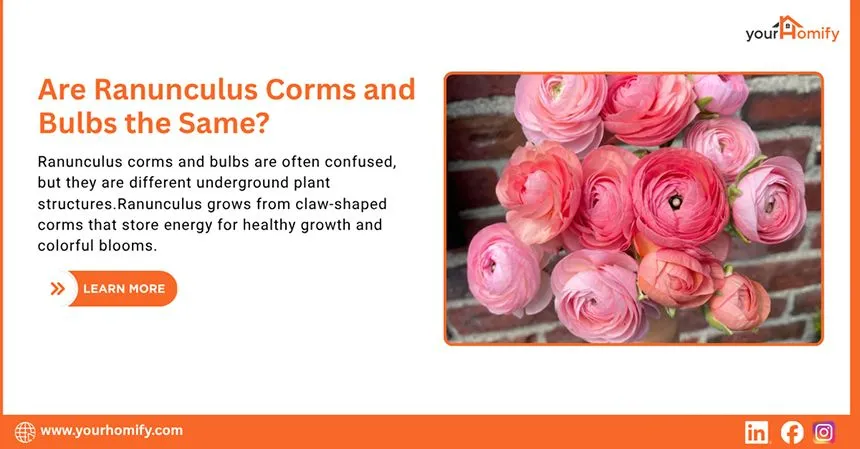
Yes, Ranunculus corms and bulbs refer to the same thing. These spring flowers are ideally grown using corms, which are often labelled as bulbs because the term is universally used for any underground storage used for planting.
Corms are small swollen stems that store food and energy for the plant’s growth; they are botanically different from the traditional bulbs used for plants, as the latter are paired with fleshy leaves.
How to Choose the Right Ranunculus Variety as Per Your Goal?
Choosing the right variety of Persian buttercup ranunculus plant entirely depends on your gardening goals; the Butterfly and Cloni Success series work best for cut flower arrangements, while the Amandine series are perfect for both indoor and outdoor planting in warmer zones due to their heat tolerance. Lastly, the Aviv series are great for colder zones with short blooming windows.
Take a look at the different varieties you can choose based on your goals:
1. Indoor Planting
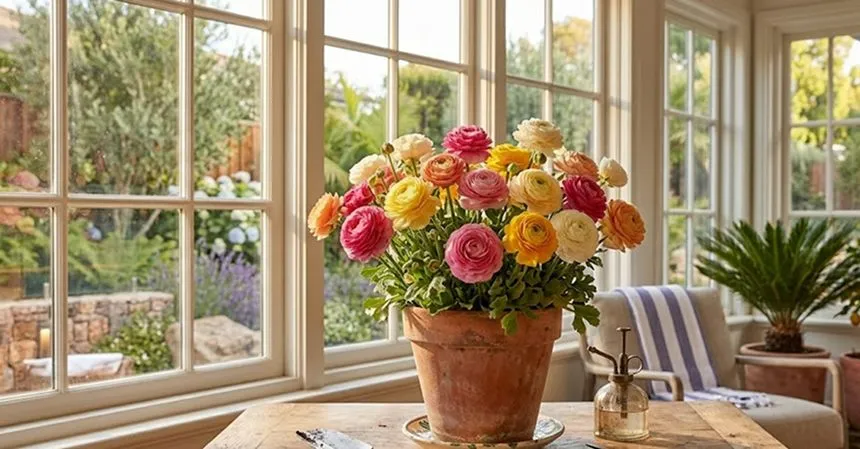
Wide dwarf varieties like the La Belle series are perfect for indoor planting. They feature shorter stems that grow up to 10-15 inches tall. With this compact size and cool-temperature preference, they can be easily grown indoors without hassle.
Similarly, the Tomer series flowers also grow up to 10-12 inches tall and can be grown as indoor plants or used as south-facing window plants due to their need for direct sun exposure.
YourHomify Tip
These dwarf varieties are only good for indoor planting; if you are aiming to transplant the corms outdoors after a while, choose taller varieties like Giant Telcote and Jardin series.
2. Cut Flower Arrangements
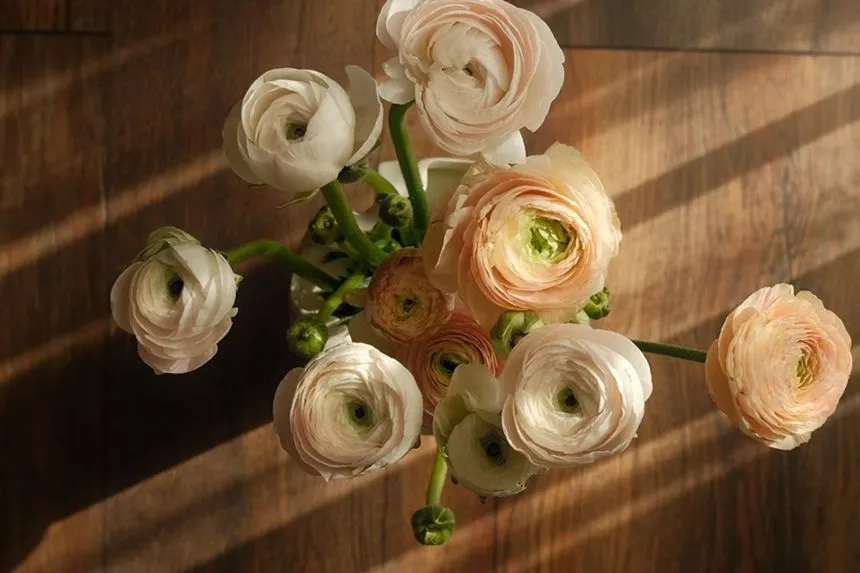
The best variety for cut flower arrangements is the Cloni series by the Italian breeders Biancheri Creazioni, along with the Butterfly and Romance series. These feature larger flowers than other varieties and are known to be grown specifically for cut flower arrangements due to their long vase life of 2 weeks or more with proper care. Alongside, the Butterfly series and Romance series produce semi-double and double blooms, respectively, which resemble peonies and hence are also grown for commercial purposes.
YourHomify Insight
All of these varieties are patented and are sold through the breeders directly to the grower. Hence, check for authorized permission before planting.
3. Climate and Hardiness Zone

Warmer zones (8-11) experience harsh summers, and Ranunculus in general is not a heat-tolerant variety; therefore, choose a type that has heat-tolerant properties, like the Amandine series. These flowers can tolerate heat better than other varieties.
In colder zones, the growing window is often small, often ending right before the temperature rises. Therefore, you need fast-growing plants that can give you a quicker bloom period, like the Aviv series, which blooms within 90 to 110 days, which is faster than widely popular varieties.
What is the Best Time to Plant Ranunculus Corms?
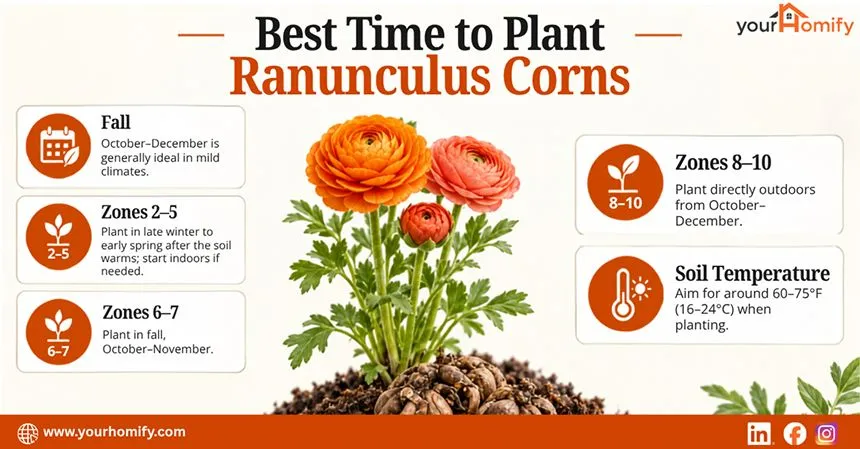
The best time to plant the Ranunculus corms is fall, from October to December. The average soil temperature is between 60°F-75°F. The time of planting these perennials might vary for different zones due to the lowest winter temperature.
Take a look at the ideal time for planting Ranunculus corms based on the zones:
1. Zones 2-5
Zones 2-5 experience extremely harsh winters, with the lowest temperatures being -40°C. Ideally, Ranunculus corms are best planted during late winter and early spring, since the soil will take a while to warm up. You can also start the Ranunculus corms indoors and move them outdoors when the danger of frost has passed.
2. Zones 6-7
The best time to plant the Ranunculus corms in zones 6-7 is in the fall, from October to November. The lowest winter temperature here drops down to -23°C. Winters are not extended in these zones; hence, planting can pretty much happen during winter. However, check the soil temperature using a soil thermometer before starting.
3. Zones 8-10
Zones 8-10 experience the mildest winters comparatively. The lowest winter temperature in these regions is around 4°C. Ranunculus can be best planted during October to December directly in the ground, without the need to plant them indoors.
How Many Corms Do You Need?

An individual Ranunculus corm produces around 5-10 flowers; therefore, the right number of corms depends on how many flowers you want to grow.
I have listed all the factors that influence the number of corms required and how they affect your yield:
- Size: According to Utah State University, the size of Ranunculus corms directly affects the yield. The largest corm size, around 5-7 cm, can guarantee up to 6 stems, which can extend up to 12 stems per plant with proper care. For a 2’x4x bed, I use 32 corms with 6-inch spacing, with 4 corms per square foot.
- Garden Spacing: The number of corms you need depends on your spacing. At 4-inch spacing, you’ll need about 9 corms per square foot; at 6-inch spacing, that drops to about 4 corms per square foot. For example, a 2’x4′ bed (8 square feet) planted at 6-inch spacing needs 32 corms (8 sq ft × 4 corms/sq ft). The ideal spacing between ranunculus corms is generally 4-6 inches, which ensures resources are adequately distributed and proper air circulation is maintained
- Variety: The standard Ranunculus corm produces 3-6 flower stems per plant, and hence, if your goal is to grow indoor plants, 3-4 average-sized corms work best for you. However, some Jumbo varieties produce 5-15 flower stems per plant; therefore, use accordingly depending on your space.
Recommended Product
View all products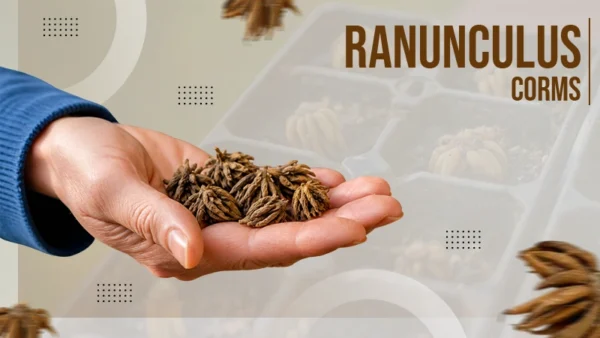
Overview and description of the Ranunculus corms Common Name Buttercup Maintenance Low Native Region Mediterranean regions and Southwestern Asia Average Height 12-24 inches Plant Type Herbaceous perennials Average Width 10-12 inches The ranunculus corms are small, claw-like storage organs that grow peony and rose-like flowers in the shade, white, pink, and red. These small corms are easy to plant and grow faster than seeds. Also known as the “Rose of spring”, the ranunculus corms need to be soaked in water for a few days in water before planting, which helps in faster root development. Ideally grown in full sun with consistent watering, these corms are susceptible to rot caused by overwatering. Key features of the Ranunculus corms Ranunculus corms are claw-like storage organs that produce elegant, rose-like flowers that thrive in cooler temperatures, often between 40°F and 50°F. Often received in a dry condition, it is advised to soak these corms in water for 2-3 days in water to encourage faster sprouting. The ranunculus corms are best planted in autumn in zones 7 and above and in early spring in zones below 6. While they are cool-season flowers, they require direct sunlight to thrive, and extreme winters can make them rot. While planting, ensure they are watered throughout the growing season as they can not tolerate dry conditions. Care Guide of the Ranunculus Corms Growing Zone: USDA zones 8-10 Water Needs: Regular watering Soil Type: Well-draining soil rich in organic matter Sunlight Exposure: 6-8 days of direct sunlight Growth Rate: Slow Advantages The ranunculus flowers last up to 2 weeks in a flower vase. Can be planted both outdoors and indoors in containers. The growth of the corms is faster than the seeds, with a better yield quality. As compared to seeds, the ranunculus corms are easier to grow. Disadvantages The ranunculus corms are sensitive and are susceptible to rot. They need a precise temperature to thrive, or else they might die. The ranunculus corms are considered toxic for dogs and can be a nuisance indoors. While the growth rate is much faster, the ranunculus corms have a high initial cost.
How to Plant Ranunculus Corms? Pre-Sprouting to Growing Outdoors
Ranunculus corms can be planted as corms and can be sown directly in the ground during late fall or started in containers 4-6 weeks before the last frost date in your area. The ideal growing guide for planting Ranunculus is divided into 2 steps: pre-sprouting and transplantation.
Take a look at the step-by-step guide for planting Ranunculus at home:
Phase I: Pre-Sprouting
Pre-sprouting Ranunculus corms is the process of encouraging rooting weeks before it is ideal to grow them outdoors. This step is crucial for the zones below 5, which experience extremely harsh winters.
Step 1: Start by selecting a corm variety you want to plant. A healthy Ranunculus corm is shaped like an octopus, has an earthy fragrance, and is at most ¾ of an inch in diameter.
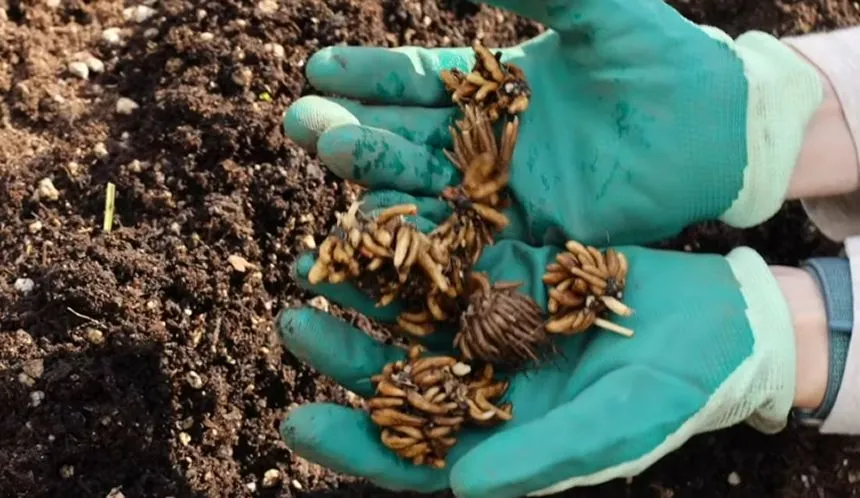
Step 2: Soak the corms in room-temperature water for at least 3-4 hours. This will help produce small rootlets, shaped like hair, which will accelerate the process of germination and produce blooms promptly.
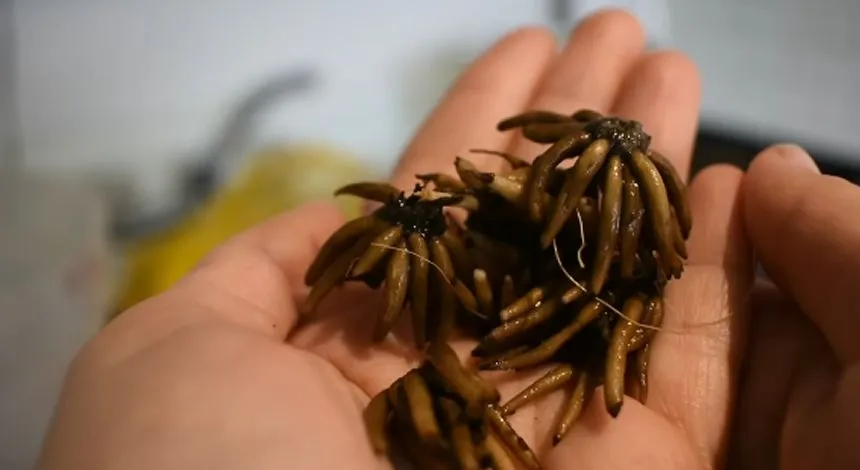
Step 3: Alongside, prepare a well-draining soil mix with a slightly acidic pH (5.8 – 6.3). Also add a peat-free or multi-purpose compost blended with coarse perlite for improved aeration and drainage, as suggested by the BBC Gardener’s World Magazine.
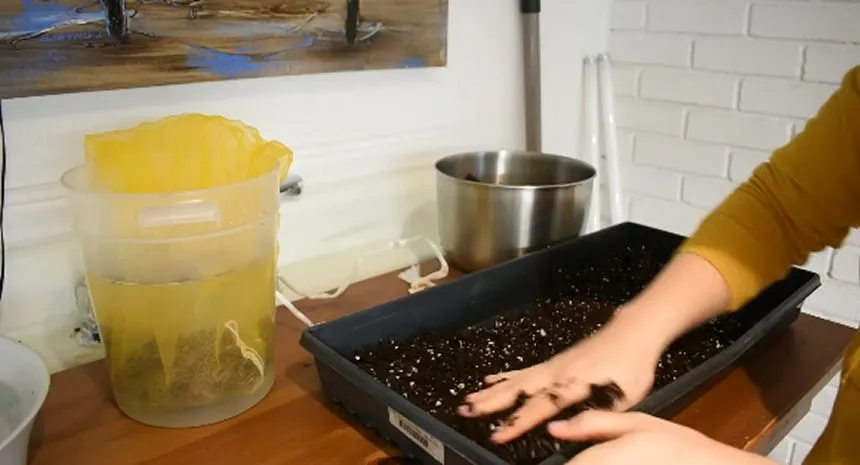
Step 4: In a 6-8 inch deep pot, fill the damp soil mix, leaving at least 2 inches of space at the top. Now place the Ranunculus corms downwards in the soil and cover them with another layer of soil.
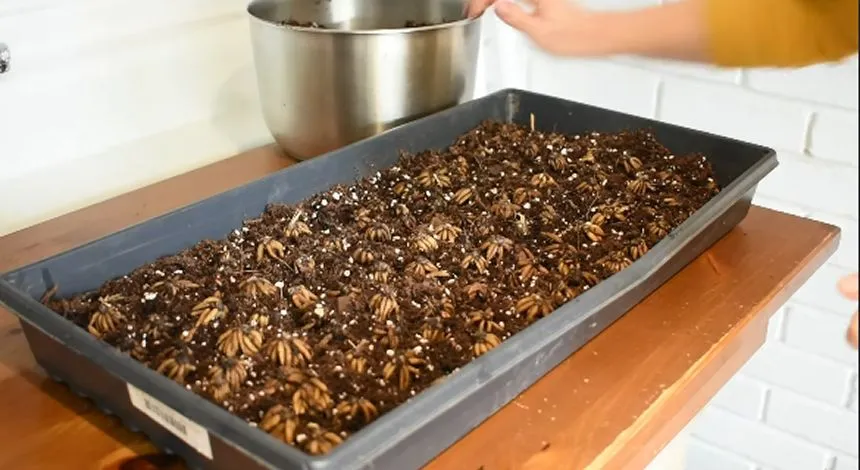
Step 5: Place these plant containers in complete darkness for up to 14 days until the new shoots appear. After that, move them to bright, direct sunlight or grow lights for at least 12-16 hours.
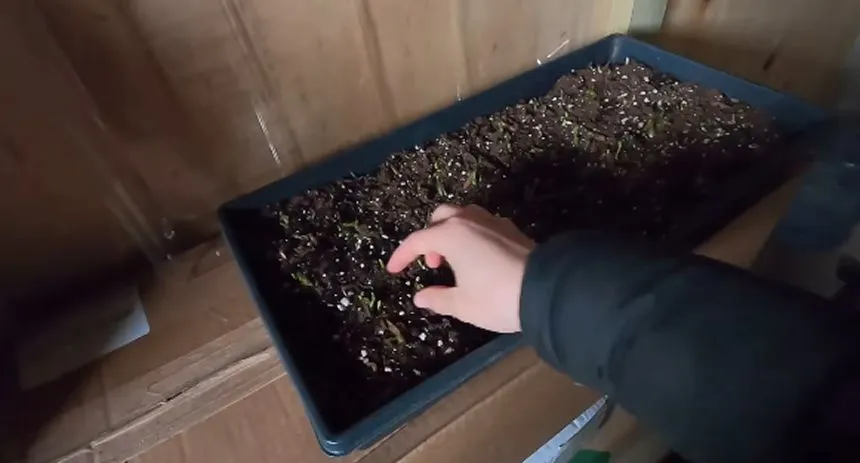
Phase II: Transplanting
Transplanting is the process of moving the sprouted corms outdoors after the danger of frost has passed. Ranunculus corms require a consistent soil temperature of 60°F-75°F. Therefore, make sure the plant is moved outdoors, taking this parameter into consideration.
Step 6: Select a site that receives bright, direct sunlight. Prepare a garden bed with some well-draining soil mixed with organic compost and perlite for added nutrition and better aeration.
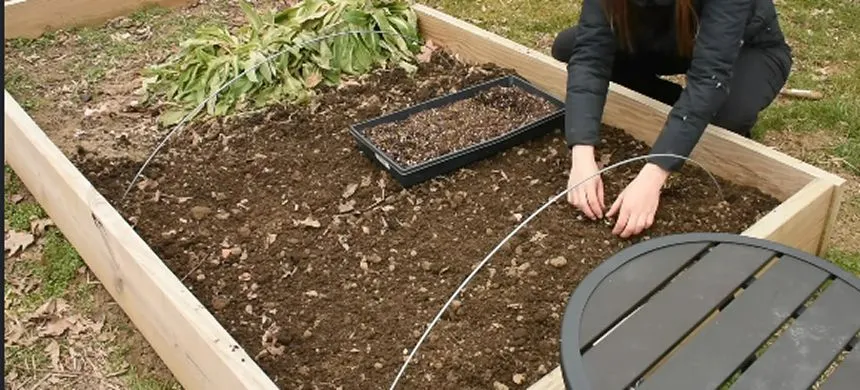
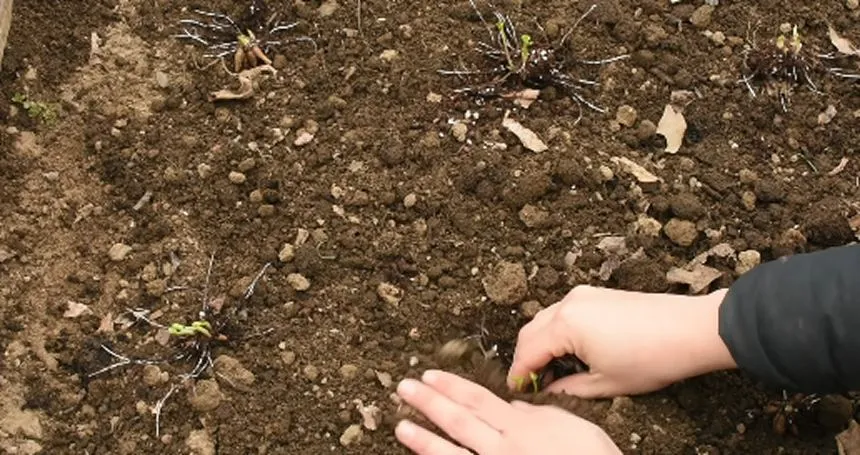
Step 7: Hydrate the soil before planting Ranunculus, gently remove them from the container, and place them at least 2-3 inches deep and 6-12 inches apart for proper air circulation.
YourHomify Tip
Before transplanting, keep the plant outdoors for a few hours every day to acclimatize it to the outdoor weather and prevent transplant shock.
Care Tips for Ranunculus After Planting
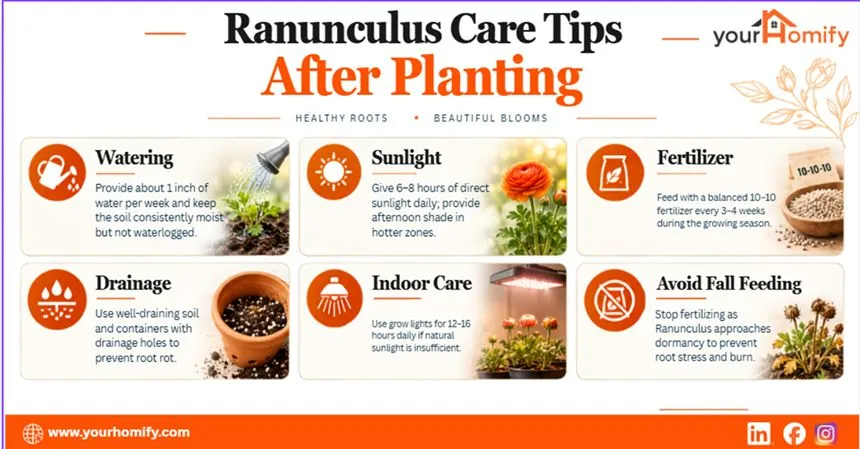
To care for the Ranunculus flowers, make sure they are adequately watered throughout the growing season with 1 inch of water per week and are receiving bright, direct sun exposure for 6-8 hours every day. They are heavy feeders; hence, a regular dose of balanced fertilizer every 3-4 weeks during the growing season.
Here are some basic care tips for growing Ranunculus at home:
1. Watering
The Ranunculus corms thrive in consistently moist soil and require at least 1 inch of water every week. Make sure the soil is watered regularly at the base and that there are enough drainage holes if planted in a container. Regularly check for signs of overwatering, like mushy leaves or browning ends, and reduce the amount accordingly. Also check the soil moisture before watering to avoid waterlogging that can lead to root rot.
YourHomify Tip
I would recommend using drip irrigation for watering Ranunculus planted directly in the ground. It ensures that the soil stays consistently damp without the danger of overwatering or waterlogging.
2. Sunlight
Ranunculus prefer 6-8 hours of direct sunlight, but in zones above 7, they prefer a little afternoon shade to make sure the leaves and the flowers do not burn off due to excess heat. When planted indoors, place them under grow lights for at least 12-16 hours to meet their requirements adequately. It is often difficult to provide the indoor plants with the proper direct sun exposure it needs, which will make them stretch out and turn leggy.
3. Fertilizer
Ranunculus corms are moderate to heavy feeders and benefit from regular feeding with a balanced fertilizer with an NPK ratio of 10-10-10. Regularly feed the plant during the growing season for lush, healthy blooms. However, avoid feeding in fall as the plant is ready to enter dormancy, and fertilizing will stress the root of the plant, leading to root burn.
Companion Plants for Ranunculus Corms
According to the National Gardening Association, the best companion plants for Ranunculus are snapdragon and pansy. It suggests that the cool-season flowers work best alongside these elegant blooms. I have personally grown flowers like anemones, tulips, and foxgloves also with Ranunculus for distinctive contrast and texture.
Here are 5 Ranunculus companion plants for a blooming garden:
1. Anemones
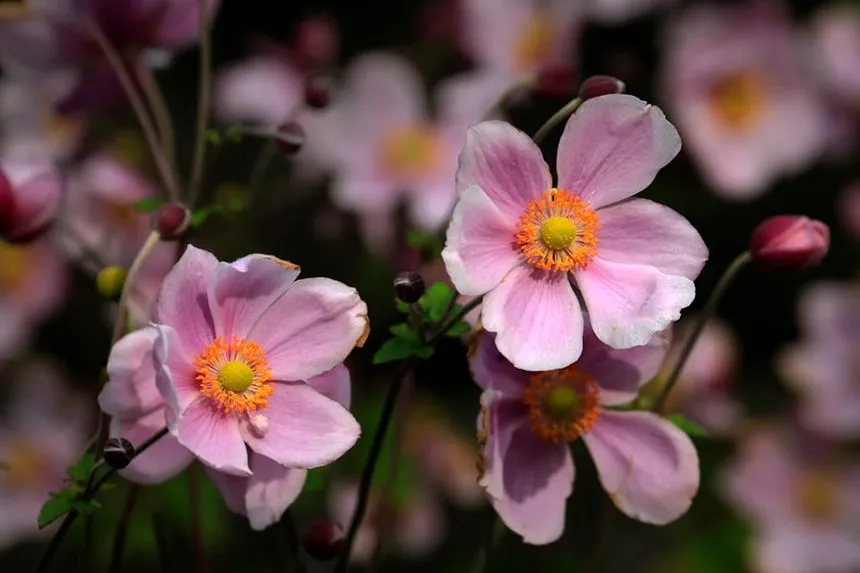
Anemones are herbaceous perennial flowers from the Buttercup family and are the best companion plants for Ranunculus. They are cool-season flowers that can be planted best in fall for colder regions, and for warmer zones, late winter to fall works best, similar to the Ranunculus flowers. Additionally, the cup-shaped flowers of anemones contrast perfectly with the ruffled blooms.
2. Sweet Peas
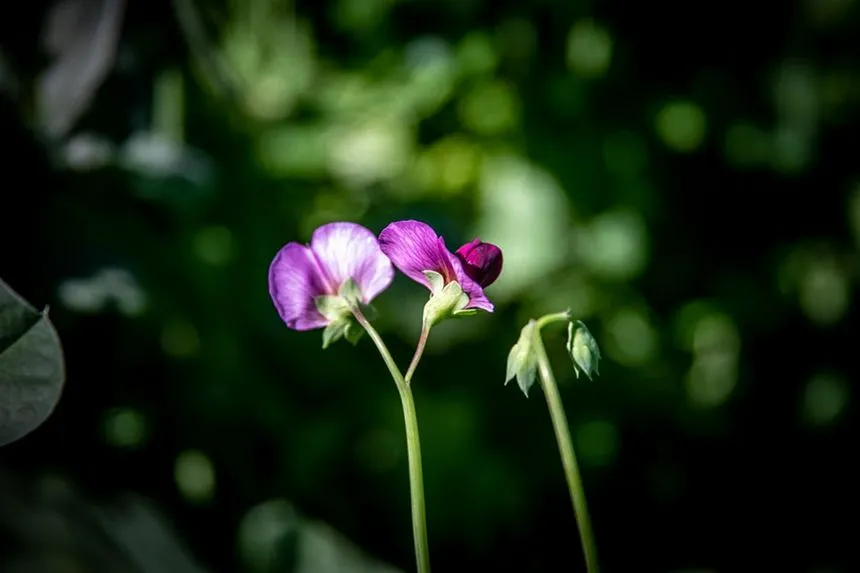
Sweet peas are an annual flowering vine that shares the same growing requirements as the Ranunculus .Both of them prefer full sun, well-draining moist soil, and cool weather to grow.
Additionally, both of these flowers bloom around the same time, during late winter and early spring, making it ideal to grow them together. Lastly, the sweet pea vines contrast well with the bushy Ranunculus flowers and provide a distinct texture and vertical height to the garden.
3. Snapdragon
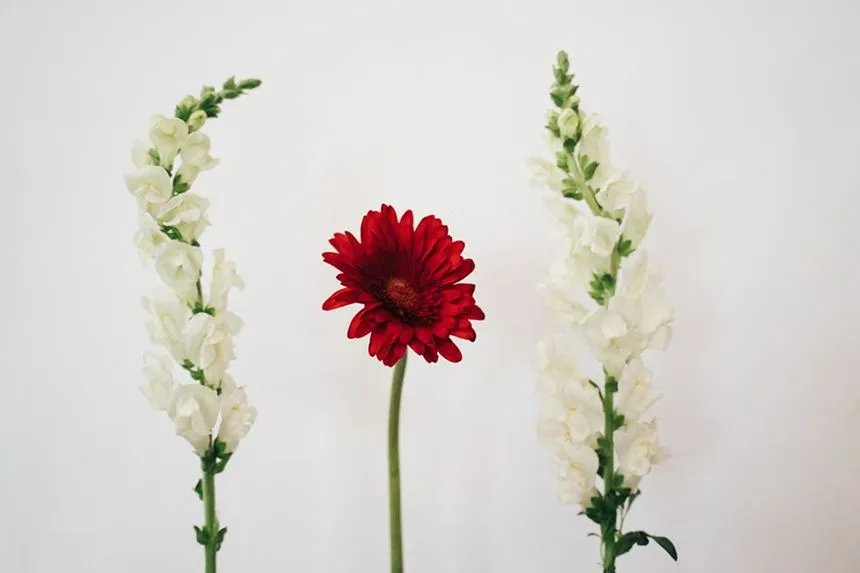
Snapdragons are short-lived perennial flowers that are commonly known as cool-season annuals. These tall, ruffled flowers are shaped like a dragon’s mouth. They grow perfectly alongside Ranunculus due to soil, sunlight, and water compatibility.
However, place them at least 8-12 inches apart, as the taller varieties planted too close can block the sunlight for the Ranunculus flowers, causing leggy growth.
4. Tulips
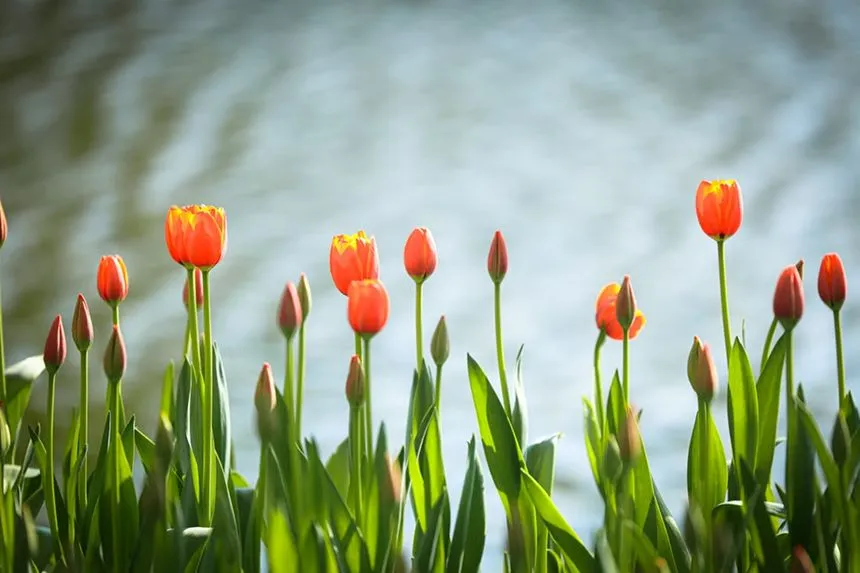
Tulips are bulbous spring flowers that bloom around April to May, much before the Ranunculus flowers. This gives the garden an extended period of blooming flowers.
While both of these flowers have similar water needs, tulips do not prefer heavy feeding and can easily rot due to excessive plant food in the soil, which is not the case with Ranunculus , as they prefer regular feeding every 3-4 weeks during the growing season.
YourHomify Tip
To work around the differing fertilizer needs of the flowers, I plan their feeding schedules accordingly to avoid overlapping. Additionally, I do not feed the tulips more than once in the growing season and use a liquid fertilizer for Ranunculus every 3-4 weeks.
5. Foxgloves
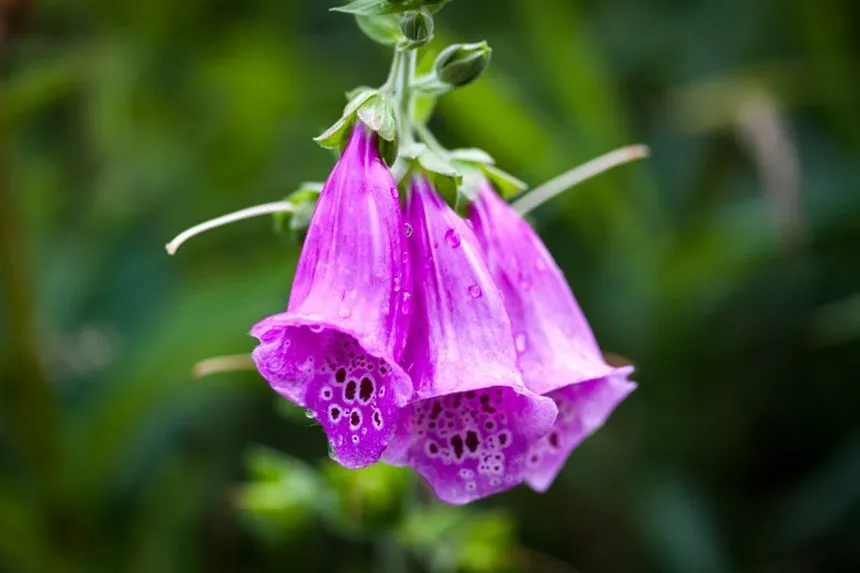
Foxgloves are biennial bell-shaped flowers which, when planted with Ranunculus, can give the perfect cottage garden aesthetic. Both these flowers bloom almost at the same time, from late spring to early summer, which is perfect for achieving a spring garden look. However, proper spacing is necessary, as foxgloves can grow up to 5 feet tall, while Ranunculus have a bushier growth, which can lead to sunlight issues if planted too close.
I would recommend an 8-12 inch gap for better air circulation and proper sunlight distribution.
Cost Breakdown: Ranunculus Corms vs Buying Cut Flowers
Planting Ranunculus corms is significantly cheaper than purchasing cut flower stems, excluding all the care/maintenance cost. As a home gardener, the average cost of growing Ranunculus is around $0.5-$1 per corm, which extends to $1-$8 per Ranunculus stem for cut flowers.
Take a look at this comparison table to understand which is a more financially practical choice:
| Medium | Cost | Additional Considerations |
| Corms | The average cost is around $0.5- $ 1, which depends on the variety, size, and the source. | The ongoing care cost, including plant food, labour cost, gardening tools, and equipment required, can add up to the cost significantly. Additionally, planting comes with the risk of failure and dissatisfaction with the results due to common mistakes. Garden-grown flowers also take time and effort, which adds up ultimately. |
| Flower Stem | $1-$8 per stem, which also varies for different retailers and varieties. | The maintenance cost is negligible here; only aftercare is needed, which is cheaper than garden care. However, the upfront cost is higher than homegrown flowers, and with a shorter life. |
On the surface, it may seem like growing corms is cheaper than buying cut flowers, but take into consideration the maintenance cost that adds up ultimately. Personally I think, both have their set of pros and cons.
If you are aiming for fast results, go for cut flowers, which come with a higher cost but no maintenance. If your aim is landscaping and just ornamental gardening, corms are great, and then later you can transform them into bouquets and sell them for added profit.
Concluding Remarks
Planting Ranunculus is a rewarding journey that helps in growing elegant spring flowers that return every year. These flowers are best grown in early to late fall, which can vary by zone, as the minimum temperature in winters is different and the Ranunculus corms prefer warm soil temperatures. My advice for beginners would be to start with pre-sprouted Ranunculus corms indoors and then transplant them outdoors once the danger of frost has passed.
Happy Gardening!
FAQs
Why is it so hard to grow Ranunculus ?
It can be a little tricky to grow Ranunculus flowers, as they have specific water and moisture needs. They are cool-season flowers and do not tolerate temperatures rising above 21°C. Therefore, extreme summers are not ideal for them, and they need consistently moist soil to grow.
Do Ranunculus grow better in the ground or in pots?
Ranunculus can be grown either way, but garden planting is much better as it reduces the chance of transplant shock. However, plants grown in pots are more beneficial if you want to be sure of soil fertility and avoid waterlogging.
What months to plant the Ranunculus corms?
The best time to plant the Ranunculus corms is during late fall to early spring, but it entirely depends on your zone. If you live in zones 6 and above, winters are ideal, as winters are moderate to less intense, while zones below 5 need early planting in early fall to avoid root shock.
Do Ranunculus come back every year?
Yes, Ranunculus come back every year if they are protected from winter or are planted in warmer regions. They are tender perennials and are mainly grown as annuals in areas with extreme winter temperatures and summer heat.
Do Ranunculus plants spread?
No, the Ranunculus corms do not spread or have an aggressive growing habit. However, the corms can multiply over time and produce baby corms attached to the parent corm; their roots do not spread over the garden bed.
- How to grow Ranunculus (Persian buttercup)– BBC Gardener’s World